Wholesale Jilbab: One Piece and Two Piece Construction
A jilbab is defined by coverage rather than decoration: head, neck, shoulders and body in one garment, or split into a hooded top and a skirt. Which of the two you order decides almost everything else about the fit.
One piece or two piece: the decision that drives the order
A one piece jilbab is a single garment: the hood, neckline and body are cut from one pattern, so there is nothing to pin, wrap or readjust. It is the shape most often bought for prayer and travel, where the wearer needs to put it on quickly and know the coverage stays put.
A two piece jilbab separates the hooded top from the skirt or trousers. It costs more to produce and pack, but it lets the customer wear the pieces at different lengths and replaces only half a set when one part wears out. Both are legitimate products; they are not interchangeable.
The most common failure in a jilbab order is a buyer ordering on the strength of a photo and receiving the other construction. Write the construction into the quotation, not just the style name.
- One piece: fastest to wear, single garment, simplest packing
- Two piece: sold as a set, two pieces to label and pack
- Mixed construction under one style name is a quoting risk
Coverage length, measured rather than named
Knee, mid-calf and ankle describe very different garments, and the same words are used loosely across suppliers. Ask for the shoulder-to-hem length in centimetres on the actual batch, plus the front and back lengths separately where the hem is shaped.
For a two piece set, measure the top and the skirt independently. A top that ends at mid-thigh over a skirt that breaks at the ankle reads as one long line; the same top over a shorter skirt reads as two garments, which is not what most buyers expect.
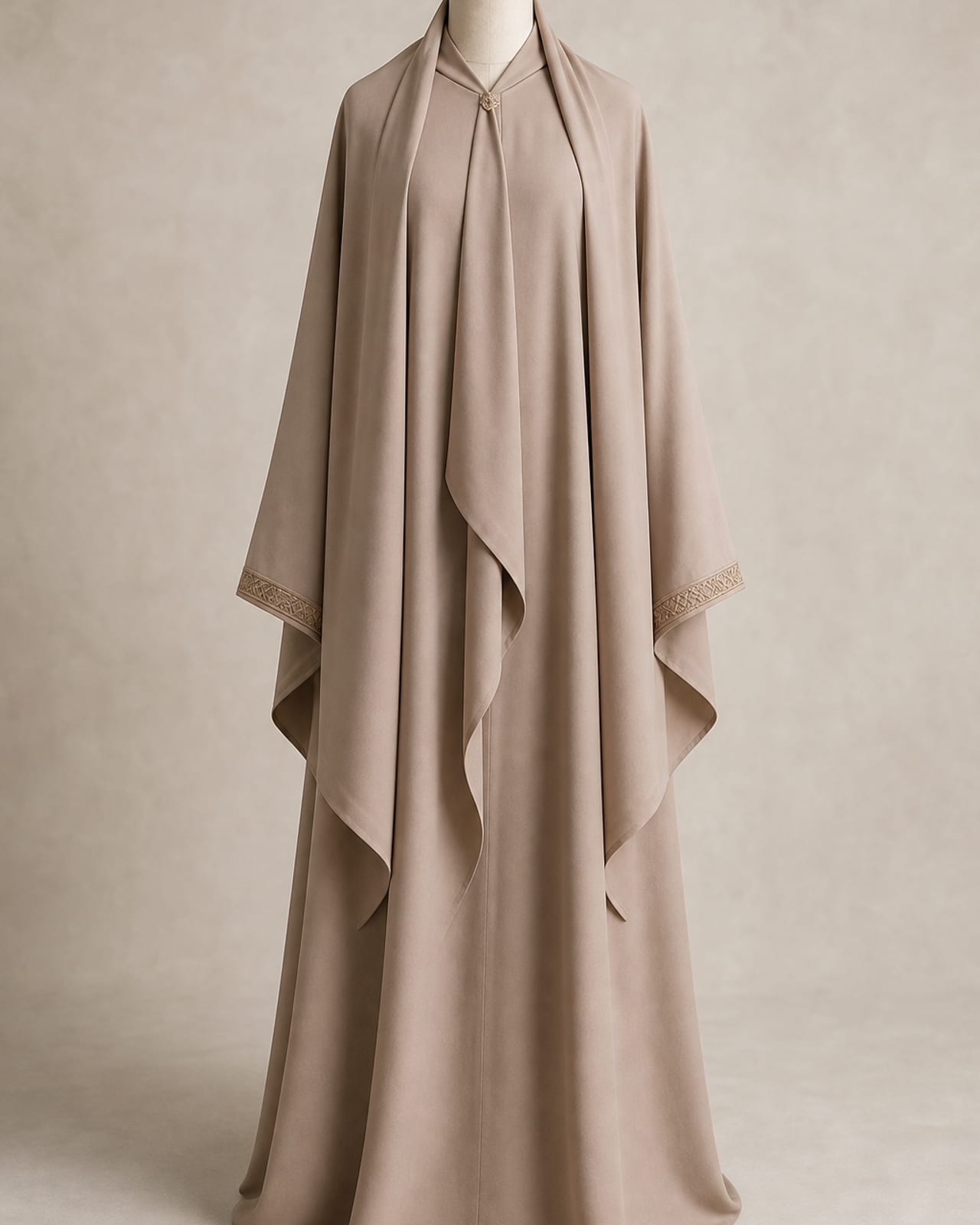
The face opening
A new face opening or a changed drop belongs in a made-to-order enquiry, not a stock order.
The opening decides comfort more than any other measurement. Too small and the garment pulls across the forehead; too large and it will not stay in place without a pin. Construction varies: some are cut wide and rely on drape, others are elasticated or tied at the back.
Ask which method the batch uses, and whether the opening can be adjusted on a made-to-order run. Changing this on ready stock is not usually possible, because the pattern is already cut.
Sleeves and cuffs
A jilbab sleeve is usually wide, gathered at the wrist with elastic or a soft cuff. The cuff matters in daily wear: an open sleeve rides up when the arm lifts, and a tight cuff restricts movement during prayer.
Check the cuff finish in a photo close-up rather than at full length, and ask whether the sleeve is cut in one piece with the body or set in. Set-in sleeves cost more and sit closer to the shoulder.
- Wide sleeve, elasticated cuff: everyday and travel
- Narrow cuff, fuller body: prayer
- Set-in sleeve: closer fit, higher cost
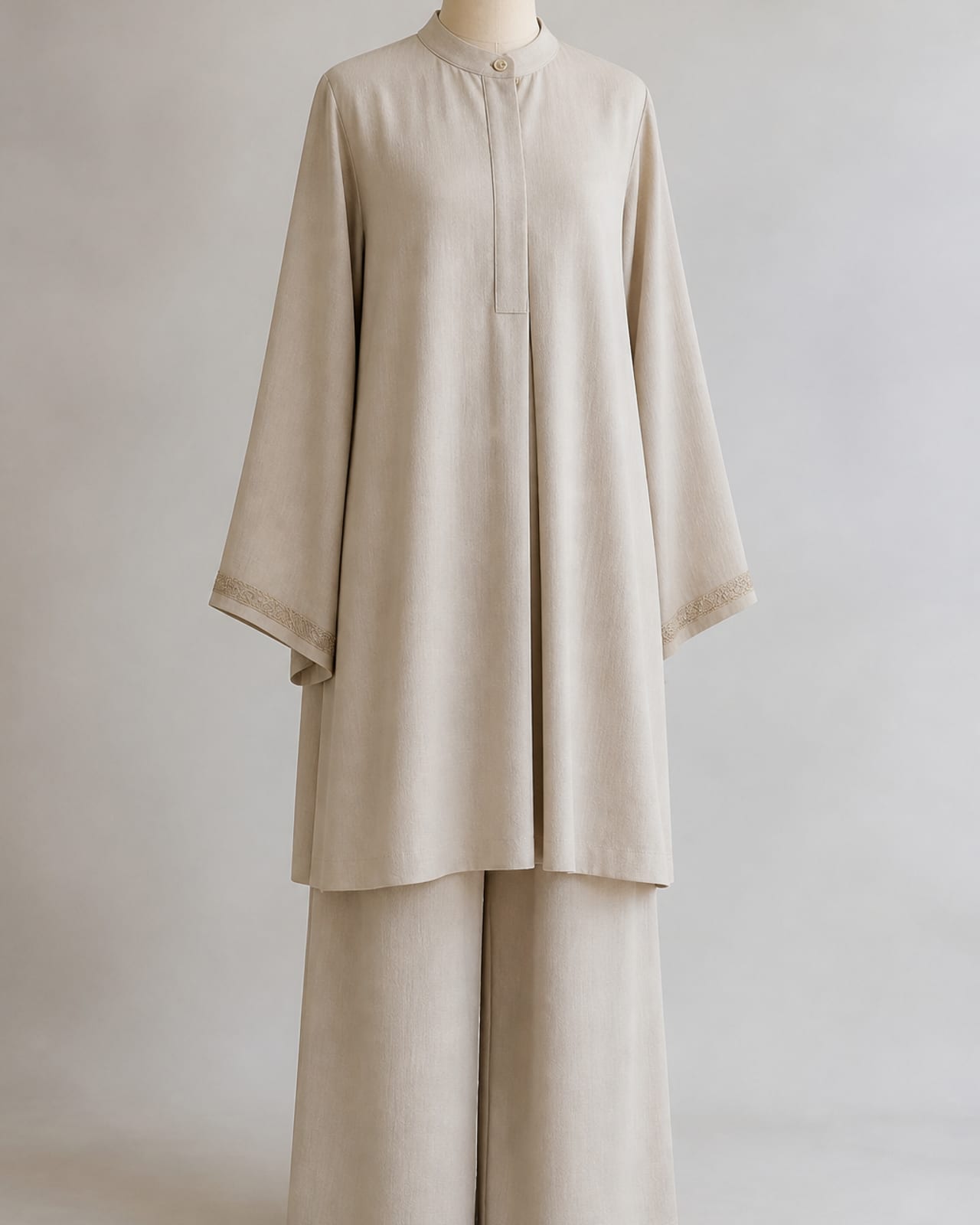
Fabric and opacity
A jilbab covers the head, so opacity is the first fabric test — hold the fabric against light before agreeing a colour. Dark tones hide a thin weave, which means a black batch can pass inspection while the same fabric in cream does not.
Nida and crepe are the usual choices for structure and low creasing. Chiffon gives movement but normally needs a lining, and a lined jilbab is a heavier garment that changes both the price and the packing weight.
Packing and dispatch
A two piece set is packed as a set, which means two pieces per bag and a decision about whether the skirt is folded inside the top. That decision affects carton count, so agree it before the order is confirmed rather than at dispatch.
For a range, ask for a size and colour breakdown per carton. Mixed cartons save freight but make receiving slower for the buyer.
Confirm one piece or two piece construction
Agree coverage length and face opening
Check opacity on the actual colour
Agree packing: set per bag, carton breakdown
What to send with a jilbab enquiry
Send the construction, the coverage length in centimetres, the face-opening type, the colours, the quantity and the destination. A reference image helps, but write the construction down as well: two photos that look similar can be a one piece and a two piece, and the difference changes both price and packing.
View collection
One piece jilbab
- One piece with integrated hood
- One piece prayer jilbab
- One piece with elasticated cuff
Two piece jilbab
- Hooded top with straight skirt
- Hooded top with flared skirt
- Hooded top with trousers
Frequently asked questions
Yes when the listing states a two piece set. The quotation lists every supplied piece, so a one piece garment cannot be confused with a two piece set. Always confirm the piece count in writing before the order is placed.
Ready stock uses an existing cut, so the opening cannot usually be changed. A different opening, drop or cuff belongs in a made-to-order enquiry, where the pattern is adjusted before production.
The minimum depends on construction, colour count and packing. Send the styles and quantities you need and we confirm the current MOQ for that combination; an order is only confirmed once MOQ and price are agreed.
Ankle length sells most reliably across Gulf and Western European markets because it covers the widest range of customer expectations. Knee and mid-calf lengths are worth testing only where you already know your customers prefer a shorter garment.
Opacity depends on the colour as much as the weave. Ask for a photo of the actual colour held against light. Dark tones can pass on a fabric that is too thin in cream, so checking the specific colour matters.
Selected styles can take a woven label or printed care label by agreement. Because a two piece set has two garments, decide whether both pieces are labelled before the order is confirmed.
Planning your next modest fashion collection?
Tell us these seven things and we can come back with a workable sourcing plan instead of a price list.