Wholesale Prayer Wear: Prayer Dress, Jilbab, Khimar and Prayer Sets
Prayer wear is bought on two rhythms — a Ramadan and gifting peak, and steady replenishment. This page covers the specification points that are particular to garments worn for prayer.
Who buys wholesale prayer wear, and when
Prayer wear is bought by two kinds of buyer. The first is the general modest wear retailer adding a prayer range for Ramadan and Eid, where the purchase is seasonal, gift-driven and often packed for presentation. The second is a shop, distributor or online seller that carries prayer wear all year as a basic category, where the priorities are coverage, easy washing and a repeatable price position.
Both groups judge the product on the same two things: coverage while the wearer is moving and bending, and how the garment behaves after repeated washing. A prayer garment that rides, clings or shows through is a return regardless of how well it was decorated, so specification starts with coverage rather than with trim.
- Modest wear boutiques building a Ramadan or Eid capsule
- Online and social commerce sellers who need packable, gift-ready styles
- Distributors supplying markets where telekung or mukena is a standard retail line
- Travel retail and gifting sellers who need light, fold-flat pieces
- Brands developing a private label prayer range with their own label and pouch
- Shops that reorder prayer wear as a year-round basic
How the prayer wear range is grouped
Prayer wear is grouped by how the garment is put on and how much it covers, because that is what buyers and their customers actually choose between. The groups further down this page list the styles we can supply and develop, and a mixed order across groups is normal.
- Prayer dress — one piece, pull-on or front opening
- Prayer set — top and skirt, including telekung and mukena cuts
- Jilbab — one piece outer garment for prayer and everyday wear
- Khimar — shoulder and back-covering drape, single or double layer
- Travel and gifting — light, packable, presented in a pouch or box
- Custom and private label — your pattern, measurements and label
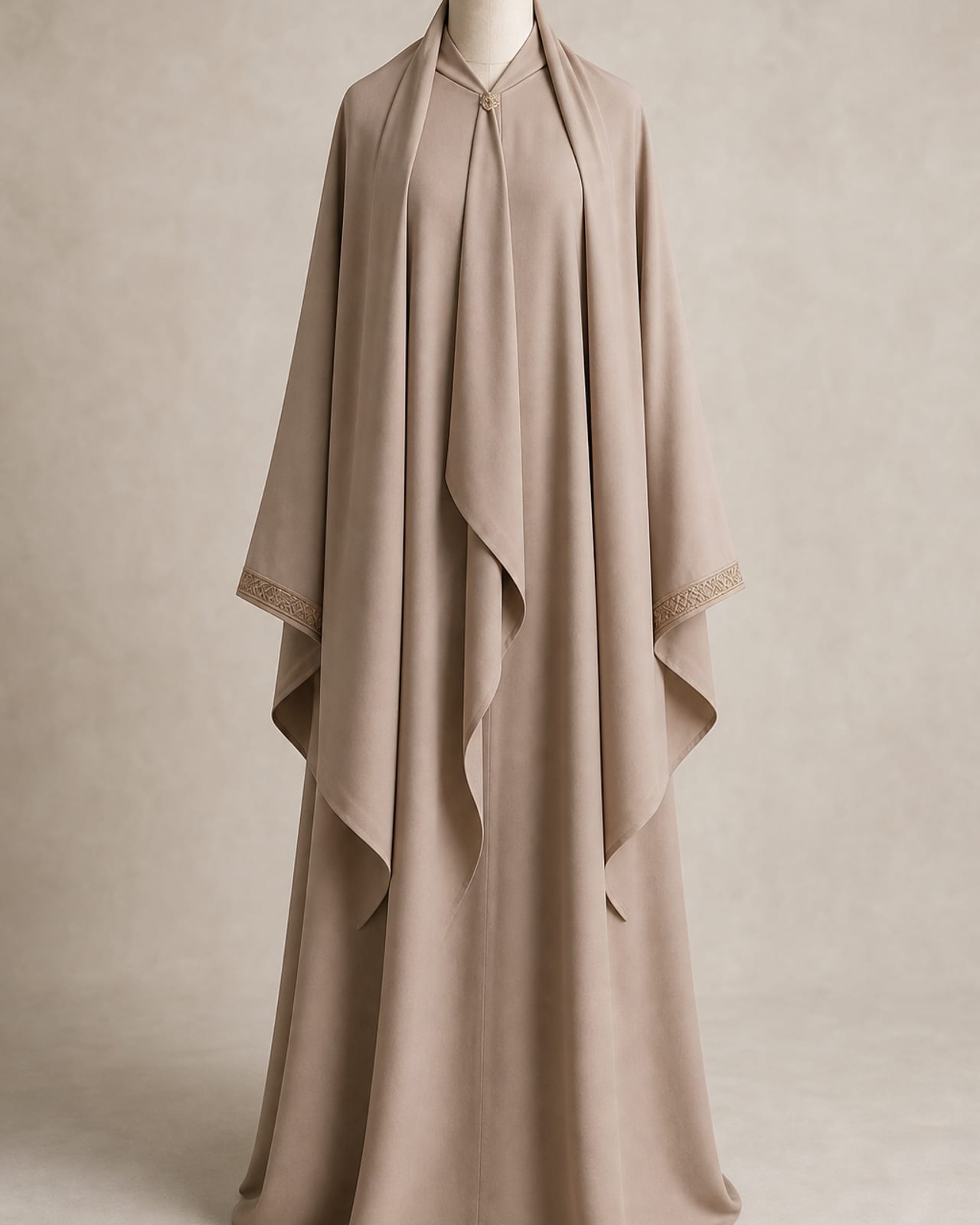
Fabric for prayer wear: coverage, breathability and washing
Prayer wear is worn against the skin and then washed often, so fabric choice is driven by three things at once: opacity in daylight, breathability in a warm room, and how the cloth looks after repeated washing. Cotton voile is the traditional answer for breathable prayer sets, nida gives an opaque, fluid drape with minimal care, and jersey suits travel and everyday pieces where stretch matters.
The fabric library explains feel, opacity, drape and season for each option, which is the fastest way to narrow the range before sampling. Where a buyer wants a premium gift presentation, satin and viscose are usually specified for the outer layer only.
- Opacity checked in daylight and against a backlit window, not on a screen
- Breathability for warm rooms and long wear
- Weight — heavy fabric covers well but becomes uncomfortable in heat
- Surface finish — smooth fabrics cling more than textured ones
- Care behaviour — how the piece hangs after repeated washing
- Contrast lining or double layer where a light fabric is chosen for comfort
Coverage and measurement: how prayer wear is specified
Test the sample by putting it on and moving: coverage when the arms are raised is the check a flat-lay measurement cannot replace.
Prayer wear is often sold as one size, which makes the specification more important rather than less. One size still means a fixed set of measurements, and a buyer who never records them cannot reorder the same garment. The lower hem, the sleeve, the head opening and the back coverage are the measurements that decide whether the piece works.
Values are recorded on the approved sample for each style, and the sheet below shows what we measure on every prayer garment.
- One size supplied to a fixed measurement set, recorded on the sample
- Sized runs for markets that sell prayer wear by body size
- Extended lengths for taller wearers, agreed per style
- Sleeve and cuff options: straight, elasticated or finished with a cuff
- Coverage checked in the postures the garment is worn in, not only flat
| Measurement | Where it is measured | Confirmed value |
|---|---|---|
| Prayer dress length | Shoulder point to hem | — |
| Set top length | Shoulder point to hem | — |
| Set skirt length | Waistband to hem | — |
| Khimar length | Crown to hem at the back | — |
| Sleeve | Shoulder point to cuff | — |
| Face opening | Opening measured flat at the widest point | — |
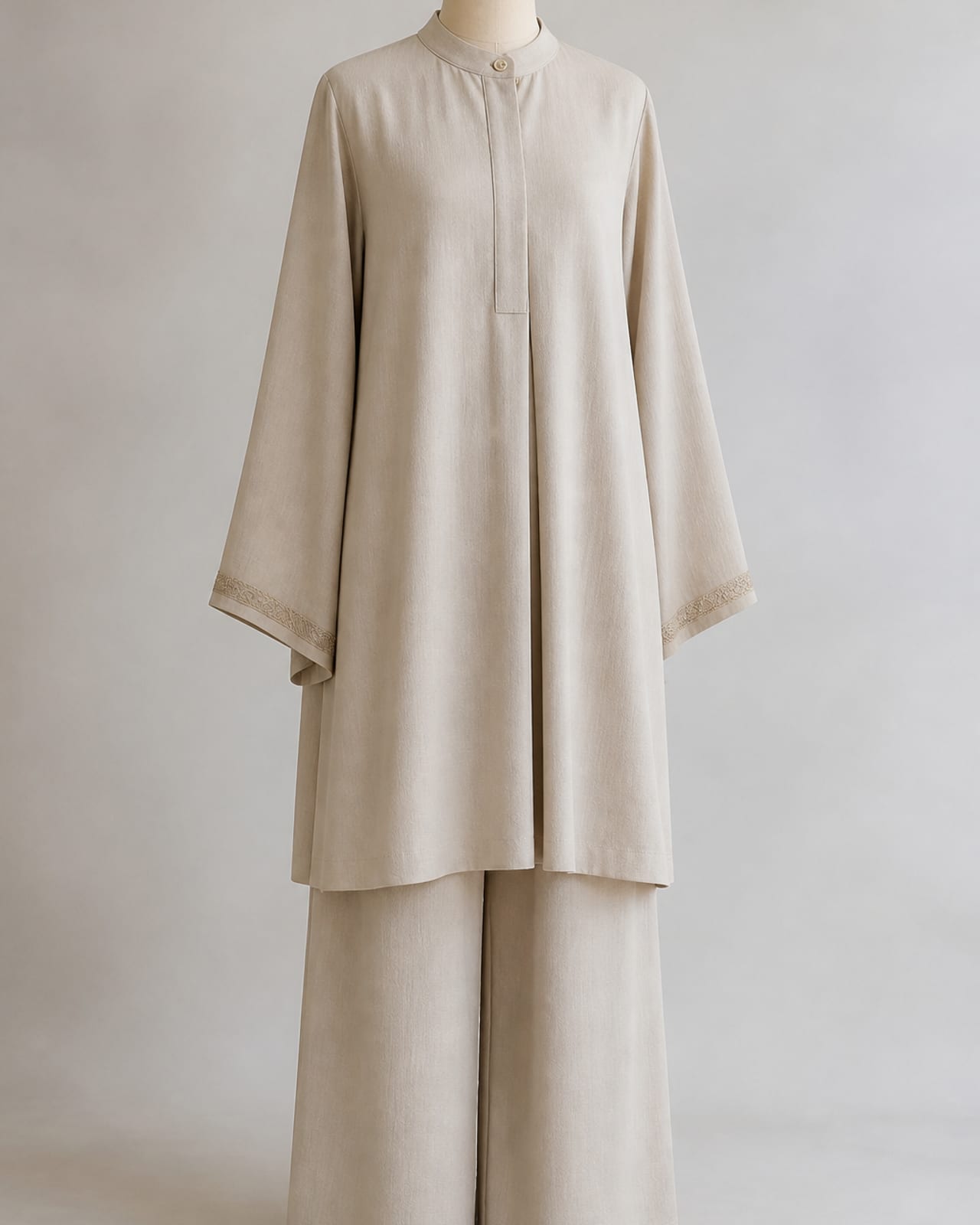
Colour and print for prayer ranges
Prayer wear has a colour logic of its own. Neutral light shades sell as everyday and gifting styles, muted tones carry a premium price position, and printed ranges sell strongly in gift-led markets. Consistency matters more than breadth here, because a customer who buys a second piece expects it to match the first.
- Ivory, cream and soft neutrals for everyday and travel selling
- Muted tones and deeper shades for premium and gift ranges
- Printed ranges with repeat and placement agreed on the final fabric
- Consistency of whites and creams checked between orders, since these show variation first
- Contrast trim, lace edge or embroidered border specified as separate lines
MOQ: what prayer wear minimums depend on
Contact us for current MOQ — Ramadan ranges are planned early, so the earlier the pack format is decided, the better the answer will be.
Prayer wear is often bought in larger numbers for a short season, so the minimum is driven by how many styles, colours and pack formats are in the order rather than by the total. Gift packing and embroidery add setup on top of the garment itself.
- Plain styles in a running fabric carry the lowest minimum
- Two layer constructions and lining add a second fabric line
- Printing, embroidery and lace trim add setup per design
- Gift box, pouch and retail packing are quoted with the packing included
Ready stock or made to order for a prayer range
Ready stock suits buyers who need to fill a shelf or test a price position quickly, and it is the practical route for a first Ramadan range. Made to order is how a private label prayer range is built, including the pouch or box that carries the brand.
- Ready stock — running prayer styles in listed fabrics and colours, subject to availability
- Made to order in a running fabric — your colour, sized run and label
- Made to order with custom print or embroidery — artwork approved before bulk
- Mixed orders — ready stock for the season ahead, made to order for the one after
Label, branding and personalisation
Prayer wear sits closer to gifting than most categories, so branding is often about presentation: a label that reads well at the neck, a tag that carries the brand, and a pouch or box that makes the piece giftable without repacking.
- Woven label, printed label and care label to your artwork
- Hang tag and gift tag, with the packing designed as one presentation
- Name or initial embroidery available where the design allows it
- Care and fibre wording printed exactly as you give it
- Label and pouch produced in the same artwork so the gift looks complete
Packaging prayer wear for retail and gifting
Pack format decides how a prayer range sells. A folded set in a pouch reads as a gift; the same set loose in a plain bag reads as a basic. Decide the format with the order, because repacking later is work nobody wants to pay for twice.
- Folded flat in plain or printed poly bag for shelf and stockroom
- Pouch or drawstring bag, packed with the garment as one unit
- Gift box for Ramadan and Eid ranges
- Set pieces packed together so a two piece never ships incomplete
- Carton packing with an itemised packing list on every carton
Sampling prayer wear: what the sample review decides
A prayer wear sample is reviewed for coverage and comfort before decoration is discussed. The order of the review matters, because a change in length or sleeve after decoration means the decoration is made twice.
Send the brief: market, season, style and quantity range.
Confirm fabric with opacity and breathability in mind.
Agree lengths, sleeve and opening measurements in writing.
Produce the sample in the agreed fabric and colour.
Wear-test the sample: coverage with the arms raised and while bending.
Review finish at the seam, hem, elastic and ties.
Confirm print or embroidery placement, then approve and seal the sample.
Quality control on prayer wear
Prayer wear is judged in use, so the checks here are about how the garment behaves on a body, not only how it looks flat.
- Coverage in movement — sleeves and back checked on a form rather than folded
- Opacity against the light — checked on the finished garment, piece by piece
- Seam and hem finish — loose threads, skipped stitches and unfinished edges at finishing
- Elastic, drawstring and tie quality — opened, closed and stretched during inspection
- Set completeness — top, skirt and pouch checked as one packed unit
- Colour consistency of light shades — checked against the approved swatch for the whole order
- Print and embroidery placement — checked against the approved artwork
- Packing errors — the wrong size or colour in a gift pack, checked at packing inspection
Wholesale ordering: what to include
Prayer wear is seasonal, so an enquiry that includes the selling window can be planned properly. Tell us the season you are buying for, and the pack format you intend to sell.
Business type: shop, online seller, brand, wholesaler or distributor.
Target market and the season the order is for.
Style: prayer dress, prayer set, jilbab, khimar or a custom design.
Fabric direction, or a request for advice on coverage and breathability.
Sizing: one size to a written measurement set, or a sized run.
Colour and print direction, with artwork files if the design is yours.
Label, pouch or gift box requirements.
Quantity and the delivery window you are working to.
Shipping and seasonal planning
Prayer wear is light and folds small, so it consolidates well with abayas, dresses and hijabs from the same order. The planning challenge is timing rather than freight: Ramadan and Eid demand moves every year, and the sourcing calendar has to start before the selling window opens.
- Ramadan ranges planned backwards from the selling date, with sampling booked first
- Eid and gifting ranges planned as a second, smaller production wave
- Year-round basics reordered on the same specification and fabric
- Prayer wear consolidated with other categories in one shipment
- Export documents and origin paperwork: available upon request
- Lead time depends on design and order quantity
View collection
Prayer dress
- Prayer dress, one piece pull-on
- Prayer dress with integrated head cover
- Prayer dress with front opening
- Lightweight travel prayer dress
Prayer set
- Prayer set, top and skirt
- Telekung style prayer set
- Mukena style prayer set
- Prayer set with matching pouch
Jilbab
- Jilbab, one piece
- Jilbab with front zip
- Jilbab, two layer
- Jilbab with finished sleeve cuff
Khimar
- Khimar, single layer
- Khimar, two layer
- Khimar with tie back
- Khimar with wrist-length sleeve
Travel and gifting
- Prayer set with carry pouch
- Gift-boxed prayer set
- Lightweight khimar for travel
- Prayer dress in fold-flat packing
Custom and private label
- Custom prayer wear from tech pack
- Private label prayer set range
- Buyer measurement chart prayer wear
- Buyer colour card prayer wear
All categories
Frequently asked questions
Prayer wear is usually ordered by style, colour and pack format rather than by a single quantity, so we quote the structure you are planning. Contact us for current MOQ with your season and pack format and we will confirm what is workable.
Either, and both need a written measurement set. One size still means fixed lengths and a fixed opening, and recording those values on the approved sample is what makes a reorder possible. Sized runs are used in markets that sell prayer wear by body size.
They describe closely related prayer set styles under different regional names, and the cut varies by market. Rather than assume a standard, we work from the shape you sell — send a reference garment or photographs and the construction is agreed on the sample.
Cotton voile is the traditional choice for breathability, nida gives an opaque drape with minimal care, and jersey suits travel pieces. Whichever you choose, check opacity on the finished garment rather than on the fabric roll, because a seam and a hem change how a cloth covers.
Yes, where the design allows it. Personalisation is treated as decoration, so placement, thread colour and lettering style are approved on the sample before bulk, and it moves the minimum because every piece becomes its own line.
Yes. Pouches, drawstring bags and gift boxes can be produced with your artwork, and the set is packed as one unit so it reaches the shelf ready to give. Tell us the format while the order is being quoted, not after packing has started.
Yes. Prayer wear consolidates well with other categories because it is light and folds flat, and a combined order usually reduces freight cost per piece while keeping one packing list for the whole shipment.
Planning your next modest fashion collection?
Tell us these seven things and we can come back with a workable sourcing plan instead of a price list.