Custom Modest Clothing: OEM and ODM Development from Your Design
You have a design idea, a reference photo, a sketch or a tech pack. This page explains what we need to check feasibility, how a sample is developed, and how the approved sample is held against bulk.
OEM or ODM: the difference decides your workflow
OEM means you bring the design and the specification; production follows your drawing. ODM means you start from an existing product and adapt it — fabric, colour, length, decoration, sizing, labelling — until it matches the collection you are building.
Both are workable. The distinction matters because it sets how much development happens before the first sample, and therefore how long the sampling stage takes. Tell us which one you are asking for; it changes the answer to almost every other question.
- OEM: your sketch, your tech pack, your measurements, your construction
- ODM: an existing base style adapted to your market and brand
- Hybrid, and the most common case: an existing style plus a new fabric, a new length and a new decoration
What you can send us
You do not need a finished tech pack to start a conversation. You do need to send something we can work from, and the more precise your input, the fewer sampling rounds are needed.
| What you send | What we do with it | What we still need from you |
|---|---|---|
| Sketch or illustration | Interpret silhouette, length, sleeve, neckline and closure into a pattern | Fabric direction, target market and rough quantity |
| Reference photo from a marketplace or another brand | Identify what is achievable and what is not, then propose the closest construction | Which details matter most if the exact construction is not reproducible |
| Tech pack with measurements and construction notes | Work directly from your specification and confirm any point that is open | Fabric reference, colour reference and size grading rules |
| Existing garment sample | Analyse construction, measure the garment and use it as the fit reference | Which changes you want made to the original |
| Design idea in words | Turn it into a concrete proposal with options for fabric and construction | Fabric direction, market, price position and quantity |
Feasibility: what is checked before you get a quotation
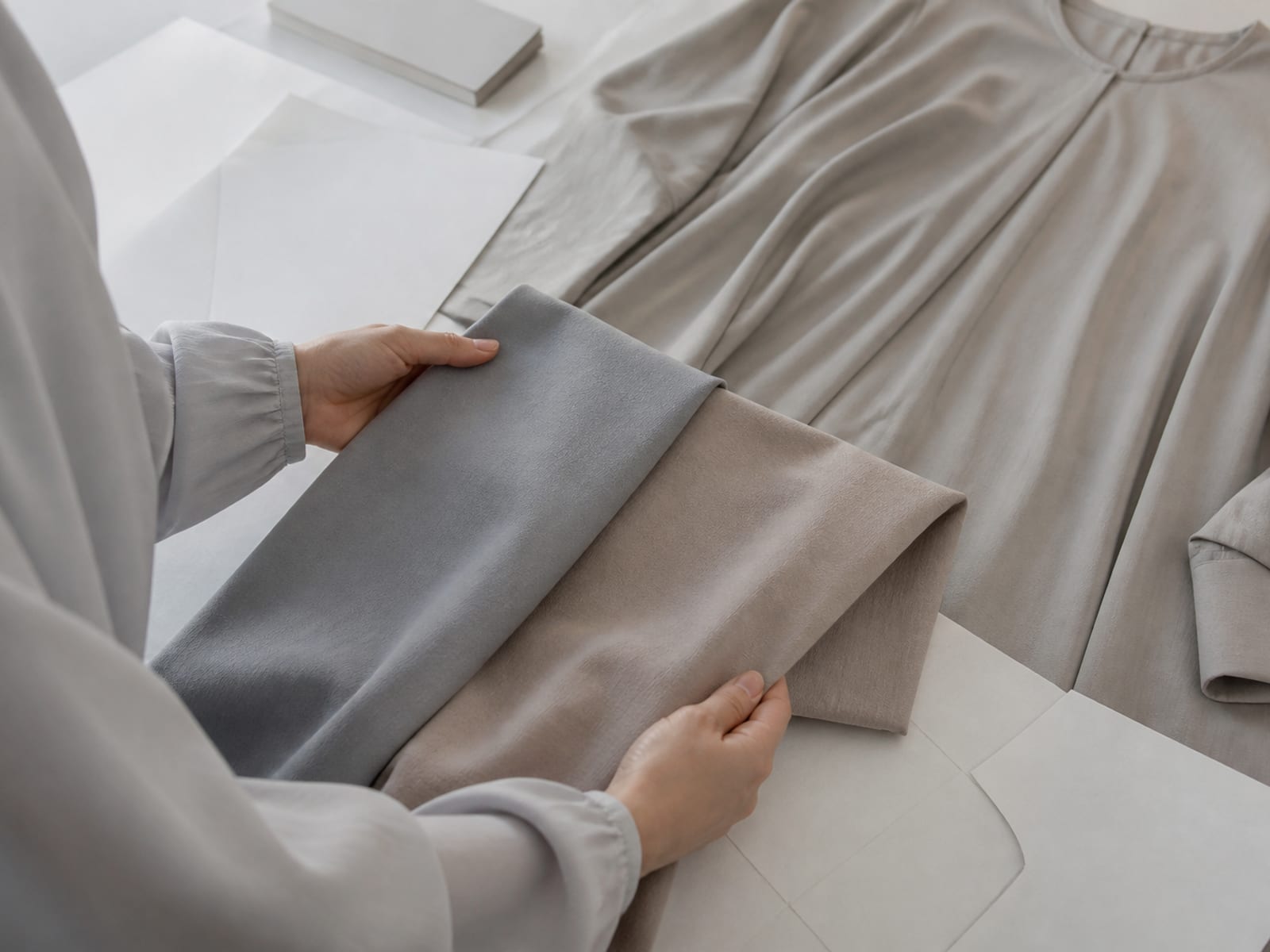
Not every design can be produced as drawn, and a supplier who says yes to everything is not helping you. Feasibility is checked across structure, material and decoration, and anything that cannot be reproduced is raised before sampling rather than discovered in bulk.
- Construction: how the garment holds its shape, and whether the drawing translates into a wearable cut
- Fabric: whether the chosen material supports the drape, opacity and structure the design assumes
- Decoration: whether the embroidery, beading or rhinestone placement works on that fabric and that panel size
- Closure and lining: whether they behave as the design implies
- Sizing: whether the design can be graded across the size range you need
- Decoration position against seams and hems, since placement is fixed by construction
From idea to bulk order: the ten steps
Skipping sample approval is the most expensive way to save time. A change made after cutting is a new cost, not a correction.
This is the sequence used for custom and OEM/ODM projects. Step six is the one that protects you: nothing goes into bulk until you have approved a physical sample.
Tell us your market: where the goods will be sold, at what price position, to which customer.
Select a product or send your design: sketch, reference photo, tech pack or design idea.
Choose fabric: Nida, crepe, chiffon, modal, jersey, cotton voile, viscose, satin, linen blend, or your own specification.
Confirm sizing: garment measurements or a size run, adapted to your market.
Sample development: pattern, fit, construction and finish on the agreed fabric.
Sample approval: you check measurements, colour, stitching, decoration and branding before bulk starts.
Bulk production: cutting, stitching and decoration to the approved sample.
QC: inspection at the stages where the defects described on the quality page actually appear.
Packaging: poly bag, hang tag, labels or retail packing to your instruction.
Shipping: consolidation, packing list and the documents your destination requires.
Sample development and what a sample round covers
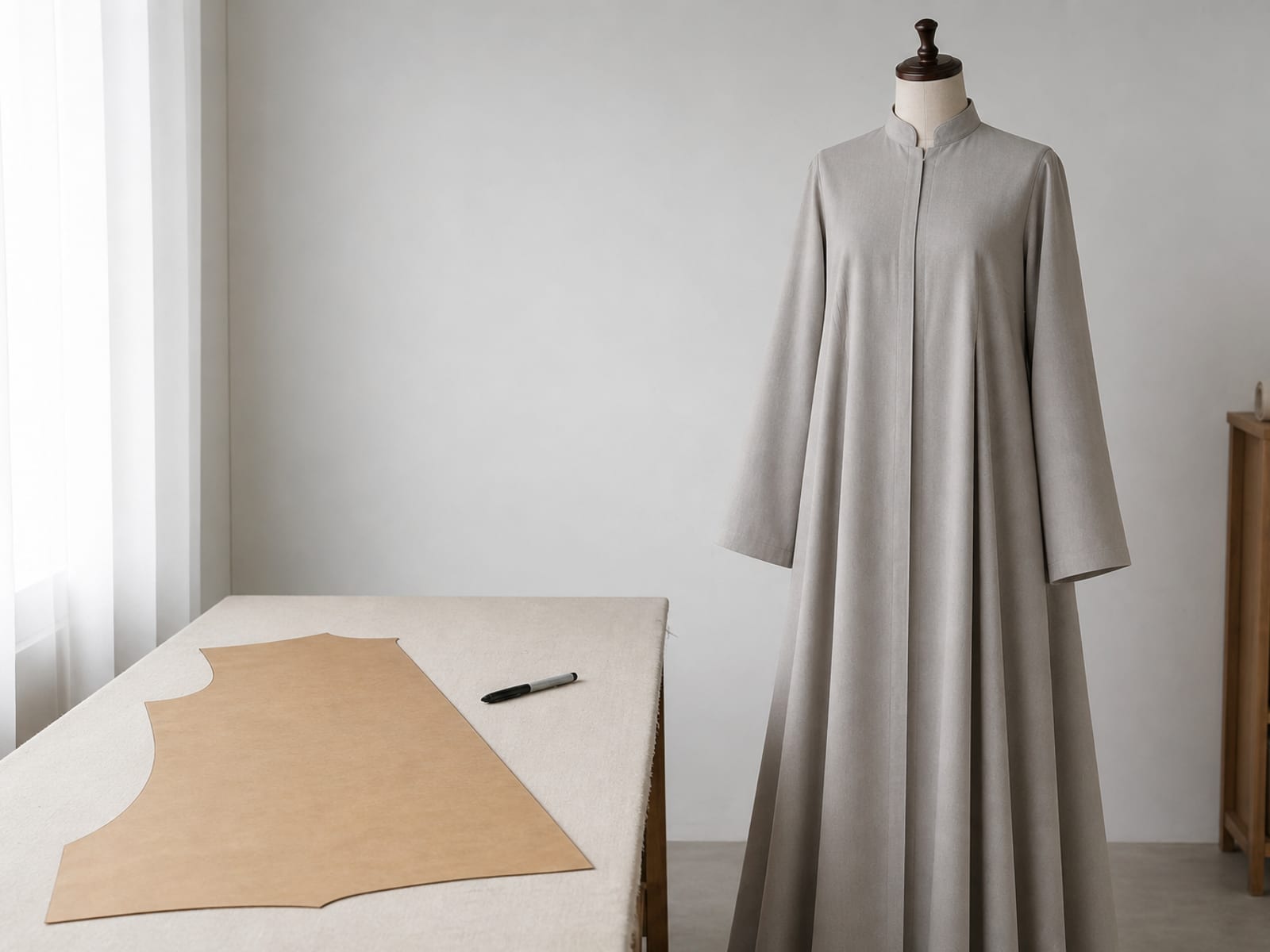
A sample round produces a physical garment for you to judge. It covers the pattern and fit, the fabric behaviour, the finish, and — if branding is involved — the label and tag placement. It is the first point at which your design is judged in the hand rather than on a screen.
Expect feedback to be part of the process. Most designs need adjustment after the first sample: sleeve length, hem width, drape, decoration density. That is normal development work, not a failure.
- Fit and drape judged on the agreed fabric, not on a substitute
- Measurements checked against your chart and recorded for bulk
- Construction points confirmed: lining, closure, finishing, seams
- Decoration approved in place, not as a separate swatch
- Branding sampled when the order includes labels, tags or packaging
Fabric selection for a custom design
Fabric is the decision that most often changes a design. A cut drawn for a fluid fabric looks wrong in a stiff one, and a colour that reads well on screen can behave differently on a matte surface than on a satin one.
Choose the fabric before the decoration, because embroidery, beading and rhinestone all respond differently to weight, stretch and surface. The fabric library explains feel, drape, opacity and typical use for each material we work with.
- Nida and crepe: everyday and formal abayas, clean drape, good for embroidery
- Chiffon and modal: layered and lighter garments, hijab-focused ranges
- Jersey and cotton voile: comfort-led and everyday lines, hot-climate markets
- Viscose, satin and linen blend: premium and occasion pieces
- Custom colour on a stock base fabric, or a fabric developed for your order
Embroidery, rhinestone and beading development
Decoration is inspected against the approved sample before packing — see quality control for how each defect type is caught.
Decoration is design work with its own production logic. Each technique has requirements that must be settled before the sample is made, because changing decoration after sampling usually means sampling again.
- Embroidery: artwork digitised into a stitch file, thread colours agreed against a physical reference, density and placement approved on the garment
- Rhinestone: stone size, colour, spacing and setting method agreed, then tested for grip and comfort on the inside
- Beading: pattern, density and backing confirmed, with attention to how the added weight changes the drape
- Placement engineering: decoration positioned against seams, hems and closures so it stays symmetrical after assembly
- Lining and backing: checked so decoration does not pull, scratch or distort the panel
Custom measurement, sizing and grading
A custom design does not solve fit on its own. Sizing has to be built for the market you sell in, and the letters S, M, L and XL do not mean the same thing in every country. Work from garment measurements and decide the size run deliberately.
Read the size and fit guidance before confirming a size run, and see plus size abaya wholesale if the range needs extended sizes. Custom measurement per piece is possible, but it changes the cutting and packing plan.
- Your own measurement chart, or a chart agreed with us
- Grading across a size run rather than one sample size
- Height-based length options for abaya and jilbab styles
- Size tolerance agreed in writing before bulk and checked at inspection
Sample to bulk consistency
Any change after approval is re-quoted and re-sampled where the change affects construction, fabric or decoration.
The difference between the sample and the bulk shipment is the most common dispute in custom production, and it almost always comes from something that was not written down. The approved sample becomes the reference; the specification is recorded around it.
- Approved sample held and checked against production
- Fabric reference and colour reference kept as physical standards
- Measurements and tolerances recorded for the size run
- Decoration placement and density recorded with the decoration files
- Labelling and packing method written into the order, not agreed verbally
What to put in your first message
A custom project is easier to price when the first message contains the seven points below. Without them, the reply can only be a question list.
- Your design input: sketch, reference photo, tech pack or design idea
- Target market and price position
- Fabric direction, or the fabric of your reference garment
- Size range and measurement requirements
- Decoration requirements: embroidery, rhinestone, beading or none
- Branding requirements: label, tag, care label, packaging
- Quantity estimate and target delivery window
Where custom projects usually go wrong
Bring these four points into your project plan and the sampling stage does the job it exists to do. Read more on custom abaya and custom modest clothing.
Most failed custom projects fail at one of four points, and all four are avoidable before production starts.
- The supplier confirms a design that cannot be produced as drawn, and the difference is discovered at the sample stage or later
- The buyer approves a sample verbally and does not record what was approved
- The fabric or colour changes after sampling, which resets the reference for everything downstream
- Decoration is approved as a swatch rather than in place on the garment
Frequently asked questions
Often yes, if the construction is visible and the details are standard. A photo does not show internal construction, fabric weight or exact measurements, so we will tell you what is reproducible and what has to be adapted before any sample is made.
Yes. In an ODM project you start from an existing style and change fabric, colour, length, sizing, decoration, labels and packing. In an OEM project we work from your design and specification. Tell us which approach you need and the development route is planned accordingly.
Yes. Sample development comes before bulk in the process, and the sample is what you approve. Sample cost, sample timing and courier arrangements are confirmed for your project.
Both depend on the design, the fabric and the decoration, so they are confirmed per project rather than published as a general figure. Lead time depends on design and order quantity.
Your design remains your design. We produce to your specification and do not re-sell a customer's exclusive developed style. If you need an exclusivity arrangement in writing, raise it before the project starts and it will be confirmed with your order.
Send the garment and we will measure it, analyse the construction and use it as the fit reference. Where a detail is not reproducible we say so and propose the closest alternative rather than agreeing and delivering something different.
It depends on the fabric, the decoration and whether the order is ready stock based or fully made to order. Contact us for current MOQ on the design you have in mind.
Planning your next modest fashion collection?
Tell us these seven things and we can come back with a workable sourcing plan instead of a price list.