Private Label Modest Clothing: Put Your Brand on the Garment
Private label is a sourcing decision before it is a branding decision. This page explains what you can control, how sampling proves it, and how the approved sample is held against bulk.
What private label changes for a buyer
Buying private label is not the same as buying a logo sticker. The label, the care instructions, the packaging and the measurement chart all sit between your brand and your customer, and each of them is a decision you make before production starts.
This page sets out what can be branded, how branding is proven at the sample stage, and how the approved sample is used to keep bulk consistent.
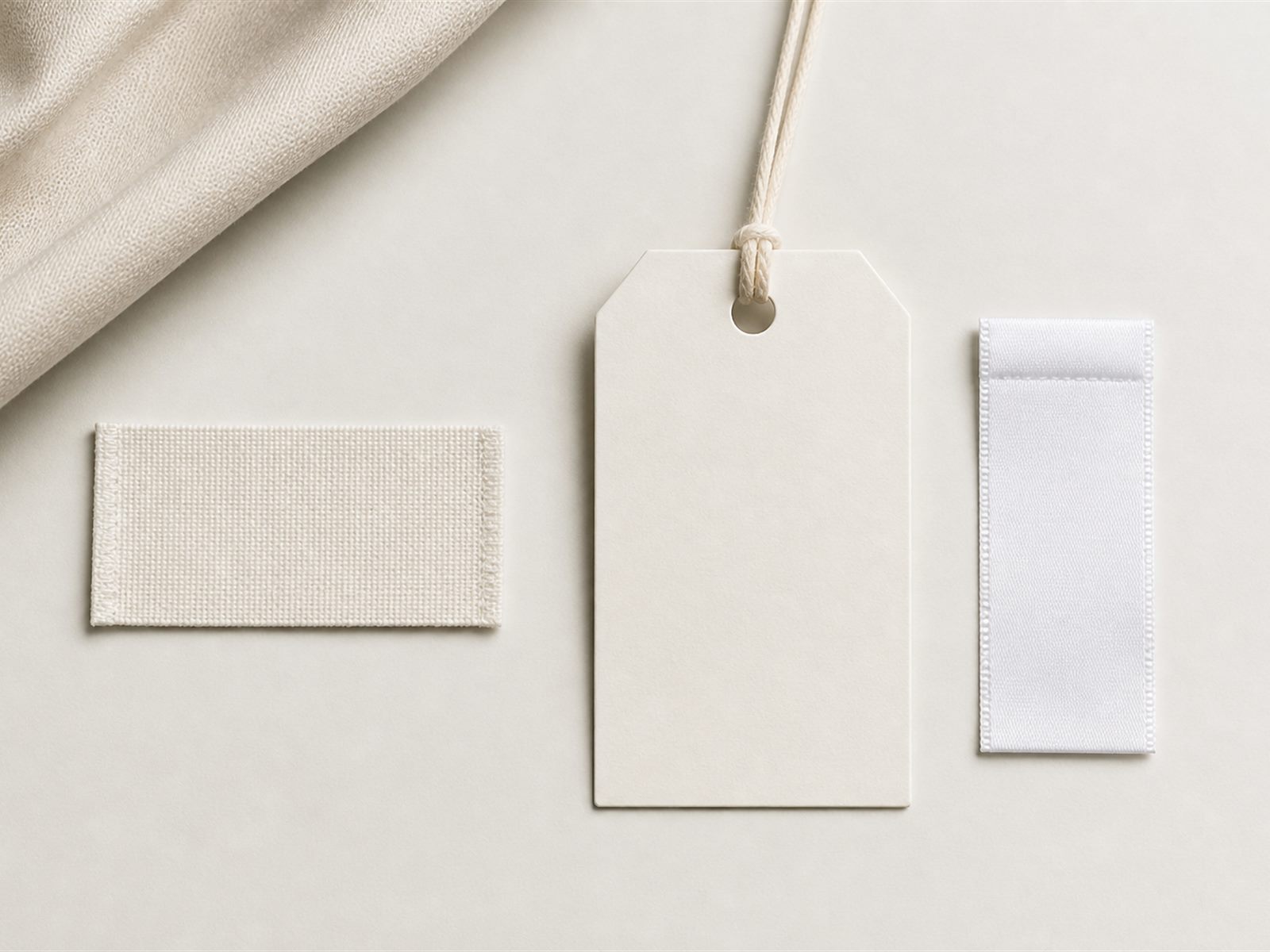
- Woven label, printed label and care label
- Hang tag and header card
- Poly bag, printed poly bag and retail packaging
- Custom color and custom fabric selection
- Custom measurement and size grading
- Embroidery, beading and rhinestone application
- Logo application: woven, printed, embroidered or metal
Start with the label, not the logo file
Most delays in private label orders come from artwork, not from sewing. A woven label is produced from a weaving file, an embroidered logo needs a digitised stitch file, and a printed bag needs a print-ready file with a colour reference. If the file arrives after the fabric is cut, the labels wait and the shipment waits with them.
Send artwork early, even a rough version, so it can be checked while fabric and sampling are still being discussed. The full scope is set out on private label abaya and private label hijab.
- Label artwork in a vector or high-resolution file, with the label size and fold type you want
- Care and composition content for the care label — what you are required to show is set by your market, and we produce the wording you approve
- Logo placement: centre back neck, side seam, hem or sleeve
- Hang tag artwork, size, and string or pin requirement
- Barcode, GTIN or size sticker files if the labelling is applied at our end
- Packaging artwork: poly bag print, header card, tissue or box
Sampling: prove the branding before bulk starts
Sample cost, sample timing and courier options are confirmed per project. Ask what applies to your design.
A sample without your label tells you how the garment fits. It does not tell you where the label sits, how the care label reads against the seam, whether the hang tag hangs straight, or whether the printed bag survives handling.
Ask for a branding-complete sample: garment, labels, tag and packing. That one sample becomes the reference for everything that follows. Sampling time depends on the design and on how many branded elements are involved — confirm it for your order rather than assuming a standard figure.
Bulk consistency: the approved sample is the working standard
The most common private label dispute is not a wrong label. It is a label in the wrong place, or a colour that drifts between the sample and bulk. Both are prevented by writing the specification down.
Before bulk, the approved details are recorded: label type, size, position, thread colour, fold, tag attachment, bag type, size stickers and packing order. Your approved sample is held as the reference and checked against production.
- Label position and label size recorded, not remembered
- Thread and print colour matched to the approved reference
- Packing method and pack ratio written into the order
- A change after approval is re-quoted, because a change after cutting is a new cost
- Inspection records and test documents are available upon request
What sets the minimum order quantity
We do not publish a single MOQ, because one number would be wrong for most orders. Contact us for current MOQ on the styles, labels and packaging you are considering.
Buyers often expect one MOQ for every private label order. In practice MOQ is a combination, and it is set by the element with the longest setup.
- Woven or printed labels: produced per artwork, so the number of label designs in your order matters as much as garment quantity
- Printed packaging: a printed bag or box is made for your order and carries its own minimum
- Fabric: stock fabric can start smaller than a custom-dyed or custom-woven fabric
- Decoration: embroidery and rhinestone placement are set up per design, and hand work is slower per piece
- Size range: a wide size run spreads the same quantity across more variants
- Style count: mixing several styles into one order raises the total quantity needed for a workable run
Decoration under your own brand: embroidery, beading, rhinestone
Decoration is where a private label order turns into a design order. Embroidery needs a digitised file and a placement plan, rhinestone work needs stone size, colour and setting method agreed, and beading is judged by density and by how the piece falls when it is worn.
All three change the sample plan, because the decoration has to be seen on the garment before bulk. If you are designing a garment from scratch rather than branding an existing style, start from customization.
- Embroidery: thread colours, stitch density and placement approved on the garment
- Rhinestone: stone size, colour, spacing and setting method agreed in writing
- Beading: pattern, density and backing confirmed on the approved sample
- Lining and backing checked so decoration does not pull or scratch
Packaging that arrives retail-ready
Packaging minimums and packing cost are quoted with your order, because a printed bag is produced specifically for that order.
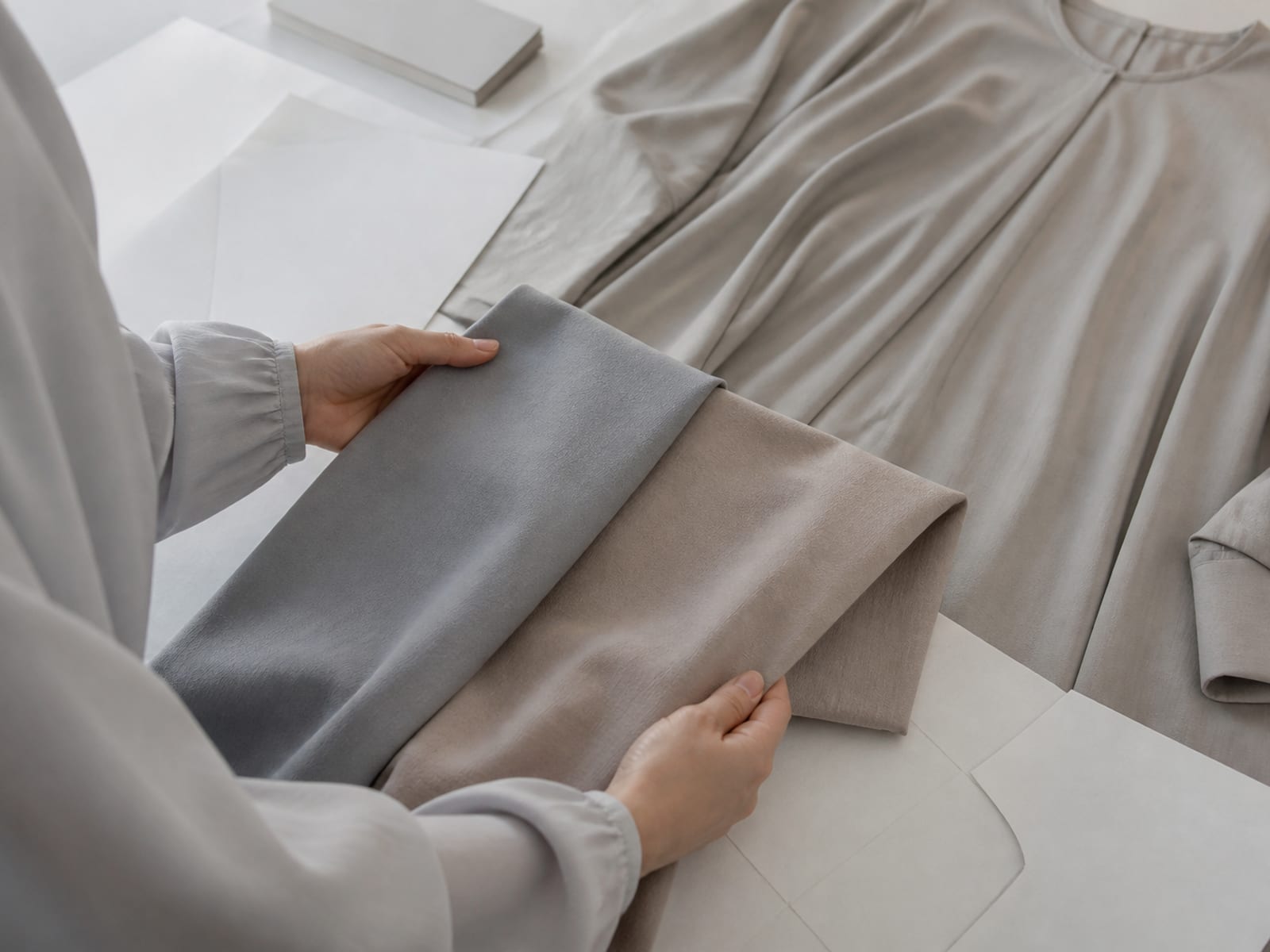
Packing is the last cost line and the first thing your customer sees. Decide early whether garments ship flat, folded, on hangers or boxed — the answer changes carton size, freight cost and how much handling you do on arrival.
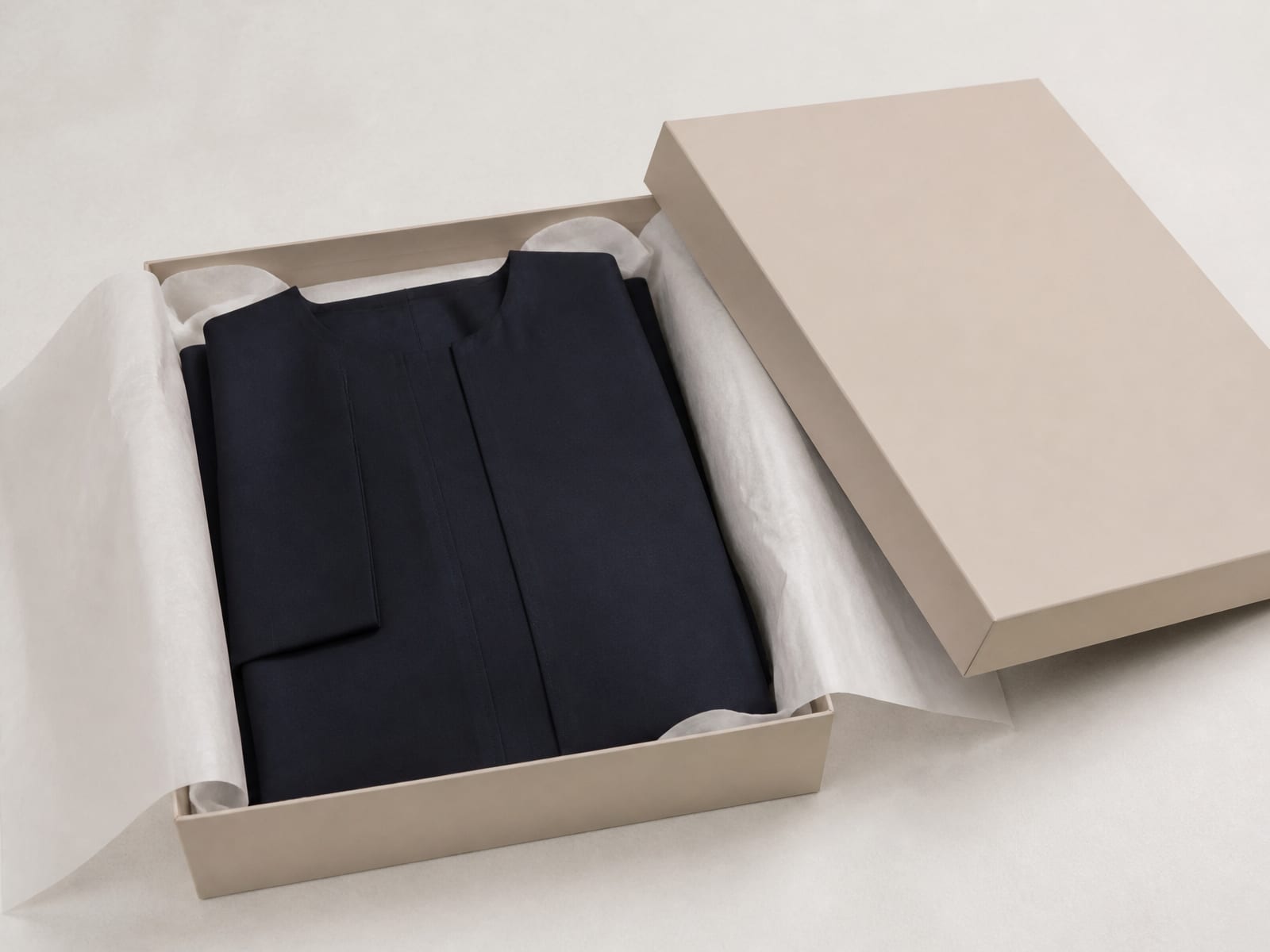
- Plain poly bag, or printed poly bag in your own artwork
- Hang tag attached with string, pin or both
- Size stickers, colour stickers or barcode labels applied before shipping
- Single packing or assortment packing, so one carton can go straight to a shelf or a picking table
- Care card, insert or brand card added per unit
- Export carton marking to your instruction, including any destination requirement you supply
Sizes and measurements under your own label
A private label size chart is a promise. If your chart says one thing and the garment measures another, the returns come back to your brand, not to the supplier. Agree garment measurements in writing before bulk, and use the size language your market already understands.
We can work from your measurement chart, from your existing sample, or from a size run agreed together. See the size and fit guidance and, for extended ranges, plus size abaya wholesale.
- Garment measurements rather than letter sizes as the working contract
- Your own chart, your own labels, your own labelling language
- Custom measurement for individual pieces or a full graded run
- Size tolerance agreed in writing before production and checked at inspection
What we need from you in the first message
One message covering these points is enough for us to come back with a real specification and a real price.
A private label quote is only as good as the information behind it. Send the points below and you will get a usable specification instead of a wide range.
- The garment: an existing style reference, or a sketch, photo or tech pack
- Quantity per style, per colour and per size, or your honest estimate
- Fabric direction: Nida, crepe, chiffon, modal, jersey, cotton voile, viscose, satin or your own specification
- Branding elements wanted: label, tag, care label, packaging, logo application
- Decoration wanted: embroidery, beading, rhinestone or printing
- Market and destination, so sizing, labelling language and shipping can be discussed
- Target delivery window, if you already have one
Documents, labels and claims for your market
Certificates and test documents: available upon request, for the specific order and material.
We produce the label content you approve. What you are allowed or required to print — fibre content wording, care symbols, importer details, origin wording — depends on where you sell, and that responsibility stays with your brand rather than with the supplier.
Where documents exist for your order, they are available upon request rather than published as a general claim. If you need to see something before ordering, ask and we will confirm what can be provided for that order and that material.
Frequently asked questions
MOQ depends on the combination in your order: label artwork, printed packaging, fabric type, decoration and size range. Contact us for current MOQ on the exact styles and branding elements you are considering.
Yes. Woven labels are produced from a weaving file, printed items from a print-ready file, and embroidered logos from a digitised stitch file. Send what you have and we will tell you whether it is production-ready or what needs to be adjusted.
Yes. Send your measurement chart or your existing sample, or agree a size run with us. Garment measurements are the working contract, not the letter on the label.
Send a physical reference — a swatch or an existing garment. Screen colours and digital files do not reproduce accurately enough to be used as a colour standard, so matching is done against a physical reference.
The approved sample is held as the reference, and the specification — fabric, colour, measurements, label position and packing — is recorded before production. Bulk is checked against it at the inspection stages described on the [quality page](/quality/). If a difference appears, it is raised for your decision rather than shipped silently.
Yes, and it is the recommended way to start. A branding-complete sample shows the garment with your label, tag and packing, which is what your customer will actually receive.
Lead time depends on design and order quantity, and branding elements such as woven labels or printed packaging add their own production step. We confirm timing for your specific order instead of quoting a blanket figure.
Planning your next modest fashion collection?
Tell us these seven things and we can come back with a workable sourcing plan instead of a price list.