Wholesale Hijab: Modal, Chiffon, Jersey and Cotton Voile
A hijab has no fit to get wrong, so the buying decision moves to fabric behaviour, opacity, cut and edge finishing — which is what this page is about.
Who buys wholesale hijabs, and how their brief differs
Hijab buyers come in two very different shapes. The first group sells hijab as the main product — dedicated hijab shops, online sellers and wholesalers who need a wide colour range in a small number of fabrics. The second group sells hijab as an add-on: a boutique that sells abayas and wants the matching scarf, or an online store that bundles a hijab with every dress.
The first group cares about colour depth, price steps and repeatability. The second cares about matching what is already on the rail and about packing the two items together. Both are quoted the same way, but the specification conversation starts in a different place.
- Hijab-only retailers and online sellers who sell colour ranges rather than single styles
- Boutiques adding a hijab wall to an existing modest wear rail
- Brands developing a private label hijab range with their own print or edge finish
- Wholesalers and distributors supplying markets where hijab is a fast-moving basic
- Gifting and travel sellers who need packaged, pin-free styles
- Abaya and dress sellers who want the scarf to match the garment
How the hijab range is grouped
Hijab is easier to buy when the range is grouped by fabric behaviour rather than by style name, because fabric decides opacity, drape, pressing and how the scarf behaves after washing. The groups listed further down this page follow that logic, with regional shapes such as tudung bawal kept together because they are bought and packed differently.
- Modal — the soft, matte default for a premium-feeling basic
- Chiffon — light and layered, for styling-led ranges
- Jersey — stretch knit for everyday, travel and active customers
- Cotton voile — breathable and crisp, the base for tudung bawal
- Instant and slip-on — pre-shaped, no pinning, sold as convenience
- Printed — the pattern carries the design, so artwork comes first
- Custom — your dimensions, your edge finish, your label
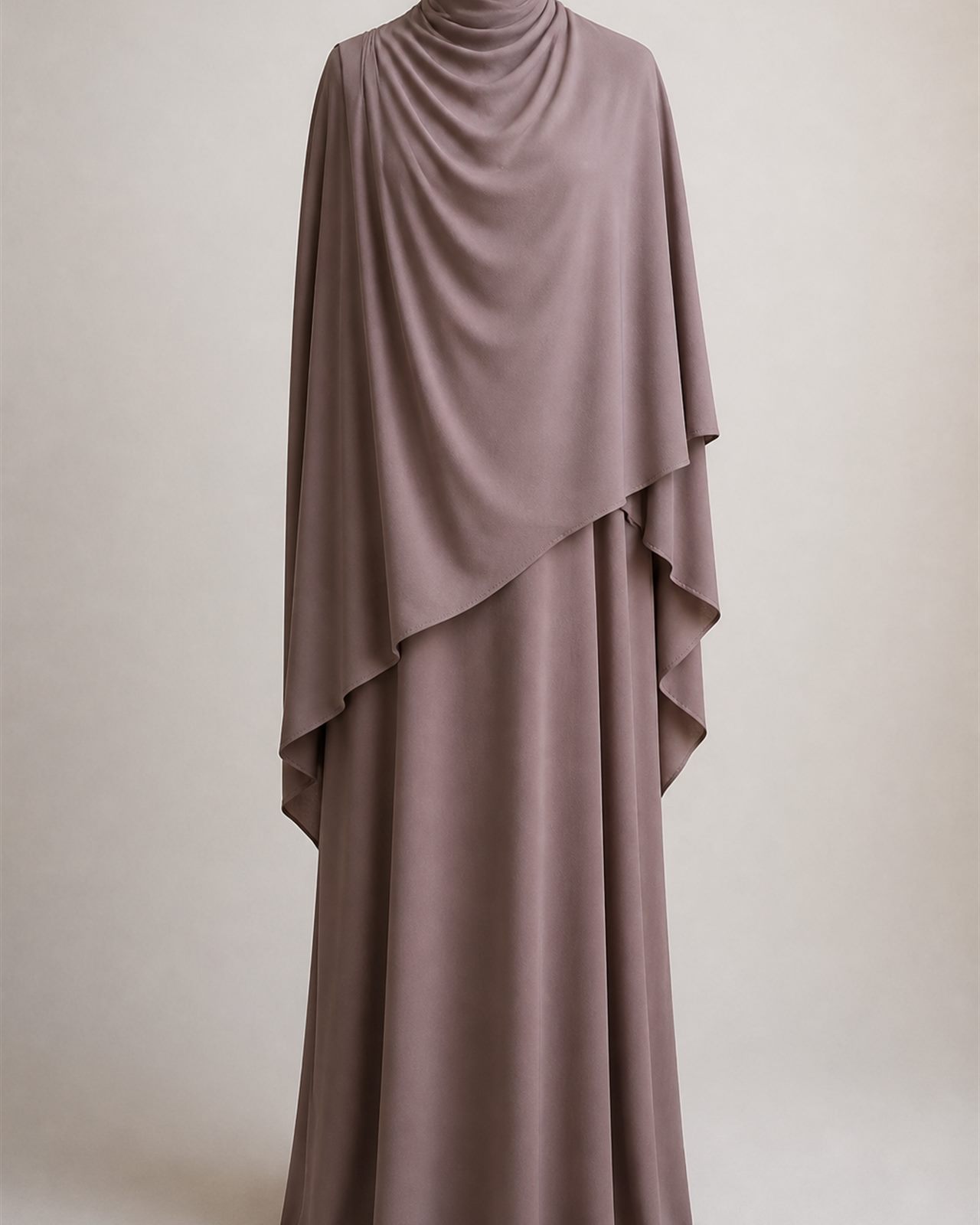
Fabric, opacity and edge finish: the three specs that decide the scarf
Send the fabric you want to match, or ask for swatches — deciding opacity from a photograph is the most common cause of a repeat order that is not a repeat.
Hijab complaints are rarely about style. They are about a scarf that shows more than the customer expected, or an edge that frays or curls after a few washes. Both are specification issues that can be settled before bulk.
Start with the material: modal for a matte hand, chiffon for drape and layering, jersey for stretch and easy care, cotton voile for crisp breathability. The fabric library compares them on feel, opacity, drape, season and best use, which is the fastest way to narrow the range before sampling.
- Opacity — checked against a hand or under strong light, not on a screen
- Edge finish — overlocked, rolled hem, baby hem, hand-rolled or machine-stitched
- Drape and weight — how the fabric falls at the shoulder and the chin
- Stretch recovery for jersey, which decides whether the scarf sags by evening
- Press behaviour — some fabrics need finishing, some do not
- Lining or double-layer options for chiffon where coverage is the priority
Cut, shape and dimensions
Hijab sizing is about dimensions and shape rather than body fit, which is why a hijab trial order carries far less sizing risk than a garment. It still needs a written specification, because square, rectangular, long and instant cuts sell very differently from market to market.
Dimensions are confirmed per style on the sample, and the sheet below shows what we record on every approved scarf.
- Square cut — the standard in many markets, folded and pinned on the wearer
- Rectangular and long cut — more length for wrap styles and heavier coverage
- Instant and slip-on — pre-shaped with an inner cap or tie
- Tudung bawal — the finished square with stitched or hemmed edges
- Buyer dimensions — produced to your own sheet when you sell a fixed size
| Specification | What it means in practice | Confirmed value |
|---|---|---|
| Length | Measured along the long edge, flat | — |
| Width | Measured across the short edge, flat | — |
| Edge finish | Stitch type and finish at all four edges | — |
| Weight feel | Described against an approved reference swatch | — |
| Shrinkage after wash | Recorded on the approved sample and matched in bulk | — |
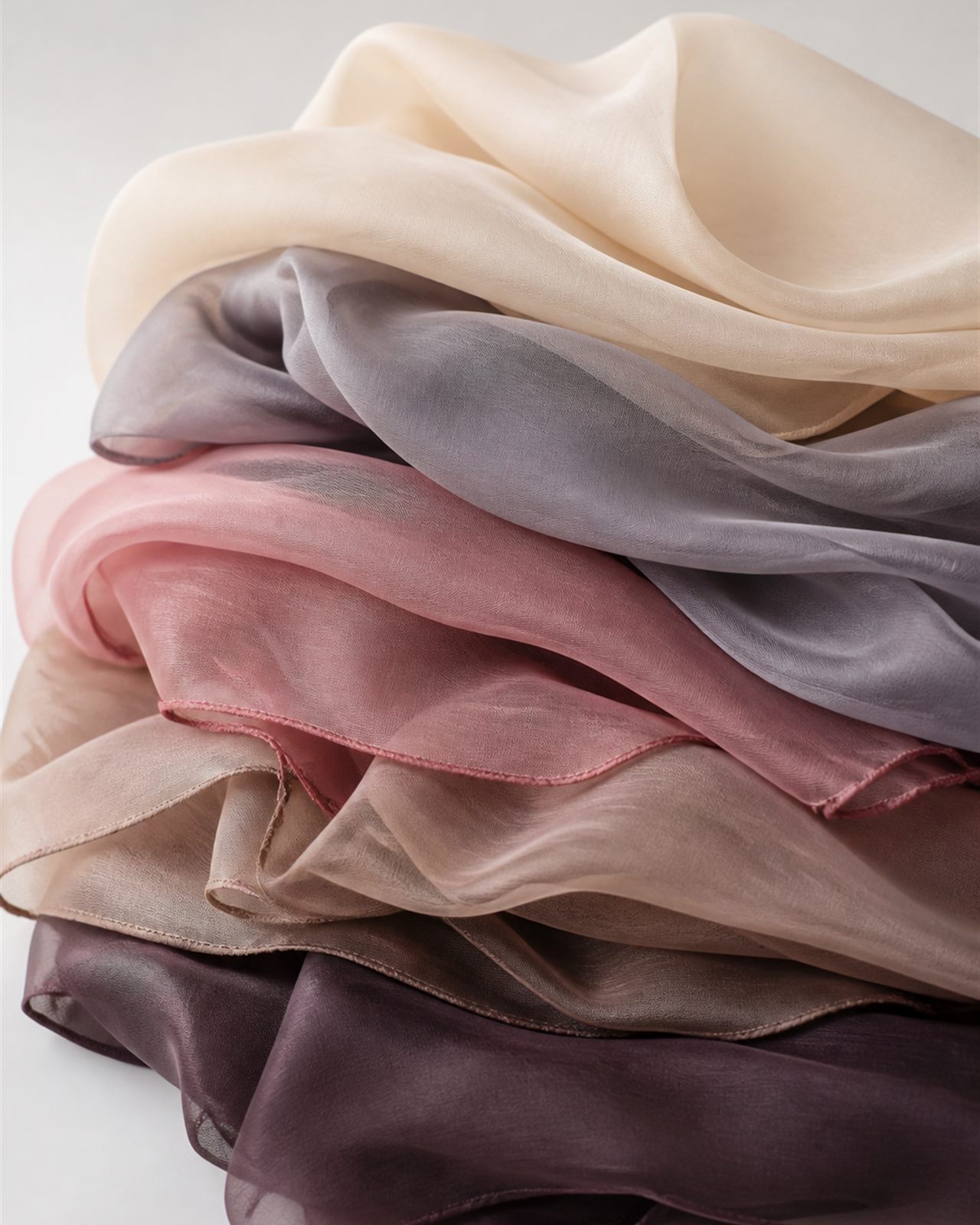
Colour and print planning
Hijab is usually sold as a colour wall or a grid of swatches, so the palette matters more than any single style. Build the core range first, then decide how much seasonal or printed stock the market will actually absorb.
For print, the artwork and the fabric are chosen together. A detailed pattern that reads well on cotton voile can look weak on chiffon, and the reverse is just as common, so a test print on the final fabric is worth arranging before bulk.
- Core solids for year-round replenishment, kept stable across orders
- Seasonal shades added to the core range rather than replacing it
- Colour matching to an abaya or dress range so both sell together
- Dye-lot handling agreed up front when the same shade is repeated
- Print repeat, scale and colourway confirmed on the final fabric
- Buyer artwork files supplied in a production-ready format
MOQ for hijab: fabric, print and packing all move it
Contact us for current MOQ and tell us the colour grid you have in mind — the answer depends on how many lines that grid creates.
Hijab quantities are usually built from a colour grid: a number of shades, in a number of fabric options, in one shipment. That structure affects the minimum more than the total quantity does, because each colour and each print is produced as its own line.
- Plain dyed styles in a running fabric normally carry the lowest minimum
- Custom print adds separation, screen or digital setup per design
- Custom dimensions and custom edge finish are quoted per style
- Retail-packed or gift-packed units are quoted with the packing included
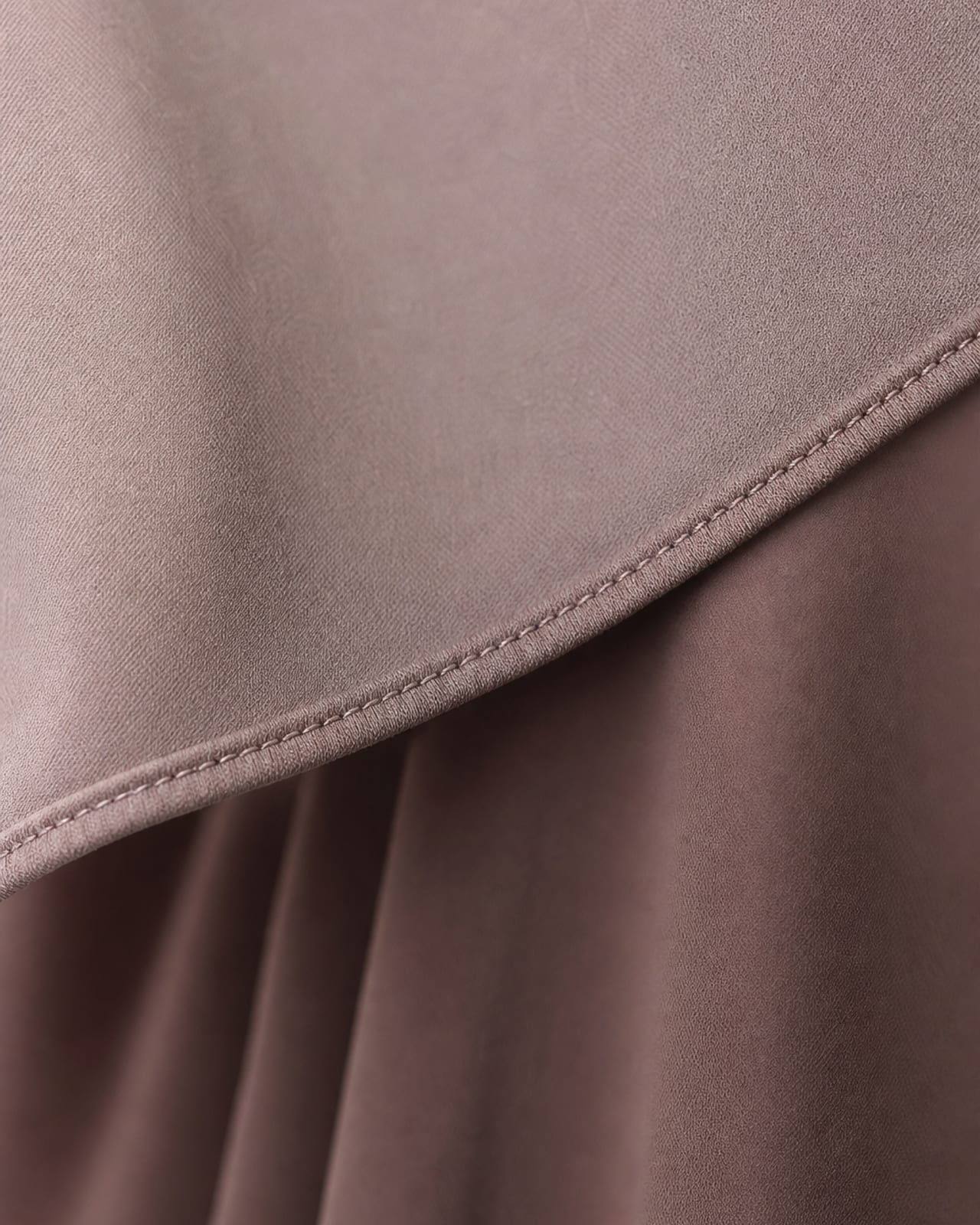
Ready stock or made to order for hijab
Ready stock is the fastest way to test whether a colour or a fabric works in your market, because there is no sampling round and no print setup. Made to order is how a private label hijab range gets built: your dimensions, your edge finish, your print and your label.
- Ready stock — core solids and running fabrics, confirmed against current availability
- Made to order in a running fabric — your colour, dimensions and label
- Made to order with custom print — artwork, strike-off approval, then bulk
- Mixed orders — ready stock to fill the shelf now, made to order for the next drop
Label, tag and retail packing for hijab
Hijab is a small item with a high shelf turnover, so the pack does a lot of the selling. A scarf that arrives on a branded band, in a printed bag, with a care label that matches the customer's language, behaves differently in a shop than a loose scarf in a plain bag.
- Woven label, printed label or heat-transfer label to your artwork
- Hijab band or sleeve that holds the fold and carries the brand
- Header card, hang tag and price tag
- Plain or printed poly bag, with a size and colour sticker where needed
- Gift pouch or box for gifting and travel ranges
- Care and fibre text printed exactly as your artwork specifies
Sampling a hijab: what actually gets approved
A hijab sample is quick, which is why more buyers approve one. The point of the approval is to lock the fabric, the dimensions, the edge finish and the colour before a bulk run, because those are the four things that cannot be changed later without restarting.
Confirm the brief: fabric, market, colour grid and packing direction.
Select fabric and compare opacity against the intended wear.
Agree dimensions and edge finish on paper before the sample is cut.
Produce the sample scarf in the agreed fabric and colour.
Check the sample wet and dry: opacity, edge behaviour and shape after pressing.
For printed styles, approve the strike-off before bulk printing.
Seal the approved sample with its specification sheet.
Quality control on hijab orders
Because a hijab has no fit, quality problems show up as finishing and consistency instead. These are the checks that catch them before the carton is closed.
- Edge quality — fraying, curling, skipped stitches and uneven hems checked piece by piece
- Dimension drift — pieces measured against the sealed sample rather than by eye
- Opacity variance — checked across the whole order, because one lot can behave differently from the next
- Colour consistency — checked against the approved swatch under controlled light
- Print placement and registration — checked against the approved strike-off
- Stretch recovery on jersey — checked after the piece has been stretched and released
- Packing accuracy — the right colour on the right band, in the right bag, in the right pack
Wholesale ordering: what to include in the enquiry
The fastest hijab quotes come from enquiries that describe the grid: how many fabrics, how many colours, what packing. Send what you know and mark what you are still deciding.
Business type: hijab retailer, boutique, brand, wholesaler or distributor.
Target market, since cut and packing expectations differ by region.
Fabric direction: modal, chiffon, jersey, cotton voile, or a request for advice.
Dimensions and edge finish, or a request for our specification sheet.
Colour grid: how many shades, whether they must match an existing range.
Print requirements, with artwork files if the design is yours.
Label, band and packing requirements.
Quantity per colour and the delivery window you are working to.
Shipping, consolidation and reorder
Hijabs are light and compact, so freight cost per piece stays low and consolidation is straightforward: hijabs can travel with abayas, dresses or accessories from the same order. Reorders are usually the same fabric and colour grid, which is what keeps a hijab wall consistent.
- Multiple fabrics, colours and styles consolidated into one shipment
- Hijabs combined with garments so one carton serves the whole rail
- Carton marks and a packing list issued per carton before dispatch
- Export documents and origin paperwork: available upon request
- Lead time depends on design and order quantity
View collection
Modal hijab
- Modal hijab, standard cut
- Modal hijab, extra long
- Modal hijab with finished edge
- Modal hijab, core solid colours
Chiffon hijab
- Chiffon hijab, plain
- Chiffon hijab, two layer
- Chiffon hijab, stitched edge
- Chiffon hijab with satin trim
Jersey hijab
- Jersey hijab, one loop
- Jersey hijab, long cut
- Jersey hijab, tube
- Jersey hijab, match-to-abaya colours
Cotton voile and tudung bawal
- Tudung bawal, plain dyed
- Tudung bawal, printed
- Tudung bawal, stitched hem
- Cotton voile hijab, soft finish
Instant and slip-on
- Instant hijab with inner cap
- Instant hijab, jersey
- Instant hijab with tie back
- Instant hijab, pleated front
Printed and pattern
- All-over printed hijab
- Border print hijab
- Printed tudung bawal
- Buyer artwork print to order
All categories
Frequently asked questions
That depends on how many colours and fabrics you want. A wide grid creates more production lines than a large quantity of one shade, so we price the grid rather than the total. Contact us for current MOQ with the colours you have in mind.
Yes. Mixed fabric orders are common, because most buyers want a range that covers a light scarf, a matte basic and an easy-care option. Everything ships together with one packing list.
Ask for swatches and check them against a hand and under strong daylight. Photographs and screens both mislead on opacity, and opacity is the single most common reason a hijab order is not repeated. Lining or a double-layer chiffon style is the usual fix where coverage matters.
Yes. Send the artwork, tell us the fabric it will be printed on, and approve a strike-off before bulk printing. Print scale and repeat are agreed at that stage, because the same design can read very differently on chiffon and on cotton voile.
Yes. Plain, printed, hemmed and stitched versions are all produced in cotton voile, and the edge finish is part of the approved sample specification.
Yes. Matching hijabs can be packed with the garment or supplied separately in the same shipment, and the label or band can carry the same branding as the garment.
We can add your woven or printed label, a hijab band, a header card and a printed poly bag or gift pouch, so the scarf reaches the shelf ready to sell rather than needing repacking.
Planning your next modest fashion collection?
Tell us these seven things and we can come back with a workable sourcing plan instead of a price list.