Wholesale Abaya: Open, Closed, Everyday and Custom Styles
Abaya is the category most buyers start with, and the one where fabric, length and closure decide whether a style sells. This page covers how to specify an abaya order from first sample to bulk.
Who buys wholesale abayas, and what they are buying for
An abaya enquiry is rarely about one garment. A boutique buys a small trial run in a few colours to find out which cut moves. A brand buys a full size run in its own fabric and label. A distributor buys width — several shapes at several price positions, in one shipment. The same garment can serve all three, but the specification changes each time.
What is actually being purchased is a set of decisions: how the front opens, how long the garment runs, how opaque the fabric is, how much decoration the price position can carry, and how the piece is packed for the shelf. Those decisions matter more than the length of the style list.
- Boutiques and concept stores adding a modest wear rail, usually starting with open and closed abayas
- Online and social commerce sellers who need photogenic styles that can be reordered
- Modest fashion brands building a private label abaya line
- Wholesalers and distributors who need a wide range consolidated into one shipment
- Occasion and Ramadan buyers working to a fixed selling window
- Retailers in hot climates who sell lighter, unlined styles all year
How the abaya range is grouped
The range is arranged by how the garment opens and where it is worn, because that is how buyers describe what they want in an enquiry. The groups further down this page list the styles we can supply and develop; orders that mix groups are normal and are packed as one consignment.
- Open abayas — layered over a dress, the easiest shape to style and photograph
- Closed abayas — no front opening, the everyday workwear shape
- Everyday abayas — unlined and low-maintenance, built for reorder
- Luxury abayas — heavier drape and finer finishing for occasion price positions
- Embroidered, beaded and rhinestone styles — decoration carries the design
- Kimono and layered cuts — crossover front, wider sleeve, softer silhouette
- Prayer abayas — fuller coverage with a closed or wrap front
- Plus size and tall length runs — a grading decision, not a separate design
- Custom abayas — your pattern, your measurements and your label
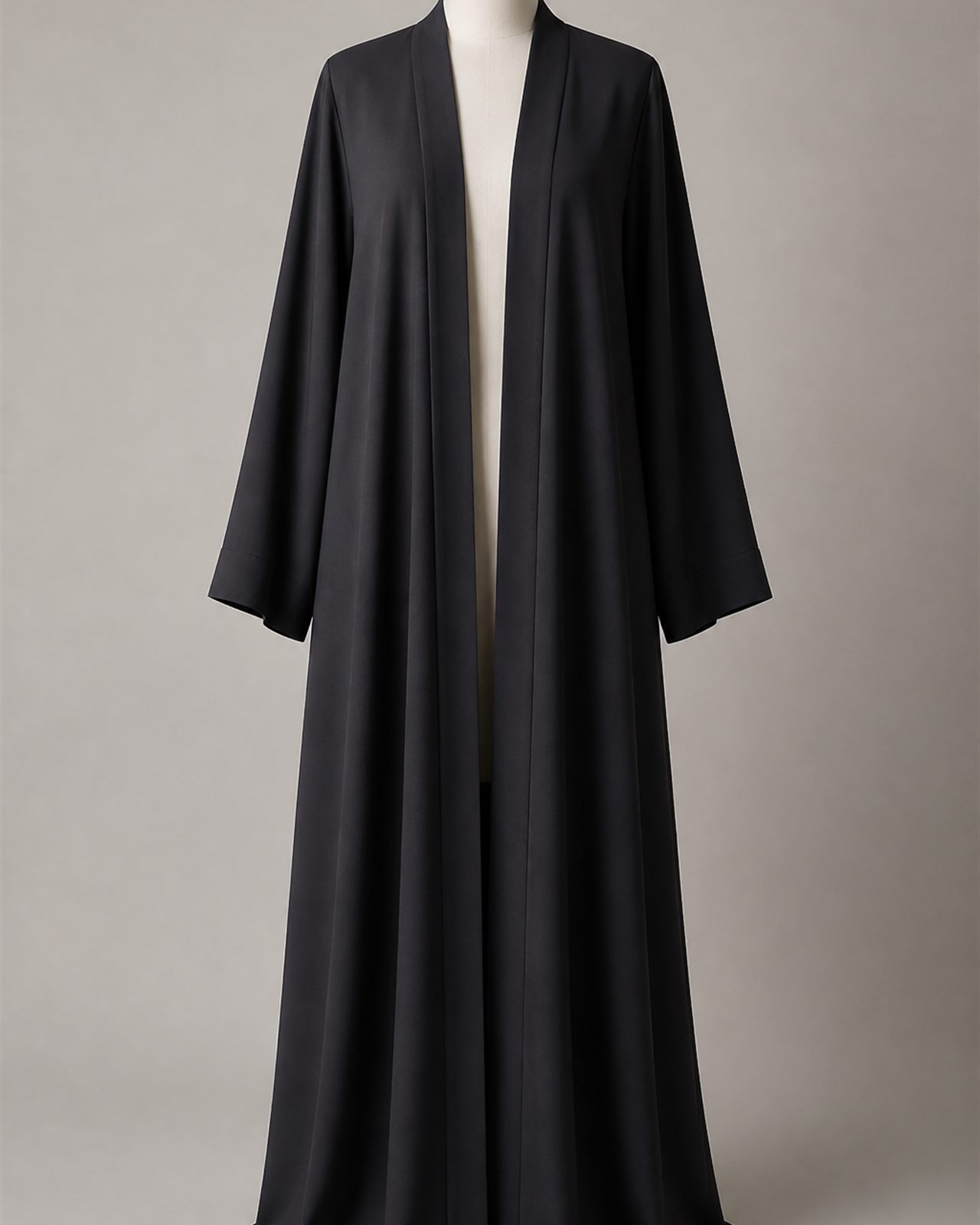
Fabric selection: the decision that resets the sampling clock
Fabric is where first orders go wrong, usually because it is chosen last. Approve a sample and then change the fabric and the sample has to be made again, which moves everything downstream with it. Choose fabric first, then decoration, then packing.
For abayas the working options are nida, crepe and chiffon, with satin, viscose and linen blend for specific price positions. The fabric library explains feel, opacity, drape and season for each material — that is the part buyers usually end up asking about by email.
- Nida — matte, opaque and fluid, the default abaya cloth and the easiest to reorder
- Crepe — more body than nida, holds a pressed crease and a structured sleeve
- Chiffon — light and layered, translucent on its own, so it needs lining for coverage
- Satin and viscose — sheen and drape for evening and premium price positions
- Linen blend — surface texture for warm-weather and resort ranges
- Jersey — knit comfort for travel and everyday styles, with minimal pressing
| The buying brief | Fabric to start with | What to confirm first |
|---|---|---|
| Everyday styles that must reorder easily | Nida | Opacity under strong light and how it behaves after repeated washing |
| Structured or formal shapes | Crepe | How the cloth holds a pressed finish at the sleeve and placket |
| Layered or occasion looks | Chiffon | Lining specification and how the sleeve is finished |
| Premium and evening price positions | Satin or viscose | Drape and weight against the target retail price |
| Hot climate, travel and easy care | Jersey | Stretch recovery and how the hem hangs after wear |
| Textured summer ranges | Linen blend | Creasing expectation and blend ratio with the mill |
Size and length: order by garment measurement, not by letter
Send a garment you already sell and we will measure it, so the discussion starts from your chart rather than from a generic size letter.
S, M, L and XL do not mean the same thing in every market, and abaya length is normally quoted as a number rather than a letter. Buyers who order by letter are the buyers who open a carton that fits nobody. Send the chart you sell to, or ask for ours and mark the cells you want changed.
The sheet below is the measurement set we work to. Values are confirmed against the approved sample for each style, because a kimono cut and a straight closed abaya do not share one chart.
- Length runs: petite, regular and tall, or one fixed length per market
- Plus size grading on bust, hip and sleeve, not just a longer body
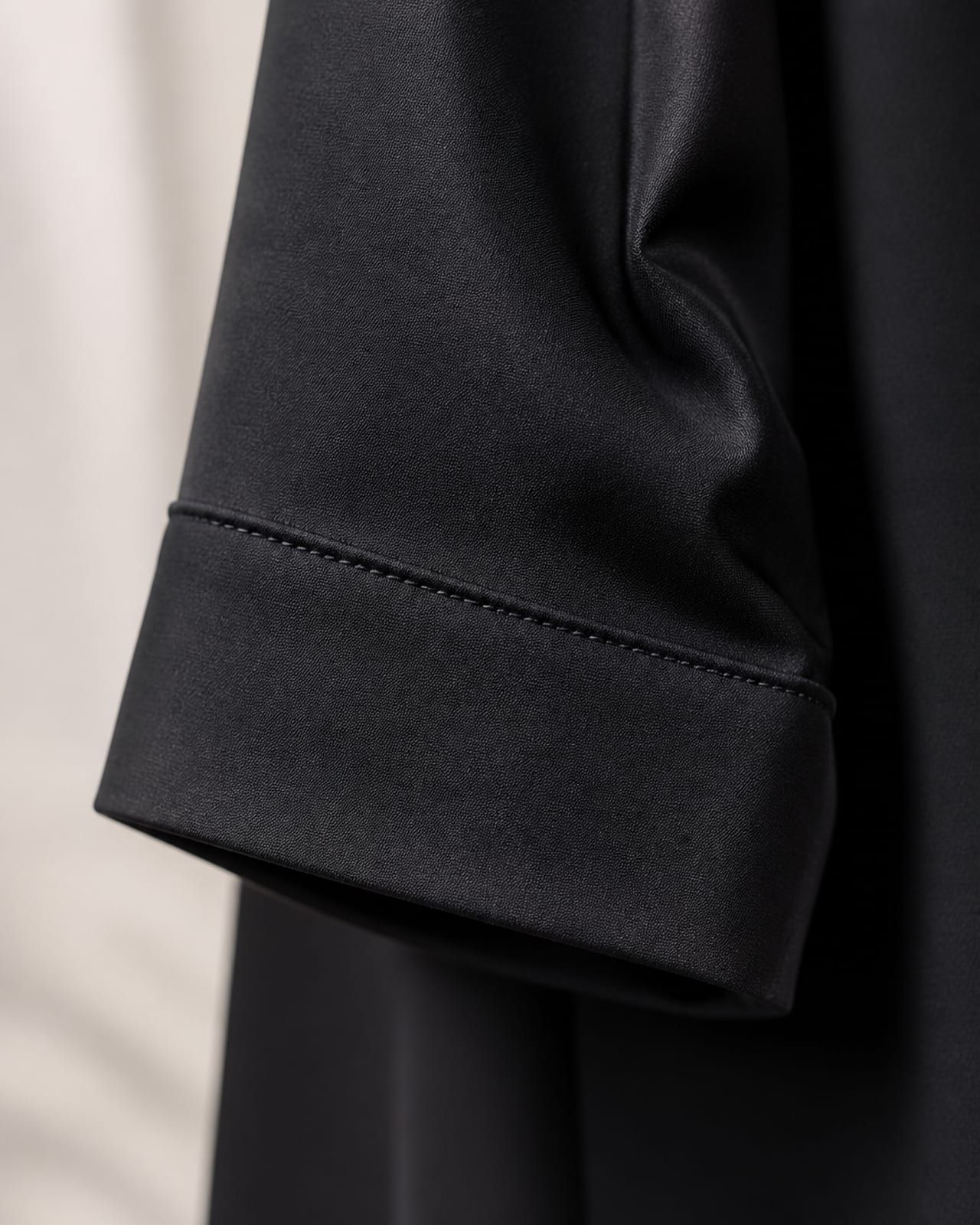
- Sleeve finishes: straight, cuffed, flared or elasticated
- Front opening: press-stud, tie, concealed zip, hook or fully open
- Measurement tolerance agreed in writing before bulk starts
| Measurement | Where it is measured | Confirmed value |
|---|---|---|
| Garment length | Shoulder point to hem | — |
| Bust | Pit to pit, measured flat | — |
| Hip | Widest point, measured flat | — |
| Sleeve length | Shoulder point to cuff | — |
| Shoulder | Seam to seam across the back | — |
| Sweep | Hem opening, measured flat | — |
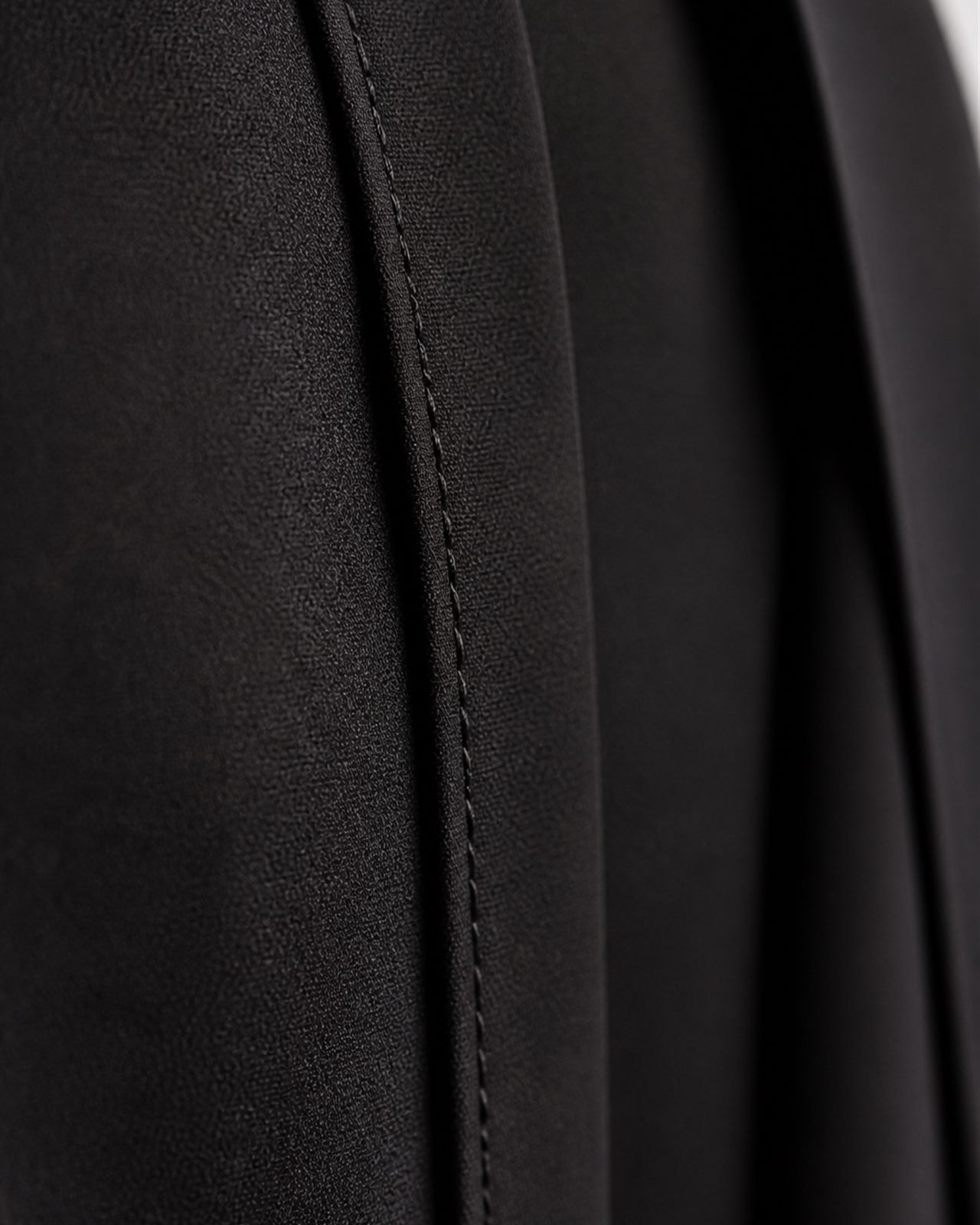
Colour: build the palette around the market, then the season
Colour is the second most common reason a trial order does not repeat. A black abaya that photographs well on a white background and a black abaya that reads grey in daylight are identical lines on a purchase order and different products to the customer. Approve against a physical swatch, not a screen.
- Core black, charcoal and navy for year-round workwear selling
- Warm ivory, sand and beige for spring and summer retail
- Deep olive, muted burgundy and dusty rose for premium ranges
- Seasonal and Eid colours planned with the collection, not added after sampling
- Custom colour matched to a buyer swatch, with dye-lot handling agreed up front
- Contrast trim, piping and lining colours specified as separate order lines
MOQ: what it actually depends on
Contact us for current MOQ — we quote the style you are considering rather than publishing a figure that changes with fabric and decoration.
Minimum order quantity is not one figure for the category. It moves with the fabric, whether the style is already running, how much decoration is involved, and how the goods are labelled and packed.
For a first order the practical approach is to test a small number of styles rather than to push a single style below a workable quantity, because the second order is where the real volume sits.
- Plain styles in a running fabric normally allow the smallest quantities
- Printing, embroidery, beading and rhinestone work add setup and raise the minimum
- Custom colour and custom label introduce their own minimum on the same order
- Made-to-measurement and made-to-pattern styles are quoted individually
Ready stock or made to order
Most abaya programmes mix both. Ready stock covers the season you are already selling and any gap that opens in the rail; made to order covers the collection you are launching. The two can sit on one order.
| Consideration | Ready stock | Made to order |
|---|---|---|
| What you receive | Styles already in production, in the listed fabric and colour | Your fabric, colour, measurements and label |
| Where it fits | Trial orders, fast reorders and filling a gap in the rail | Building a brand collection or a market-specific range |
| Sizing | Standard run as produced | Standard, extended or buyer-supplied chart |
| Branding | Label and packing options depend on the style | Label, hang tag and packing specified by you |
| Timing | Confirmed with the order | Lead time depends on design and order quantity |
| Decoration | As produced | Embroidery, beading and rhinestone developed with the style |
Logo, label and branding on an abaya
On an abaya the label is unusually visible, because the neckline is part of the design rather than something hidden inside a collar. Label position and finish are therefore worth settling before sampling, not after.
- Woven label, printed label and care label produced to your artwork
- Neck label and side-seam label positions, agreed on the sample
- Hang tag, header card and price tag supply
- Logo embroidery on sleeve, chest or hem plaque
- Custom press-stud, button and trim hardware where the design allows
- Care and fibre text printed exactly as you supply it
Packaging: how the order is presented
Packing is where a wholesale order starts to look like retail product, and it is also where labour cost moves fastest. Decide the packing specification while the bulk quantity is still being negotiated.
- Folded flat in plain or printed poly bag with size and colour sticker
- Single-piece bag with hanger loop for hanging display
- Retail packing with tissue, box sleeve or gift box for occasion selling
- Solid-colour or assorted packs, with the size ratio chosen by you
- Carton packing with an itemised packing list and carton marks
- Matching hijab or inner slip packed with the abaya where the style allows
Sampling: what the approval step protects
Sampling exists to move the arguments to the front of the order. Everything that will be checked in bulk is checked on the sample: fabric against specification, measurements against the chart, colour against the swatch, decoration against the artwork, and finish against what the customer will see.
Send the brief: style, market, price position, fabric direction and quantity range.
Confirm fabric and colour against swatch cards or against your own swatch.
Agree the pattern and measurement sheet, including tolerance and size run.
Produce the first sample in the agreed fabric, colour and trim.
Review the sample: fit, finish, closure behaviour and decoration placement.
Record revisions in writing so the approved version is the produced version.
Seal the approved sample and keep it as the bulk reference.
Release bulk production only after written approval.
Quality control: the abaya defects that cause disputes
Complaints on abaya orders cluster around a short list of problems. Each one has a stage where it can be caught, and that stage is usually earlier than buyers expect.
- Loose threads and unfinished seams — caught at finishing, before packing
- Length and measurement drift — caught by measuring bulk pieces against the sealed sample
- Placket gapping or closures that release — checked by opening and closing every closure
- Opacity differing between pieces — checked piece by piece under light, because lots can behave differently
- Embroidery and beading off-centre — checked before lining and finishing close the panel
- Colour variation within one order — checked against the approved swatch under controlled light
- Sample-to-bulk difference — the dispute the sealed sample exists to settle
- Packing errors, such as a wrong size sticker or a mixed pack — checked at packing inspection
Wholesale ordering: what to put in the enquiry
An abaya enquiry containing the points below can be quoted and sampled without a second round of questions. If some of them are still open, say so — recommending a specification for a market is part of the work.
Business type: boutique, online store, brand, wholesaler or distributor.
Target market and country of sale, including the climate the garment will be worn in.
Styles: open, closed, everyday, decorated, plus size or a custom design.
Fabric direction, or a request for a recommendation with the reason behind it.
Size run and length, or a request for our measurement sheet.
Colour direction: core palette, seasonal palette or a buyer swatch.
Label, hang tag and packing requirements.
Quantity range and the delivery window you are working to.
Shipping and consolidation
Abayas pack small relative to their retail value, which makes consolidation worthwhile: several styles, or abayas with matching hijabs, can travel as one shipment. Timing is confirmed for your order rather than promised in general.
- Multiple styles, colours and sizes consolidated into one shipment
- Packing list, carton marks and carton-level counts issued before dispatch
- Export documents and origin paperwork: available upon request
- Courier, air and sea options matched to the window you need
- Carton dimensions and weights supplied for your freight forwarder
- Lead time depends on design and order quantity
Planning a first abaya order: a short checklist
Buyers who repeat an abaya order usually did four things before the first one: they chose fabric before decoration, they fixed a measurement chart, they limited the trial to a small number of styles, and they decided the packing specification early.
- Ask about fabric before asking about colour, because fabric drives everything else
- Use one market and one price position for the trial order
- Check the abaya size guide before fixing the size run
- Order a sample and measure it against your own chart
- Plan the Ramadan or Eid window backwards from the selling date
View collection
Open abaya
- Front-open abaya, straight cut
- Front-open abaya with belt
- Front-open abaya with contrast trim
- Open kimono-cut abaya
Closed abaya
- Closed abaya, straight cut
- Closed abaya with side pockets
- Closed abaya with pleated back
- Closed abaya with cuffed sleeve
Occasion and decorated
- Embroidered cuff and hem abaya
- Hand-beaded neckline abaya
- Rhinestone-trim abaya
- Embroidered sleeve abaya
Everyday and travel
- Everyday nida abaya
- Jersey-knit travel abaya
- Two-tone everyday abaya
- Abaya with matching hijab
Size and length range
- Plus size abaya
- Petite length abaya
- Tall length abaya
- Buyer chart custom-measurement abaya
Custom and private label
- Custom abaya from sketch or tech pack
- Private label abaya range
- Buyer colour card abaya
- Buyer measurement chart abaya
All categories
Frequently asked questions
It depends on the fabric, the style and how much decoration is involved, so we quote per style instead of publishing one figure. Contact us for current MOQ and we will tell you what the smallest workable order looks like for the cut you want to test.
Yes. Mixing is the normal way to test a rail: a small quantity across a few styles tells you more than a large quantity of one cut. Everything consolidates into one shipment with one packing list.
Start with nida or crepe for opacity and low maintenance, or jersey for travel and everyday wear. Chiffon works for layered looks but needs lining, which changes the weight and the cost. The [fabric library](/fabrics/) explains how each option behaves in heat.
Send the chart you sell to, or tell us the length in centimetres or inches and the point you measure from. We confirm the measurement point on the sample so bulk pieces match. Lengths are set per style rather than from one universal chart.
Send the garment or clear photographs with measurements and a fabric description. We confirm what the fabric is, whether the construction can be reproduced as it stands, and which details have to change to make it producible in bulk.
Yes, as a graded run rather than a single oversized pattern. Grading on bust, hip and sleeve matters more than adding body length, and the size range is agreed on the measurement sheet before sampling.
Planning your next modest fashion collection?
Tell us these seven things and we can come back with a workable sourcing plan instead of a price list.