Wholesale Program: Bulk Ordering for Distributors, Wholesalers and Multi-Store Buyers
One supply partner for abayas, hijabs, modest sets, prayer wear and accessories — ordered by the style and category you actually sell, with one specification, one packing list and one shipping plan.
What a wholesale program covers here
A wholesale order is not one product repeated. It is a buying plan: which styles sell in your market, in what quantity, at what size mix, in what packing, arriving together so that one shipment can be checked, stored and distributed as a single lot.
This page explains how bulk ordering works, what actually moves your price, and what we need from you before a quotation means anything. It is written for buyers who purchase to resell, not for consumers.
- Wholesale program: a repeatable supply arrangement around the categories you sell
- Bulk ordering: one purchase across multiple styles, colours and sizes
- Distributor supply: larger, specification-locked supply for onward distribution
- Mixed categories in one shipment: abaya, hijab, sets, prayer wear and accessories
- Private label on top of wholesale, if you sell under your own name
Do we publish wholesale prices?
To receive a real quotation, send: product, quantity, market, fabric, size range, customization and target delivery date.
No. A published wholesale price list is misleading in this category, because two orders that look identical on a catalogue page can differ in fabric, decoration, packing and size spread — and the difference in cost is real.
Instead, send the specification and you get a price built for your order. If you want to compare options, ask for the same style quoted in two fabrics, or with and without decoration. That comparison tells you more than any list price.
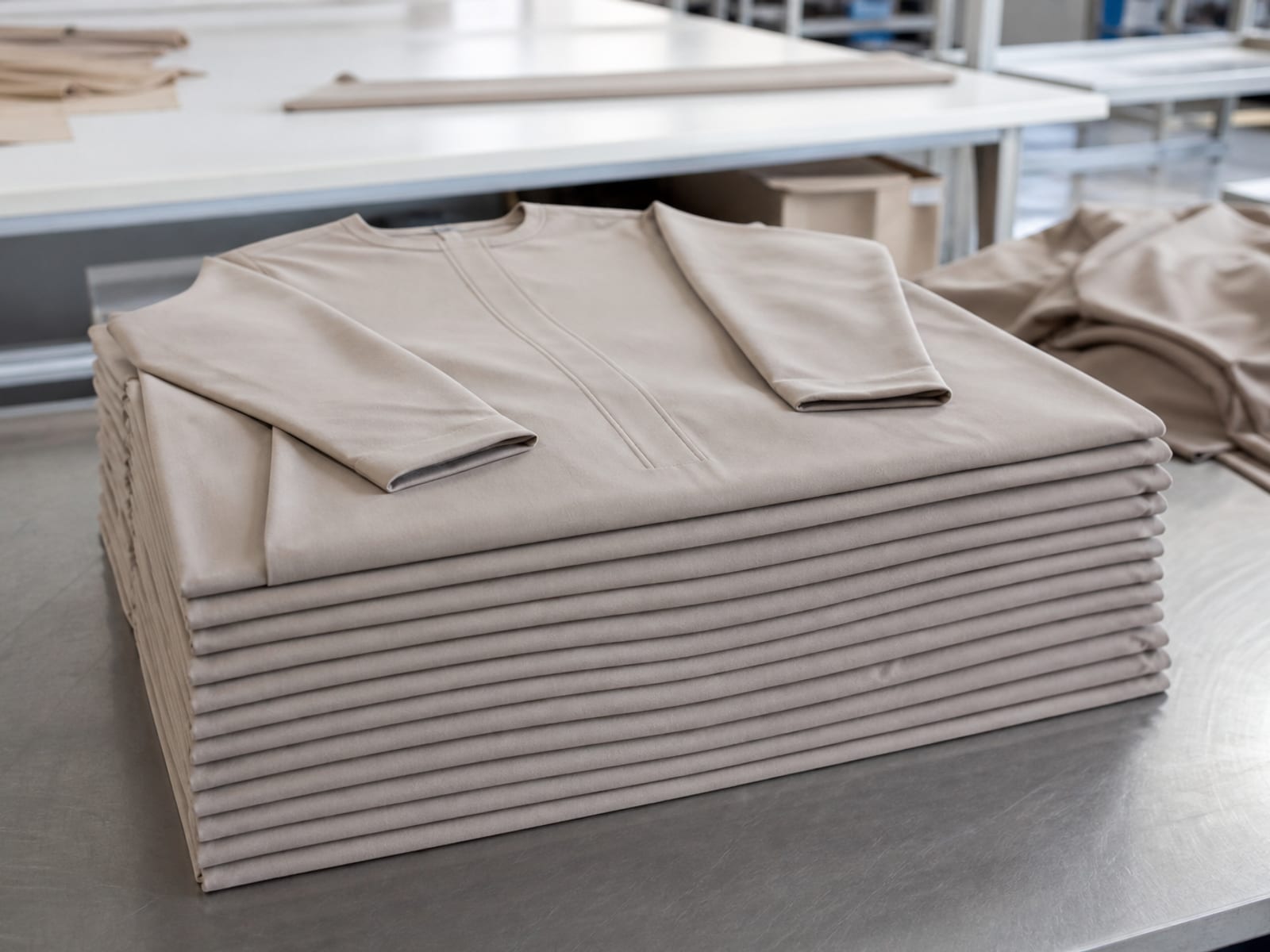
Why price moves with quantity, fabric and customization
Price in garment sourcing follows setup cost and material cost. Some of that cost is spread across the whole order, and some of it repeats for every piece. That is why a bigger order is not simply a discount.
| Factor | Why it moves the price | What you can do about it |
|---|---|---|
| Quantity per style | Cutting, pattern setup and machine setup are fixed per style and colour, so the fixed part is spread across more pieces in a larger run | Increase quantity per style, or reduce the number of styles in one order |
| Number of colours | Each colour can require its own fabric lot and its own cutting run | Concentrate quantity in fewer colours, and start with the colours that sell |
| Fabric choice | Material price, availability and whether the fabric is in stock or made for your order | Choose stock fabric for volume and reserve specialty fabric for statement pieces |
| Custom dyed or custom woven fabric | The mill produces for your order, so its own minimum applies | Use a custom fabric on a hero style, stock fabric on the rest |
| Decoration: embroidery, beading, rhinestone | Digitising and placement setup are per design; hand work adds time per piece | Keep decoration on a defined portion of the order |
| Size spread | A wide size run breaks the same quantity into more variants, each with its own cutting and packing | Build a size run around your actual sell-through, then extend it |
| Packaging | Printed bags, hang tags and retail packing are produced for your order | Plain packing for stock, branded packing for the styles you feature |
| Measurement work | Custom measurement and grading need a separate pattern step before cutting | Use an agreed standard run where the fit is already right |
How a bulk quotation is actually built
If a quotation looks lower than expected, check the specification behind it. Price differences between suppliers are usually specification differences, not generosity.
A quotation is only valid against a defined specification. Before pricing, the order is broken down into its parts, and each part is confirmed — which is also why a quotation changes when the specification changes.
- Styles and quantities per style
- Colours and size ratio
- Fabric and any fabric change between styles
- Decoration and its placement
- Labelling and packaging, per unit and per carton
- Packing method and carton plan
- Destination, incoterm and delivery window
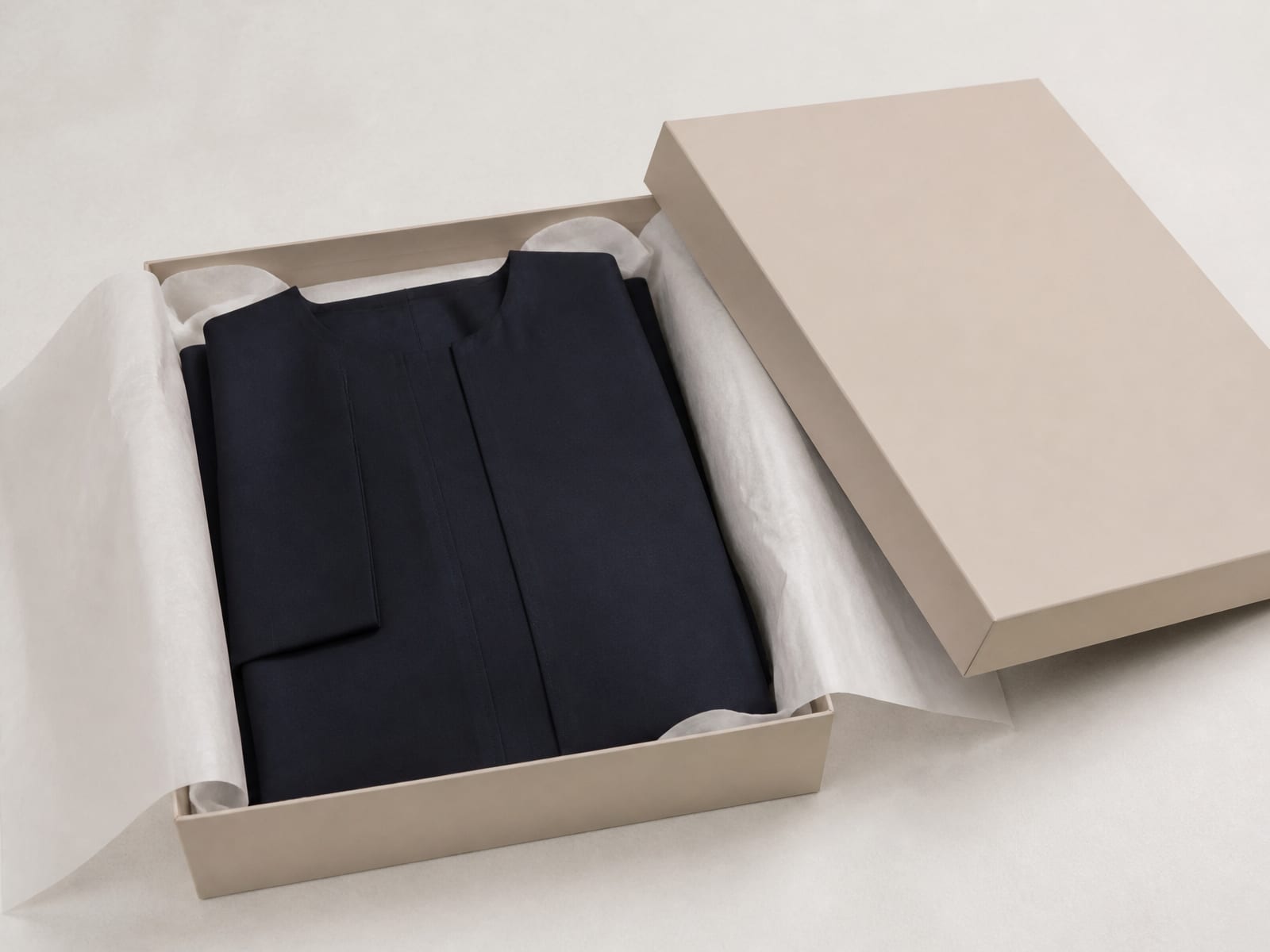
Mixed styles, one shipment
Buyers who resell need category depth, not a single bestseller. Combining abayas, hijabs, sets and accessories in one order keeps the arrival date together, which matters when you are distributing to stores or selling into a season.
It also makes the paperwork simpler: one packing list, one inspection standard, one freight plan. See modest clothing wholesale, wholesale abaya and wholesale hijab for category detail.
- One order across several styles and categories
- Packing ratio set by you — single packing or assortment packing
- One quality standard applied across the whole lot
- Carton marking and packing list prepared for the destination
Ready stock versus made to order
Ready stock items can be shipped sooner and allow a smaller start. Made-to-order items let you specify fabric, colour, size and branding, but they need sampling and a longer planning window.
Most wholesale buyers use both: ready stock to fill gaps and keep selling while a made-to-order range is in development. Ask which styles in your category are available as ready stock today rather than assuming.
- Ready stock: existing specification, faster dispatch, less customization
- Made to order: your fabric, colour, sizing, labelling and packing
- Mixed order: part ready stock, part made to order, shipped together if the timing allows
Stable supply and repeat orders
A wholesale relationship is judged on the second order, not the first. Reorders only work if the specification is recorded: fabric reference, colour reference, measurements and packing. Without that record, a reorder becomes a new product.
- Approved sample held as the reference for repeats
- Specification recorded so the next run starts from the same baseline
- Continuity agreed in advance for core colours and core styles
- Changes raised before production, never after cutting
- Lead time depends on design and order quantity, so reorder timing is confirmed per order
Distributor supply: what changes at distribution level
Distributors buy to hold and to break bulk. That changes the questions: packing that survives storage, carton marking that keeps styles separated, size ratios that match how you allocate to retailers, and documents that your own customers may ask you for.
- Specification locked across the styles you distribute, so the range stays consistent
- Packing and carton marking designed for onward allocation
- Private label possible at distributor level, not only for end brands
- Order documents and test documents available upon request
- Supply planning discussed per programme, because timing depends on design and quantity
How a wholesale order is placed
Payment terms, deposit structure and shipping terms are confirmed per order and per destination. Nothing on this page substitutes for the terms in your own order confirmation.
The sequence below is the one that avoids surprises. Step three is the step buyers most often try to skip, and it is the step that prevents disputes later. What happens at step six is described in detail on the quality page.
Send your requirement: styles, quantity per size and colour, market and destination.
Confirm specification and quotation against a written breakdown, not a single figure.
Approve a sample or a reference sample from an existing style if the specification already exists.
Confirm the order: quantity, colours, packing, labelling and delivery window.
Production: cutting, stitching, decoration and finishing to the approved specification.
Inspection: the checkpoints described on the quality page, including measurement and packing checks.
Packing: single or assortment packing, carton marking and packing list.
Shipping: consolidation, documents and delivery to the destination you confirm.
What we need to quote your bulk order
Send these seven points and the quotation can be specific. Send fewer and the answer can only be a range.
- Product category and style references
- Quantity per style, per colour and per size, or your estimate
- Target market and selling channel
- Fabric direction or an existing fabric reference
- Size range and whether you need custom measurement
- Customization: label, tag, packaging, embroidery, beading, rhinestone
- Delivery window and destination
Frequently asked questions
No. Price depends on quantity, fabric, colour count, decoration, sizing and packaging, so a published list would be inaccurate for most orders. Price tiers are quoted against your specific specification — send it and the tier that applies to your quantity will be confirmed.
It depends on whether the item is ready stock or made to order, and on fabric, decoration and packing. Contact us for current MOQ on the styles you want to buy.
Yes. Abayas, hijabs, modest sets, prayer wear and accessories can be combined in one order, which usually reduces freight per garment and simplifies arrival and stock handling.
Yes. Distributor supply is built around repeat orders against a locked specification, packing designed for onward allocation, and the documents your own customers may request, which are available upon request.
Payment structure depends on the order, the specification and the destination, and it is set out in your order confirmation. We do not publish blanket payment terms that may not apply to your case.
Lead time depends on design and order quantity. Decoration, custom fabric and printed packaging add their own production steps. Timing is confirmed for your order rather than quoted as a general figure.
Yes, and it is recorded on purpose. Fabric reference, colour reference, measurements, labelling and packing details are kept so a reorder starts from the same baseline instead of becoming a new development.
Planning your next modest fashion collection?
Tell us these seven things and we can come back with a workable sourcing plan instead of a price list.