Wholesale Khimar: Single Layer and Layered Styles
A khimar covers the head, neck and shoulders and stops somewhere between the waist and the knee. Two numbers decide the product: how many layers, and how far the front and back each fall.
Why layer count changes the product
A khimar is worn close to the face, so weight and opacity behave differently than on a full-length garment. A single panel in a light fabric can be cool and still adequate if the weave is dense; the same fabric doubled gives more coverage without the head feeling heavy, because the weight is distributed across two panels.
That is why layer count is a product decision rather than a detail. Buyers in hot climates often prefer two light layers over one heavy one, and the two are priced differently because the fabric consumption is different.
- Single layer: lightest, relies on a dense weave
- Two layer: coverage without weight on the head
- Three layer: most coverage, highest fabric consumption
Front and back length, measured separately
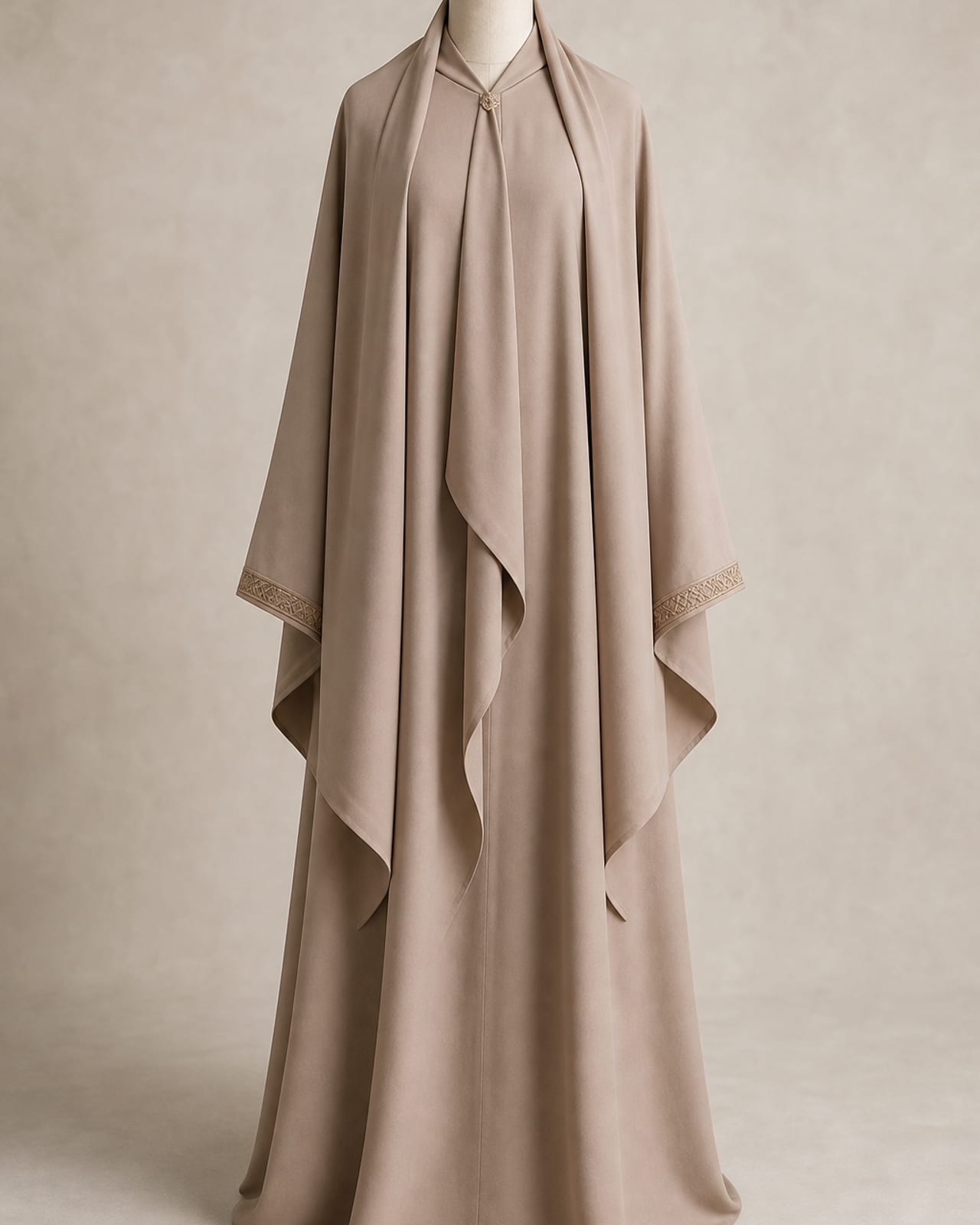
Khimars are usually cut shorter at the front and longer at the back, and the difference is not visible in a front-facing photo. Ask for both figures in centimetres. A garment described as waist length can mean anything from just below the bust to the top of the hip.
For a range, keep the front-to-back ratio consistent across colours. If one colour is cut differently, the styles will look like separate products on a rail even though the pattern is the same.
The face opening and how it stays put
An underscarf is only included when the quotation says so. Most photos show one for styling.
A khimar sits directly against the forehead, so the opening either holds by drape, by elastic, or by a tie at the back. Each behaves differently in daily wear: drape needs the right fabric weight, elastic is quicker but can loosen, and a tie is adjustable but takes longer to put on.
Ask which method the batch uses and, if it is elastic, whether the elastic is replaceable. This is the part that fails first in repeat wear.
Fabric: opacity first, then drape
Because the garment covers the head, check opacity before choosing a colourway. Hold the fabric against light in the actual colour: a black batch can pass while the same weave in cream does not. Chiffon and jersey behave very differently here, and jersey usually needs no lining at all.
Drape matters next. A khimar that holds a stiff shape reads as formal; one that falls softly reads as everyday. Neither is better, but mixing both in one range splits the collection.
- Chiffon: light, needs an opacity check in pale tones
- Jersey: opaque, stretch, no lining required
- Crepe: holds shape, reads more formal
- Cotton voile: breathable, more visible weave
Sizing and the one-size question
Many khimars are sold as one size because the garment is loose, but one size across a range still has to fit different face sizes and shoulder widths. Ask for the opening circumference and the shoulder-to-hem figures, then compare them with a khimar you already sell.
If your customers span a wide range, a short and a long version of the same style is usually more useful than three nominal sizes of one length.
Packing, labelling and range building
A khimar packs flat and light, which makes it the easiest category to add to a carton that is already going out. Header cards and small pouches are the usual branding route because there is no room for a woven label at the back neck.
For a first order, four to six colours in one construction is usually enough to test a market. Adding layer counts before colour range is confirmed tends to leave the slowest sellers behind.
Choose layer count and length
Confirm the face-opening method
Check opacity in the actual colours
Agree packing: header card, pouch, carton mix
What to send with a khimar enquiry
Send the layer count, front and back length in centimetres, the face-opening type, the colours, the quantity and the destination. If you sell underscarves separately, say whether the khimar has to work with them — that changes the opening size.
View collection
Single layer
- Single layer to the waist
- Single layer to the hip
- Single layer with tie back
Layered
- Two layer khimar
- Three layer khimar
- Layered with contrast edge
Frequently asked questions
Only when the listing and quotation state it. Photos frequently show an underscarf for styling, so the written piece list is the only reliable answer. Ask us to confirm any cap, tie-back or underscarf included with the style.
Send the lengths and quantities separately. We confirm whether both cuts exist in the available batch and how the minimum order quantity applies across the two.
A khimar covers the head, neck and shoulders and ends between the waist and the knee. A jilbab is a full-length garment covering the body to the ankle, in one piece or as a top and skirt. The two are worn for different purposes and are not substitutes.
It depends on the colour and the weave. Pale tones in a light chiffon usually need an underscarf or a second layer. Ask for a photo of the actual colour held against light before confirming the order.
Ready stock uses an existing cut. A different drop, layer proportion or opening belongs in a made-to-order enquiry, where the pattern is adjusted before production and timing is quoted separately.
Because the garment has no back neck seam for a woven label, branding usually goes on a header card or a small pouch. Printed care labels inside the side seam are also possible by agreement.
Planning your next modest fashion collection?
Tell us these seven things and we can come back with a workable sourcing plan instead of a price list.