Linen blend fabric for wholesale abayas and summer modest wear
A linen blend is what a buyer chooses when the collection should look and feel textile-led rather than synthetic. This page covers the dry hand, the texture, the creasing you have to accept, and which abaya styles suit it.
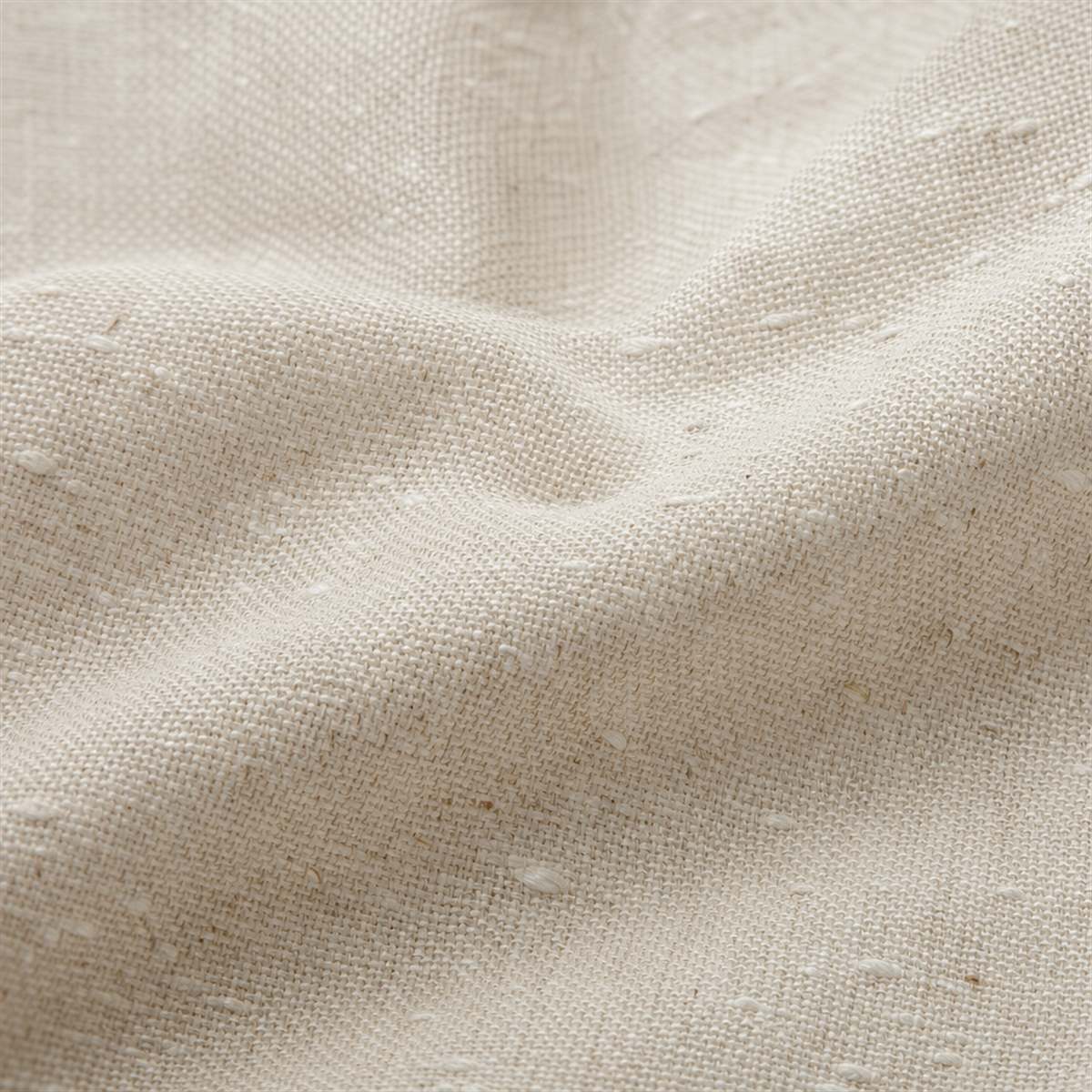
What a linen blend feels like
A linen blend feels dry, textured and slightly irregular, with the small slubs that linen is known for. It is cooler to the touch than any smooth woven in the range, and it looks like a natural textile rather than a finished synthetic — which is exactly why buyers use it in a collection that is meant to feel fabric-forward.
Linen is normally blended with another fibre to reduce creasing and improve recovery. The proportion changes the hand, the drape and the price, so what matters to a buyer is the blend and the weight of the roll, not the word linen.
- Dry, textured hand with visible slubs
- Cool to the touch — the most heat-comfortable smooth-ish option here
- Firmer than nida, so the garment keeps a relaxed shape
- Blend and weight vary by mill: confirmed per order
The twelve questions buyers ask about linen blend
| Buyer question | Answer for linen blend |
|---|---|
| What does it feel like? | Dry and textured, with the slight irregularity of a natural yarn. It feels cooler and more textural than nida, crepe or satin. |
| Is it breathable? | Yes. It is one of the most breathable fabrics in the range and the natural choice for a summer abaya or a hot-climate collection. |
| Is it opaque? | At abaya weight it is opaque, and a blend reduces the sheerness that a very light pure linen can show. Confirm the weight band for pale colours. |
| Does it wrinkle? | Yes, and that is part of the look. A blend creases less than pure linen, but treat creasing as a characteristic to design around rather than a fault to eliminate. |
| What season? | Hot weather and summer. It also works as a resort and travel piece in cooler markets. |
| Best for which product? | Summer and everyday abaya, kaftan and relaxed cuts, occasion pieces where texture is the design, and wide-leg trousers. |
| Approximate weight range? | Normally a medium to medium-heavy band, but it depends on the blend. Weight and composition are confirmed per order. |
| How does it drape? | Firmer than nida, with a relaxed fall. It holds a loose, slightly architectural shape instead of falling straight and fluid. |
| Suitable for embroidery? | Yes on the firmer weights, and the texture frames the work well. On a very loose weave, back the panel so the stitches do not pull. |
| Suitable for printing? | Possible, though the texture softens fine print detail. Placement prints work better than fine all-over pattern. |
| Suitable for hot climate? | Yes — the strongest hot-climate option alongside cotton voile, in a loose cut. |
| Suitable for premium collection? | Yes. Buyers use it to signal a natural, textile-led collection, and it supports a higher price than a plain synthetic of the same construction when the blend and finish are right. |
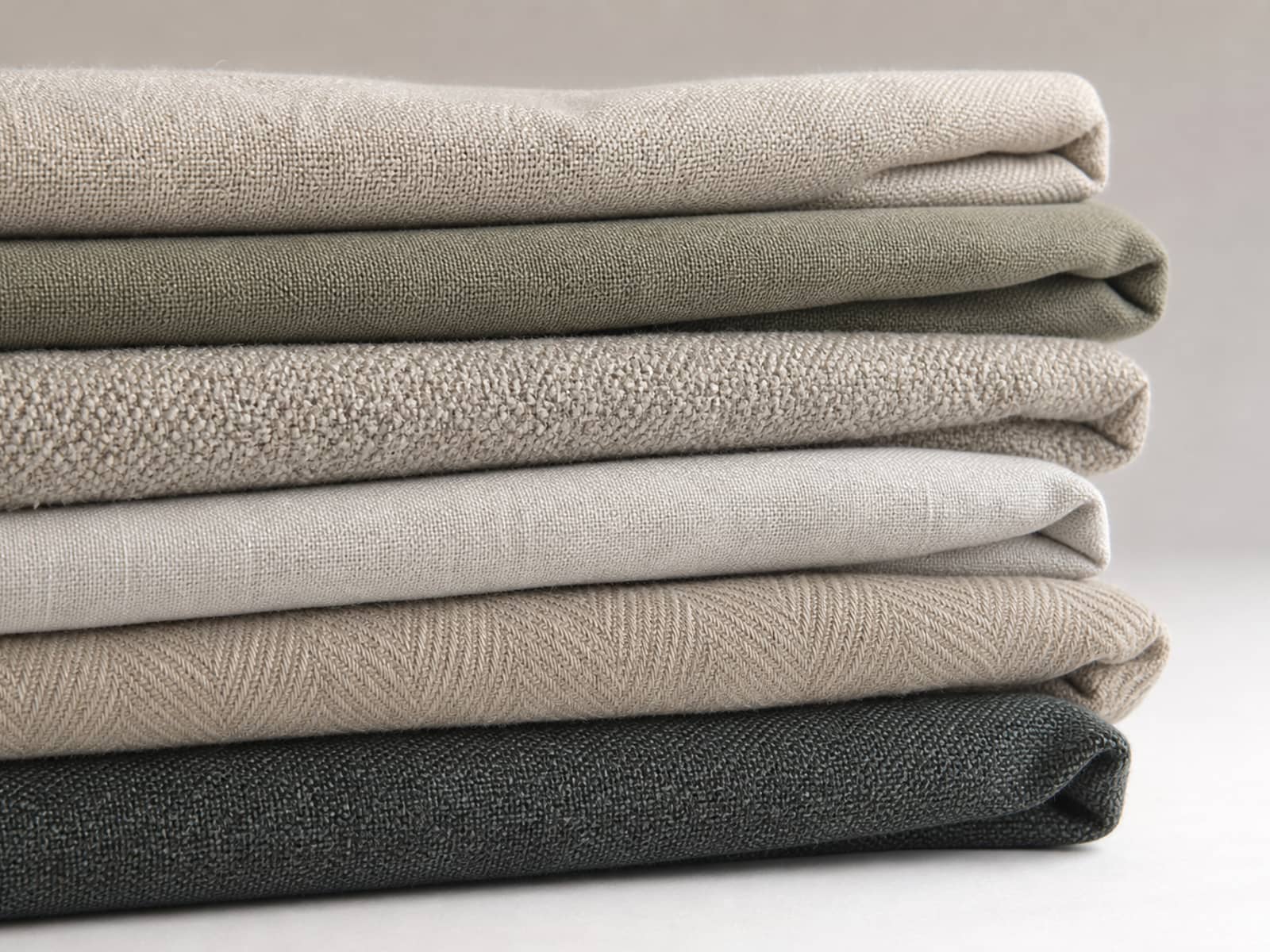
Creasing: designing around it instead of fighting it
Linen creases, and a customer who buys linen expecting a pressed, glass-smooth finish will be disappointed. The commercial answer is to choose styles where movement and texture hide the folds: a loose abaya, a kimono cut, a full sleeve, an open front.
If creasing is unacceptable in your market, a blend is the lever — but the blend is a specification item, so ask what proportion is being used and confirm it for your order rather than assuming the word blend means the same thing across mills.
- Loose silhouettes hide creasing better than fitted ones
- Open and layered styles read better in linen than closed tailored shapes
- Blend proportion is a specification: confirm it per order
- Packing: flat-folded on a board, then accept a steam on arrival
- Product copy: explain the natural crease — it is part of the fabric's value
Weight, blend and what we confirm per order
Tell us the silhouette and how much structure you want and we confirm blend, weight band and width for your order in writing before sampling starts.
Linen is usually blended, and the second fibre changes everything: recovery, drape, opacity, price and how the cloth behaves after washing. The weight band also varies by end use, from a light summer abaya to a heavier kaftan.
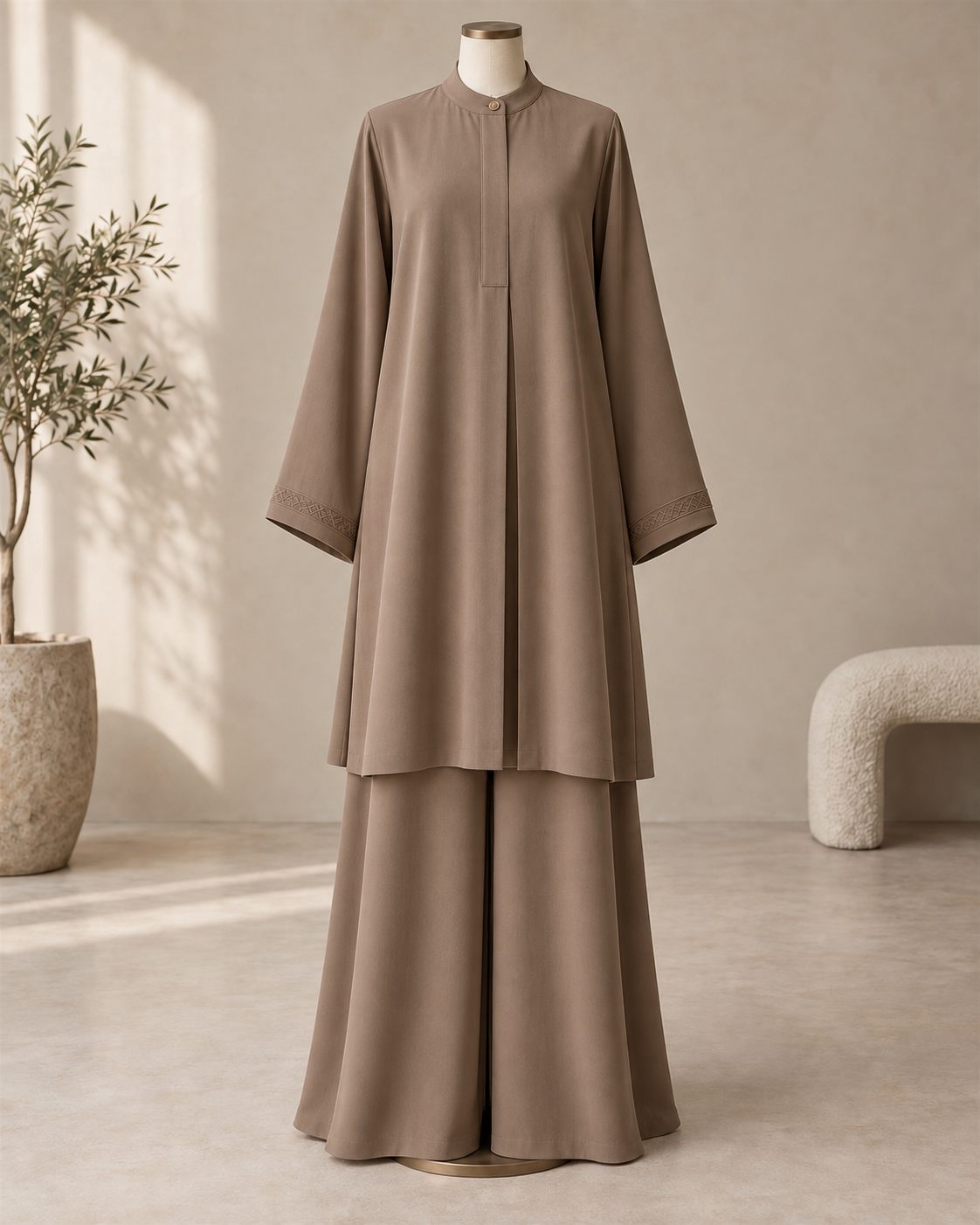
Which products buyers make in linen blend
- Summer and everyday abaya, especially open and kimono cuts; see wholesale abaya
- Kaftan and relaxed dress shapes with a fuller sleeve
- Occasion abaya where texture rather than beading is the feature
- Wide-leg trousers and tunics sold as a set
- Resort and travel ranges for cooler markets
Embroidery, printing and decoration on linen blend
The texture of a linen blend is the decoration, which is why buyers keep ornament restrained on it. Embroidery reads well in a larger scale; fine detail gets lost in the surface. Printing is possible but works better as a placement print than as an all-over pattern, and heavy beading is heavier than the fabric wants.
- Embroidery: larger motifs, tonal thread, firm weights
- Printing: placement prints rather than fine all-over pattern
- Beading: use sparingly; test the panel for pulling
- Natural trims: tonal or self-fabric detail suits the texture
- Finishing: agree pressing and packing, because creasing shows in transit
Season, climate and market fit
Linen blend belongs to the hot end of the year, and its natural markets are warm-climate regions plus the summer season in temperate ones. Sold as a summer or resort piece in a cooler market, it can carry a higher price than the same silhouette in a plain synthetic, because the customer can see and feel the difference.
- Hot-climate markets: a core summer fabric for abaya and kaftan
- Ramadan and Eid: a hot-season alternative to nida and crepe
- Temperate markets: a summer and travel line
- Colour direction: natural, sand and earth tones suit the texture
Premium positioning and price level
A linen blend is one of the few fabrics that can lift a collection simply by being recognisable. Buyers position it above their everyday matte ranges because the customer can identify the texture without being told. To hold that position, the details have to match the story: a clean internal finish, a considered sleeve, a tonal label, and packaging that does not undercut the price on the tag.
Sampling and ordering linen blend
MOQ: contact us for current MOQ on the style you are considering. Lead time depends on design and order quantity, and fabric specification is confirmed per order.
Send the silhouette, the season and the price level you are selling into.
Confirm the blend and the weight band, and ask for the hand you want.
Confirm sizing by garment measurement, with length chosen for the cut.
Approve the sample on the actual cloth, including how it creases and hangs.
Bulk production, inspection, pressing and packing to the approved sample.
Frequently asked questions
Linen creases by nature, and a customer who expects a glass-smooth finish will be disappointed. It sells well when the style is cut loose — an open or kimono abaya, a kaftan, a full sleeve — because movement hides the folds. A blend also creases less than pure linen; confirm the proportion per order.
Yes. It is one of the coolest fabrics in the range and the natural choice for a hot-weather abaya, especially in a loose cut and a light colour. It is a common alternative to nida for buyers whose market is hot and humid.
At abaya weight it is opaque, and blending reduces the sheerness of a very light pure linen. For pale colours, ask for the weight band to be confirmed per order and check a swatch against backlight before sampling.
Yes, and larger tonal motifs suit it better than fine detail, because the texture of the cloth fills in small shapes. On a looser weave, back the panel so the stitching does not pull. Approve the work on the actual cloth rather than a render.
Nida is fluid, matte and low-care; a linen blend is firmer, textured and creases. Buyers who want a natural, textile-led premium look tend to choose the blend and design around the crease; buyers who want volume and easy care stay with nida.
Contact us for current MOQ. It depends on the style, whether it is ready stock or made to order, and how the order is combined across categories. Lead time depends on design and order quantity.
Planning your next modest fashion collection?
Tell us these seven things and we can come back with a workable sourcing plan instead of a price list.