Wholesale Abaya: How to Build the Order, Not Just the Style
A wholesale abaya order is a set of decisions about mix, size and replenishment. This page walks through them in the order a buyer actually has to make them.
What a wholesale abaya order actually contains
New buyers usually arrive with one style in mind and one quantity in their head. That is a retail question, not a wholesale one. A bulk abaya order is really three orders at once: a style mix, a size run, and a colour range — and each of the three fails in a different way.
If you get the style mix wrong you sit on stock; if you get the size run wrong you sell out of one length and discount the rest; if you get the colour range wrong, the reorder never happens because the winner is gone. Decide in that order and the numbers downstream become much easier to argue about.
- Style mix — how many abaya shapes, and in what proportion
- Size run — which lengths and body sizes, and how deep each one goes
- Colour range — which shades carry the collection and which are accents
- Sourcing mode — ready stock, made to order, or both in one order
- Finish level — plain, embroidered, beaded or trimmed
Choosing the style mix before the colour range
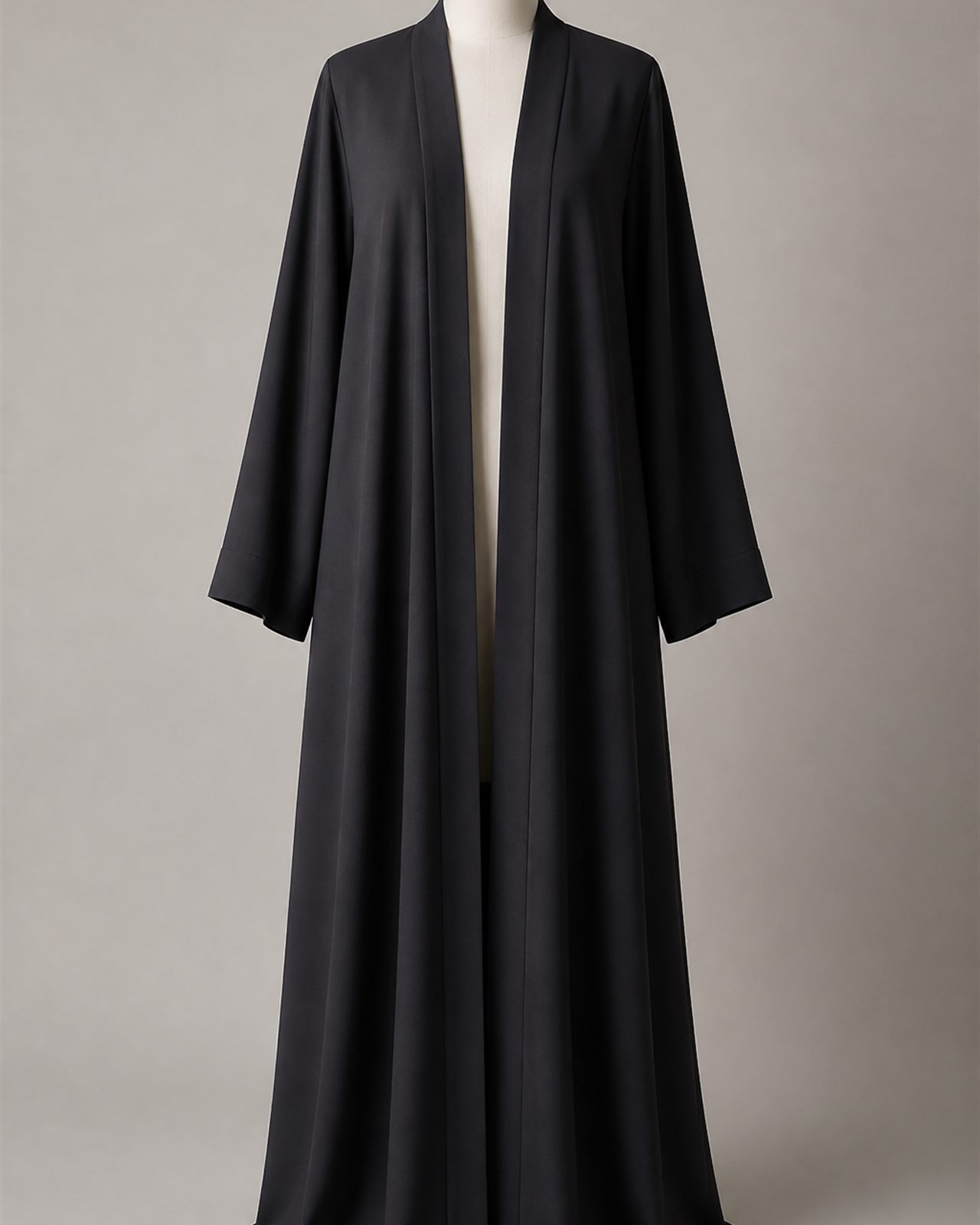
Abaya shapes do different jobs in a store. Open abayas sell as layering pieces and suit customers who already own a dress underneath. Closed abayas sell as a complete outfit and convert better with first-time buyers. Kimono cuts and prayer abayas cover two different occasions altogether.
The practical rule is to anchor the order on two or three shapes that you can repeat, and treat the rest as a test. Full details of the shapes we supply sit on the abaya category page, and the same logic applies if you are adding a branded line — see private label abaya.
- Anchor shapes: the styles you expect to reorder and therefore order deepest
- Test shapes: one or two cuts you want data on before committing
- Occasion shapes: prayer and occasion abayas that carry a season rather than a full year
- Layering pieces: open cuts and light fabrics that pair with what you already stock
Building a size run that sells through
Abaya sizing fails in a specific way: customers buy by length first and body size second, and most markets cluster in the middle of the run. Ordering an even spread across every size is the fastest route to leftover extremes.
Bring your own size curve if you have one from previous seasons. If you do not, we will discuss which lengths move in your market and build the run around that. The size knowledge centre explains how abaya length is measured and how to compare it to body height.
| Decision | Why it changes the order |
|---|---|
| Length range | Drives the number of variants more than body size does |
| Centre of the curve | Where most of the depth should sit |
| Plus and petite extension | Adds pattern work and changes fabric consumption |
| Measurement tolerance | Must be agreed in writing before bulk and checked against the approved sample |
| Size labelling | Letter sizes mean different things in different markets |
Fabric selection across one abaya order
You can keep one fabric across the whole order, or split fabrics between anchor and test styles. Splitting is usually the smarter move at the sampling stage, because it costs nothing extra to test a crepe against a nida while you are already developing patterns.
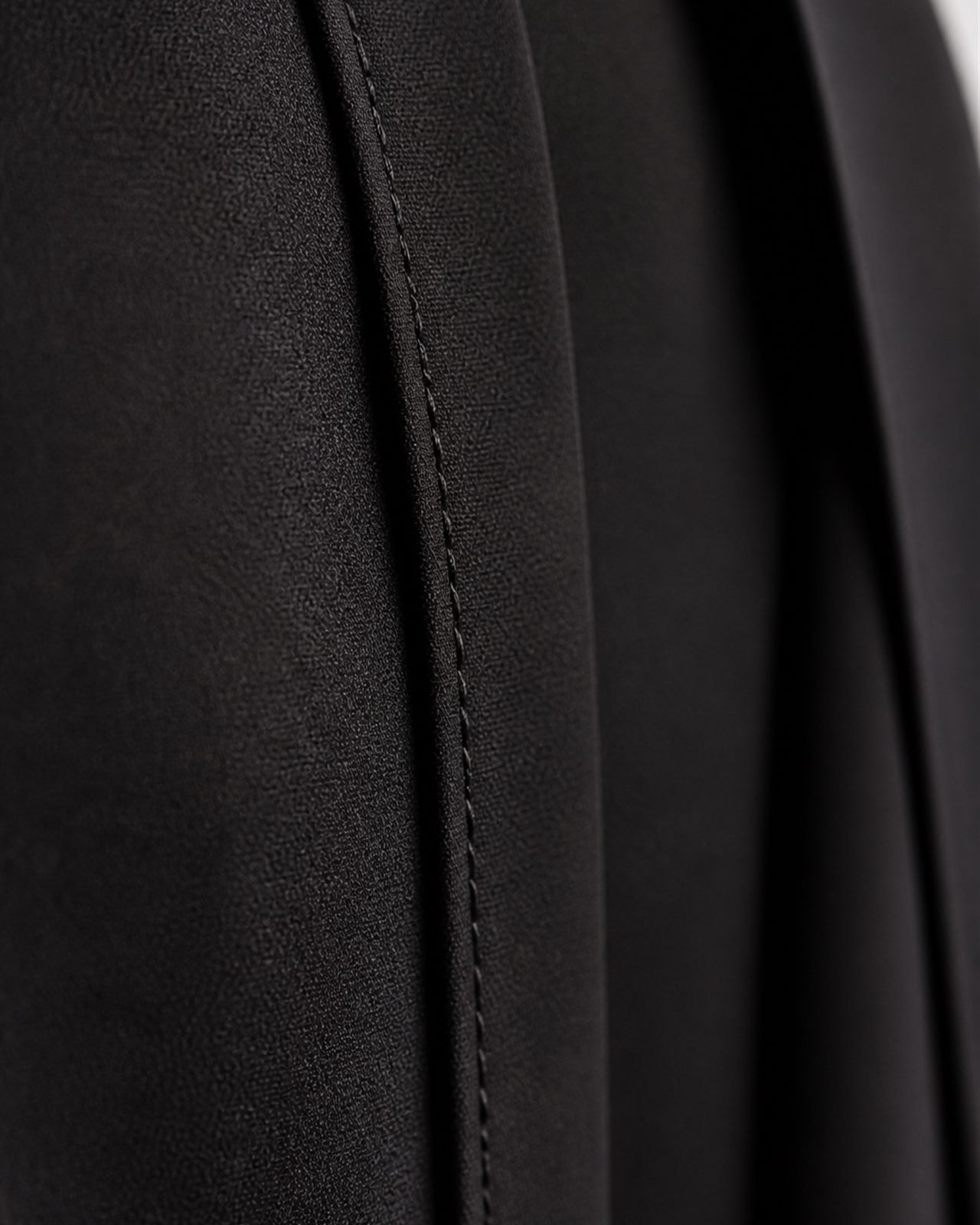
Nida remains the default for everyday abayas: matte, opaque, fluid and easy to care for. Crepe gives a more structured drape for formal cuts. Satin and heavier blends belong in premium or occasion styles. Read the nida fabric page and the crepe fabric page before you lock the order, because the fabric decision resets sampling if it changes later.
- One fabric across the order — simplest to produce, easiest to pack by style
- Two fabrics split by price tier — plain everyday versus occasion
- Lining decisions on light or sheer styles, agreed at sample stage
- Colour consistency across fabrics, checked against a sealed swatch
How wholesale abaya pricing is structured
Price is quoted per order. Quantity, destination and specification in, real price out.
We do not publish wholesale prices, and any supplier who does is quoting a number that will not survive contact with your specification. What moves the price is the fabric, the finish level, the depth of the order, the size run, and the packaging.
Quantity breaks exist, but they follow the cost of the work rather than a fixed rule: a decorated style carries more of its cost in labour, so extra units reduce its price less than they reduce a plain one. Send quantity, destination, fabric and finish and you get a price that applies to your order rather than a starting price that gets revised later.
- Fabric type and finish level — usually the largest single variable
- Decoration — embroidery, beading and trimming are labour-driven
- Order depth per colour and per size, not just the order total
- Number of variants — more variants mean more cutting and packing changes
- Packaging — poly bag, printed bag or retail-ready presentation
Ready stock and made-to-order in the same order
Most sensible first orders are hybrids. You fill the safe part of your size curve from styles that already exist, and you use the made-to-order portion for the cuts you want to differentiate on. That way part of the order arrives while the custom part is still being produced.
Tell us at enquiry stage which lines are urgent. We would rather split an order into two shipments you can plan for than promise a single date for everything and miss it.
- Ready stock: fastest route to filling a size gap or testing a new market
- Made to order: your pattern, your fabric, your colour range
- Split shipments: only when the buyer asks for them and accepts the freight impact
- Lead time depends on design and order quantity, so it is confirmed per order
Replenishment: what to reorder and what to drop
A wholesale abaya relationship is judged on the second order, not the first. Before the first order ships, agree how a reorder will work: which styles can be repeated on the same fabric and colour, and which ones were one-off.
Bear in mind that fabric lots change. A colour you approved last season may not repeat exactly, so if colour continuity matters to your brand, keep a sealed reference swatch from the original order and say so at reorder.
| Reorder type | Agree before first shipment |
|---|---|
| Exact repeat | Sealed swatch and approved sample kept on file as the reference |
| Colour refresh | Which shades are fixed and which may be replaced |
| Size top-up | Which sizes sell through and which to reduce |
| — | Reorder timing budget, since it depends on quantity and current production schedule |
The QC points that matter on a bulk abaya order
On abayas the arguments are almost never about the fabric. They are about measurement, finishing and colour. Those three are also the cheapest to check and the most expensive to discover after delivery.
- Measurement drift — the same size measured across the lot, not one garment checked once
- Length consistency — the number buyers return garments over
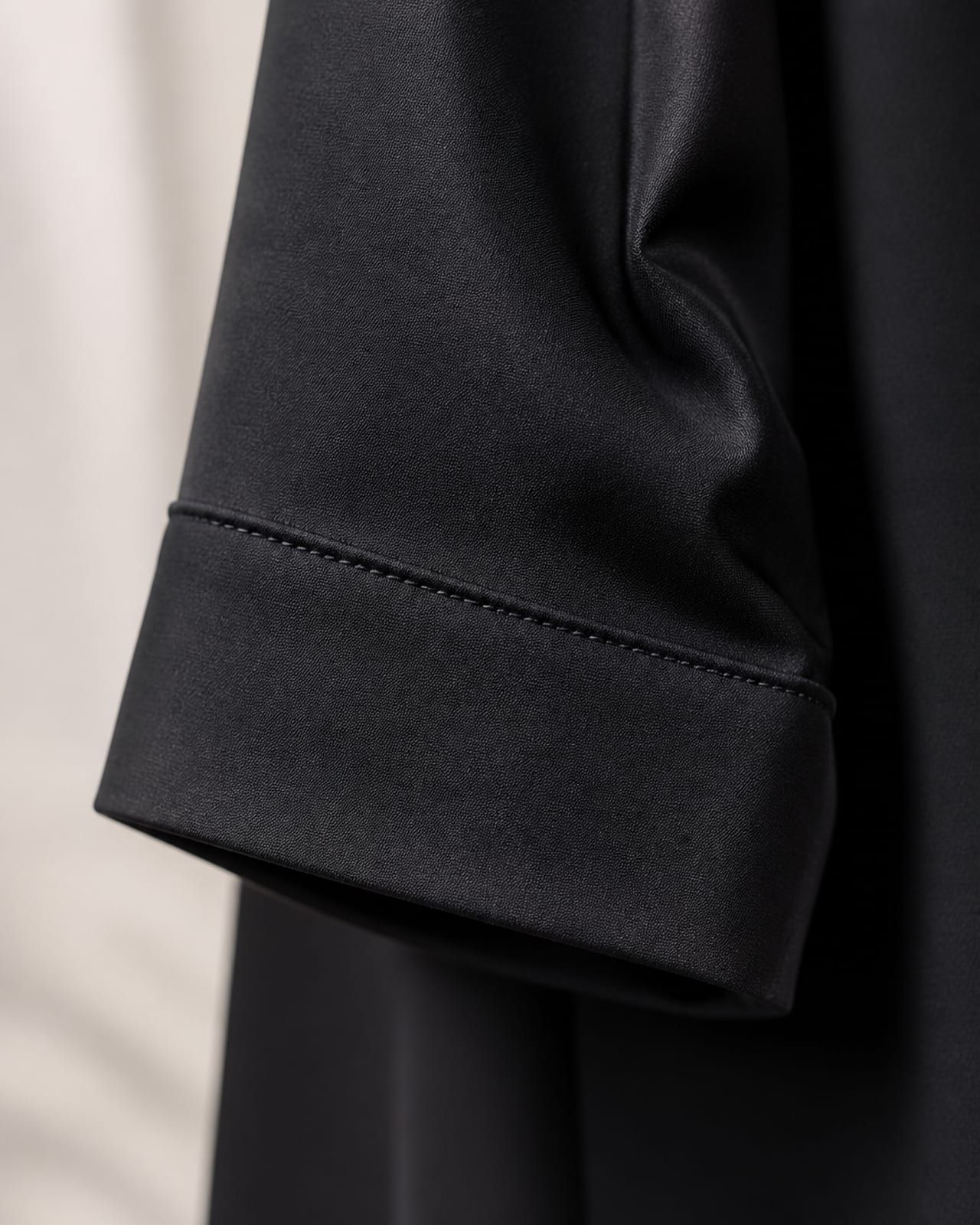
- Seam and hem finishing — inside seams checked, not just the outside
- Colour across lots — checked under controlled light against the sealed swatch
- Decoration placement — embroidery and beading checked before the garment is closed
- Sample versus bulk — the comparison the approval step exists to guarantee
Packing, cartons and shipping a mixed abaya order
A mixed order is a packing problem. If styles are folded and bagged without a rule, someone in your warehouse has to sort the carton before anything reaches the shop floor. Give us a sort order — by style, by colour, by size — and the carton arrives ready to process.
Retail-ready packing costs more per unit than bulk packing and is usually worth it only on styles that go straight to a rack or a warehouse photo shoot. For everything else, ask for compact folding and a clean packing list you can check against the order.
- One packing list per shipment, matching the order line by line
- Sort order agreed in advance: style, colour, size or shop
- Hang tag and label options for retail-ready cartons
- Freight mode discussed against volume, not against habit
- Shipping documents prepared for your destination, and available upon request
Where to start if you are ordering abayas for the first time
Narrow the range, order the middle of the size curve deep, and keep two shapes as tests. Once you know which shape and length your customers actually buy, the next order gets easier and cheaper to plan.
If you already have brand identity to apply, plan the label and hang tag with the first order rather than retrofitting them later through private label abaya. If you are developing your own cut instead, start at custom abaya.
Frequently asked questions
Yes, and most buyers do. Mixed orders are packed under one packing list, so it is worth telling us the sort order you want — by style, colour or size — before we pack. Some suppliers charge a handling surcharge for very fragmented orders; we confirm that in the quote rather than hiding it in the unit price.
Contact us for current MOQ. It depends on three things: whether the style is ready stock or made to order, which fabric you choose, and how many variants the style needs. A plain style in one colour behaves very differently from an embroidered style in four colours.
By garment measurement, every time. Letter sizes are not transferable between markets, and abaya length in particular is measured differently by different suppliers. Send the measurements you want taken on the finished garment and we will confirm them on the sample before bulk.
Usually yes, provided the fabric is still available. Ask us at order stage which shades are repeatable and which are one-off, and keep a sealed swatch from the original shipment as the colour reference for the reorder.
Both. Plain stock is the usual starting point for a boutique testing a market; own-brand labels, hang tags and packaging can be applied to the same styles and are described on the private label abaya page.
Planning your next modest fashion collection?
Tell us these seven things and we can come back with a workable sourcing plan instead of a price list.