Custom Modest Clothing: OEM and ODM Development Explained
Development work is judged by whether the first sample is close. This page covers what to send, how each garment type behaves in development, and where custom projects usually go wrong.
OEM or ODM: choosing the right mode
OEM means you bring a defined product and we manufacture it. ODM means you bring a direction and we develop the product with you. The difference is where the design decisions sit, and it determines how much work happens before anyone cuts fabric.
Choose OEM if you already know your fits, your measurement specification and your construction details. Choose ODM if you know the market and the price point but need the product developed against them. Many brands run OEM on their core styles and ODM on a new category they are testing.
| Mode | You bring | We bring | Best when |
|---|---|---|---|
| OEM | Tech pack, measurements, construction and trim specification | Pattern execution, production and quality control | You already sell this garment type |
| ODM | Market, price point, references and design direction | Pattern, fabric and construction development | You are entering a new category |
| Custom design | Sketch or reference with your own branding | Interpretation, sampling and decoration | You have a look but not a specification |
| Private label | Brand artwork and colour direction | Existing patterns with your branding applied | You want to launch quickly |
Difficulty by garment type
Not all modest garments are equally hard to develop. Development effort rises with the number of measurements that have to be right on a body, and with the amount of decoration involved.
Knowing where your design sits on this scale tells you how many sample rounds to expect and how much of your budget belongs in development rather than production.
- Hijab and head covering formats — simplest, dimensions and finish are the whole specification
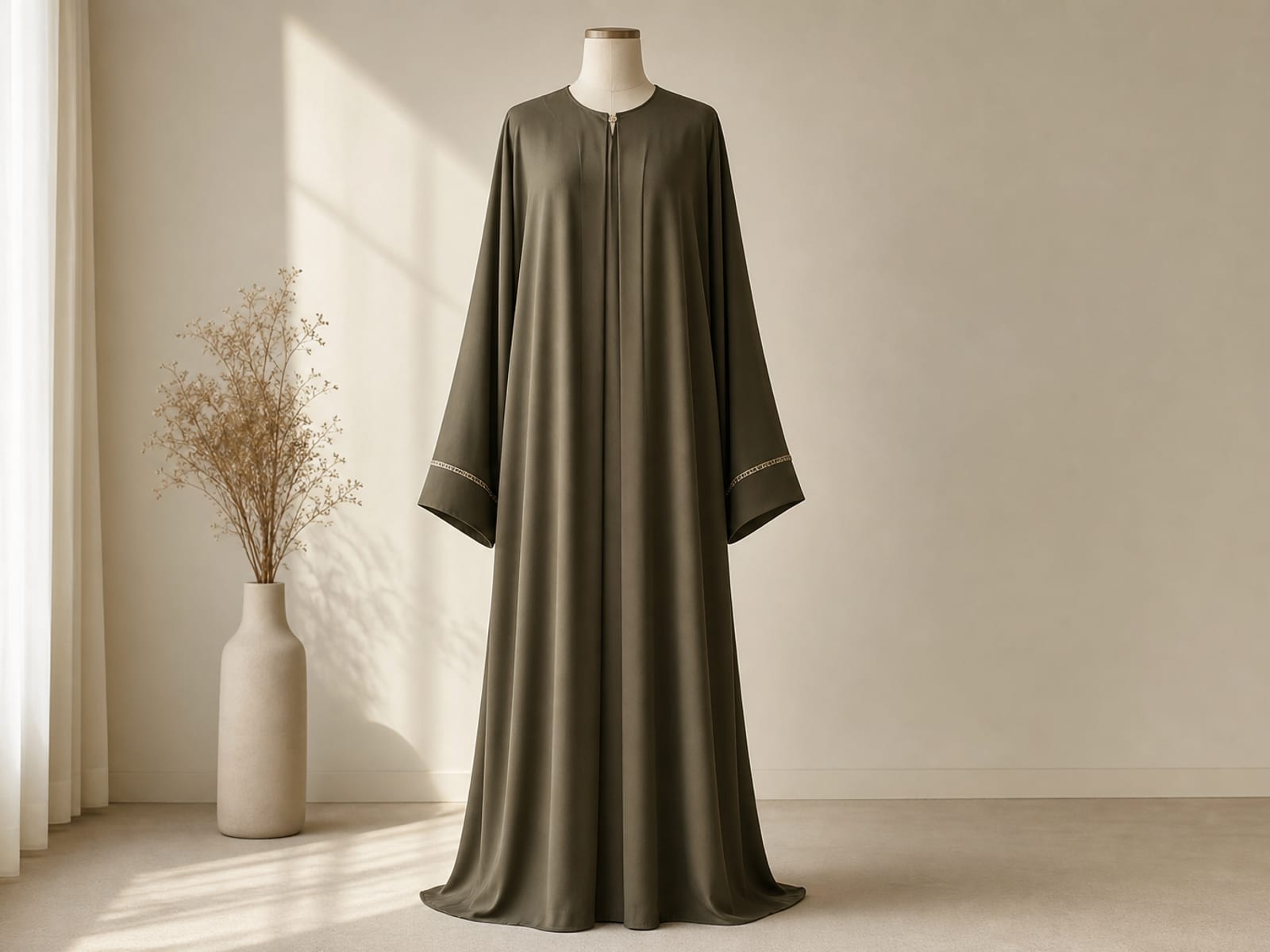
- Abaya and loose over-garments — moderate, length and width dominate over exact fit
- Prayer wear — moderate to high, because a set must work as one garment
- Dresses and sets — high, several measurement points must all be right
- Decorated occasion wear — highest, because decoration adds placement work across sizes
What to send for a development project
A complete brief shortens development more than anything else you can do. It does not have to be professional — it has to be unambiguous. A marked-up photograph with measurements written on it beats a beautiful drawing with no lengths.
- The design input: sketch, photograph, tech pack or an existing garment
- Flat measurements for every point you care about
- Fabric direction, or a swatch to match
- Colour references, with a physical standard where possible
- Decoration artwork and the placement you want
- Size range and how you want it graded
- Target market and price level, which shape the specification
- What you are flexible on, which is often the most useful line in the brief
Fabric and trim sourcing against your design
Custom projects are most often delayed by fabric rather than by pattern. A design drawn for a fluid fabric behaves differently in a crisp one, and a design drawn for a matte surface changes completely on a satin.
We will tell you which fabrics suit your design among those we work with, and where a substitution changes the look. Read the fabric library before the first sample so the material decision happens before the pattern decision, not after it.
- Nida and crepe — the standard range for abayas and loose garments
- Modal, jersey and chiffon — the hijab range
- Cotton voile — breathable, and the traditional choice for hot markets
- Viscose, linen blend and satin — drape, texture and premium tiers
- Lining and interlining — required where coverage or structure demands it
- Trims and closures — matched to the fabric rather than chosen independently
Decoration development
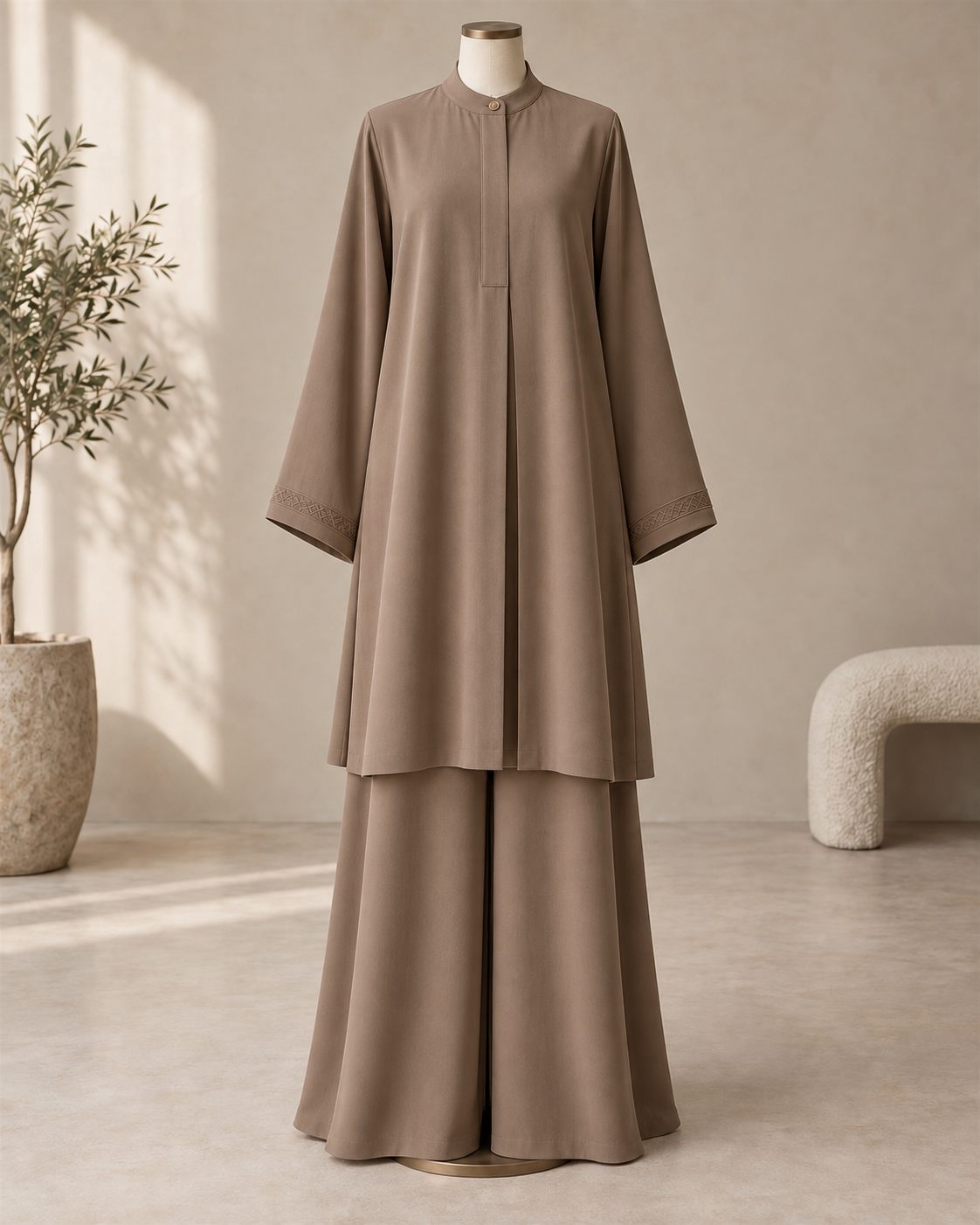
Approve decoration on the largest and smallest sizes in the range. A motif that is centred on a medium is not automatically centred on the extremes.
Decoration is where a custom project becomes expensive, and where sample-to-bulk differences are most visible. Embroidery has to be digitised, beading has to be placed, and both have to hold their position across the whole size range.
Treat decoration as a separate development stream with its own approval, running alongside the garment sample rather than after it.
- Embroidery — artwork digitised, then proofed on the actual fabric
- Beading and sequins — placement method agreed before production
- Rhinestone and hot-fix — adhesion tested on the fabric, not assumed
- Placement control — measured from a fixed reference point on every size
- Combined decoration — where techniques overlap, the order of work matters
Running several styles in one development round
Developing a capsule is more efficient than developing styles one at a time, because the fabric, trim and decoration decisions carry across, and the sampling conversation happens once instead of five times.
Send the capsule with a priority order. Styles that share a fabric and a construction family should be grouped, so the ones you need most are not waiting behind the ones still being decided.
- Group styles by shared fabric and construction
- State which styles are must-launch and which are exploratory
- Reuse one decoration artwork across styles where the look allows
- Confirm measurement specifications once and apply them across the group
Sampling rounds and what approval means
Development samples exist to fail early and cheaply. A sample that is 90 per cent right and approved anyway becomes a bulk order that is 90 per cent right, which in retail terms means returns.
Send the design input and the open points you want resolved.
Confirm fabric, colour and trim direction before pattern work starts.
Pattern and measurement specification developed for your size range.
First sample produced and sent for your evaluation.
You measure it, fit it and mark every correction on the garment itself.
Revision round on the points that changed, if any.
Sample approved and sealed as the production standard.
Bulk produced to the sealed sample, with decoration on the approved placement.
Final inspection against the sealed sample before packing and shipping.
Where custom development projects fail
The failures are consistent across categories and almost all of them happen before production starts. Recognising them in advance is cheaper than correcting them in a sample round.
- Fabric decided after the pattern, which resets the development
- Measurements communicated verbally or as letter sizes
- Decoration artwork sent at a resolution that cannot be digitised
- Size range increased after the pattern has been graded
- Multiple people on the buyer's side giving conflicting feedback
- Sample approved for the look without measuring the garment
Who owns what after development
For OEM and ODM work, the design direction you bring remains yours, and the pattern we develop is developed for your production. Ask at enquiry stage what can be handed over — measurement specifications, pattern files and decoration placement diagrams are the assets worth holding.
If your requirement is to brand an existing product rather than to develop a new one, private label modest clothing is the faster and cheaper route. If you are developing one specific category, the detail sits on custom abaya and on the customization services page.
Frequently asked questions
With OEM you supply a defined design and specification and we manufacture it. With ODM you bring the market, price point and direction, and the product is developed with you. OEM needs a complete spec from you; ODM needs a clear brief and more development time.
Yes, and it is usually more efficient than running styles separately, because fabric and decoration decisions carry across. Send the whole capsule with a priority order so the styles you need first are not delayed by the ones still being decided.
Send the artwork and we will tell you. Fine detail, tight negative space and gradients are the usual problems. Where artwork needs adaptation, we say so before digitising rather than after, so you can decide whether to simplify or change the placement.
Small corrections before approval are normal and expected. Changes after the sample is sealed restart the approval, because bulk is produced against the sealed standard. That is why we ask you to measure every size in the sample range before signing it off.
Contact us for current MOQ. Custom styles carry development work before production, so the quantity question is tied to the pattern, the fabric and the decoration. Development samples are quoted separately from the bulk order.
The design direction you bring remains yours. Ask at enquiry stage what can be handed over at the end of the project — measurement specifications, placement diagrams and pattern files are the things worth requesting in writing before development starts.
Planning your next modest fashion collection?
Tell us these seven things and we can come back with a workable sourcing plan instead of a price list.