Custom Abaya: Developing Your Own Cut, Not Choosing Ours
Custom abaya development runs on what you can put in front of us: a drawing, a photo, a measurement sheet or a garment you already sell. Here is how each starting point turns into bulk production.
Three starting points, three different processes
Custom is not one workflow. A buyer with a finished tech pack is asking us to manufacture; a buyer with a photograph is asking us to interpret; a buyer with an existing garment is asking us to reproduce and adapt. The development effort is different in each case, and so is the number of sample rounds.
Being honest about which one you are saves a week of exchanged messages. It also stops the most common disappointment in custom abaya work: a buyer expecting a photograph to be reproduced exactly.
| You send | What we need to confirm | Main risk |
|---|---|---|
| Full tech pack | Measurements, construction, fabric and trim specification | Specification gaps that only surface at sample |
| Sketch or drawing | Proportions, lengths, opening type and closure | Two people reading the same drawing differently |
| Reference photo | Which details you actually want and which are incidental | Expecting a pixel match to a garment we never measured |
| Existing garment | Measurements taken flat, seams and finish inside and out | Hidden construction that changes the drape |
Turning a reference photo into something we can cut
A photo tells us the look, not the construction. Two abayas can look identical on a model and be built completely differently: one with a shoulder seam and set-in sleeve, one cut as a single panel with a dropped shoulder. Those two behave differently in wear and cost differently to produce.
So we work backwards from the photo to the decisions behind it. Mark up the image, circle what matters, and write one line on what you want kept and what you are flexible on. Buyers who do this usually approve the sample in the first round.
- Silhouette line — where the garment is narrow and where it opens
- Length — measured on the garment, not described in words
- Sleeve — set-in, dropped, bell, cuff finish or plain
- Front — open, closed, wrap, concealed placket, zip or buttons
- Coverage — opacity at the shoulders, chest and back
- Decoration — placement, density and whether it is a repeat or a single motif
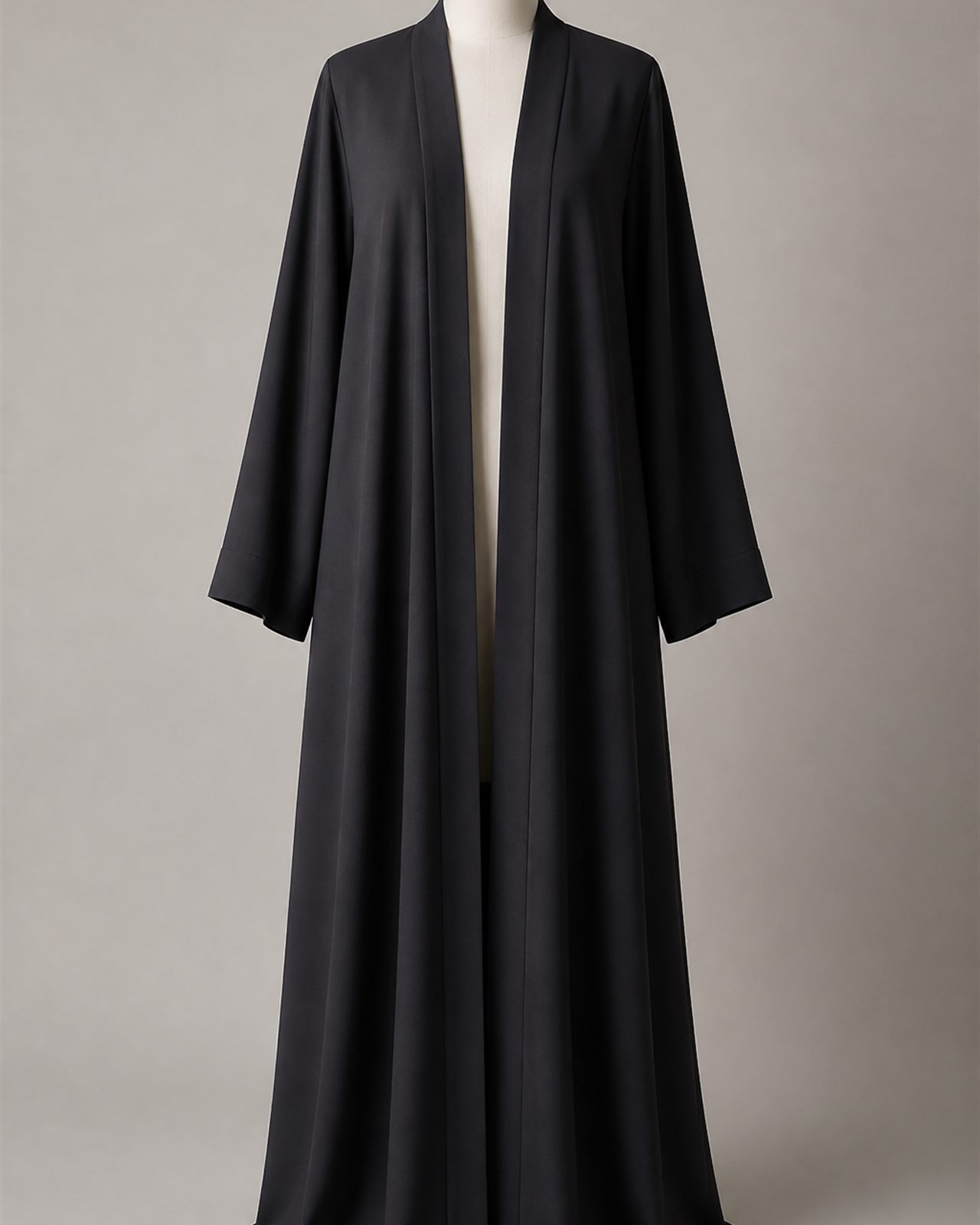
What a usable tech pack contains for an abaya
A tech pack does not need to be a designer document. It needs to remove ambiguity. If a measurement is missing we will ask; if it is missing and unasked, the sample comes back wrong and everyone loses a round.
You do not need every field below to start a conversation. Send what exists; we will list the open points before sampling so nothing is guessed.
- Flat measurements: length, bust, shoulder, sleeve, hem opening
- Construction notes: seam type, lining, interfacing, closure
- Fabric and trim specification, or a swatch to match against
- Colour reference, with a physical standard rather than a screen colour
- Decoration artwork at a workable resolution, with placement diagram
- Size range and the grading rule you want applied between sizes
Fabric and trim sourcing against your design
Custom designs fail on fabric more often than on pattern. A cut drawn for a fluid drape will read as a different garment in a stiff one, and decoration drawn for a matte surface will catch light differently on a satin.
We will tell you which of the fabrics we routinely work with suits the design, and where a substitution changes the look. Start with the nida fabric page for everyday cuts and the crepe fabric page for structured ones, then treat the rest of the fabric library as the menu.
- Nida — the workhorse for everyday and prayer cuts
- Crepe — holds structure, good for tailored lines
- Satin and heavier blends — occasion and premium styles
- Lining and interlining — needed where coverage or structure demands it
- Trim and closures — matched to the fabric, not chosen in isolation
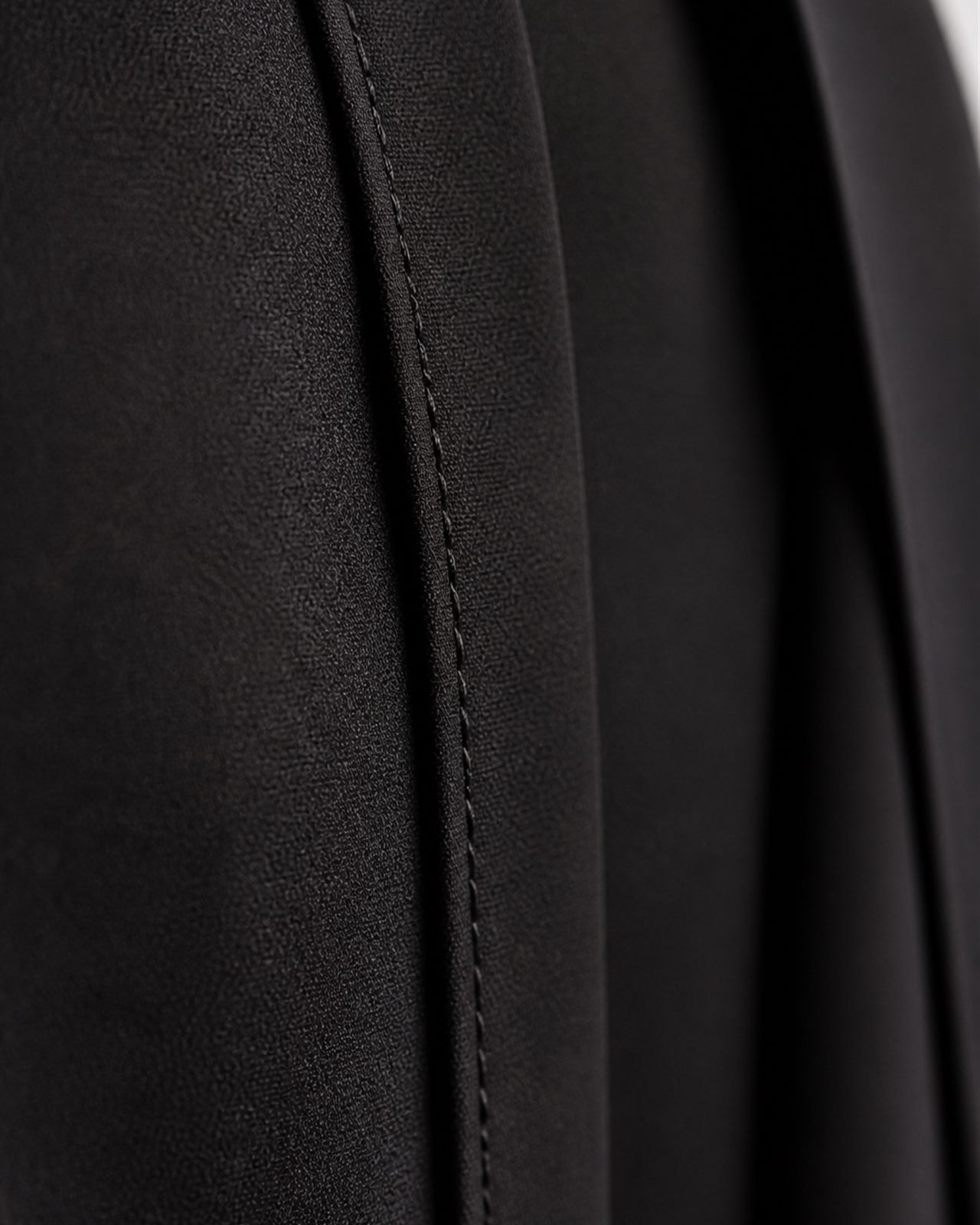
Decoration: embroidery, beading and rhinestone
Decoration placement must hold across the whole size range. A motif centred on a medium is not automatically centred on an extended length.
Decoration is where custom abayas get expensive quickly, and where sample-to-bulk differences show up most. The reason is that embroidery and beading are labour operations with more hand work and more placement decisions per garment.
Send artwork in a format that can be digitised, and expect a proof before it is stitched. If your design relies on hand beading, ask us about the placement method at enquiry stage so the sample reflects how bulk will actually be made.
- Machine embroidery — artwork digitised, then proofed on the actual fabric
- Hand beading and sequins — slower, and placement consistency needs checking
- Rhinestone and hot-fix — adhesion tested on the fabric, not assumed
- Combined decoration — where embroidery and beading overlap, order of work matters
- Placement control — measured from a fixed point so the motif sits identically on every size
The sample rounds, and what counts as approval
A development sample is not a gift and it is not a bulk unit. Its job is to fail early and cheaply. Buyers who treat the first sample as a formality pay for the mistake in bulk.
Approval means you have measured the garment, compared the colour to a physical standard, checked the decoration placement and accepted the fabric handle. Once the sample is sealed, that is what bulk is produced against — so anything you intend to comment on, comment on now.
Send the design input: sketch, photo, tech pack or existing garment.
We confirm the open specification points and the fabric options that suit the design.
Pattern development to your measurements, including the intended size range.
First sample produced in the agreed fabric and colour.
You measure it, wear-test it and mark up every correction on the garment.
Revision round on the points that changed, if the design needed them.
Approved sample sealed and signed off as the production standard.
Bulk cut and produced to the sealed sample, with decoration on the approved placement.
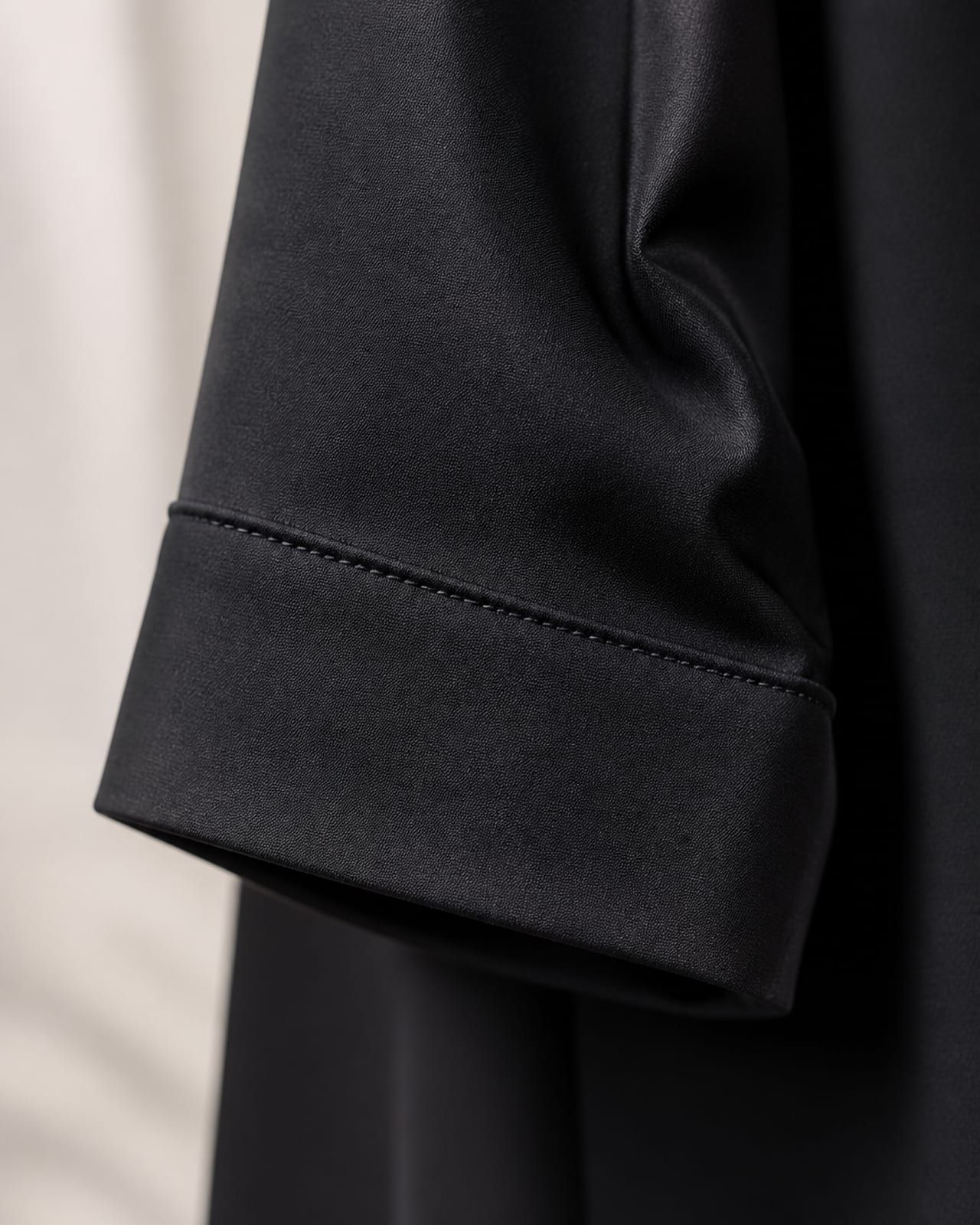
What must stay fixed between sample and bulk
Once the sample is approved, changing fabric, colour, decoration artwork or measurements restarts the development. That is not a policy we invented — it is how a production line works. Change the input and the output has to be re-verified.
- Fabric — same quality reference, sealed swatch kept on file
- Colour — approved against a physical standard under controlled light
- Measurements — the sealed sample is the measurement authority
- Decoration — artwork version and placement diagram locked
- Trims and closures — same article, not an equivalent one
Who owns the pattern and the design
For OEM and custom work, the design you bring remains yours, and the pattern we develop for you is developed for your production. If you want to move the style to another supplier later, ask at enquiry stage what we can hand over — pattern files, measurement specifications and decoration placement diagrams are the things worth having.
What we will not do is copy a branded garment outright. We can develop a cut in a direction you describe, in your own fabric and your own decoration; that is a different job from reproducing someone else's product.
Custom abaya is not the right first order for every buyer
If you have never sold an abaya, developing a custom cut is the slowest and riskiest way to find out whether the product works in your market. Start with stock styles under wholesale abaya, learn which shape and length sell, and then invest in custom development around the winner.
If you already know your cut and want to build a brand identity on top of it, the faster route is private label abaya, which applies your labels, tags and packaging to a pattern that already works.
Frequently asked questions
We can develop a cut in that direction, but not a guaranteed reproduction, because a photo does not carry construction or measurements. Mark up the image to show what you want kept, tell us your target fabric and length, and expect the first sample to be a starting point rather than a finished match.
No. We will develop a garment based on the elements you describe — silhouette, length, sleeve, decoration direction — in your own fabric and colourway. Reproducing another brand's product is not work we take on.
It depends on the starting point. A buyer with a complete tech pack on a fabric we already work with typically needs fewer rounds than a buyer working from a sketch and an undeclared fabric. The number of rounds is agreed with the quote, and every change after approval adds one.
Send the swatch and tell us which qualities matter — handle, opacity, drape or weight. We will tell you whether we can match it, offer the closest fabric we work with, or tell you honestly that the design needs to change.
Contact us for current MOQ. Custom styles carry development work before production starts, so the quantity question is tied to the pattern, the decoration and the fabric you choose. Development samples are quoted separately from bulk.
Yes, and it is usually more efficient than developing one style at a time, because fabric, trim and decoration decisions carry across. Send the whole capsule with a priority order, so the styles you most need are not held up by the ones still being decided.
Planning your next modest fashion collection?
Tell us these seven things and we can come back with a workable sourcing plan instead of a price list.