Private Label Modest Clothing: Building a Brand, Not a Batch
A label in a neckline does not make a brand. This page covers the five assets you own once private label is done properly, and the order to build them in.
Private label is a system, not a sticker
Most brands discover this the hard way. The first order carries a woven label, the second adds a hang tag, the third introduces a printed bag, and by the fourth the range looks like four different companies selling under one name.
The alternative costs no more. Decide the brand system before the first order: what your label says and where it sits on each category, what your size chart is, which colours are yours, and how the packaging changes between price tiers.
- Label architecture — one label design applied deliberately across categories
- Size chart — your measurements, not the supplier's letters
- Colour palette — shades you repeat, so the range reads as one collection
- Packing system — a defined presentation per price tier
- Care wording — accurate per fabric rather than copied across the range
Label architecture across categories
One label design does not mean one label everywhere. A woven label that sits comfortably in an abaya neckline may be wrong for a hijab that touches the skin, and a care label that suits a cotton voile piece is inaccurate on a modal one.
The system is the design language, applied with judgement per garment. Decide the label type, position and wording rule for each category once, document it, and every subsequent order follows it without a discussion.
| Category | Primary label | Presentation | Watch for |
|---|---|---|---|
| Abaya | Woven label at the neck or side seam | Folded, bagged, optionally tagged | Show-through on light or sheer fabrics |
| Hijab | Printed or soft woven corner label | Banded or sleeved fold | Comfort against skin, and label stiffness |
| Dress | Woven label plus care label | Retail fold with tag | Care wording that matches the fabric and lining |
| Sets | Label on both pieces | Packed as one retail unit | Both pieces must carry the brand, or the set looks split |
| Prayer wear | Label plus pouch or bag | Gift-ready packing | Consistent shade across a two-piece set |
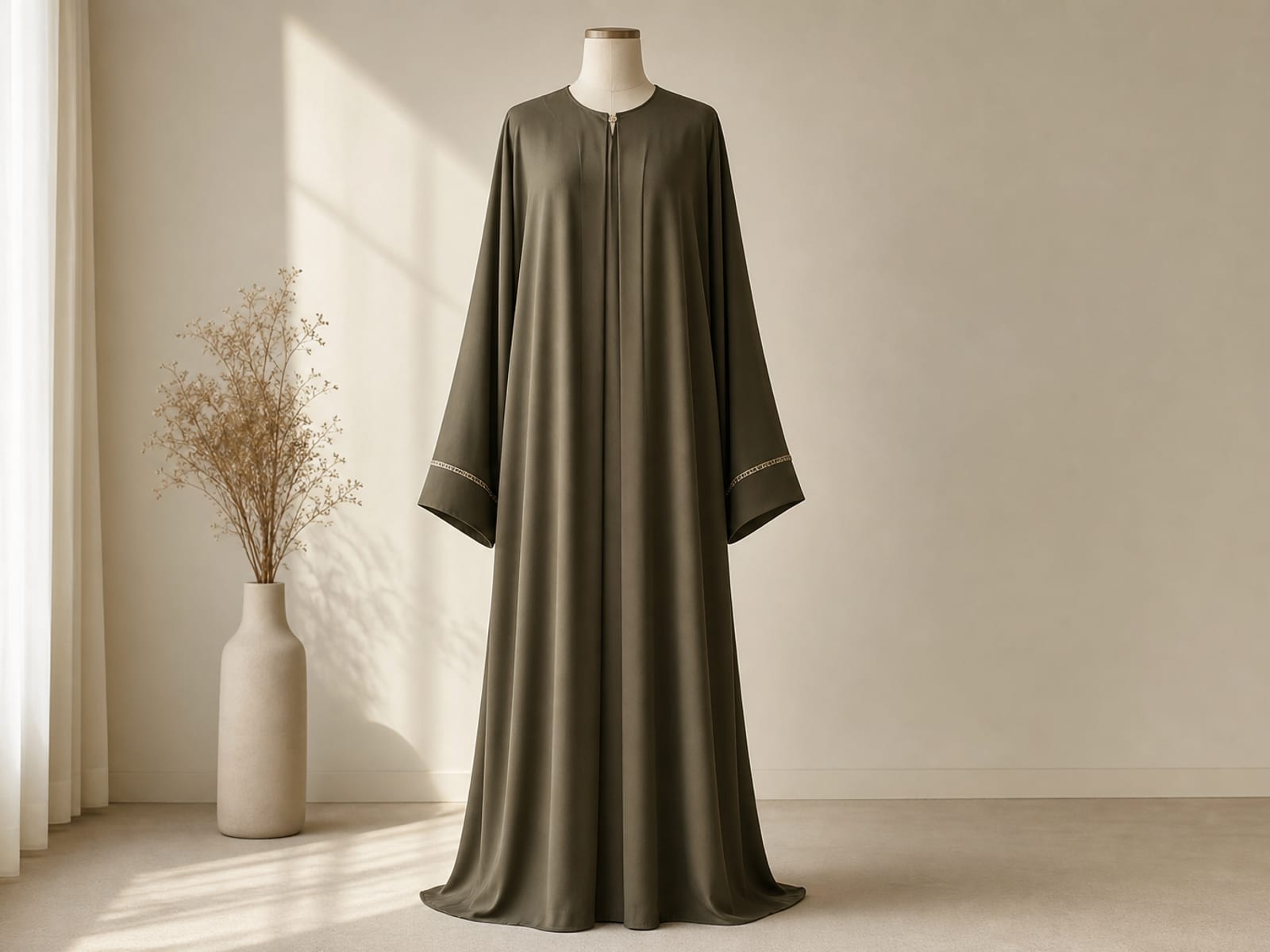
Owning your size chart
A size chart is the only brand asset your customer uses before she buys. Treat it as product, not paperwork.
The most valuable thing a modest clothing brand can own is a size chart that customers trust. It is also the asset most brands never build, because they accept letter sizes from each supplier and inherit the inconsistency.
Build your own chart for each category you sell, with the measurement points written down. Then order to it every time. Customers who know their size in your brand stop returning garments and stop hesitating at checkout.
- Measurement points defined in writing, measured on finished garments
- One grading rule between sizes, applied consistently across orders
- Length options documented for the categories where length is the variable
- The chart published on your own store, not only held internally
- A reference sample kept for each size so future orders can be compared
Owning a colour palette
A recognisable brand is often recognisable by colour before anything else. If your abayas come in one set of shades, your hijabs in another and your sets in a third, the range reads as a marketplace rather than a label.
Choose a core palette you repeat every season and a smaller layer you change. Repeat it across categories, and approve it on each fabric separately, because a shade that reads warm on a knit can read cooler on a woven.
- Core shades repeated every season across every category
- A rotating layer for seasonal or festive drops
- Physical colour standards for each shade on each fabric
- Sealed swatches archived so the next order can be matched
- Exclusive shades, where you want a colour the market cannot buy elsewhere
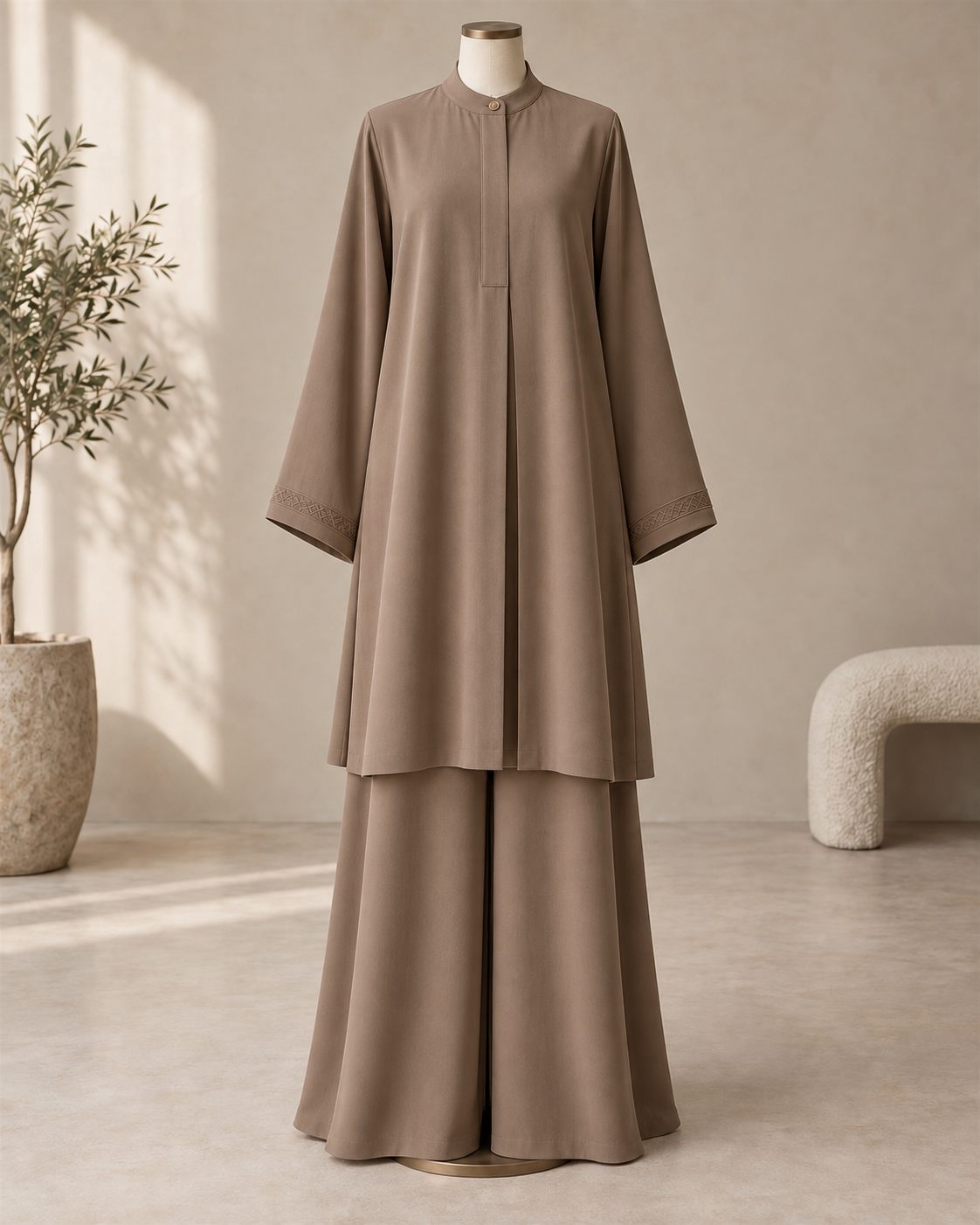
Packaging by price tier
Not everything you sell needs the same packaging. A defined system lets you spend presentation money where the customer notices it — on the pieces that are gifted, photographed or bought at a premium — without inflating cost on the volume items.
Define three levels and assign every product to one of them. The system is only useful if it is written down and applied to each order without a fresh decision.
- Bulk level — protective bag and consistent fold for stock and redistribution
- Retail level — branded band, tag or sleeve for pieces sold on a rail
- Gift level — boxed or sleeved presentation for occasion and seasonal pieces
- Consistency rule — every piece in a price tier is packed the same way
Where to start when everything is unbranded
Brand the category with the least fit risk and the fastest reorder cycle first. That is almost always hijab, because a branded hijab requires no size chart and can be reordered quickly in new colours. Abaya or dress follows once the label and packing system has been tested in the market.
Sequence matters more than ambition. Launching five branded categories at once multiplies the sample work and the chance that one of them arrives wrong.
Decide the brand assets: label design, tag, packing levels and colour palette.
Agree the size chart for the first category you will brand.
Proof all artwork, including care wording, before any sample is produced.
Produce a branded sample of the launch category and check it in your hands.
Seal the sample and pack as the reference for the whole brand system.
Produce the launch order, with a packing check on every branded element.
Extend the same system to the next category once the first sells through.
Artwork: the bottleneck in every private label project
Private label timelines are almost never lost in production. They are lost in artwork approval — a label wording change after proofing, a tag redesigned mid-order, a packing dimension not decided until the goods are ready.
Finish the artwork before sampling starts. The sample should be the thing that confirms decisions, not the thing that triggers them.
- Label artwork in a vector format, with final wording locked
- Tag and packing artwork, including dimensions
- Care and content wording per fabric
- Colour references for labels, threads and printed elements
- A single approver on your side, so two people do not approve two versions
Quality control where the brand is the product
On a private label order, a garment that meets every fabric and construction standard can still be unshippable because a label is missing or a tag is wrong. The inspection has to cover the brand elements as product attributes, not as an afterthought.
- Label presence and placement checked across the whole lot
- Label wording compared against the approved proof, not against memory
- Tag matched to the style and to the season it belongs to
- Packing level applied consistently within each price tier
- Sets confirmed to carry branding on both pieces
- Colour consistency verified against the sealed standard per fabric
Moving from private label to your own designs
Private label is the fastest way to launch and the least expensive way to learn. The natural next step is to use what you learn to develop your own cuts — which is custom modest clothing work, and usually worth doing only on the two or three styles that proved themselves.
Category-specific detail sits on private label abaya and private label hijab. If you are still assembling the range itself, start from modest clothing wholesale.
Frequently asked questions
Private label applies your brand to a product that already exists. OEM produces a product you designed. Private label is faster and cheaper and is the usual starting point; OEM is worth the development effort once you know exactly what you want to sell.
Yes, and consistency is the point. What changes is the label type and placement: a soft or printed label on a hijab that touches the skin, a woven label in an abaya seam, and a label on both pieces of a set. Care wording has to match each fabric separately.
You need one for any category where fit matters, and it is the asset that pays back fastest. Send yours if it exists; if it does not, we develop the measurement specification with you and you approve it on the sample before bulk.
Two or three is usually enough: a bulk level for stock, a retail level for pieces sold on a rail, and a gift level for occasion pieces. Define them once and assign every product to one, rather than deciding packaging per order.
Contact us for current MOQ. Branded orders carry setup work for labels, tags and packing, and the quantity logic differs between categories — a hijab range and a graded dress range behave very differently even at the same order value.
Exclusive shades can be produced, and exclusivity should be raised at enquiry stage rather than assumed. Tell us which shades matter and we will confirm what is achievable for your volumes before you build a collection around them.
Planning your next modest fashion collection?
Tell us these seven things and we can come back with a workable sourcing plan instead of a price list.