Embroidered abaya — wholesale and OEM development
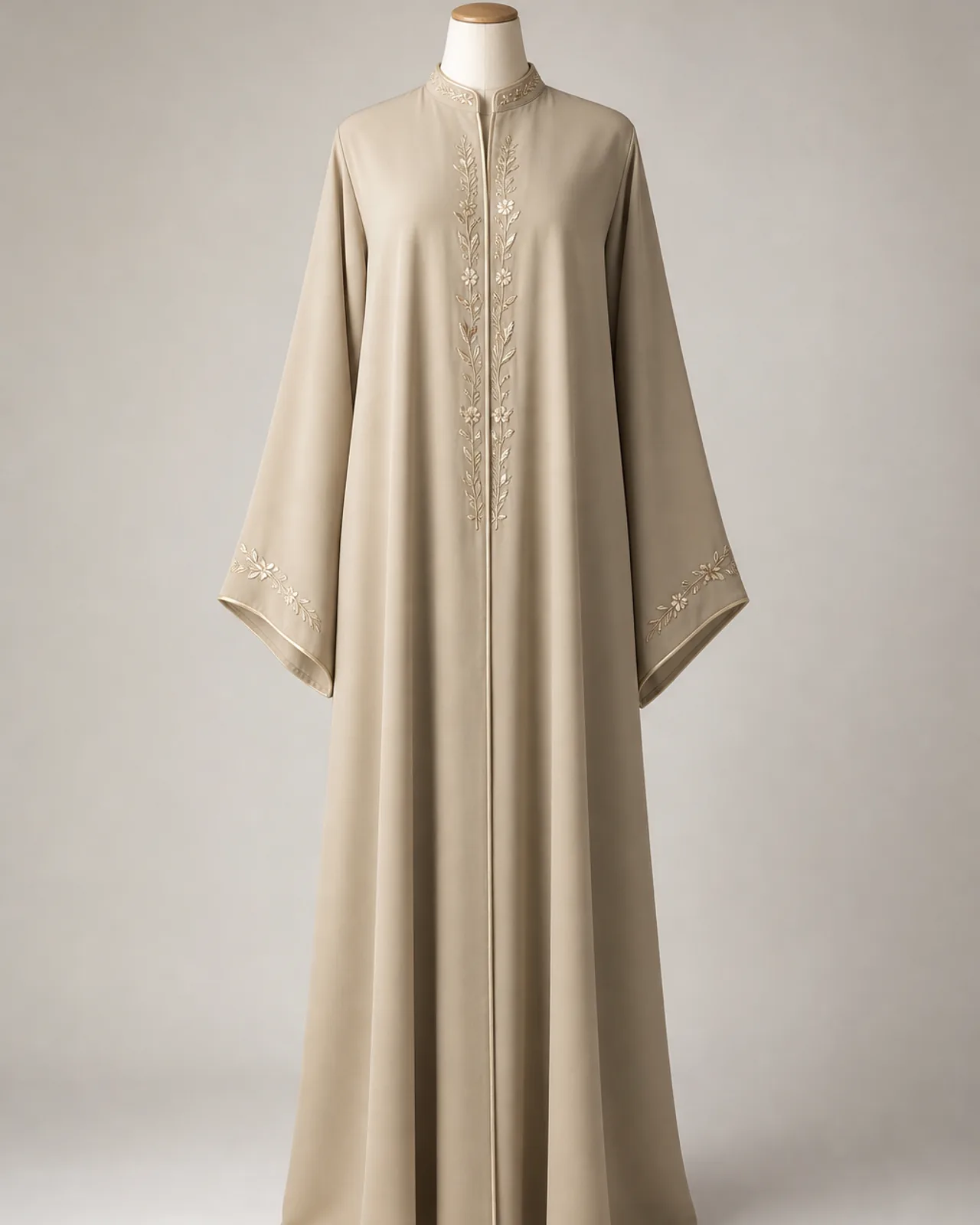
An abaya built around embroidery, whether the motif comes from your artwork or from a reference you send us. The stitch-out is approved on your fabric before any bulk embroidery is run.
How an embroidered abaya order starts
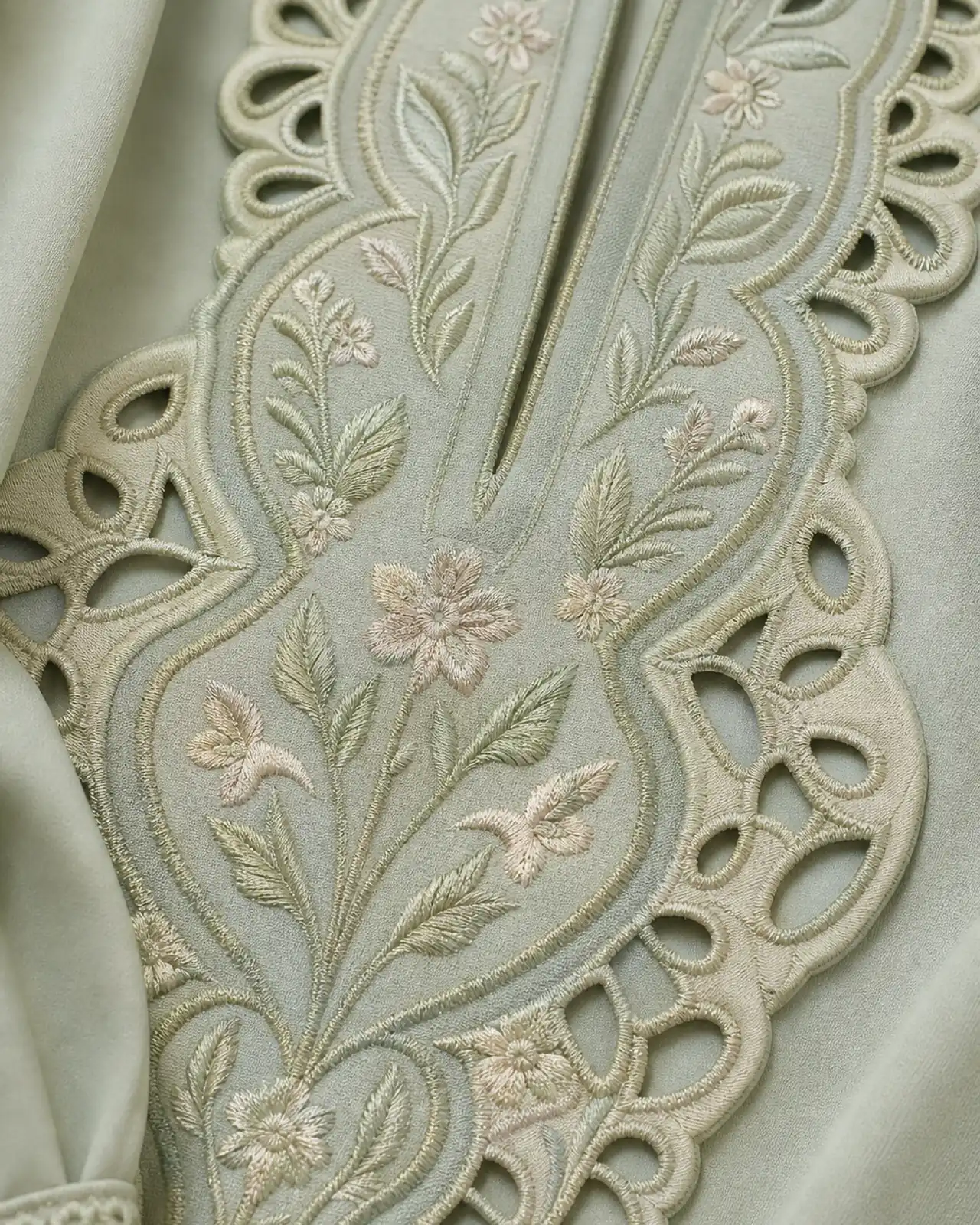
Embroidery is the part of an abaya order that is most often rushed, and the part that costs most to correct afterwards. The work begins before any garment is cut: the motif is stitched out on the exact fabric you have chosen, so you can judge thread colour, density and how the panel behaves once it is stitched.
Send the artwork, a sketch or a clear reference photograph, with the position marked on the garment you want
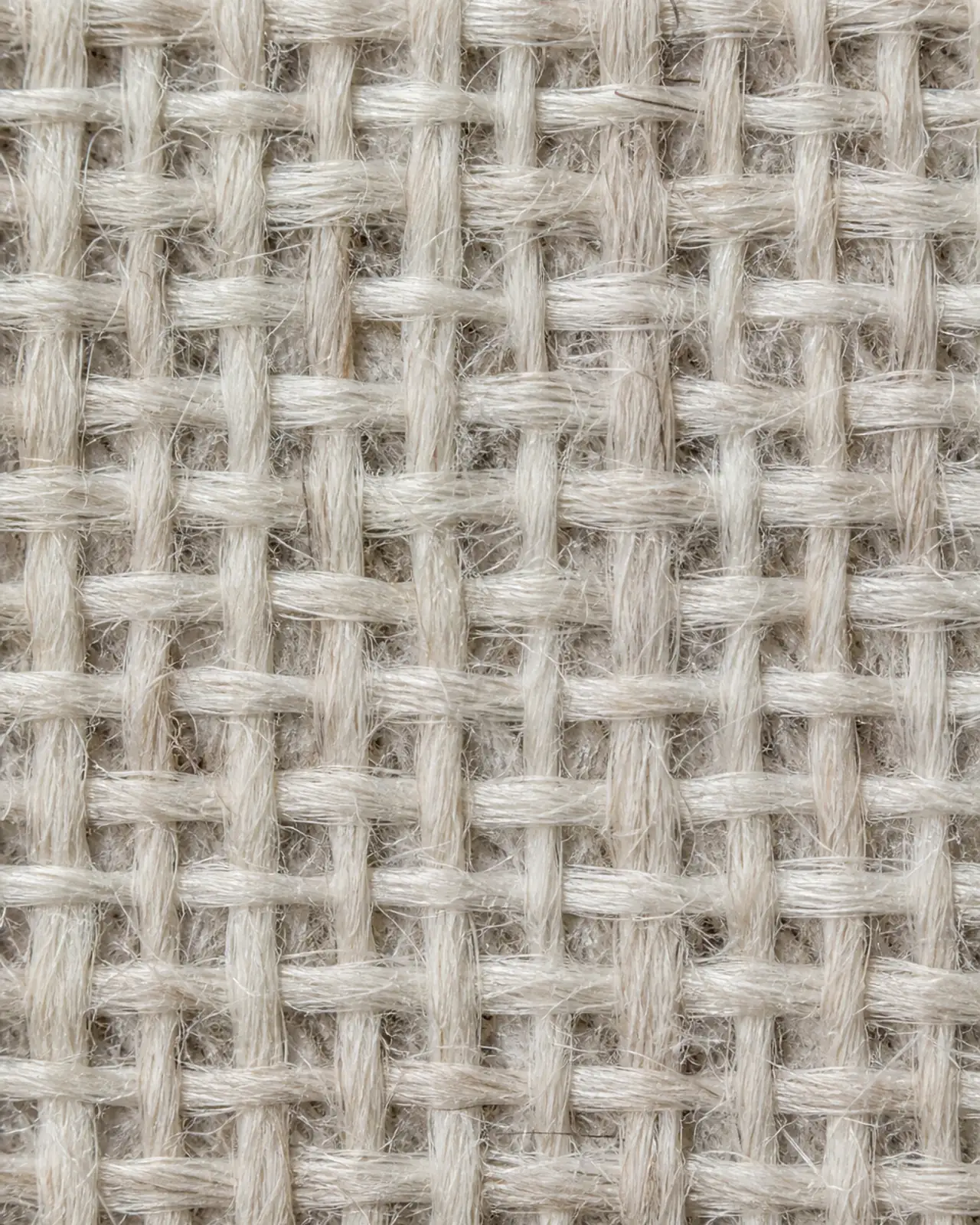
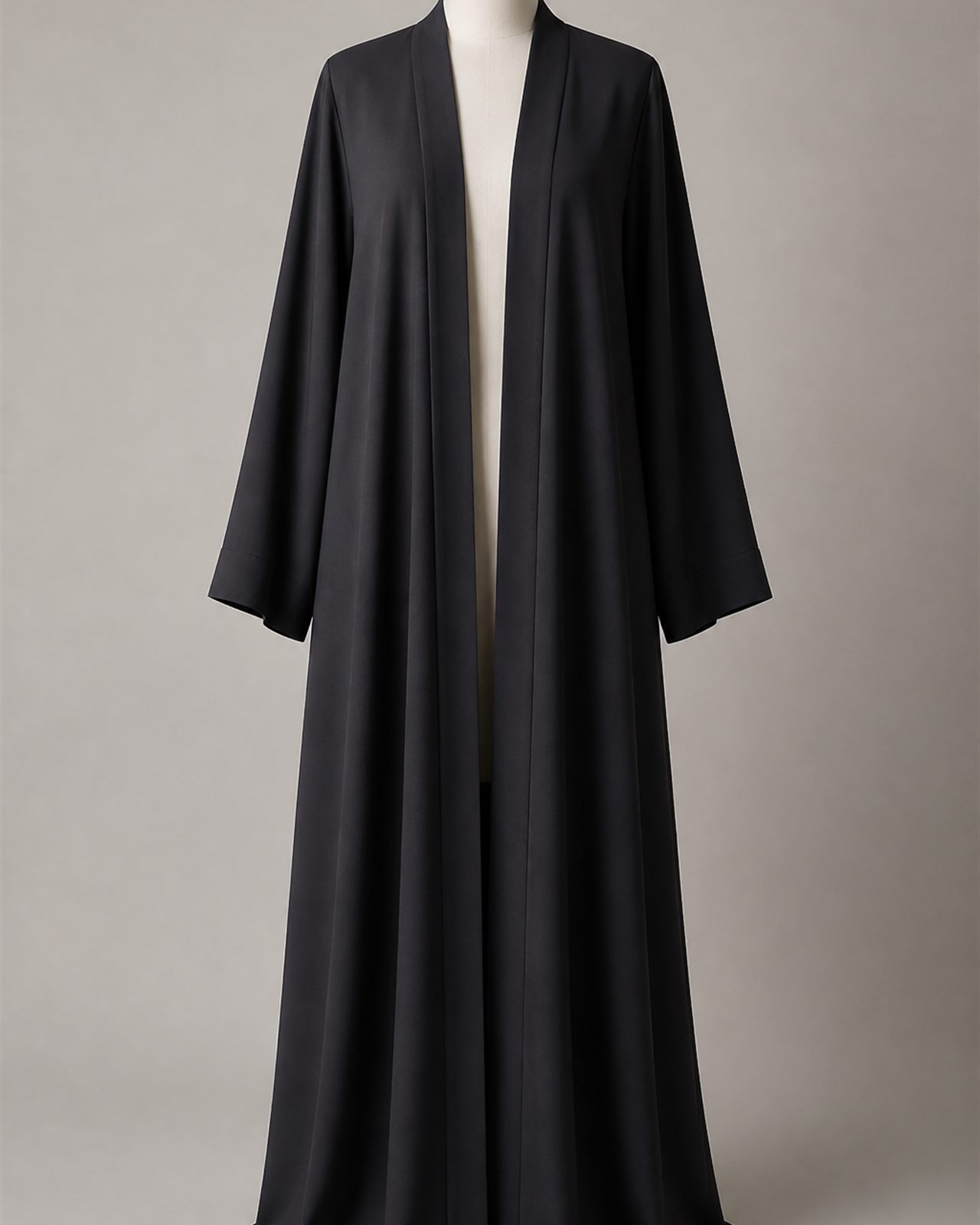
Choose the ground fabric, because the same motif behaves differently on nida, crepe and satin
Approve a stitch-out on that fabric, checking thread colour against your reference
Approve the placement on a garment sample, where length and sleeve are already fixed
Run bulk embroidery against the approved stitch-out and placement
Placement: where embroidery earns its cost
Placement decides whether a decorated abaya reads as designed or as added on. The placements below are the ones buyers return to because they survive wear, pressing and washing without distorting the garment.
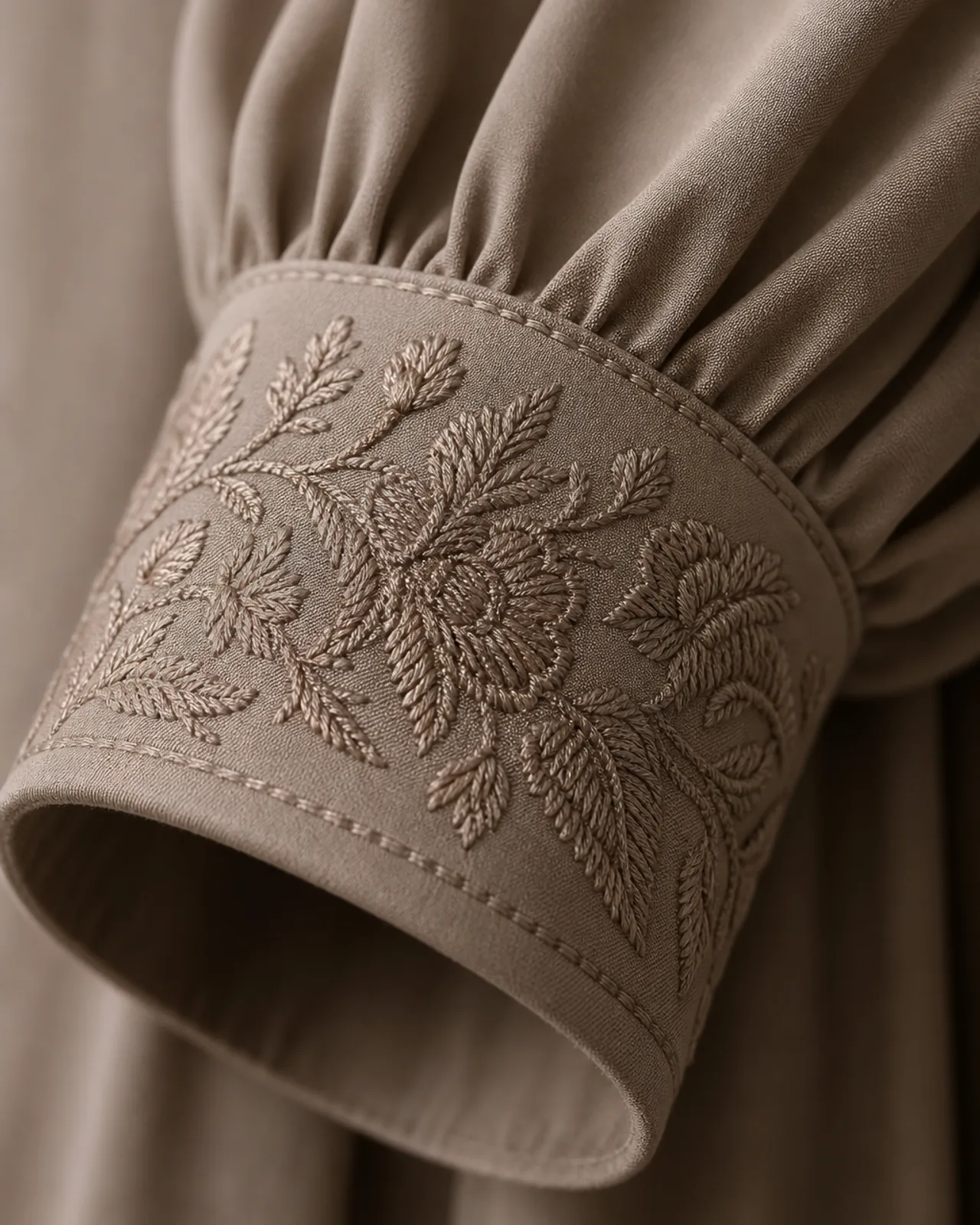
- Cuff and sleeve — visible when the arm moves, and away from the body of the garment
- Front placket or centre front panel — the main statement placement, but it must not stiffen the fall of the panel
- Hem border — strong at retail, and heavier to produce because the border runs the full width
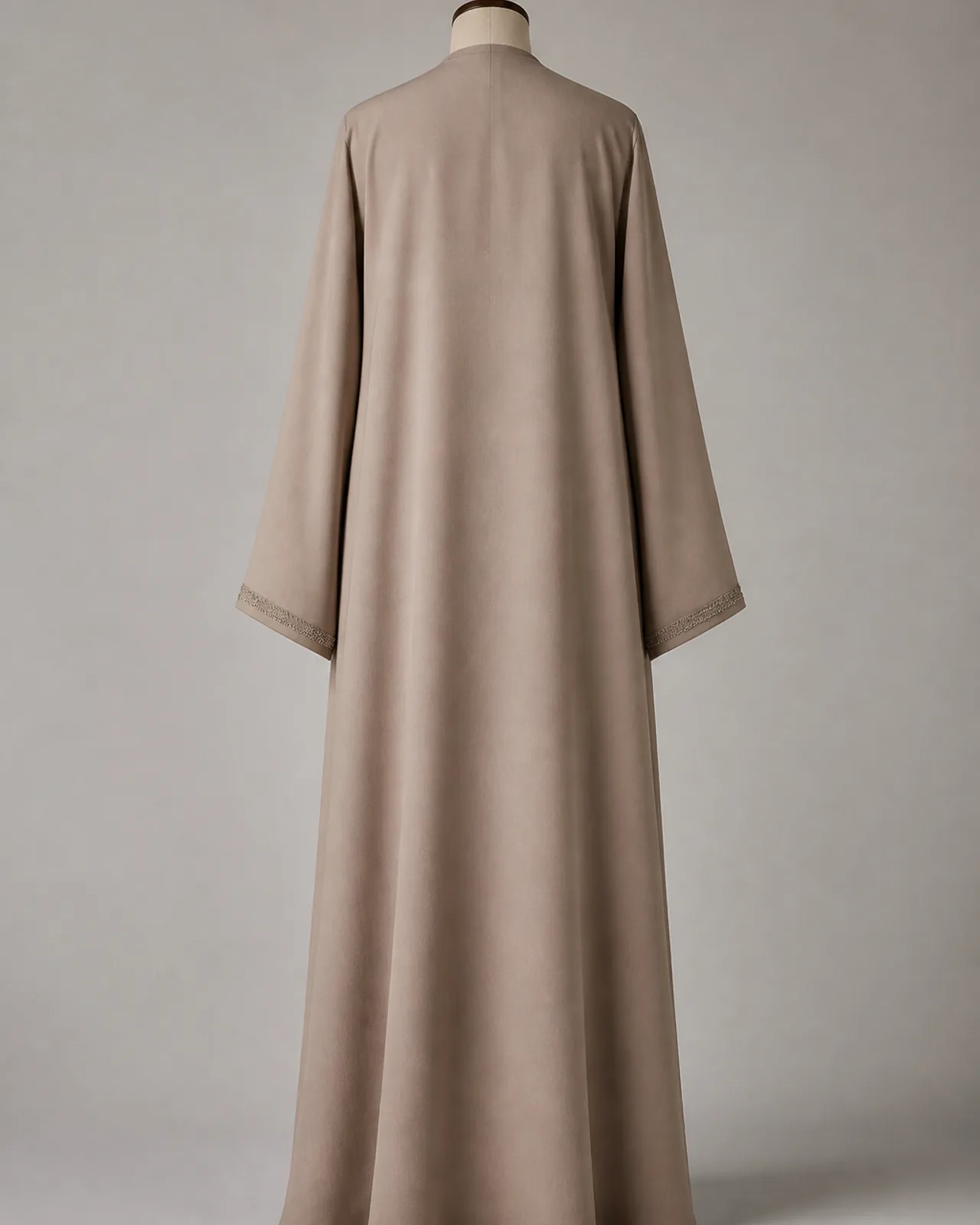
- Neckline and centre back — quieter, and useful for private label or a monogram
Thread, backing and density decisions
Three technical decisions change the look and the durability of the embroidery, and all three are easier to settle at sample stage than at production. The customization page sets out how a custom decoration brief is handled from artwork to bulk.
- Thread colour and finish — matched to your reference, and checked on the fabric rather than on a screen
- Backing and stabiliser — chosen so the panel keeps its drape and the stitched area does not pucker
- Density — heavier coverage gives a stronger motif but a firmer panel; both are shown on the stitch-out
- Finish on the reverse — trimmed and covered, or covered by lining where the inside will be seen
Embroidery for private label and monograms
Not every embroidered abaya is a statement piece. A monogram, a name or a small mark in your own typeface is often what makes a plain abaya recognisably yours, and it can be produced at a scale that suits a repeat line rather than a single occasion.
- Logo embroidery to your artwork, placed where it does not interrupt the line of the garment
- Monogram and initials for personalisation services in your store
- Small tonal stitching for a subtle mark, or contrast thread where you want it to read clearly
- See private label for the wider branding scope
Planning an embroidered line for the season
Decorated ranges are the first to be ordered and the first to run late, because every design in the collection needs its own stitch-out and approval. Buyers who treat embroidery development as a separate, earlier task get to their bulk window without cutting the decoration short.
- Ramadan and Eid ranges, where decorated abayas carry the collection
- Wedding and occasion pieces, where the motif is often repeated across several colourways
- Reorders of an existing design, which move faster because the stitch-out is already approved
- Plan the season from the collection calendar outward, not from the shipping date backwards
How embroidery is inspected
Embroidery is checked as its own operation, before the garment is closed and pressed. Once a panel is assembled and pressed, correcting registration or density means remaking the piece, so the inspection happens at the point where it is still cheap to fix.
- Registration check: the motif position measured against the approved placement, not eyeballed
- Density and coverage check against the approved stitch-out
- Thread ends trimmed and secured; no untrimmed jumps visible on the face
- Panel flat check after stitching, to catch puckering or distortion
- Colour check between pieces and between batches
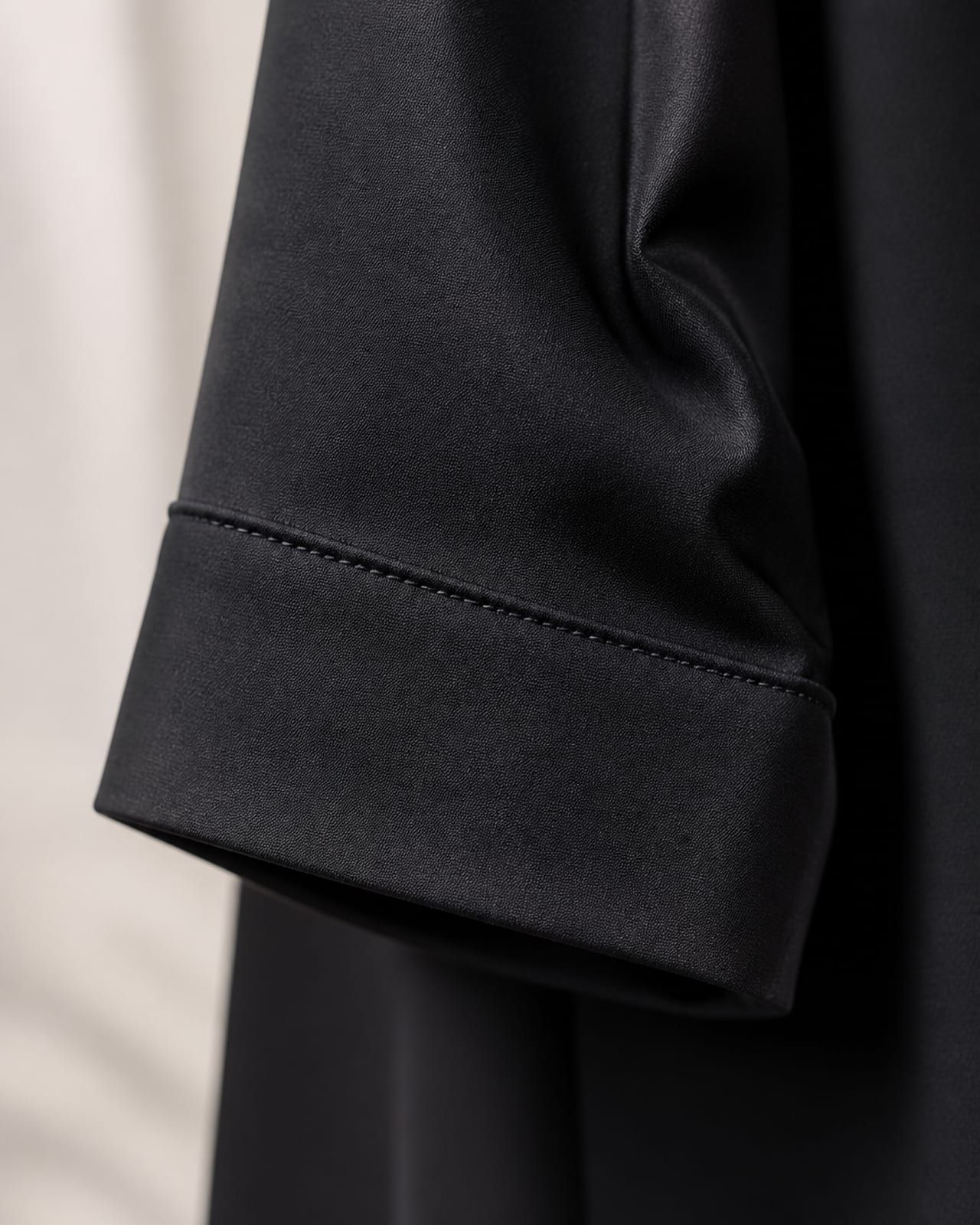
Packing a decorated garment
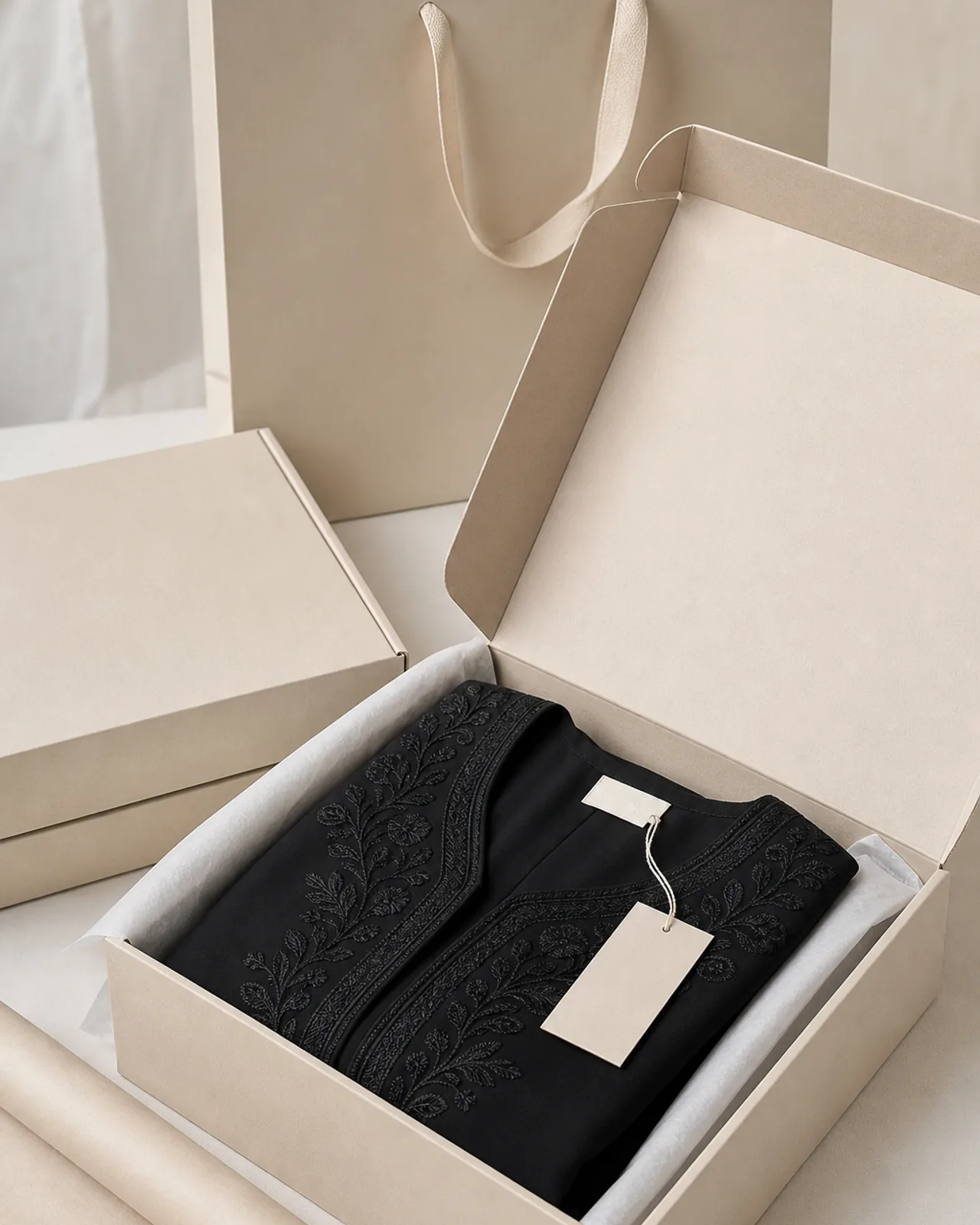
Embroidery arrives in the condition it was packed in. The stitched area is protected with tissue, the garment is folded so the motif does not sit under a hard crease, and labels are applied during packing so nothing is added after the carton is sealed.
- Tissue or a soft interleaf over decorated areas
- Folding that keeps the motif face up inside the pack
- Poly bag as standard, retail boxing on request
- Packing list by style, colour and size; shipping arrangement confirmed per destination on wholesale
Specifications
| Fabric | To be confirmed with your enquiry |
|---|---|
| Composition | To be confirmed with your enquiry |
| Weight | To be confirmed with your enquiry |
| Color | Ground fabric and thread colours matched to your reference, approved on a stitch-out |
| Size | Confirmed per order, including plus size and custom measurement runs |
| Length | Agreed in garment measurements; motif position is set against the finished length |
| Sleeve | Sleeve and cuff finishing agreed with the embroidery placement on the sample |
| Style | Abaya silhouette defined by an embroidered motif, front panel, cuff, hem or neckline |
| Decoration | Embroidery; beading and rhinestone can be combined where the design allows |
| Closure | Confirmed on the approved sample for the silhouette you order |
| Lining | Optional and often used to cover embroidery backing on the inside; confirmed per design |
| Packaging | Poly bag as standard with tissue over decorated areas; retail packing on request |
Wholesale Information
| MOQ | Contact us for current MOQ |
|---|---|
| Sample | Lead time depends on design and order quantity |
| Price Tier | Quoted per order; stitch count, thread colours, fabric and quantity move it |
| Customization | Motif, placement, thread colour, fabric, measurement, labels and packaging |
| Production | Lead time depends on design and order quantity |
| Packaging | Poly bag with protection over the embroidery; branded packing on request |
| Shipping | Consolidated shipment with packing list; terms and documents confirmed per destination |
OEM / ODM Options
- Custom Color
- Custom Size
- Custom Label
- Custom Hang Tag
- Custom Packaging
- Embroidery
- Beading
- Rhinestone
Quality Details
| Size tolerance | Measured flat against the approved size chart, with motif position checked against the approved sample placement |
|---|---|
| Stitching | Garment seams checked as normal, and embroidery checked separately for density, registration and thread ends |
| Fabric | Ground fabric checked against the sealed reference before embroidery, because needle damage and shading show up after stitching |
| Color inspection | Thread colour compared with the approved stitch-out under controlled lighting, and checked piece to piece |
Frequently asked questions
Yes. Many buyers start with a screenshot, a sketch or a photograph of a garment they have seen. We develop the motif from that reference and show you a stitch-out, so you approve the actual thread work before bulk rather than an illustration.
It depends on the motif and how it will be produced. Fewer colours usually give a cleaner result and a more repeatable one; send the design and we will advise on the colour count that keeps it faithful to your artwork.
Heavy coverage stiffens the panel and can affect how the garment falls. That is exactly what the stitch-out and the sampled placement are for — you see the effect on the real fabric and confirm the panel still hangs the way you want.
Yes, where the design supports it. Combination work is sampled as a whole, because the order of operations matters: embroidery is normally stitched first, then hand work is applied so it is not pressed under the embroidery foot.
Send the thread reference, a Pantone number or a physical swatch. The colour is checked on a stitch-out on your chosen fabric, because the same thread reads differently on a matte ground than on a satin one.
Planning your next modest fashion collection?
Tell us these seven things and we can come back with a workable sourcing plan instead of a price list.