Nida fabric for wholesale abayas and modest wear
Nida is the fabric most buyers picture when they picture an abaya: matte, opaque and fluid, with the least care requirement of the common abaya cloths. This page answers the questions you would otherwise only settle by ordering a sample.
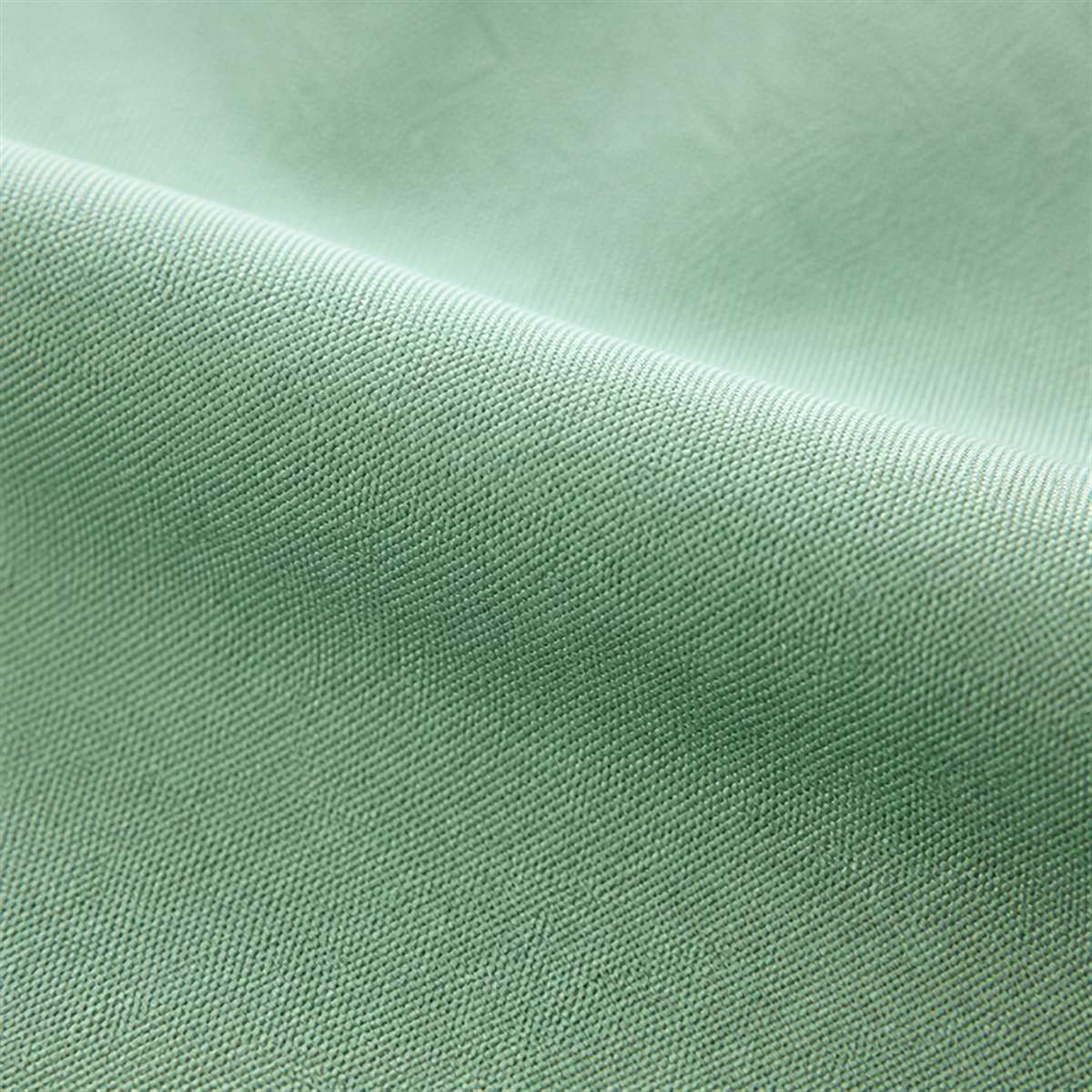
What nida feels like, and what that means for your customer
Nida has a matte, smooth surface with a slightly dry hand. It does not reflect light, so a colour reads as a solid block rather than a shine — which is why nida photographs honestly and returns low on colour complaints.
The practical consequence for a buyer is that nida carries a collection rather than a single style. It is the plain, dependable cloth a boutique puts under embroidery and beading, and the cloth a wholesaler can repeat season after season without the customer noticing a change.
- Matte finish: colour stays true in photographs and in daylight
- Fluid fall: hangs in a straight, unbroken line instead of flaring
- Low care: recovers from packing folds with a light steam, not a full press
- Quiet surface: decoration, not the fabric, becomes the feature
The twelve questions buyers ask about nida
These are the questions that come up in every nida enquiry. Answering them on the page is faster than answering them one buyer at a time.
| Buyer question | Answer for nida |
|---|---|
| What does it feel like? | Matte and smooth with a slightly dry hand. No sheen, no slip — it does not slide off the shoulder the way satin can. |
| Is it breathable? | Moderately. Air moves through a loose cut; a lined or fitted style holds more heat. For very hot markets, choose a lighter weight and a looser cut. |
| Is it opaque? | Yes in the weights used for abayas. Very light weights can show through under strong backlight, so if your market wears pale colours, confirm the weight band first. |
| Does it wrinkle? | Little. It resists creasing in wear and usually needs only a light steam after unpacking. |
| What season? | Year round. It is the default cloth for Ramadan and Eid ranges and works in hot climates when the cut is loose. |
| Best for which product? | Abaya above all, then jilbab, khimar, prayer dresses and two piece modest sets. |
| Approximate weight range? | Mills supply nida across a light to medium-heavy band. We do not publish one figure, because the weight that applies to your order is confirmed per order. |
| How does it drape? | Fluid and heavy-falling, in a straight vertical line. It does not hold a sculpted shape the way crepe can. |
| Suitable for embroidery? | Yes. Machine embroidery, beading and rhinestone work all sit well on it, and the matte ground keeps the decoration readable. |
| Suitable for printing? | Possible, but unusual. Print shows best on a lighter weight; on abaya-weight nida most buyers keep solid colours and put the interest into the decoration. |
| Suitable for hot climate? | Yes, when the weight is chosen for the climate and the cut is loose. A heavy nida in a close-fitting style will feel warm. |
| Suitable for premium collection? | Yes. Premium nida pieces are differentiated by weight, lining, finishing and decoration rather than by the fibre name alone. |
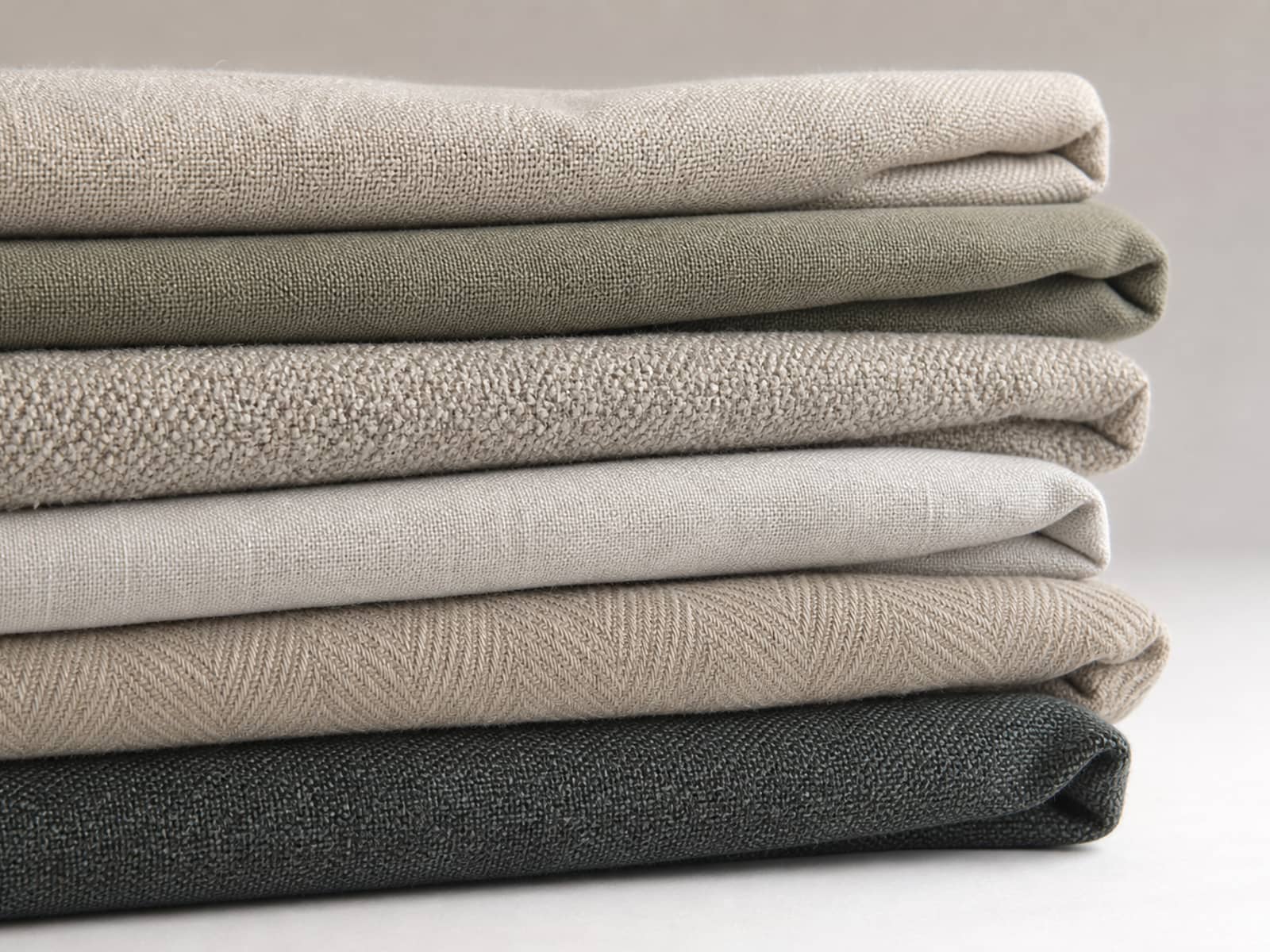
Weight and composition: what gets confirmed per order
Send the weight band, hand-feel and colour you need, and we confirm the exact specification — gram weight, composition and width — for your order in writing before sampling starts.
Nida is sold by weight band, and the band changes between mills and between production batches. Two rolls that look identical on a colour card can hang differently. That is why this page describes bands rather than printing a fixed gram weight or fibre percentage — a number that does not hold for your order costs you a sampling round.
Opacity and layering
Nida is one of the few abaya fabrics that usually needs no lining in an everyday style, which keeps the garment light and the cost controlled. The exception is a very light weight in a pale colour, or a style cut close to the body.
If you are selling into a market where light colours dominate, treat opacity as a specification item rather than an assumption: ask for a fabric swatch, hold it against a window, and approve the weight before sampling.
- Solid colours in abaya weights: normally worn unlined
- Pale colours: check the weight against backlight before you commit
- Open or kimono abaya: often deliberately unlined for layering
- Sleeves and lower panels: the areas where a light nida shows first
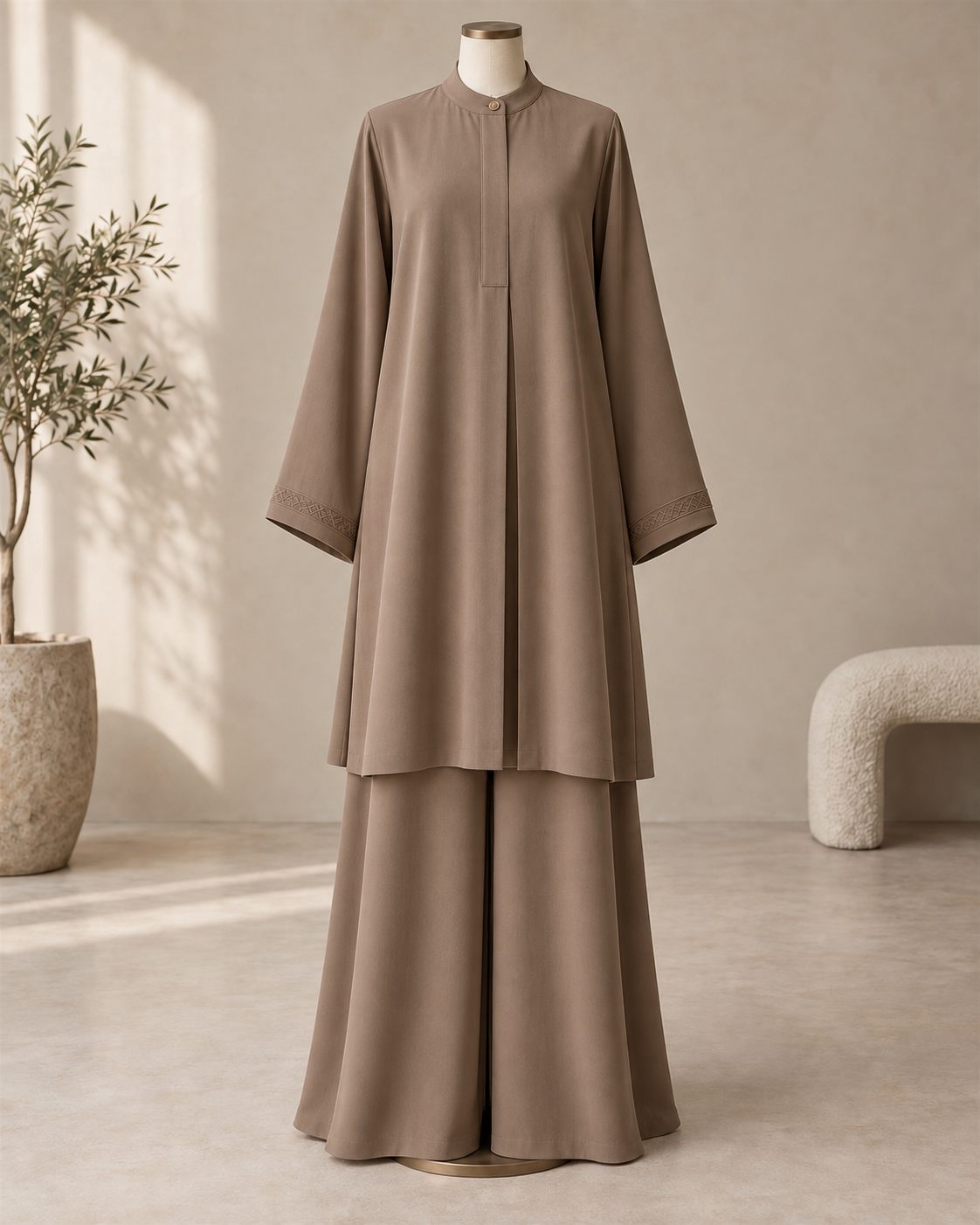
How nida drapes in a real garment
Nida falls rather than floats. On a straight or A-line abaya it produces a long vertical line that makes the wearer look taller, and it holds that line as the wearer moves. What it does not do is hold a sculpted shape: pleats and defined volume belong to crepe and satin.
For a buyer this is a pattern decision as much as a fabric decision. If the style depends on structure — a defined shoulder, a shaped cuff, a full sleeve head — nida will soften that design until it is barely visible.
Which products buyers make in nida
Nida is the default fabric across the abaya category and much of prayer wear. The styles below are the ones buyers order most often, and each can be produced plain or decorated.
- Everyday and open abaya — the volume end of the category; see wholesale abaya styles we produce
- Embroidered and beaded abaya — nida holds dense decoration without distorting
- Prayer abaya and prayer dress — low care matters most in a garment worn daily
- Jilbab and khimar — the matte surface keeps the silhouette plain
- Two piece and three piece modest sets — top and skirt cut from the same roll
- Plus size and tall abaya — nida takes a longer body and sleeve without sagging
Embroidery, beading and printing on nida
Nida is the most decoration-friendly abaya fabric in the range. Its tight, even surface gives embroidery a flat ground, so a cuff, neckline or front panel reads cleanly and the thread does not sink into the cloth.
- Machine embroidery: the standard application for cuff, neckline and front panel
- Beading and rhinestone work: supported well by abaya-weight nida
- Applique and contrast panels: cut edges stay stable
- Printing: technically possible on lighter weights, but the matte ground and the print compete — most buyers choose one or the other
- Always approve decoration on the actual fabric: the same design stitched on crepe or satin behaves differently
Season, climate and market fit
Nida is sold year round, but it is not equally suited to every climate at every weight. In Gulf and Southeast Asian heat, a light weight in a loose cut is the everyday answer. In cooler markets, the same style in a heavier weight sells into autumn and winter.
- Hot and humid markets: light weight, loose cut, solid colours
- Gulf markets: abaya-weight nida with decoration for occasion wear
- Temperate markets: heavier nida, layered styling, longer sleeves
- Ramadan and Eid: nida dominates because it photographs well and ships without creasing
Premium positioning: where nida sits in a price ladder
Nida is not a low tier by definition. It is a mid tier default that can be moved upward through weight, lining, finishing and decoration. Buyers who place a nida piece in a premium collection usually change three things: a heavier weight, a better lining, and decoration that is placed rather than repeated.
The reverse is also true. A premium label selling nida at a plain price point has to justify the price some other way — cut, colour, packaging or brand — because the fabric alone will not carry it.
Sampling and ordering nida
MOQ: contact us for current MOQ on the style you are considering. Lead time depends on design and order quantity. Fabric specification is confirmed per order.
Nida orders follow the same path as any other style in the range: specification, sample, approval, bulk. The step that saves the most money is the second one, because nida behaves differently at different weights and a swatch is cheaper than a re-cut.
Tell us the market, the style and the price level you are selling into.
Confirm the fabric: weight band, colour and hand-feel you want.
Confirm sizing: garment measurements or a size run, market by market.
Approve the sample on the actual nida, including any decoration.
Bulk production, inspection and packing to the approved sample.
Frequently asked questions
At abaya weights it is opaque and is normally worn without lining. A very light weight in a pale colour can show under strong backlight, so if that matters in your market, ask for the weight band to be confirmed per order and approve a swatch against a window before sampling.
Very little. It is one of the reasons nida dominates ready-to-wear abaya: garments arrive looking close to how they left, and a light steam removes the folds left by packing. Heavier weights recover more slowly than light ones.
Yes, if the weight is chosen for the climate and the cut is loose. The fabric itself is not a cooling fabric — it is the combination of a lighter weight, a loose silhouette and an unlined construction that makes a nida abaya comfortable in heat.
Yes, and it is the fabric most decoration in the abaya range is built on. Embroidery, beading and rhinestone application all sit well on the matte, stable surface. Approve the decoration on the actual nida you are ordering, because the same stitch reads differently on crepe or satin.
Contact us for current MOQ. It depends on the style, whether the item is ready stock or made to order, and how the order is combined across categories. Lead time depends on design and order quantity, so we confirm timing for your specific order rather than quoting a blanket figure.
Yes. Approve the weight and colour on a swatch before sampling starts. Choosing the weight first is the decision that saves the most money in a nida order, because it is the one that most often sends a sample back for rework.
Planning your next modest fashion collection?
Tell us these seven things and we can come back with a workable sourcing plan instead of a price list.