Private Label Abaya: Putting Your Brand on the Garment
Private label means the abaya arrives as your product, not as an unbranded import. Here is exactly which parts of it you own and what you need to prepare.
Private label, OEM and ODM are not the same thing
Buyers use these three words interchangeably, then disagree with their supplier about what was included. For abayas the difference matters, because it decides how much of the development work is yours and how much is ours.
Private label: you take an existing abaya pattern and put your identity on it. OEM: you bring the design and we make it. ODM: you bring a direction and we develop the design with you. Most brands start with private label and move to OEM on the two or three styles that sell.
- Private label — existing pattern, your labels, tags, packaging and colours
- OEM — your pattern or tech pack, produced to your specification
- ODM — joint development from a reference, mood or sketch
- Custom measurement — an add-on to any of the three, not a separate mode
The four things you actually brand on an abaya
A private label abaya has four branding touchpoints, and buyers usually underestimate the third and fourth. The garment itself, the information the customer needs, the moment of unboxing, and the colours other people cannot buy.
Get the first two right and the product is legally sellable. Get all four right and it starts to look like a brand instead of a reseller with a logo.
- Woven or printed brand label — set into a seam where it will not irritate
- Care and content label — carries the information your market requires on textile products
- Hang tag or header card — the retail-facing side of the same identity
- Exclusive colour, trim or fabric choice — the part competitors cannot simply copy
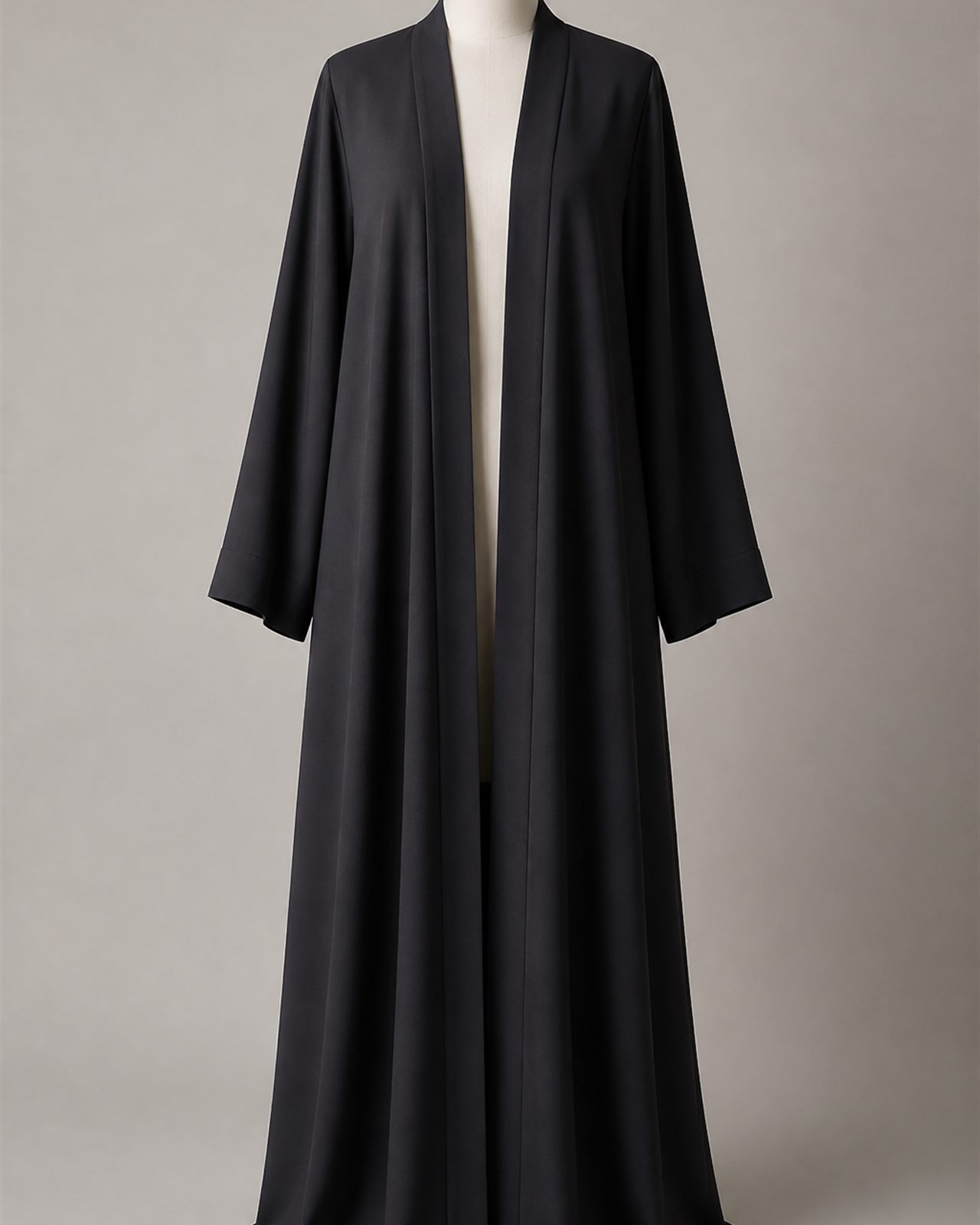
Label placement on an abaya: the detail buyers get wrong
Do not print a claim you cannot support. Fibre and care statements belong on the label only when they match the garment you actually received.
An abaya label is not a t-shirt label. The garment is long, often unlined, and worn over other clothing. A badly placed neck label rubs against the skin; a label stitched into a sheer fabric reads through to the outside.
Decide placement with the sample in your hand, not from a drawing. We will show you the options we produce and what each one does to the finish.
- Neck label — most visible, most likely to irritate if the weave is stiff
- Side seam label — discreet on open abayas, invisible when the garment is worn
- Inside back panel — visible when the abaya is hung open, so it must look intentional
- Hem or sleeve label — used as a signature on premium and occasion styles
- Legal labelling — what your market requires, and what your label may claim
Exclusivity: how much of the style is yours alone
If you are building a brand rather than reselling, the question that matters is who else can buy the same garment. Be explicit about it at enquiry stage, because the answer changes the cost of the order.
Simple ways to make a style yours: an exclusive colour, an exclusive combination of fabric and trim, a modified sleeve or hem, or decoration that is digitised from your own artwork. Each one narrows who else can place the same product next to yours.
| Route | What it involves | Buyer effort |
|---|---|---|
| Label and tag only | Standard pattern, your branding applied | Low — artwork and label text |
| Exclusive colour | Existing pattern produced in a shade you specify | Medium — colour approval on a swatch |
| Modified details | Changed sleeve, hem, placket or neckline | Medium — decisions at sample stage |
| Decoration | Embroidery, beading or rhinestone from your artwork | Higher — artwork must be digitised and approved |
| Own pattern | Pattern developed to your measurements and fit | Highest — full development cycle |
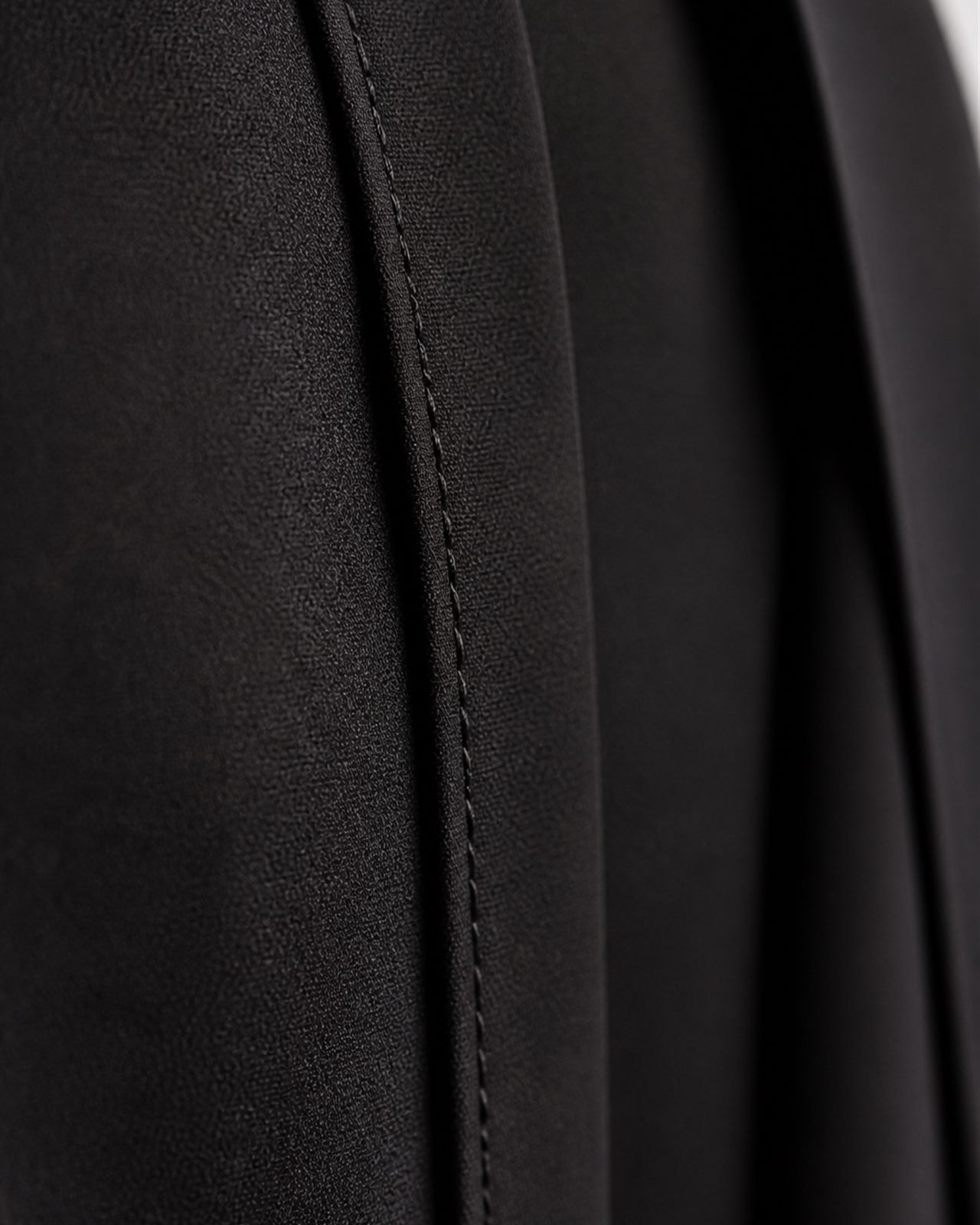
What to send us to start a private label abaya line
Private label moves quickly when the buyer sends a complete brief. It stalls when the brief arrives in four separate messages over three weeks — every missing detail turns into an extra sample round.
If you only have part of this list, send what you have and say what is still open. That is a normal starting point.
- Label artwork in a usable vector or high-resolution file, with final wording
- Hang tag or header card design, including back-of-tag content
- Packaging intent: poly bag, printed bag, boxed or unboxed
- Colour direction, with references that are more specific than a colour name
- Target market and selling channel, so sizing and finish match the customer
- Any label wording your market requires for textile products
Sampling with your branding on it
The sample you approve should already carry the label, the tag and the packing you intend to sell. Approving a plain sample and adding branding afterwards is how brands end up with a first shipment they cannot photograph.
Send the brief: style, fabric, colours, branding artwork and target market.
Confirm the pattern and fabric combination you want the brand applied to.
Label and tag artwork proofed, including placement and final wording.
Sample produced in your colour with your branding applied.
You check placement, colour, wording, feel and finish on the actual sample.
Approved sample sealed as the reference for bulk.
Bulk production, including label and packaging application.
Packing check to confirm the brand element is present and correct on every unit.
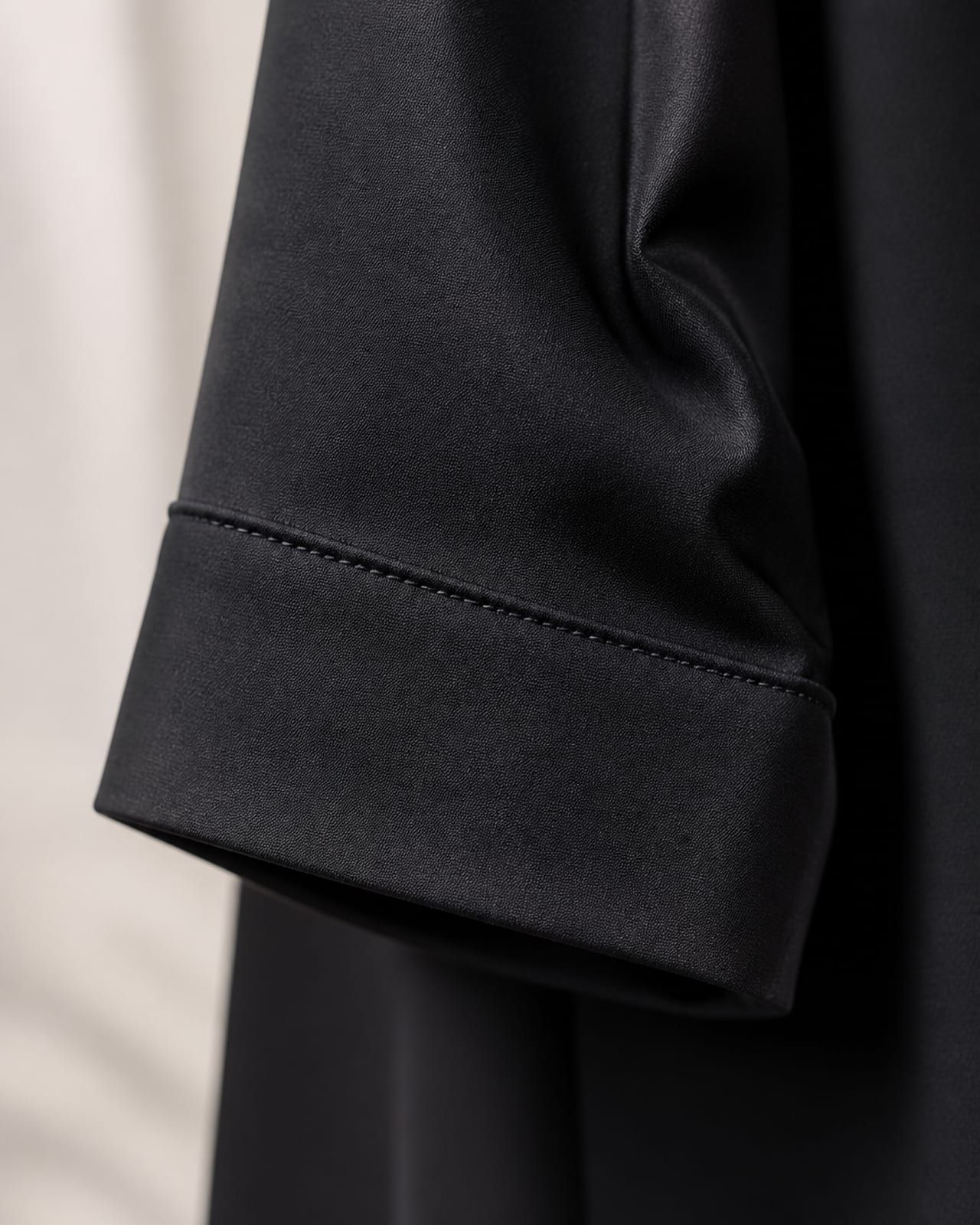
The quality risks that are specific to private label
On a plain order, a defect is a defect. On a private label order, some of the most expensive problems are branding problems, because a missing label or a wrong hanging tag can make a whole carton unsellable in your channel.
- Label position varies from garment to garment across the lot
- Label wording or spelling differs from the approved proof
- Label colour or weave differs from the approved label sample
- Hang tag missing, mismatched or attached to the wrong style
- Packaging differs from the approved packing sample
- Decoration placement drifts between the sample and bulk
Packaging: the last thing buyers decide and the first thing customers see
Packaging is where a private label abaya becomes a product. A poly bag protects the garment; a printed bag or a boxed presentation sells it. They are not the same purchase and should not be treated as one line item.
If you sell online, plan packing for the photograph as well as for transit: folded shape, tissue, tag placement. If you sell into boutiques, plan it for a rail. Tell us which one you need and we build the packing around it.
- Protective packing — keeps the garment clean and crease-free in transit
- Printed packing — carries your identity at the moment of opening
- Retail-ready packing — folded to a standard shape for shelf or rail
- Gift packing — for occasion and seasonal ranges
Frequently asked questions
No. Most private label ranges begin on an existing pattern with your labels, tags, colours and packaging applied. You can move to your own pattern later on the styles that prove themselves, which keeps early development cost in the order rather than in the pattern room.
You can label a standard style as your own, but you will not be the only one selling it, and customers who shop around will notice. If exclusivity matters, choose an exclusive colour, a modified detail or your own decoration, and tell us at enquiry stage so we can confirm what is achievable before you commit.
It depends on your market and the product, and the responsibility for the wording sits with you as the brand. We produce the label to your approved text. If you are unsure what your market requires for textile products, treat that as a question for your own compliance adviser before artwork is finalised.
In practice, keep it to one label and one tag per collection. Multiple label versions inside a single order multiply the chance of a mix-up during packing and make the packing check harder to run properly.
Contact us for current MOQ. Private label adds setup work — label production, tag printing and packing configuration — so the quantity logic differs from plain stock. It also depends on whether you choose an existing fabric or an exclusive colour that has to be produced for you.
Yes, and it should. A sample with your label, tag and packing lets you check placement and presentation, and it becomes the sealed reference we produce bulk against.
Planning your next modest fashion collection?
Tell us these seven things and we can come back with a workable sourcing plan instead of a price list.