Beaded abaya — wholesale and custom beading
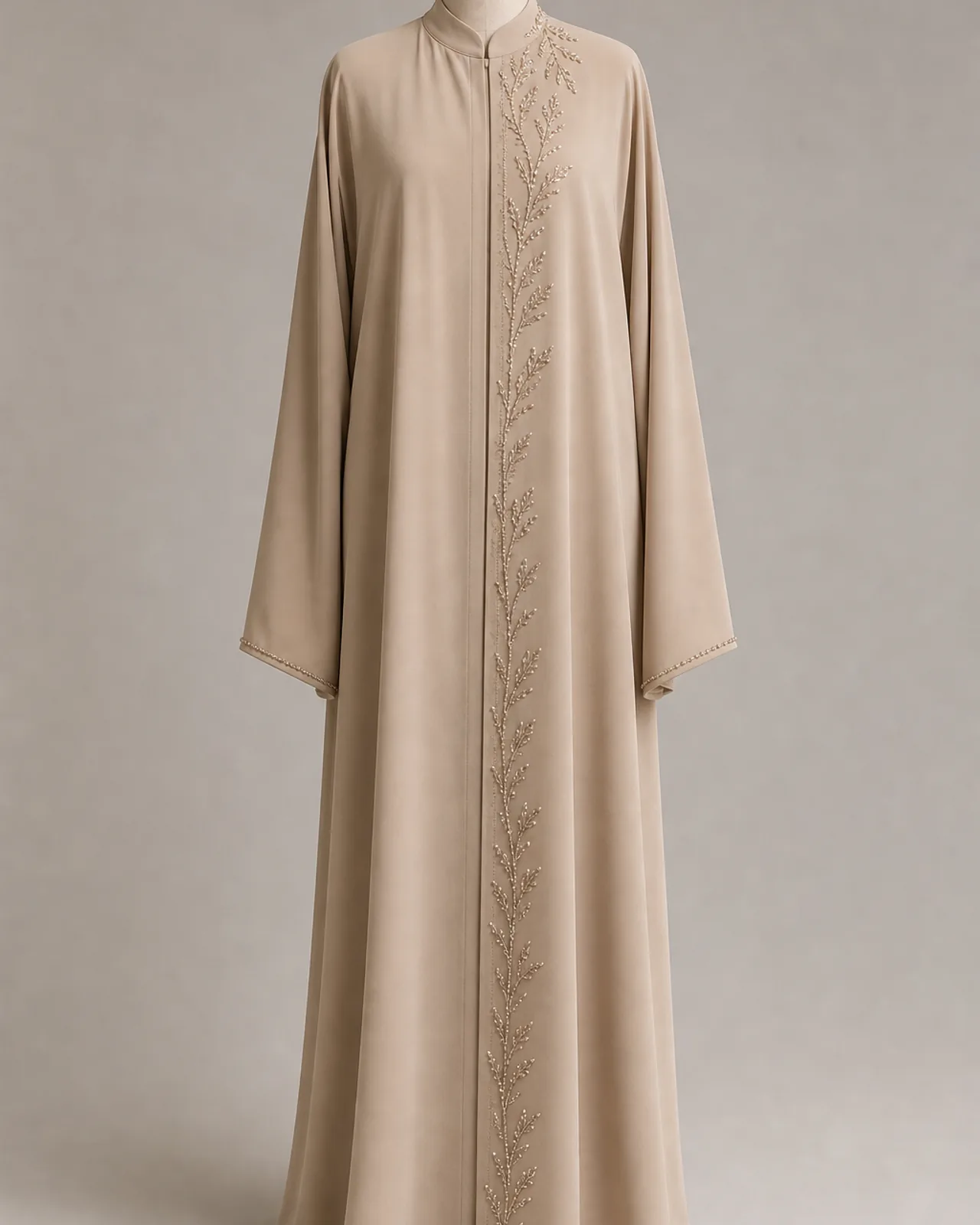
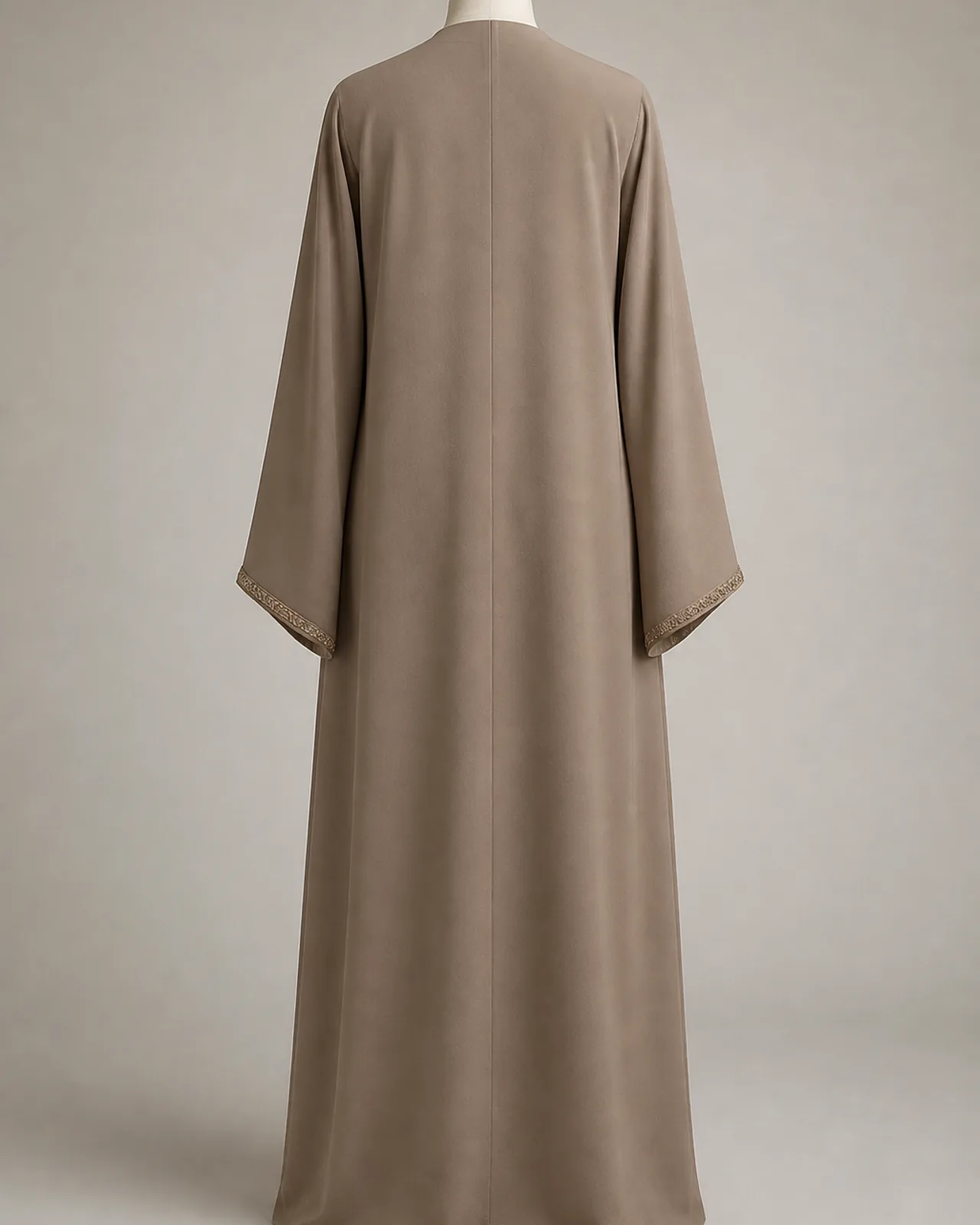
A beaded abaya is judged by whether the work stays on the garment after it is worn. Method, density and placement are agreed on a sample, then repeated for the bulk order.
What beading changes about an abaya order
Beadwork adds weight, labour and risk. Weight changes drape, labour changes lead time, and risk means that a beaded garment the customer cannot wash normally will come back if the work is not anchored properly. Buyers who plan for those three effects get a piece that sells without generating complaints.
- A decorated panel hangs differently from a plain one, so drape is checked after the beads are on
- Coverage and density are the main cost drivers, not the bead size
- Care guidance has to match how the beads are fixed, and belongs on the care label
- Reorders repeat an approved sample rather than re-interpreting a photograph
Method and density: the decisions that set the price
Two beaded abayas can look similar on a rail and behave very differently in wear, depending on how the work was applied and how densely it covers. Both options are available; what matters is that the choice is deliberate and recorded before bulk.
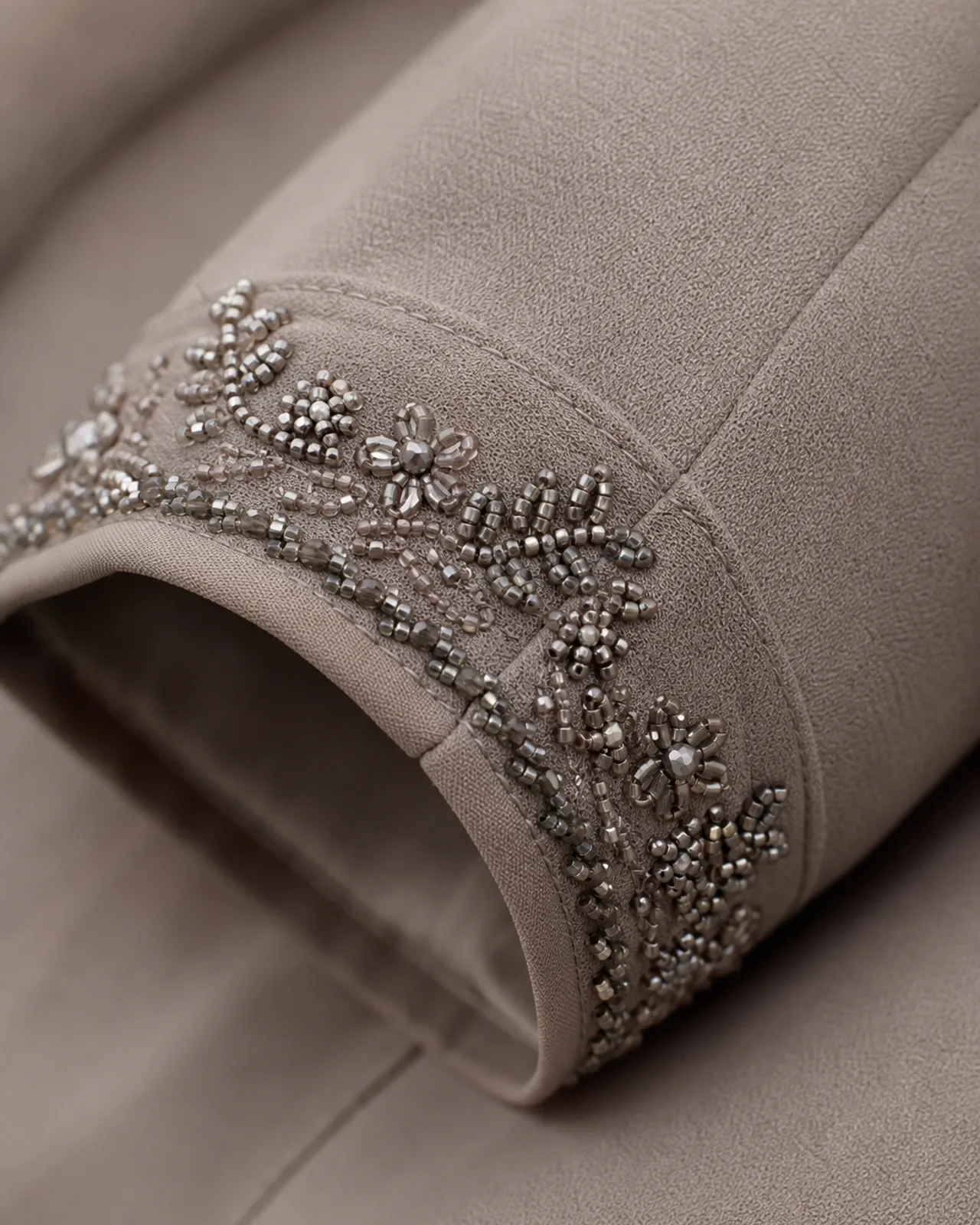
- Applied by hand — suited to open, irregular motifs and to placements that need to follow a curve
- Applied by machine — suited to repeating borders, straight runs and higher volume
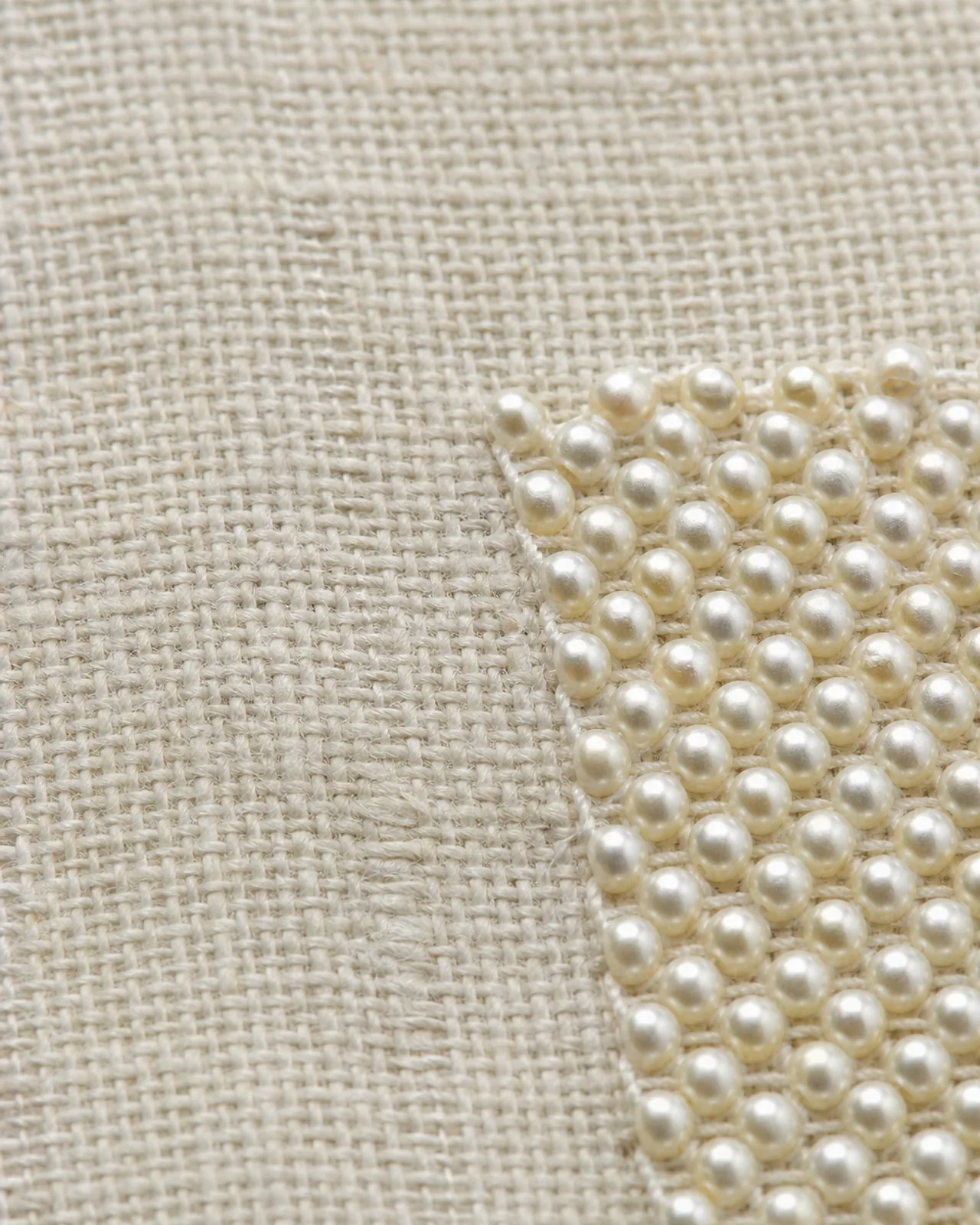
- Density around the motif — a lighter scattering, an outline of beads, or a fully covered panel
- Mixed work — a beaded panel with embroidered or rhinestone elements in the same design
How the work is anchored so it stays on
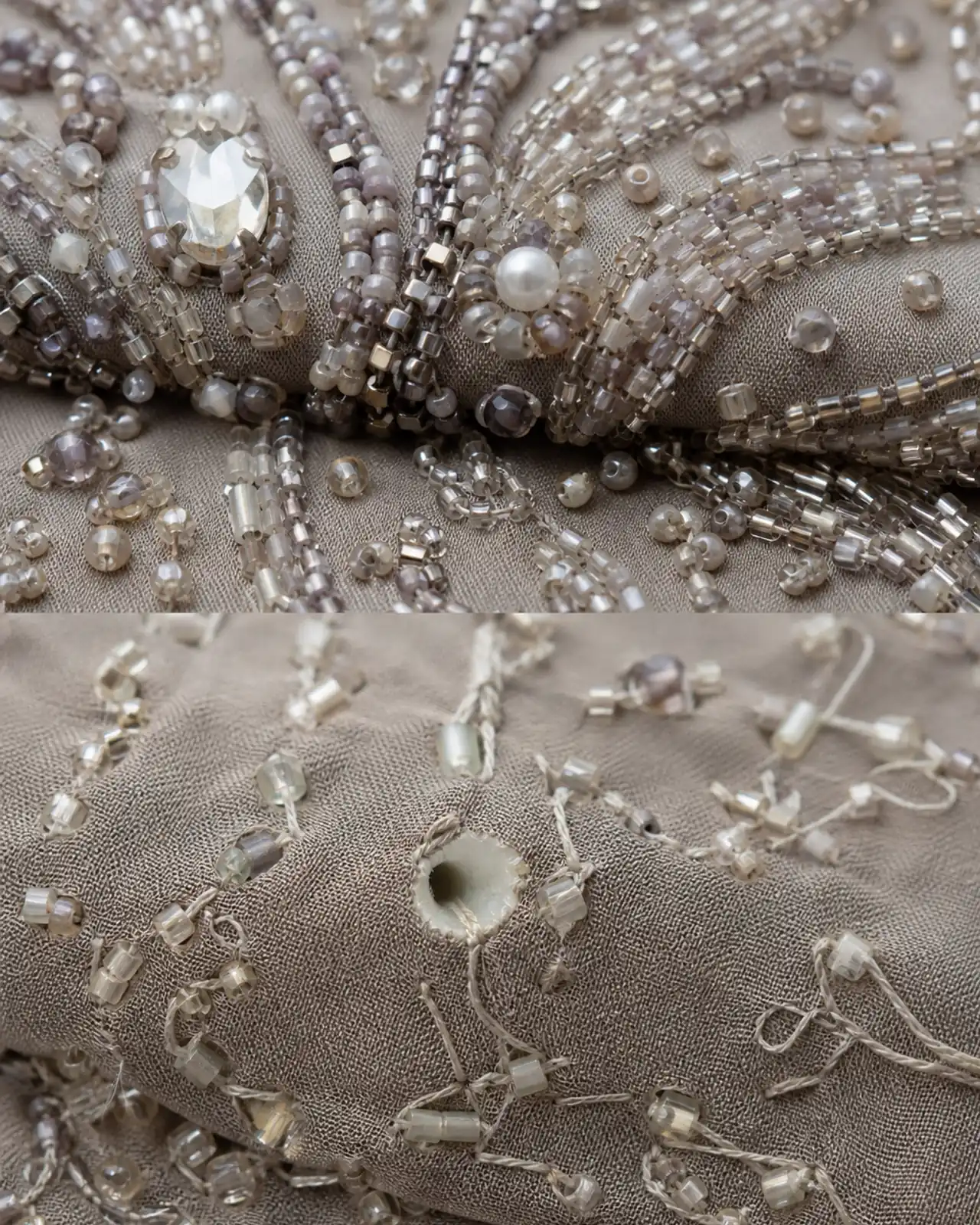
Shedding beads are the most common complaint on decorated garments, and the cause is almost always the fastening method rather than the bead. Each application technique is tested on your fabric and your chosen bead before the design goes into bulk.
- Beads and stones secured individually rather than glued in a continuous line
- The reverse of the decorated area finished so nothing catches on the garment underneath
- Sampled pieces pull-tested to confirm how the work behaves under normal wear
- Care instructions written to match the fixing method, and printed on the care label
Sizing and drape on a heavier garment
Beadwork pulls a panel downward, so a beaded abaya does not always measure or hang like the same block produced plain. Measurements are taken after decoration, and the size guide explains how the agreed points are read on the finished garment.
Define the occasion, the price level and whether the piece is a one-off or a repeat
Choose the ground fabric and confirm how it behaves under bead weight
Agree method, density and placement on a beaded sample
Approve measurements after decoration, not before
Repeat bulk against the approved sample, batch by batch
Which buyers order beaded abayas
Beaded styles sit at the decorated end of a collection and are usually ordered for a specific season or event rather than as a year-round basic. That makes the sample approval stage more valuable, because the design is repeated across several colourways once it is confirmed.
- Boutiques building an occasion rail for wedding and celebration season
- Brands that want one decorated hero piece to sit above a plain range
- Wholesalers repeating a proven motif across a colour range
- Buyers combining beading with embroidery on the same piece; the wider decoration offer sits under customization
Inspecting beadwork before it is packed
Beadwork inspection happens after decoration and before folding, because folding and pressing hide exactly the problems that matter: a loose bead, a stone set at an angle, a run of beads that has drifted off the line.
- Pull test on a sample of pieces from each batch to check how the work is anchored
- Alignment check against the approved sample, along the full length of the motif
- Tone and colour check of beads and stones, piece to piece
- Reverse check for loose threads, exposed glue marks and roughness against the skin
- Final flat check to confirm the decorated panel still hangs correctly
Packing and care: protecting the work after it leaves
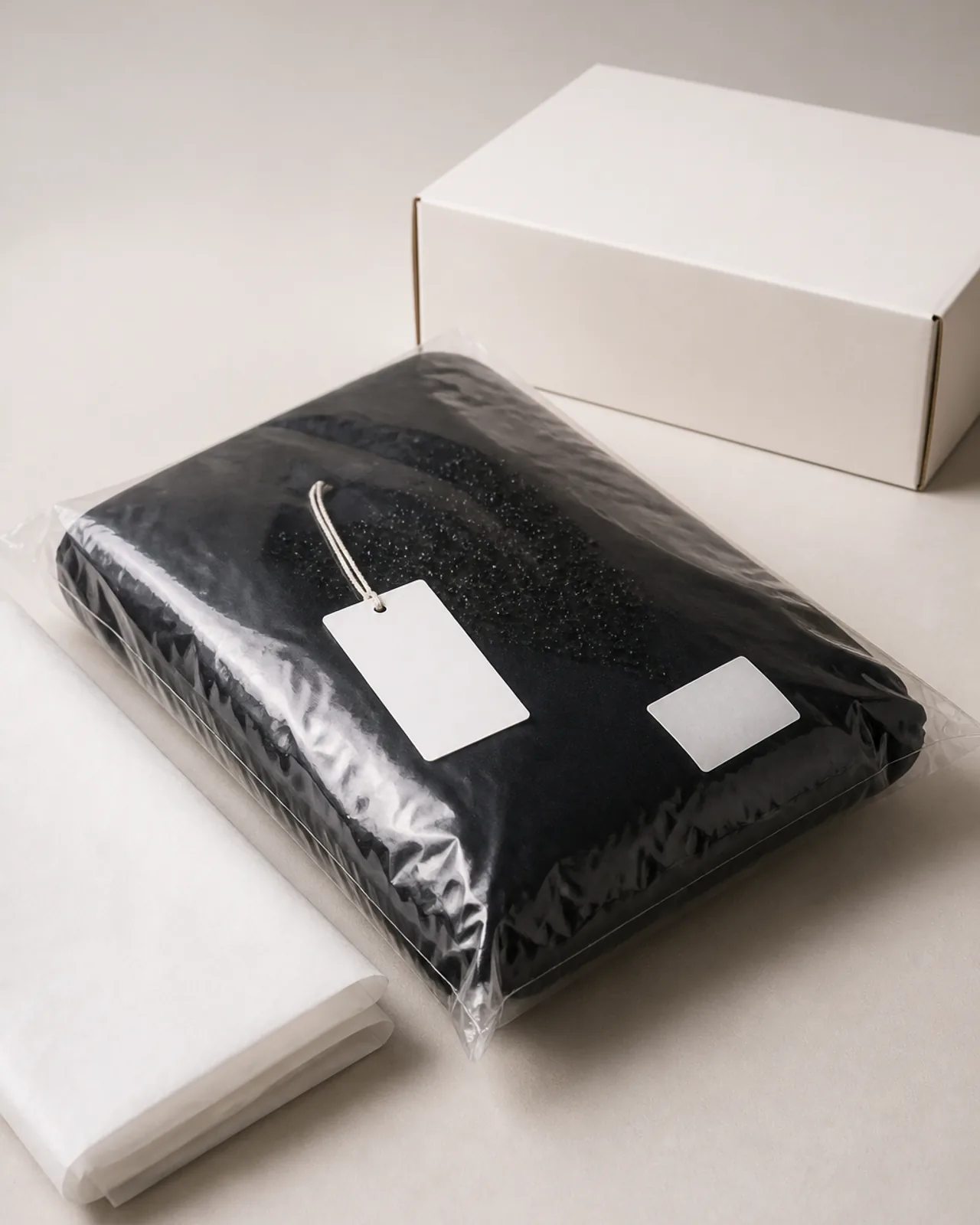
A beaded abaya is packed so that nothing presses on the decoration. The piece is folded with the beaded area cushioned, tissue is placed between layers, and care guidance goes on the garment itself rather than relying on the buyer to explain it at the point of sale.
- Cushioning over the beaded area inside the poly bag
- Folding that keeps beads off hard creases and away from zip pulls or buttons
- Care label printed with instructions that suit the fixing method used
- Packing list by style, colour and size; shipping confirmed per destination on wholesale
Specifications
| Fabric | To be confirmed with your enquiry |
|---|---|
| Composition | To be confirmed with your enquiry |
| Weight | To be confirmed with your enquiry |
| Color | Ground fabric and bead or stone colours matched to your reference on a beaded sample |
| Size | Confirmed per order, including plus size and custom measurement runs |
| Length | Agreed in garment measurements; decoration position is set against the finished length |
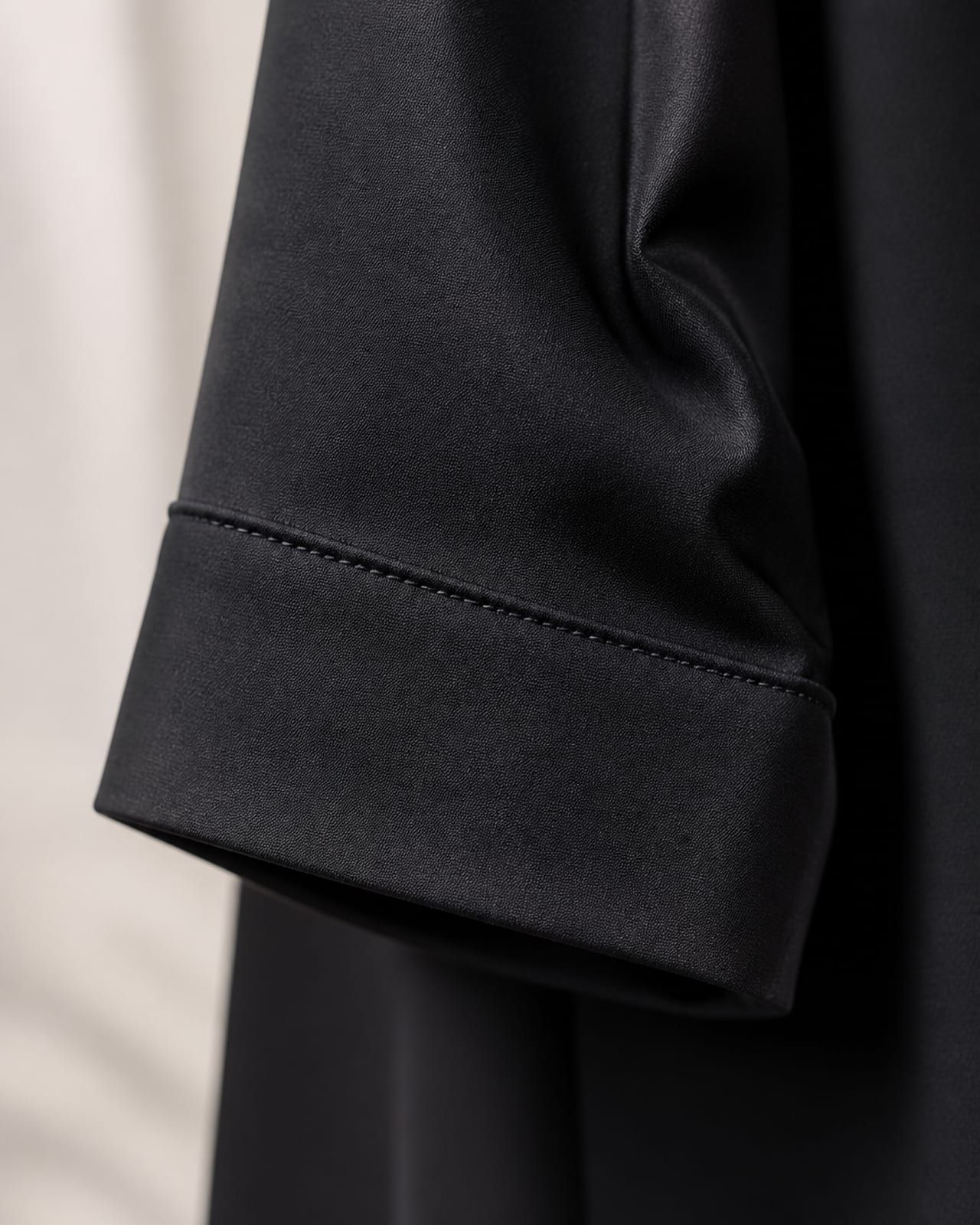
| Sleeve | Sleeve and cuff finishing agreed together with the beading placement on the sample |
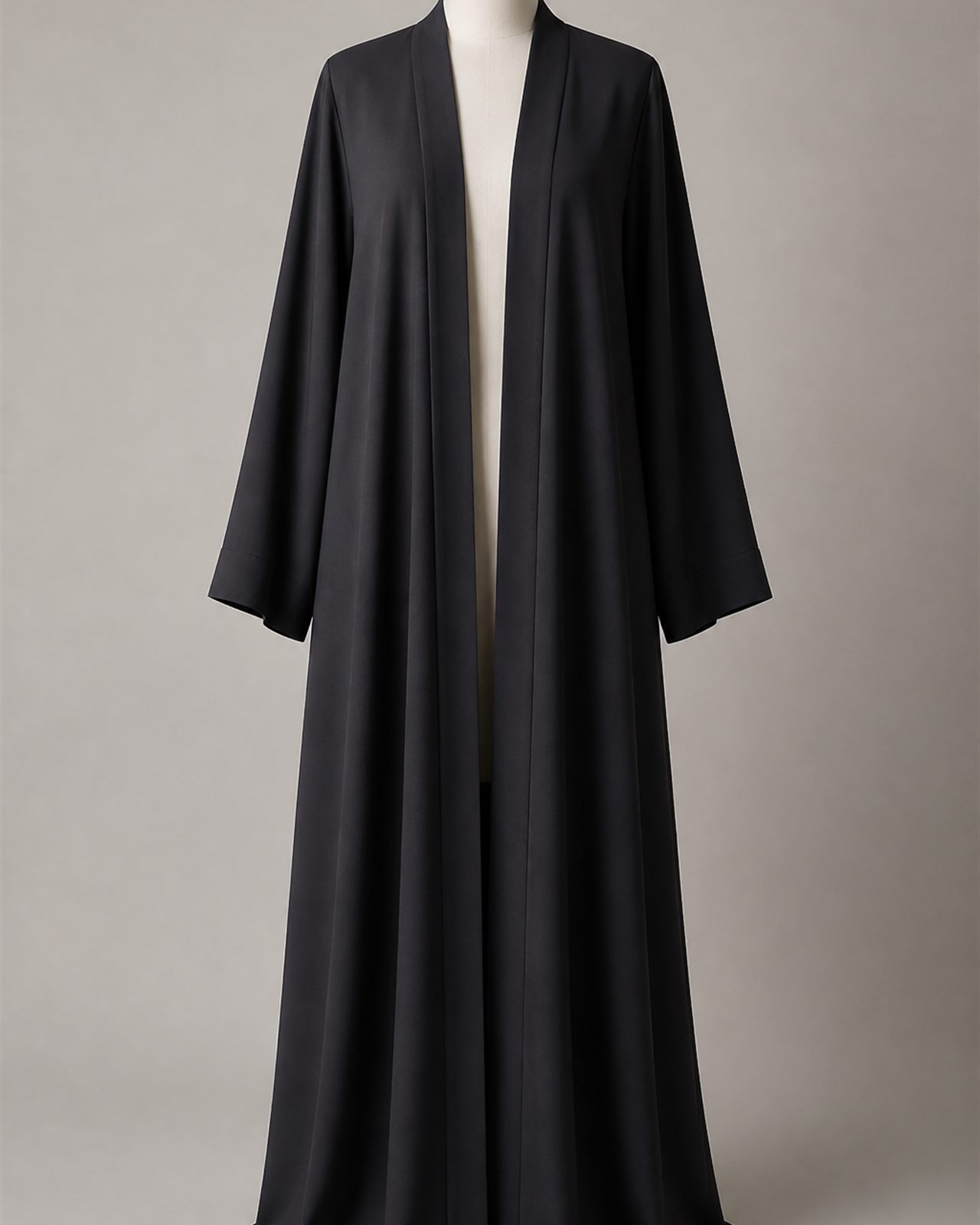
| Style | Abaya defined by applied beadwork on the front panel, cuff, hem or neckline |
| Decoration | Beading; can be combined with embroidery or rhinestone where the design allows |
| Closure | Confirmed on the approved sample for the silhouette you order |
| Lining | Commonly used to cover the reverse of the beadwork; confirmed per design |
| Packaging | Poly bag as standard with the beaded area cushioned; retail packing on request |
Wholesale Information
| MOQ | Contact us for current MOQ |
|---|---|
| Sample | Lead time depends on design and order quantity |
| Price Tier | Quoted per order; method, bead density, coverage and quantity move it |
| Customization | Bead colour, stone type, density, placement, fabric, measurement and packaging |
| Production | Lead time depends on design and order quantity |
| Packaging | Poly bag with cushioning over the beaded area; branded packing on request |
| Shipping | Consolidated shipment with packing list; terms and documents confirmed per destination |
OEM / ODM Options
- Custom Color
- Custom Size
- Custom Label
- Custom Hang Tag
- Custom Packaging
- Embroidery
- Beading
- Rhinestone
Quality Details
| Size tolerance | Measured flat against the approved size chart, with the beaded panel measured after decoration rather than before |
|---|---|
| Stitching | Seams checked as normal, and beadwork pull-tested on a sample of pieces from each batch |
| Fabric | Checked against the sealed reference before decoration, since beading marks and stresses the cloth |
| Color inspection | Bead and stone colours compared with the approved sample under controlled lighting, and checked for tone variation between pieces |
Frequently asked questions
That is decided by how the work is anchored, which is why a beaded sample is approved before bulk and why finished pieces are pull-tested during inspection. Care instructions are written to match the fixing method that was used.
It depends on the fixing method, the bead type and the ground fabric. Rather than assume, we confirm the care instruction with the sample and print it on the care label, so your customer is told what the garment can take.
Send a photograph or a physical sample with the colour and size you want. The nearest available options are presented on a beaded swatch, and you approve the tone against your reference before bulk.
Yes, and it is a common combination on occasion pieces. The order of work matters — embroidery is stitched first, then hand work is applied — so the combined decoration is sampled as a whole.
Hand work is slower per piece, so it is priced and planned differently from machine work. MOQ depends on the design and the order, so contact us for the current MOQ on the piece you have in mind.
Planning your next modest fashion collection?
Tell us these seven things and we can come back with a workable sourcing plan instead of a price list.