Closed abaya in crepe — wholesale supply for boutiques and brands
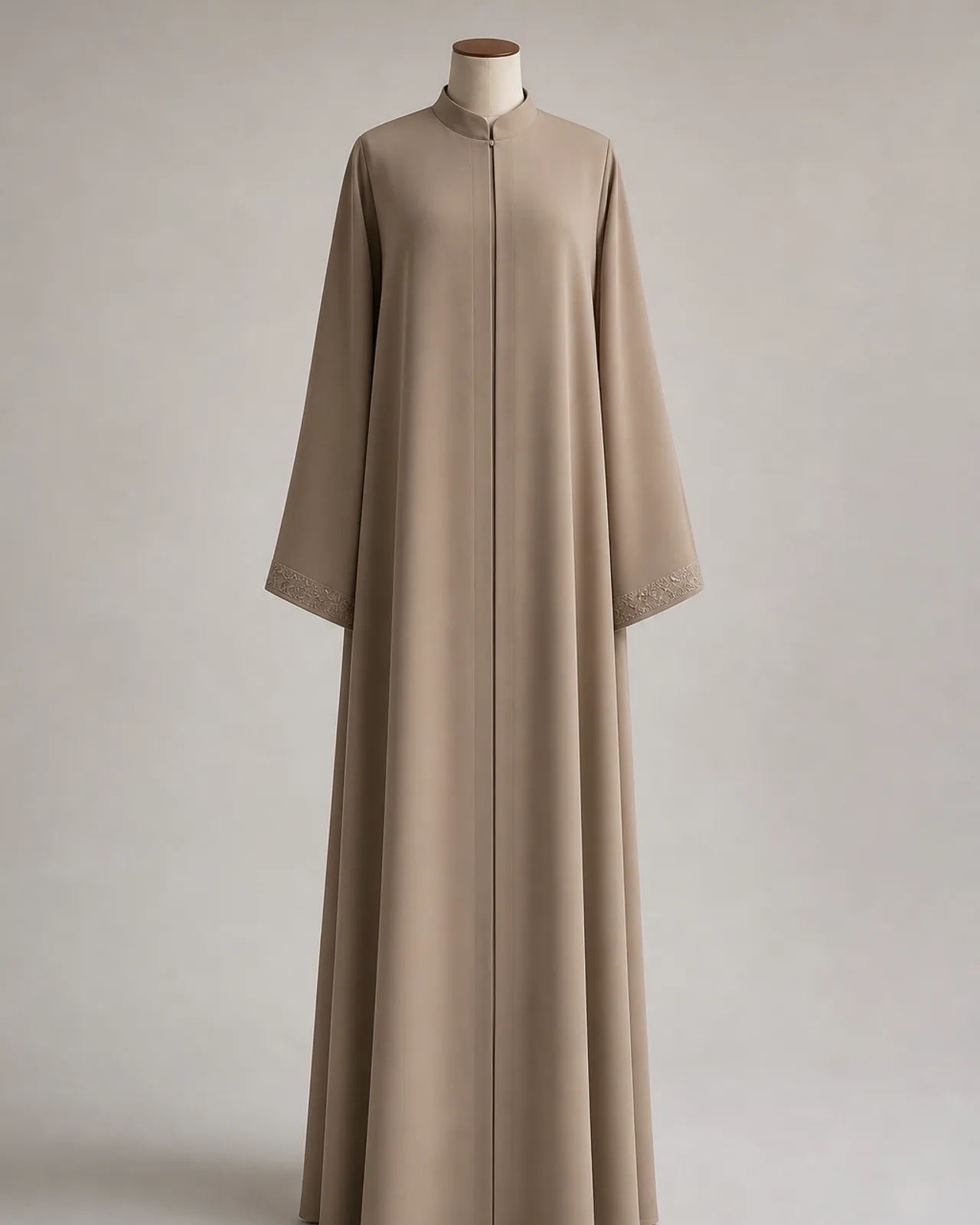
A full-coverage abaya with no front opening, cut in crepe for a structured fall that keeps its line through a long day. Made plain for private label, or decorated to your sample.
What a closed abaya is bought for
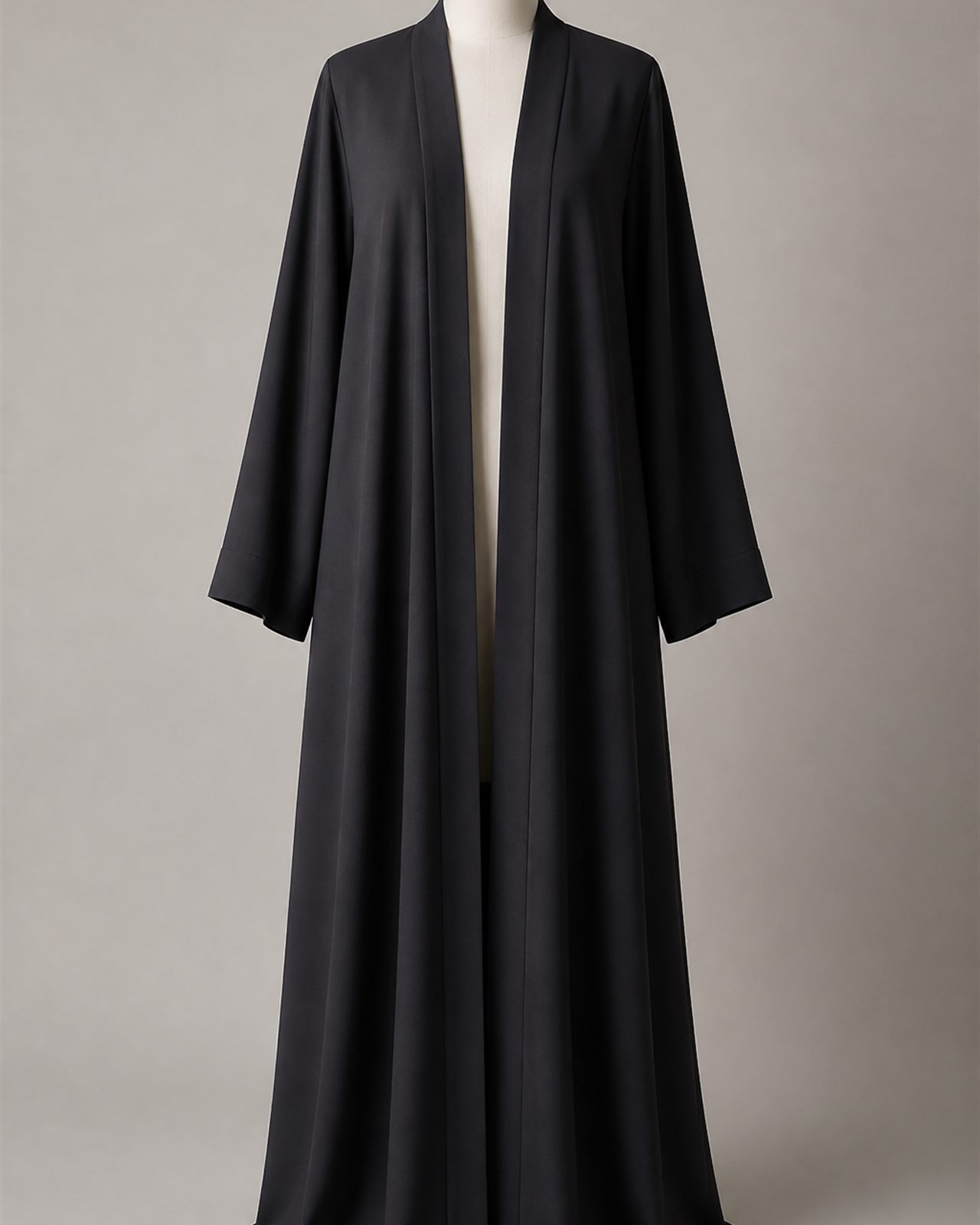
Buyers who order a closed abaya are usually buying coverage first and styling second. There is no front opening to manage, no inner layer to sell with it, and nothing to adjust in the shop — the garment goes on and closes. That simplicity is exactly why the details that remain visible have to be right.
- A neckline that sits flat and does not gape when the customer moves
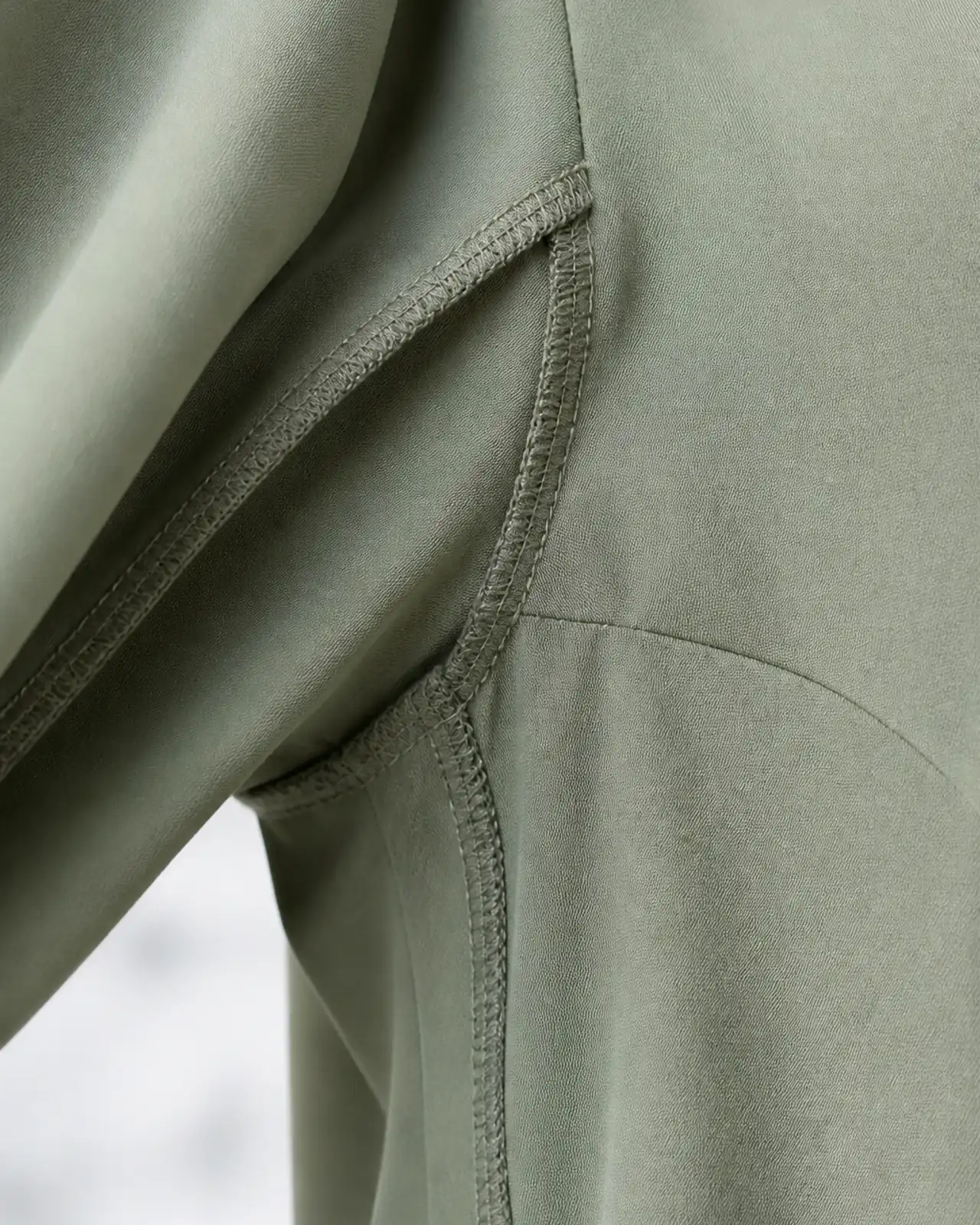
- Side and underarm seams that do not pull across the chest
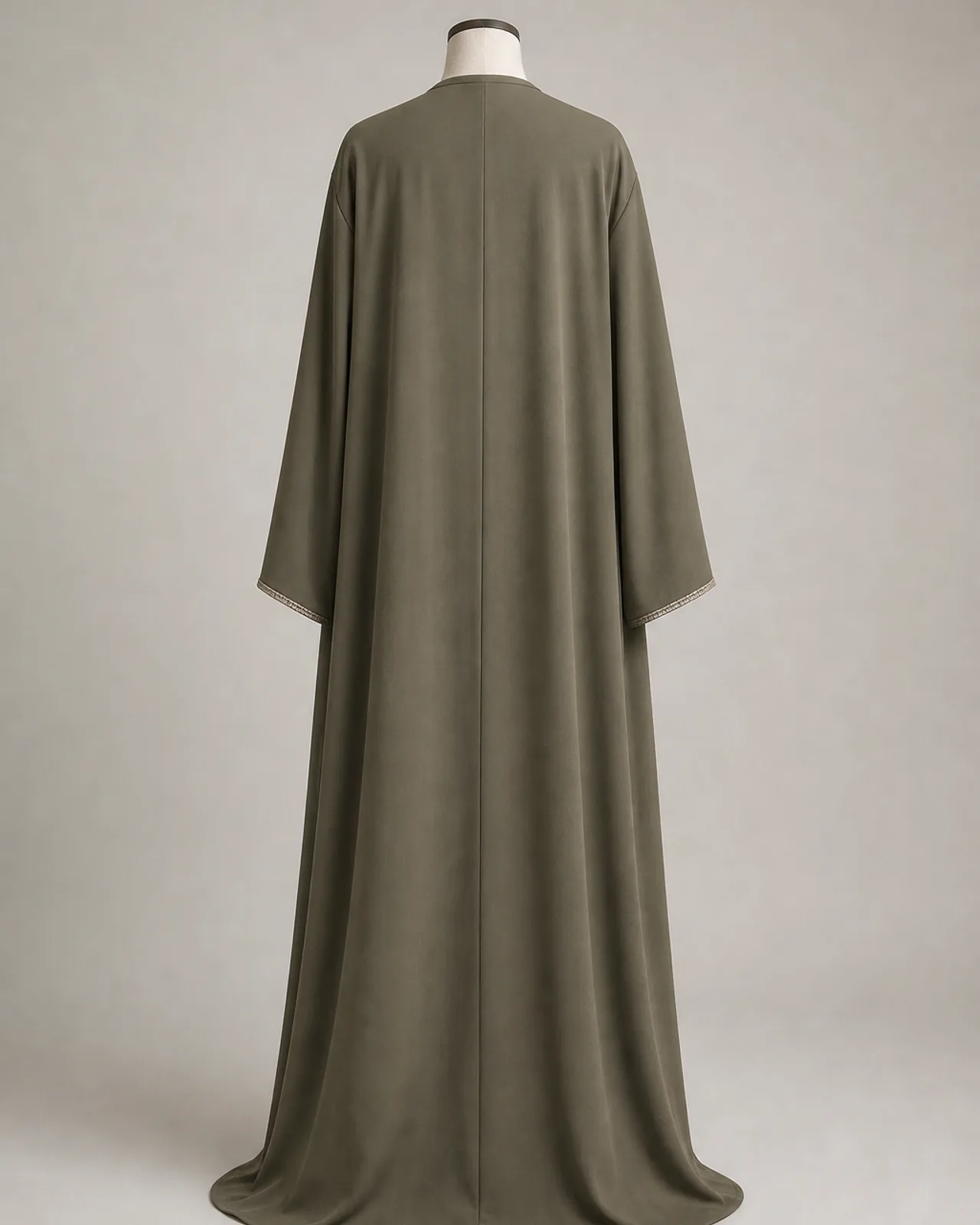
- A hem that hangs level all the way round, checked on a form and flat
- Enough body width for comfort without losing the silhouette your market expects
Which buyers order closed abayas
Closed silhouettes sell strongest where customers prefer full coverage without layering, and where the abaya is worn for long stretches of the day. That makes the style a volume line for regional wholesalers and a dependable basic for brands that already sell open styles.
- Wholesalers and distributors who need one reliable block across many colours
- Boutiques serving customers who want a garment to wear on its own, without an inner dress
- Brands adding a plus size and tall run around a single tested silhouette
- Start with the wider offering on wholesale abaya if you are still deciding between open and closed cuts
Crepe: what it changes about this style
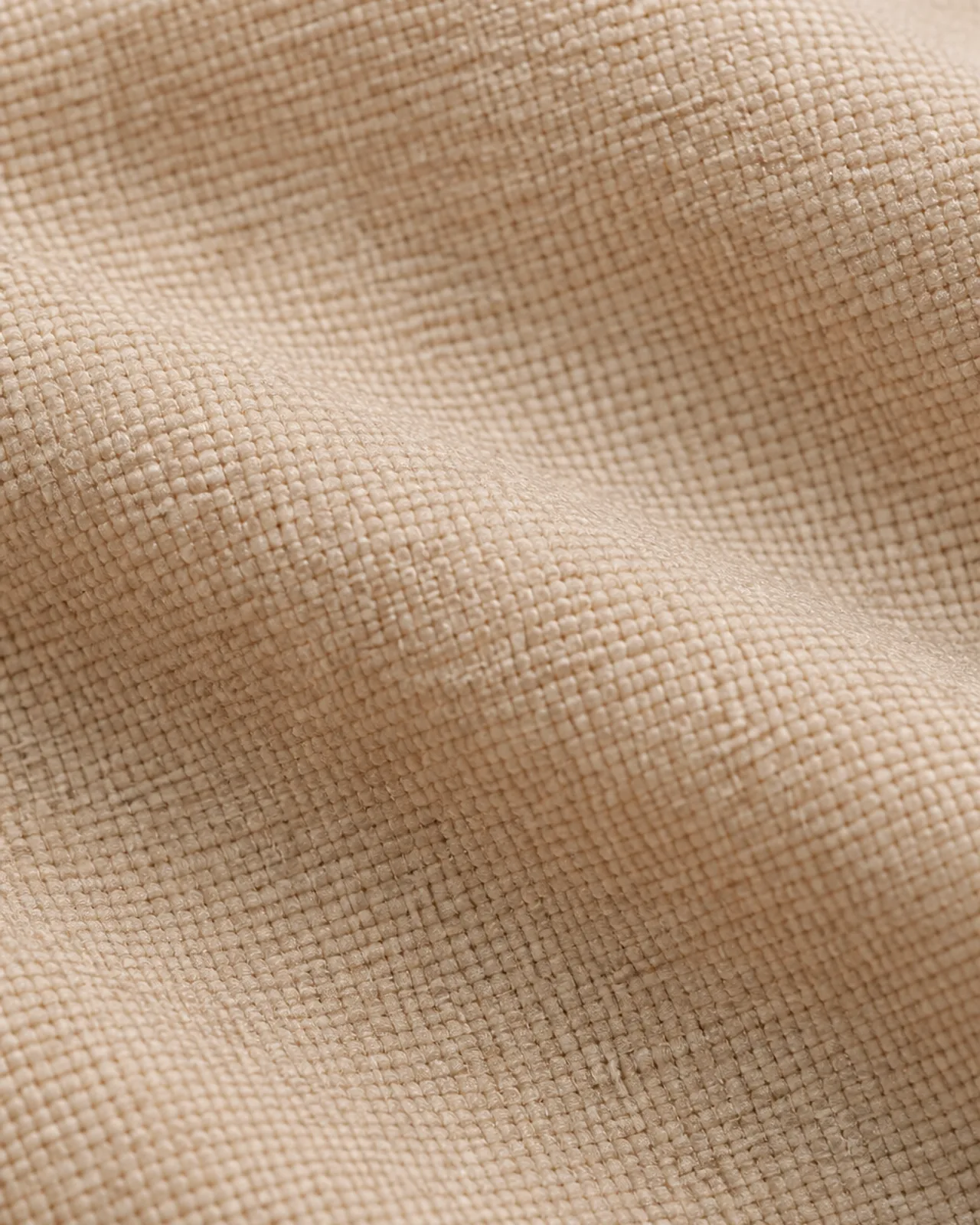
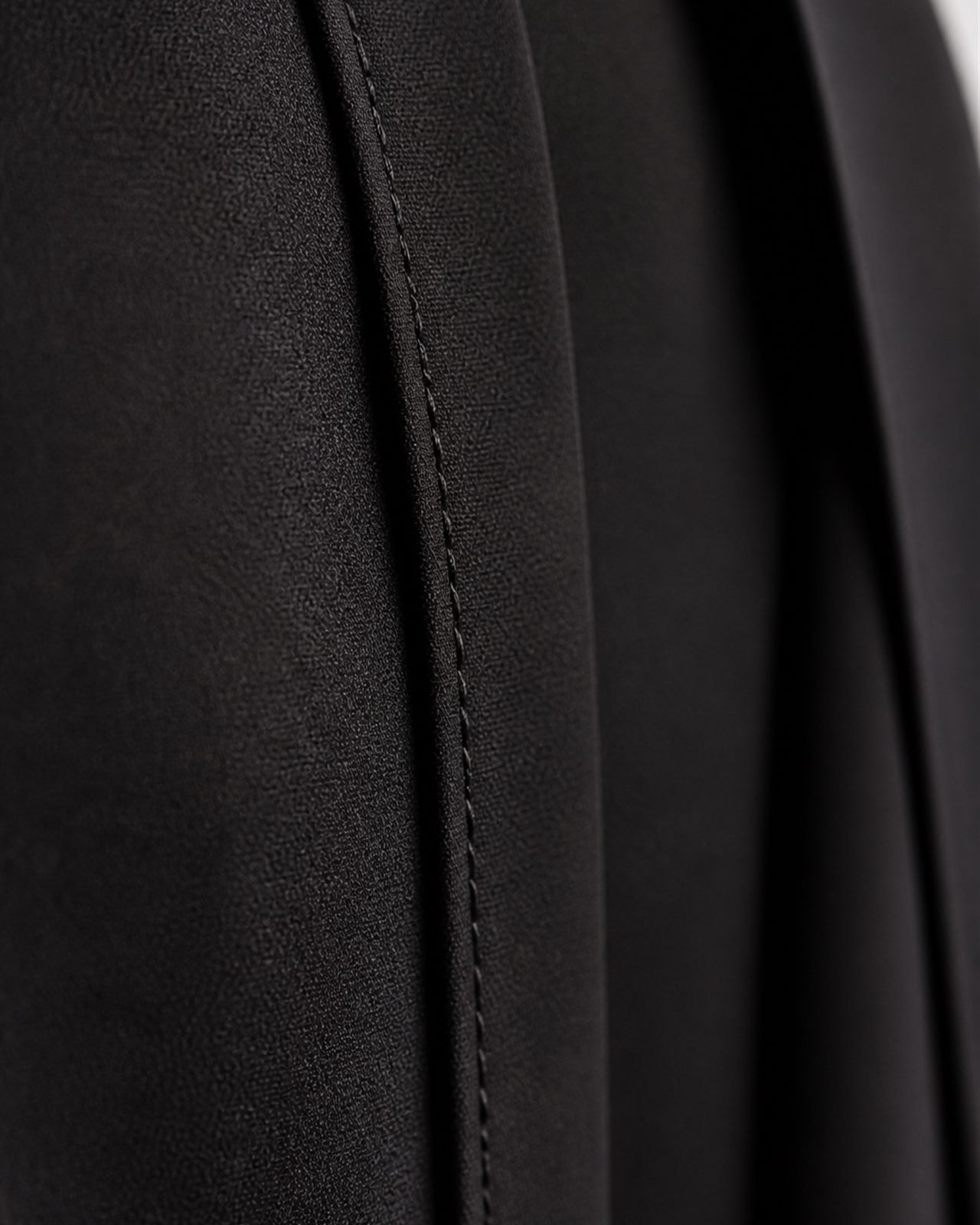
Crepe gives the closed abaya a more deliberate line than a fluid fabric would. It holds a shape at the shoulder and hem, which reads as a tailored garment rather than a loose layer — useful when the same abaya is sold to customers who want to wear it to work as well as to an occasion. The crepe page explains how it compares with Nida on drape and structure.
- Structured drape that keeps the shoulder and hem line intact
- A surface that takes pressing well over long panels
- Suitable for hot and mild climates, and for markets that prefer a firmer hand feel
Specifying the closed abaya
With no front opening to adjust, the specification lives in three numbers: body width, garment length and sleeve. Get those into garment measurements before sampling and the fit conversation stops being about opinion. The size guide walks through how each is measured.
Confirm the market, the price level and whether the abaya is decoratable or plain
Choose crepe quality and set the colour reference
Fix garment measurements for bust, hip, sleeve and length
Approve the sample, including neckline and hem finish
Run bulk against the approved sample and size chart
Private label on a plain block
A closed abaya is the most natural garment in the range for private label, because it is bought as a repeat basic rather than a one-off. Your label, your size chart and your colour range are what turn a plain abaya into a line a customer comes back for.
- Woven, printed and care labels produced to your artwork
- Custom colour range built around your best-selling shades
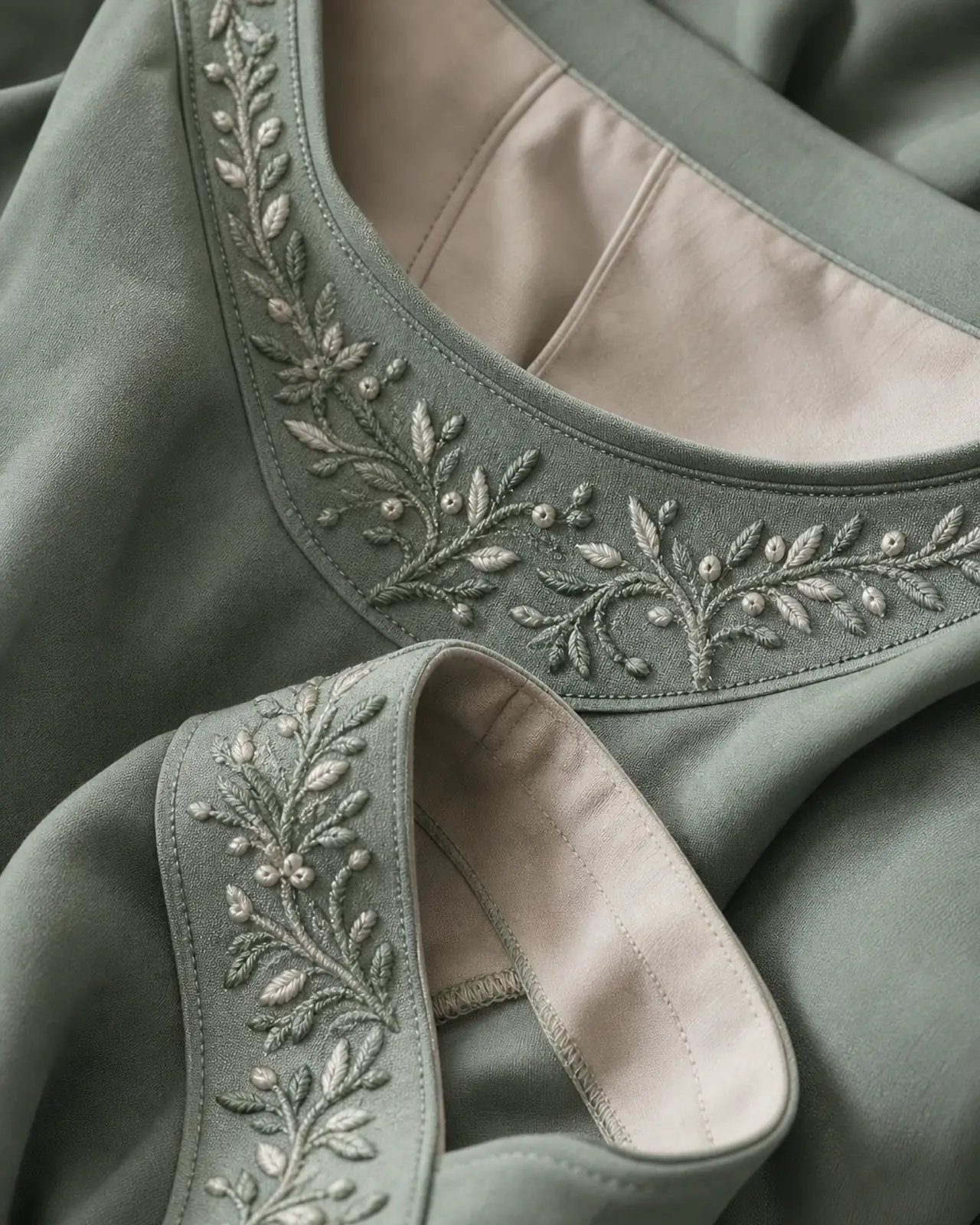
- Optional embroidery or beading placed at the neckline or cuff, sampled before bulk
- Full scope on private label and customization
Inspection points specific to a closed abaya
Nothing is hidden behind an open front, so the inspection focuses on how the garment reads from the front, back and side at the same time.
- Neckline check on a form and flat, to confirm it lies level and does not gape
- Hem level check all the way round, not only at the front
- Underarm and side seam pull test, since these take the strain on a closed garment
- Measurement check against the approved chart, taken flat at agreed points
- Shade check piece to piece under controlled light before packing
Packing and shipping a full-coverage garment
A closed abaya is packed as a single garment rather than as part of a layered set, which keeps the carton count predictable and the folding consistent across a bulk run. Mixed orders can be consolidated with hijabs, sets and accessories on one wholesale shipment.
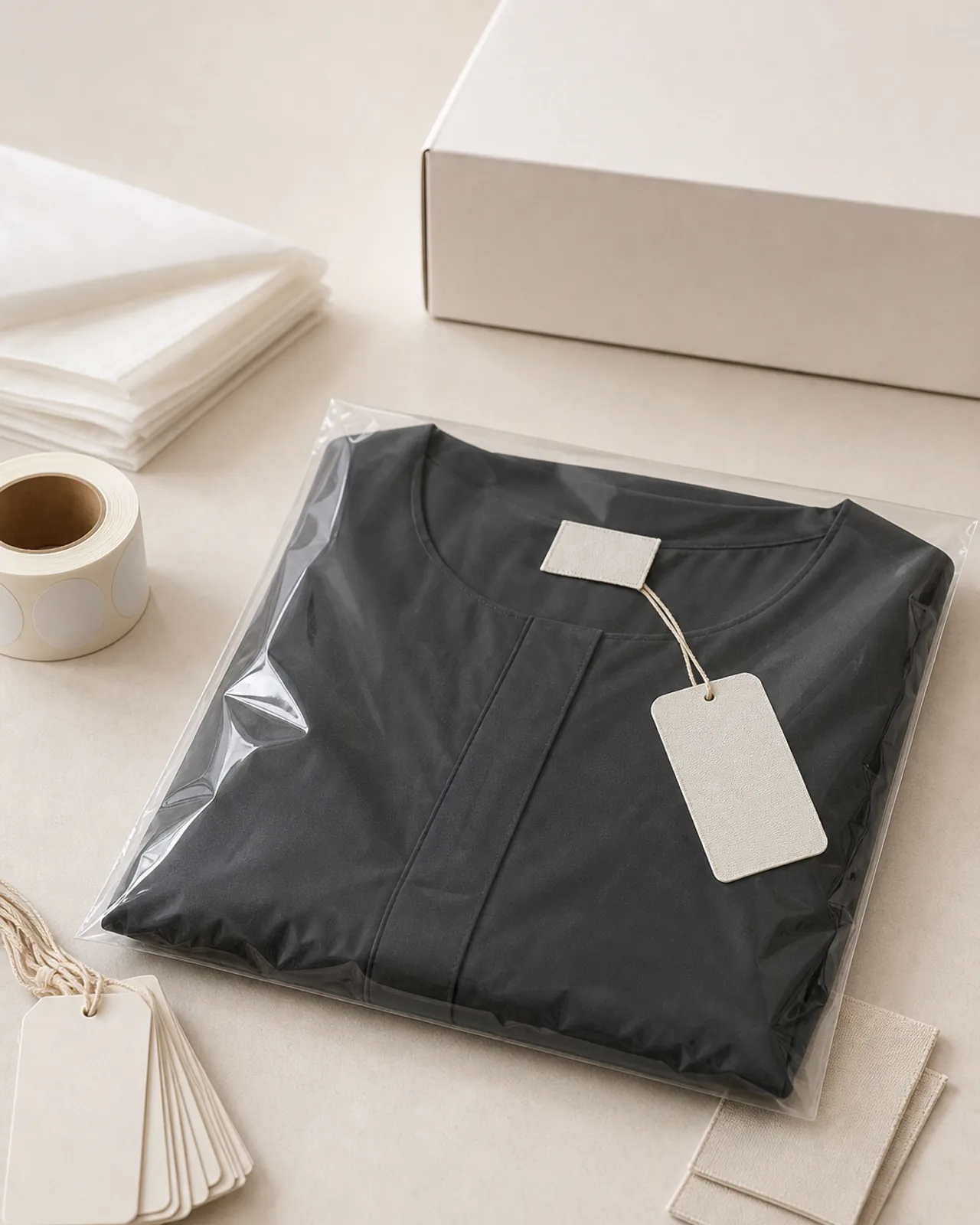
- Folded to a fixed size, with the neckline and hem protected inside the fold
- Poly bag as standard, printed or retail packing on request
- Labels and hang tags applied during packing to your instruction
- Packing list by style, colour and size; shipping documents confirmed for the destination
Specifications
| Fabric | Crepe |
|---|---|
| Composition | To be confirmed with your enquiry |
| Weight | To be confirmed with your enquiry |
| Color | Matched to your reference, with lab dip or swatch approval before bulk |
| Size | Confirmed per order, including plus size and custom measurement runs |
| Length | Full length, worn on its own; agreed in garment measurements |
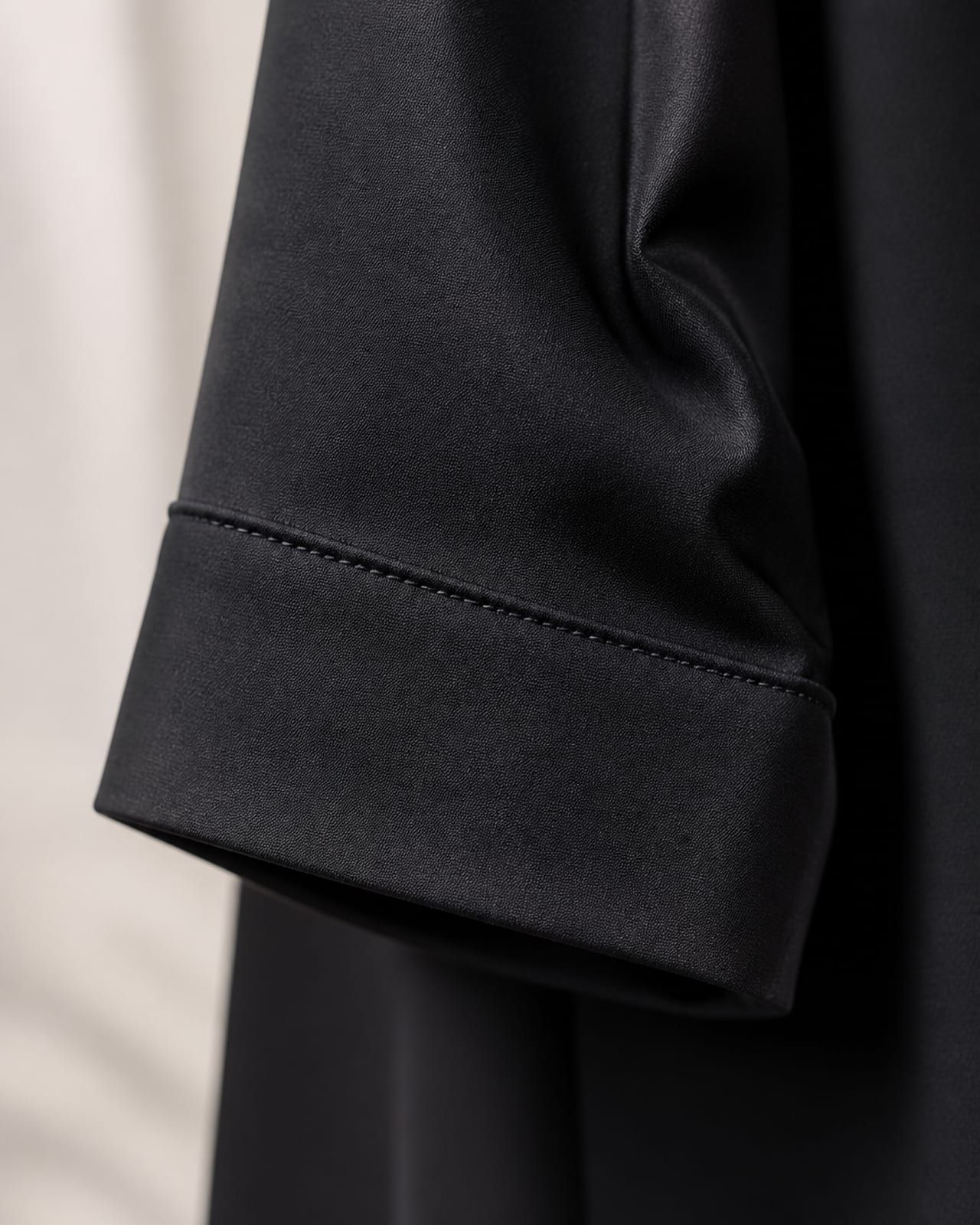
| Sleeve | Long sleeve with finished cuff; cuff depth confirmed on the sample |
| Style | Closed front, no opening |
| Decoration | None as standard; embroidery, beading or rhinestone on request |
| Closure | No front opening; the fastening type used, if any, is confirmed on the approved sample |
| Lining | Optional; confirmed against the fabric and the market you sell into |
| Packaging | Poly bag as standard; printed poly bag, hang tag or retail packing on request |
Wholesale Information
| MOQ | Contact us for current MOQ |
|---|---|
| Sample | Lead time depends on design and order quantity |
| Price Tier | Quoted per order; it moves with fabric, quantity, decoration and packaging |
| Customization | Colour, measurement, neckline finish, labels, hang tags and packaging |
| Production | Lead time depends on design and order quantity |
| Packaging | Poly bag as standard; branded or retail packing to your instruction |
| Shipping | Consolidated shipment with packing list; terms and documents confirmed per destination |
OEM / ODM Options
- Custom Color
- Custom Size
- Custom Label
- Custom Hang Tag
- Custom Packaging
- Embroidery
- Beading
- Rhinestone
Quality Details
| Size tolerance | Garment measured flat at bust, waist, hip, sleeve and length, then checked against the approved size chart |
|---|---|
| Stitching | Seam and hem checked for skipped stitches and loose threads; set-in sleeve and underarm seams pull-tested |
| Fabric | Compared with the sealed reference sample for grain, shade and surface defects before and after cutting |
| Color inspection | Checked against the approved swatch under controlled lighting, and again on the finished garment before packing |
Frequently asked questions
It is a single panel with no front opening, worn over the head. If your market expects a fastening, that is confirmed at sampling so the sample and the bulk order use exactly the same construction.
Yes. That is the reason most customers choose a closed abaya. Fabric opacity is checked against a dark layer before approval, so you know how the garment behaves in normal wear rather than only on a display form.
Crepe holds a firmer line, so the silhouette stays tailored rather than fluid. Nida is the better choice when you want a lighter, more flowing garment. Both can be produced on the same block.
Yes. Neckline, cuff and hem are the usual placements. We sample the placement first, because embroidery on a long plain panel changes how the fabric hangs and should be approved before the full run.
Markets and customer groups that prefer full coverage without layering, and buyers who need a garment suitable for daily wear. Tell us where you sell and we will recommend fabric weight and sleeve proportions accordingly.
Planning your next modest fashion collection?
Tell us these seven things and we can come back with a workable sourcing plan instead of a price list.