Plus Size Abaya Wholesale: Grading, Not Just Scaling
An abaya enlarged from a standard pattern is not a plus size abaya. This page explains what changes in the pattern, the fabric and the quality checks.
Scaling a pattern is not the same as grading it
Scaling multiplies every measurement by the same factor. Grading moves each measurement by a deliberate amount that suits how a body actually changes. On an abaya, scaling produces a garment that is longer, wider at the shoulders and disproportionately wide at the hem, and it fits nobody properly.
This is why a plus size abaya range cannot be produced by extending an existing grade indefinitely. At some point the pattern has to be re-blocked: the shoulder, armhole, sleeve and overall width need their own relationships rather than an amplified version of the smaller sizes.
- Shoulder and armhole — the first area that breaks when scaling is used
- Sleeve width and length — must allow free movement, not just cover
- Body width through chest, waist and hip — graded at different rates
- Length — no longer reliably proportional once the width increases
- Ease allowance — has to be reviewed, not inherited
Two routes to a plus size abaya range
You can extend an existing grade, or you can develop a separate plus block. Extension is faster and cheaper and works up to a point; a separate block costs more development and produces a garment that genuinely fits.
Which one is right depends on how wide your range goes and how serious the plus size customer is to your business. If it is the fastest-growing part of your range, it deserves its own block.
| Point | Extended grade | Separate plus block |
|---|---|---|
| Development effort | Low — added to an existing pattern | Higher — new pattern and sample rounds |
| Fit quality | Acceptable at the first sizes, degrades as the range widens | Consistent across the whole plus range |
| Cost per garment | Lower fabric consumption than a re-blocked version | Higher — more fabric and more pattern work |
| Fit consistency | Varies with the customer's shape | Designed for a specific shape |
| Suitable for | One or two sizes above the standard range | A dedicated plus size line |
How fabric behaves at larger sizes
Check coverage on the largest size you sell. It is the size where a marginal fabric becomes a returned garment.
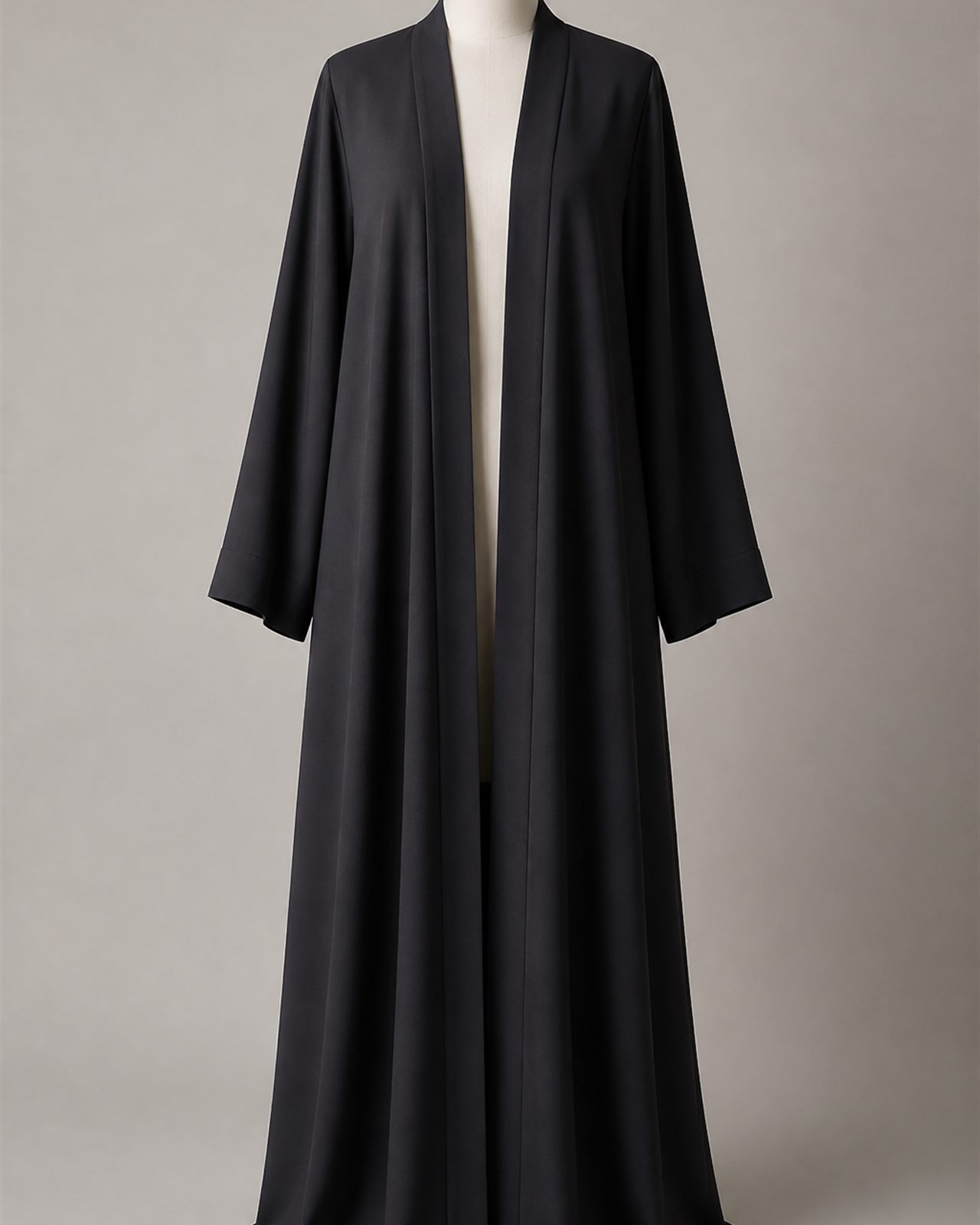
Fabric that drapes well on a standard size does not automatically drape well on a larger one. The same material falls over a wider surface, stretches further across the shoulders, and reads differently in the light.
Two practical consequences: opacity has to be rechecked, especially across the back and shoulders, and drape has to be reassessed, because a fabric that looked fluid on a small abaya can look heavy on a large one — or too thin to hang properly.
- Opacity rechecked at the widest points of the garment
- Drape assessed on the largest size, not the standard one
- Fabric consumption recalculated, since the price follows it
- Lining reconsidered where coverage becomes marginal
- Stretch or spread — checked under movement, not only standing still
Length is a separate decision from size
Buyers often assume a plus size garment should also be longer. That is not true: body width and body height are unrelated, and treating them as one variable is exactly the mistake that produces a size run nobody buys.
Keep length as its own option within the plus range. A generous width in a standard length serves the customer who is wider but average height; the same width in a longer length serves someone taller. Offering both is what makes the range work.
- Width graded by body measurement, independent of height
- Length offered as a separate choice on each style
- Measurement specification published so customers choose correctly
- Measurement-to-order offered where the range still does not cover a customer
Building a plus size run that sells through
The commercial trap in plus size is ordering evenly across a wide range. Demand clusters: a small number of sizes carry most of the volume, and the extremes sell slowly unless you have a specific customer for them.
Order where your customers actually are. If you do not know yet, take a small spread across the range, watch which sizes sell, and then order depth on the winners in the next order.
- Identify the centre of your plus demand before ordering depth
- Keep the extremes shallow until the data supports them
- Treat length separately when you build the run
- Use one or two styles to test, rather than the whole plus range at once
- Review sell-through by size, not by style alone
The presentation problem: photography and fit models
Plus size ranges are often undermined by presentation rather than by product. Photographing a large size on a standard-size model, or pinning the garment back for the picture, tells the customer immediately that the range was not designed for her.
Plan the photography at the same time as the order. Ask us for samples in the sizes you intend to photograph, because that has to be arranged at the sampling stage rather than after production.
- Photograph the sizes you actually sell, not a pinned-back sample
- Request sample sizes in the plus range for the shoot
- Show the garment worn, not only flat
- Publish garment measurements so the customer can check before buying
Custom measurement as an option
Some customers fall outside any size run, and for those the answer is measurement-to-order: the buyer or the customer supplies the measurements and the garment is produced to them.
This is a different production route from stock sizing and it has to be arranged as part of the order rather than assumed. It works best on a limited number of styles, where the pattern is stable and the measurement points are clearly defined.
- Measurement points defined in writing, with a clear method for measuring
- Limited to styles where the pattern is stable
- Confirmed on a sample where the order size justifies it
- Lead time depends on design and order quantity, so it is confirmed per order
Quality checks that are specific to plus sizes
Measuring the middle of a size range and assuming the rest is consistent is a bad habit in any category. In plus size it is fatal, because errors increase as sizes move away from the sample size.
- Measure the largest size, not only the middle one
- Check shoulder and armhole on the extremes of the range
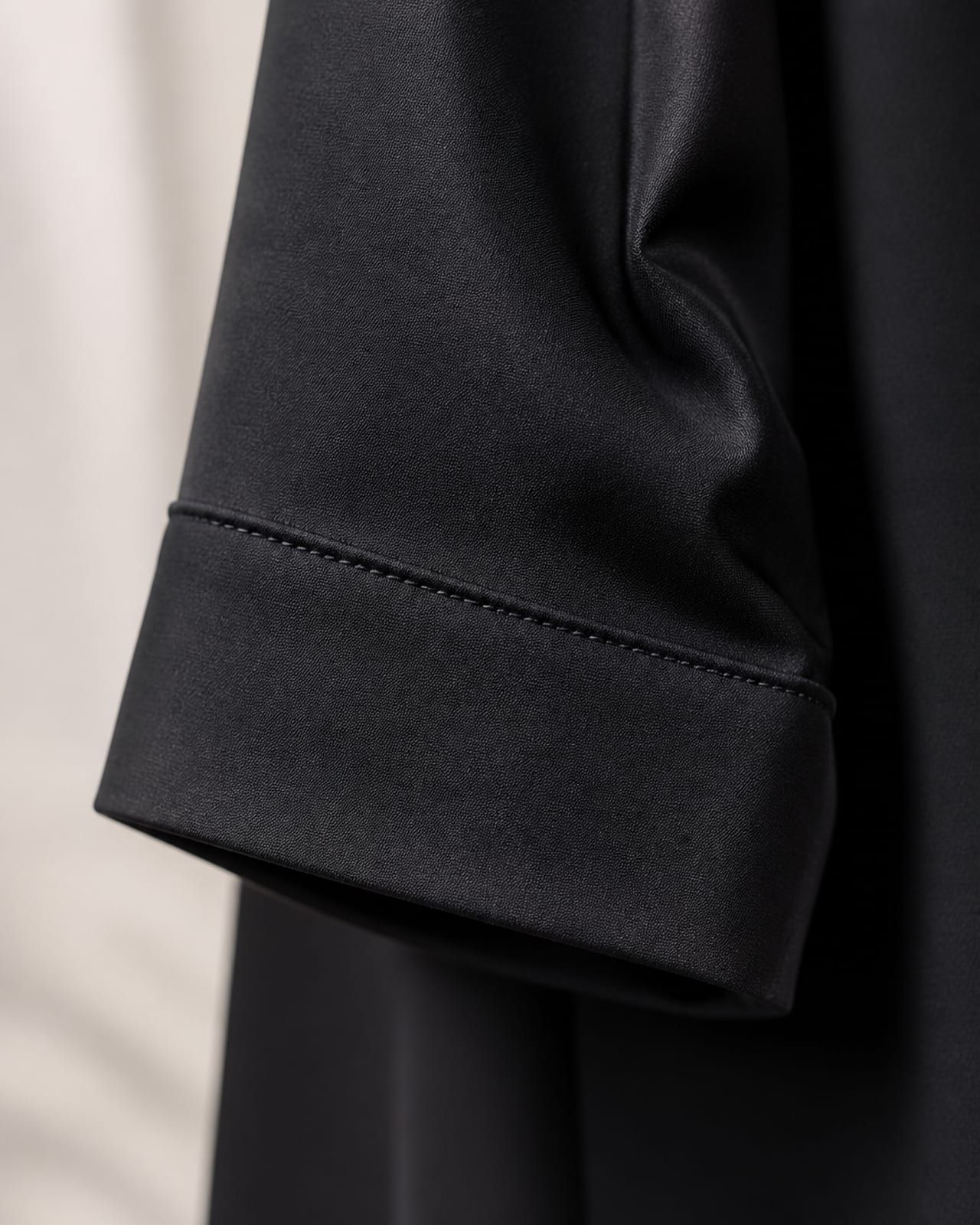
- Verify sleeve width against the approved specification at every size
- Check length independently of width, since they are graded separately
- Confirm coverage on the largest size, in daylight
- Check hem circumference — an under-graded hem restricts movement
Why plus size belongs in the main range
Treating plus size as a side line, ordered once and quietly restocked, is the commonest mistake in this category. Customers who find a supplier that fits them properly stay, and they buy across the whole range rather than in one section.
Order it inside your main wholesale abaya purchase so it shares the packing list and the quality standard. If you want your own cut in a plus block, that is development work — see custom abaya. Read the size knowledge centre for how measurements are specified across the range.
Frequently asked questions
You can order a size or two above your standard range that way, but beyond that the fit degrades — usually at the shoulder and armhole first. A proper plus range needs the pattern re-blocked, which is development work rather than an order line.
Generally yes, because a larger garment uses more fabric and, on a re-blocked pattern, more pattern work. Price is quoted per order against the fabric, the size spread and the finish level, so the difference is visible before you commit.
Not automatically. Width and height are separate variables, and many plus size customers are average height. Offer length as its own choice within the range so customers can select width and length independently — that single decision prevents most plus size returns.
Not always. A fabric that drapes well on a standard size can look heavy or sheer when it has to cover a wider surface. Coverage and drape should both be checked on the largest size, and lining added where coverage becomes marginal.
Contact us for current MOQ. It depends on whether the order uses an existing pattern or a newly developed plus block, the fabric, the number of sizes and lengths, and the packing level. Measurement-to-order styles are quoted separately.
We can develop the measurement specification with you for the sizes you want to sell, and you approve it on the sample. If you already have a plus size chart from your own customer data, send it and we grade to that instead.
Planning your next modest fashion collection?
Tell us these seven things and we can come back with a workable sourcing plan instead of a price list.