Jersey Hijab Wholesale: Buying a Knit, Not a Woven
Jersey is the volume fabric of the hijab trade. It is also the one buyers most often under-specify, because knit behaves differently from everything else on the shelf.
Knit fabric behaves differently, and the order should reflect it
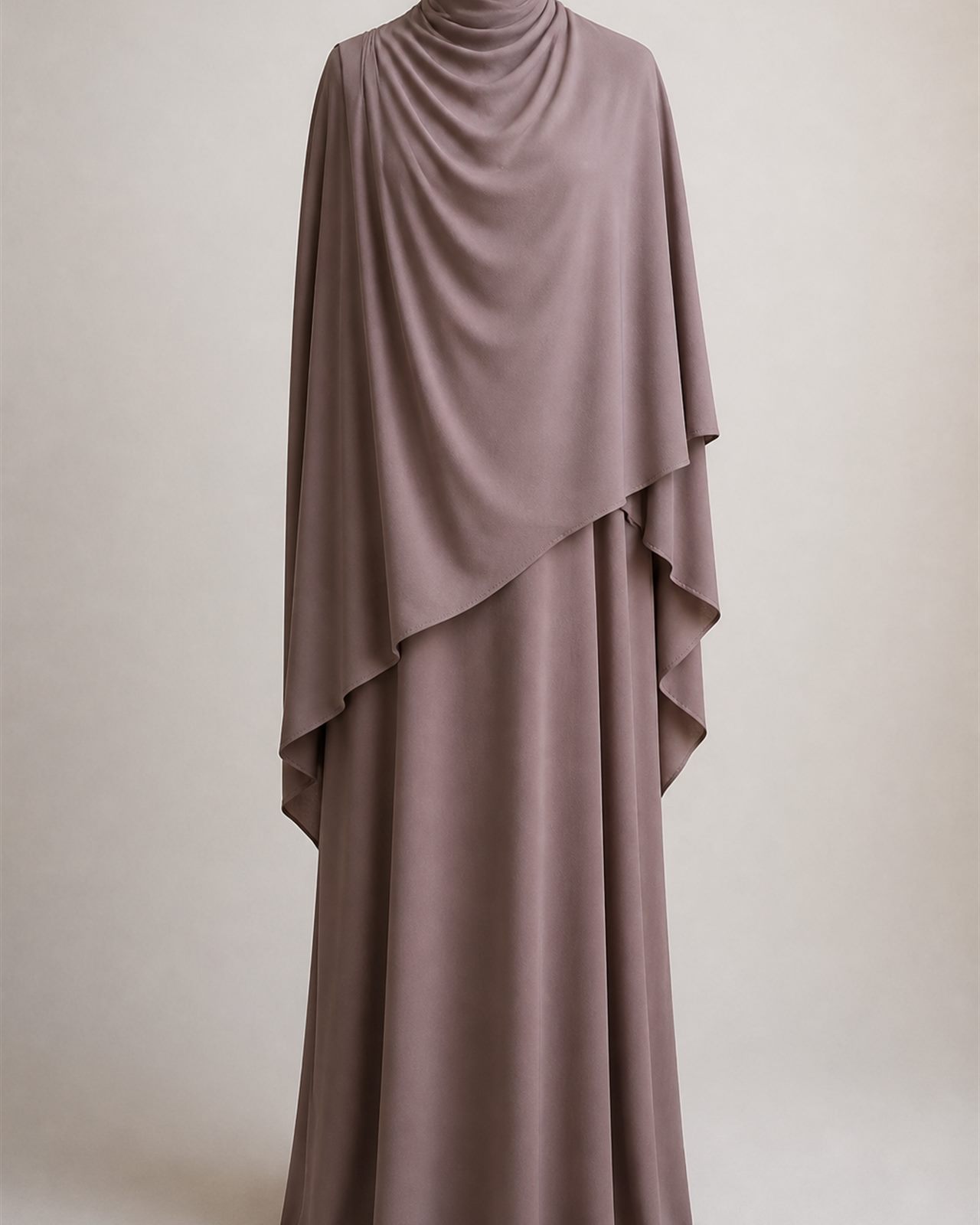
Jersey is a knit, not a woven. It stretches, it recovers, it drapes under its own weight rather than falling stiffly, and it does not fray at a cut edge in the same way chiffon does. Those four facts decide how it should be ordered, finished and packed.
Buyers who treat jersey as though it were a lightweight woven — same stitch, same fold, same dimensions — get a hijab that grows during wear and never returns to the same shape. The specification has to change with the construction.
- Stretch along the length and across the width, which is not always equal
- Recovery — whether the fabric returns to its original shape after wearing
- Weight, which decides whether the drape is soft or structured
- Edge behaviour, which is finished differently from a woven scarf
Stretch and recovery: the two words that decide customer satisfaction
A jersey hijab is comfortable because it moves with the wearer. The same property becomes a defect when the fabric keeps stretching and stops coming back — the piece loses shape, the edge ruffles, and the customer concludes the fabric is poor when the problem is the knit specification.
Ask us how the jersey recovers, and test it yourself on the sample. Stretch a cut piece, hold it, release it, and see whether it returns. That test takes seconds and it is the difference between a reorder and a complaint.
- Stretch direction — checked both ways, since a hijab is used in different wraps
- Recovery — no permanent deformation after normal wearing
- Edge stability — hems that stay flat instead of curling with wear
- Weight balance — heavy enough to stay put, light enough for comfort
Why jersey dominates everyday and volume sales
Jersey hits the price and convenience point that most customers buy at every week: it grips without pinning, it needs almost no ironing, and it survives a washing machine. For a boutique, that means fast sell-through and low return risk.
It also allows a wide colour range without much cost penalty, which makes it the right fabric for a rack-based retail display where the customer picks a shade to match an outfit she already owns.
- Minimal ironing, which customers notice immediately
- Grip without pins, which suits quick daily wear
- Comfortable over long hours, including in prayer
- Durable through frequent washing, if the knit was specified properly
- Wide colour range at a consistent price point
Instant and tube formats in jersey
Jersey is the fabric that made the instant hijab possible. A knit holds a pre-shaped form without constant adjustment, so an instant or tube style works in jersey where it would collapse in chiffon.
Instant formats are strong for travel retail, gift sections and customers who are new to hijab. They also carry a slightly different quality question: the seams and the opening matter more than the fabric, because that is what the customer interacts with.
- Instant pull-on styles with a finished opening
- Tube and one-loop formats for quick wear
- Sport and active variations, with a closer fit and secure edge
- Travel and gift sets packed as a retail unit
Travel, prayer and high-frequency use
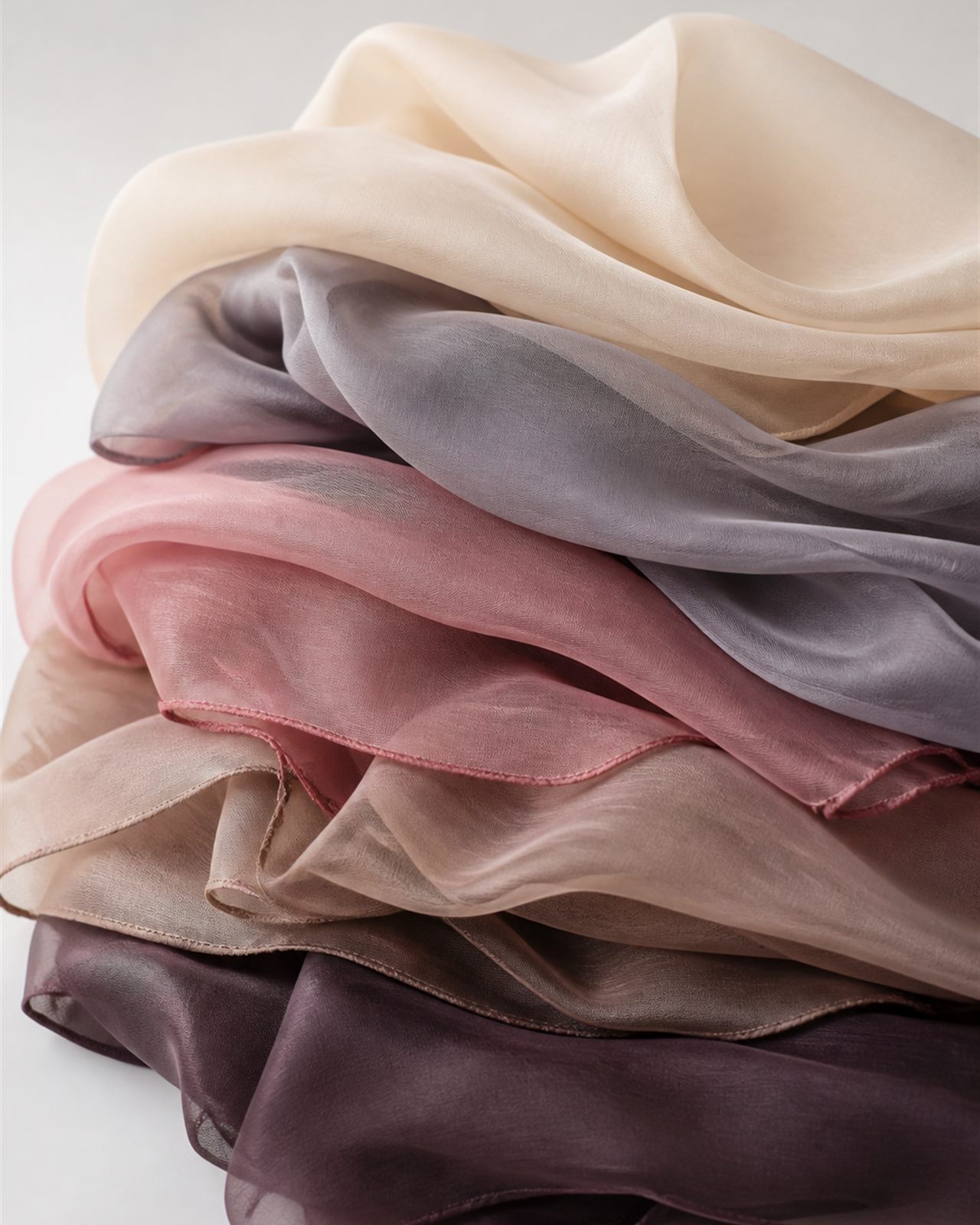
Jersey is the fabric customers choose when they will wear the same hijab for hours and wash it often — pilgrimage travel, long working days, school runs. That usage pattern tells you what to test: repeated washing, colour stability and edge integrity.
It also means restocking speed matters more than novelty. A jersey range is judged on whether the same shade is available next month, so plan the colour core accordingly.
| Use case | What to prioritise | Where it fails |
|---|---|---|
| Everyday wear | Recovery and edge stability | Loss of shape after repeated wearing |
| Prayer and worship | Coverage, comfort and weight | Fabric too light to stay in place |
| Travel and pilgrimage | Easy washing and colour stability | Shade fading after repeated washing |
| Active and sport | Stretch balance and secure finishing | Edge curling under movement |
Light colours are the risk in jersey
If a colour is marginal on coverage, do not discount it — replace it before production.
A knit spreads slightly when worn, so a pale jersey that looked solid on the table can become readable in daylight on the head. This is the same coverage issue that affects chiffon, but it arrives through stretch rather than through weight.
Settle it the same way: test the specific colour you intend to sell, on the person who will wear it, in daylight, with the underlayer your customers actually use.
- Pale shades — check coverage under stretch, not flat
- Deep saturated shades — confirm colour stability through washing
- Colour consistency — jersey takes dye evenly only if the lot is controlled
- Hue across sizes and formats — instant and shawl versions must match if sold as a set
What to put in a jersey hijab enquiry
Jersey quotes change with construction and finishing more than with colour, so give us these points and the price will reflect the order you actually want.
- Format — shawl, instant, tube or sport
- Weight preference — light for drape, heavier for grip and coverage
- Stretch and recovery expectation, described in wear terms
- Finished dimensions for each format
- Edge finish and any seam specification for instant styles
- Colour range and quantity per shade
- Packing level, including any band, tag or retail presentation
Quality checks for a jersey hijab order
Jersey problems are behavioural: they show up after the customer wears and washes the piece, not when the carton is opened. Inspection has to include a wash and wear test rather than only a visual pass.
- Stretch and recovery — tested on a cut piece, not on a fabric roll
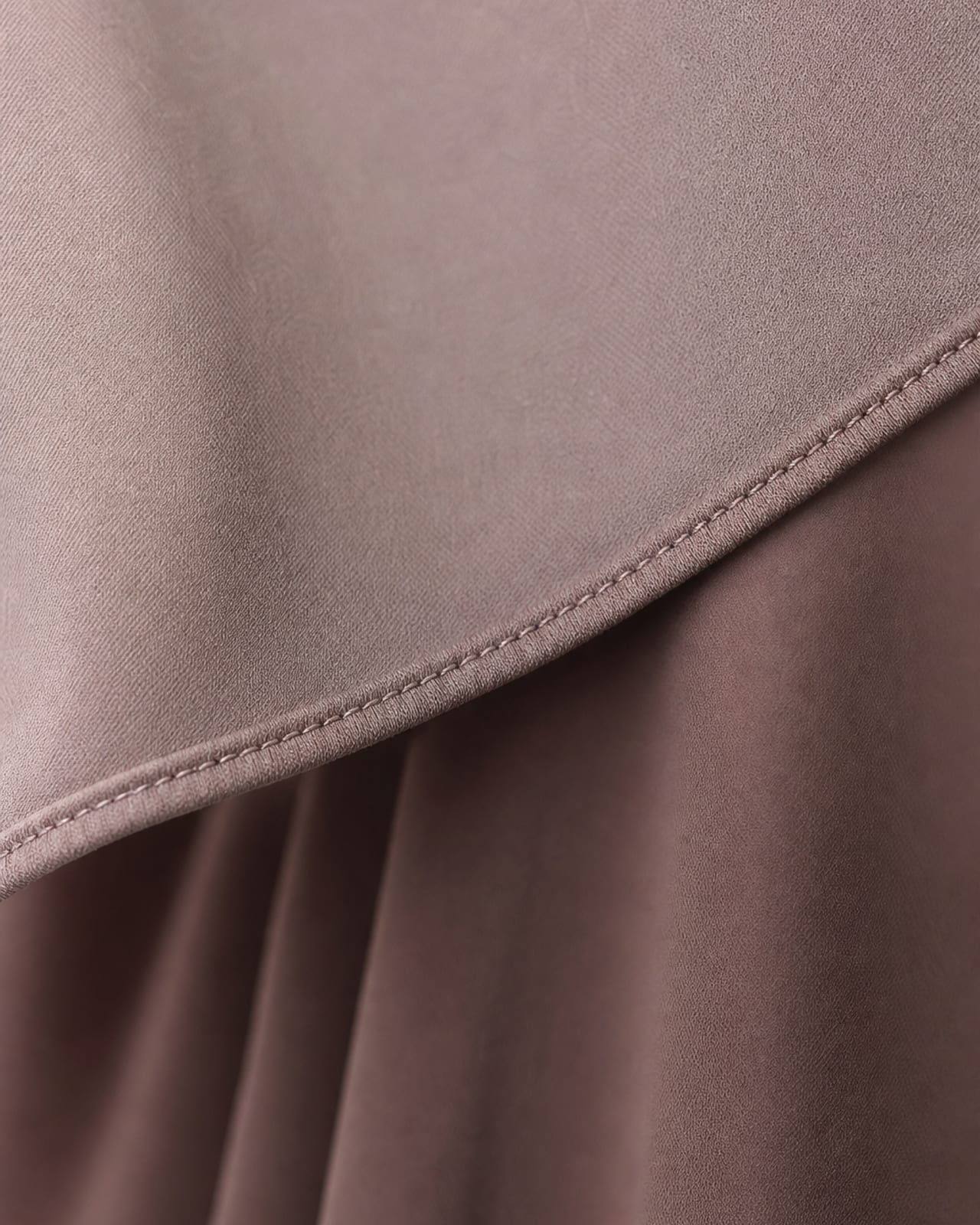
- Edge finish — checked for curling, waviness and skipped stitches
- Seam strength on instant styles — pull-tested at the opening
- Colour fastness — washed and compared against the approved swatch
- Shade consistency — checked across the whole lot, since knits dye in batches
- Dimensional stability — re-measured after washing
Jersey or modal: which belongs in your range
They are not competitors so much as two tiers. Jersey is the everyday, high-frequency, volume fabric; modal is the softer, more premium fabric that a customer reorders by name. Many ranges carry both and use the difference to justify two price points.
Plan the range at wholesale hijab level, read the jersey fabric page for the properties behind the material, and compare against chiffon if you also sell occasion wear. If the range will carry your own label and packing, private label hijab covers the branding decisions.
Frequently asked questions
Usually because the knit was specified for softness rather than recovery, or because the piece was cut without allowing for stretch. Both are settled at sampling stage: stretch a cut piece, hold it and release it, and reject any specification that does not spring back.
It can be, if the weight is chosen for the climate rather than for the price. A heavier jersey in humid heat feels uncomfortable; a lighter one may not stay in place. Compare weights on a sample before ordering for a hot market.
Yes, and print behaves differently on a knit than on a woven — it can stretch with the fabric. Approve the print on a sample of the final jersey at the final scale, and check how the design looks when the piece is stretched as it is worn.
Contact us for current MOQ. Jersey depends on the format, the weight, the number of colours and whether printing, labelling or branded packing is applied. Instant styles carry more sewing work than a plain shawl.
Ask for a sample in your darkest and lightest intended shades, wash them the way your customer will, and compare against the approved swatch. Deep shades and pale shades fail differently, so testing only one of them tells you half the story.
No. Price depends on the knit, the format, the finishing, the colour count and the packing, so it is quoted per order. Send your specification and destination and you will get a price for your order rather than a general list.
Planning your next modest fashion collection?
Tell us these seven things and we can come back with a workable sourcing plan instead of a price list.