Private Label Hijab: When the Presentation Is the Product
A hijab has no fit to hide behind, so branding it means owning presentation, colour and print. This page covers every place your name can appear on it.
The hijab has one branding surface, and it is not the garment
On an abaya you can change the cut, move a seam, add decoration. On a hijab there is almost nothing to modify: a square or a rectangle of cloth with a finished edge. That is why private label hijab work is much more about presentation than about construction.
The consequence is practical. Two suppliers can produce the same dimensions in the same fabric, and one will look like a brand and the other like a market stall. The difference is entirely in labels, tags, folding and packing.
- The edge finish — the only construction detail a customer can feel
- The folding — because the first thing she sees is the fold, not the cloth
- The band, tag or sleeve that carries your name
- The bag or box it arrives in
Every place your name can appear on a hijab
There are more branding points on a hijab than most buyers expect, and each one has a different cost and a different failure mode. Choose deliberately rather than accepting a default set.
- Woven brand label — stitched into a corner or a folded seam
- Printed care and content label — carries the information your market expects
- Branded band or paper sleeve — wraps the folded hijab and carries the logo
- Hang tag or header card — the retail-facing element
- Printed poly bag — the last protective layer, and the first branded one for online orders
- Matching accessories — a branded clip, pin or inner cap that ties the range together
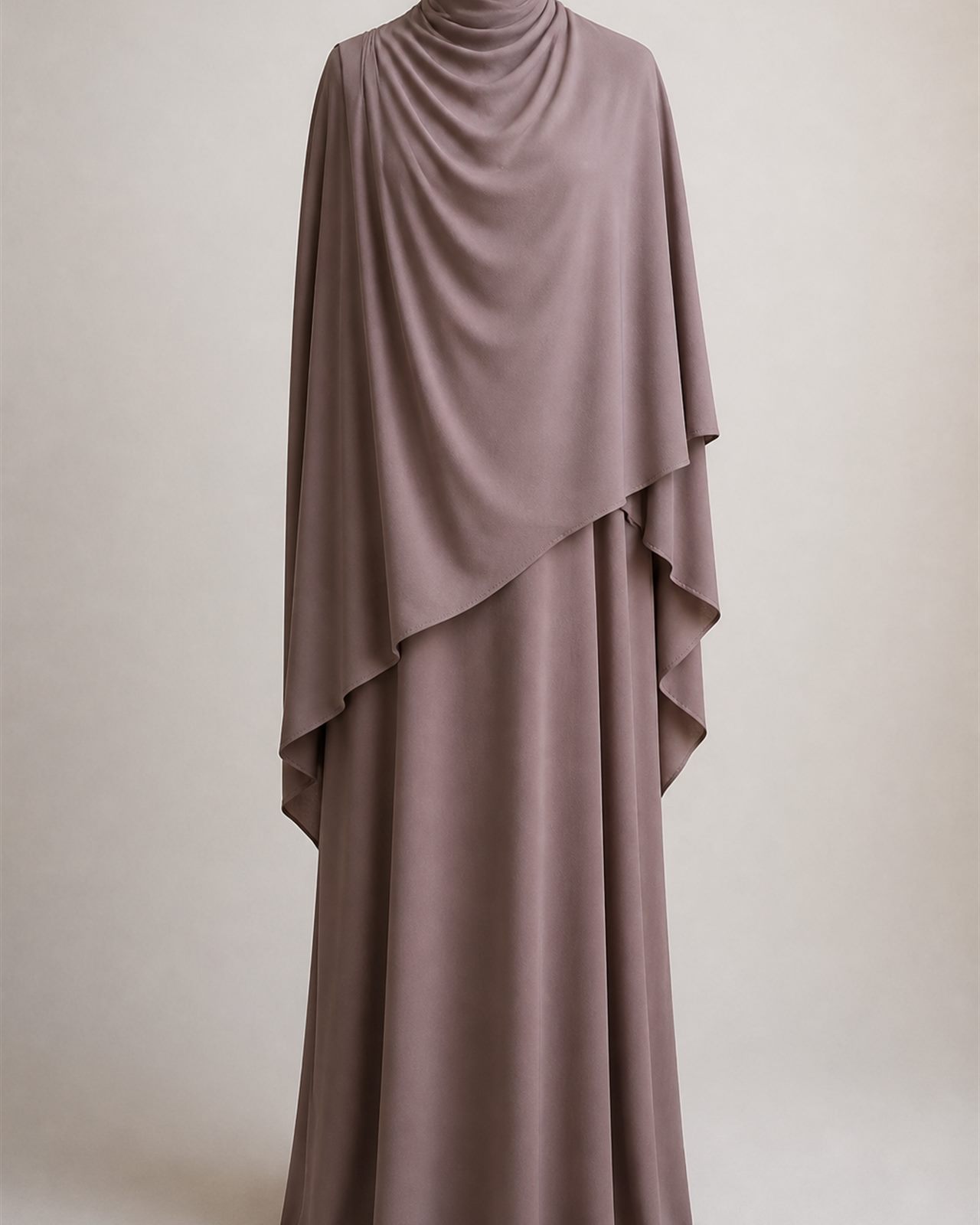
Label placement and why it matters more on a hijab
Check the label on a folded hijab, not a flat one. That is how the customer will first see it.
A hijab sits against the skin, at the face and neck — the two places where a rough edge is felt immediately. A stiff woven label in the wrong position will make a customer stop wearing a piece she otherwise likes.
Light fabrics make this worse: on chiffon and thin modal, a heavy label also shows through when the fabric is folded, so the branding becomes visible from the outside in the wrong way.
- Corner label — standard, low cost, must be woven soft enough to sit against skin
- Folded-seam label — hidden, used when comfort is the priority
- Printed label instead of woven — flatter, and often the better choice on fine fabric
- Label colour — matched to the fabric shade or used as a deliberate contrast
- Show-through — checked with the hijab folded the way you actually pack it
Custom print as the strongest form of branding
A label can be copied by anyone. A print that belongs to your brand cannot. For a private label hijab range, an exclusive print is usually the single element that most clearly separates you from every other seller of the same base fabric.
Prints also carry seasonal storytelling: a collection can be built around one motif and expanded into tonal variations. The artwork has to be prepared for repeat, and print colour should be approved on the fabric you will actually produce in, not on paper.
- All-over repeat — the easiest print to control across cut lines
- Border or edge design — needs the layout agreed with the finished dimensions
- Placement motif — a signature element at a fixed position
- Tonal print — texture and depth without a loud pattern
- Print scale — approved on a physical sample, because scale changes the whole look
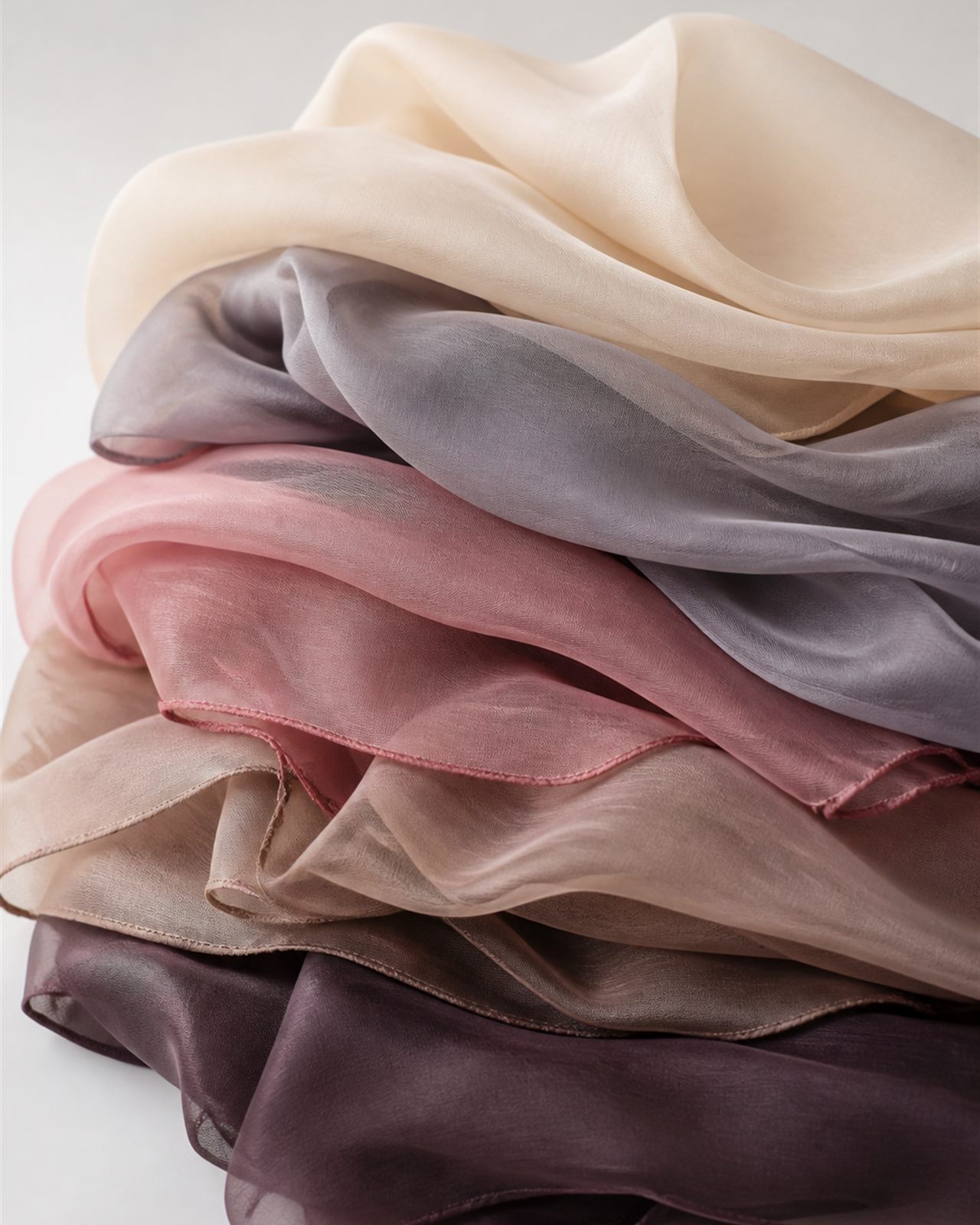
Keeping a colour or print exclusive
Exclusivity is a commercial question, not a technical one, and it needs to be stated at enquiry stage. Ask for what you need: an exclusive shade, an exclusive print, or an exclusive combination of fabric, dimensions and finish.
Be realistic about what exclusivity costs. A shade nobody else buys has to be worth producing for your volume, and a print prepared for you is your artwork rather than ours. We will tell you what is achievable before you design a collection around it.
| Route | What you prepare | What it protects |
|---|---|---|
| Exclusive colour | A physical colour standard, not a name on a screen | The look of the range, until the shade appears elsewhere |
| Own print | Artwork prepared for repeat printing | The design of the range, since the artwork is yours |
| Exclusive dimensions | Your preferred square or shawl length, agreed on the sample | The fit of the range rather than its look |
| Branded presentation | Label, band, tag and packing artwork | The customer experience of opening the package |
Artwork: what to send and what slows it down
Label and tag production is fast when artwork is final and slow when it is nearly final. Text that changes after proofing means the label has to be remade, and that delay lands inside your production window, not outside it.
- Vector artwork for labels, tags and packaging wherever possible
- Exact label wording, checked and signed off before proofing
- Colour reference for the label, including thread colour on a woven label
- Print artwork at a resolution suitable for fabric printing
- Packing dimensions, if the hijab goes into a boxed or sleeved retail format
- Any wording your market requires on textile products
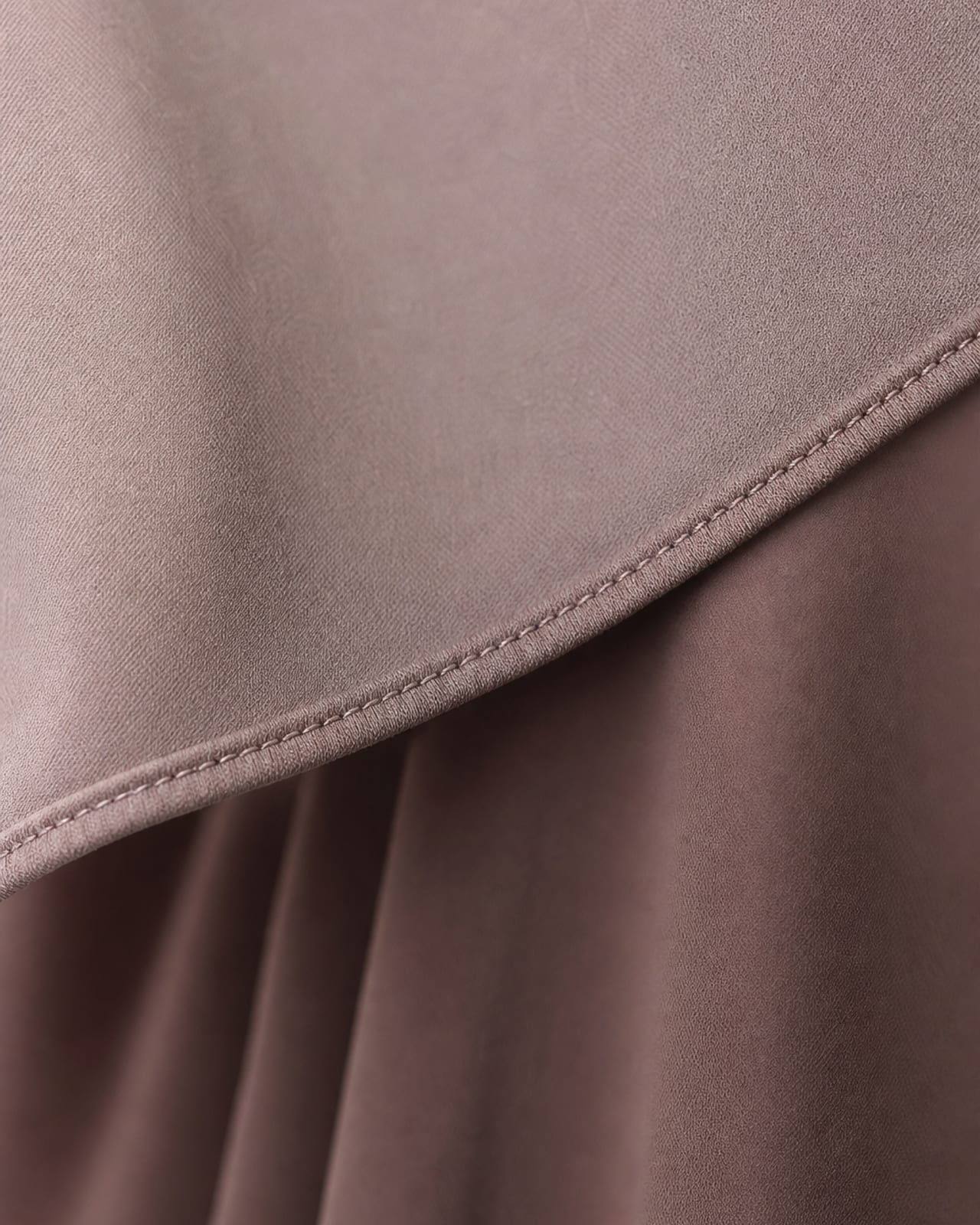
Sampling a private label hijab range
The sample should show the finished customer experience: correct fabric, correct dimensions, correct edge, your label, your band and your packing. If the sample is plain, you are approving half a product.
Confirm the format and dimensions of each hijab in the range.
Select fabric and edge finish, and approve a physical swatch.
Approve label, band, tag and packing artwork, including final wording.
Produce a sample with the branding and packing applied.
Check comfort, show-through, fold and presentation with the piece in your hands.
Seal the approved sample as the reference for bulk.
Bulk production, with the packing check verifying every branded element.
The branding failures that reach customers
On a branded hijab, the cheapest mistake to make and the most expensive to receive is a packing error. A hijab in the wrong band or with the wrong tag is not a damaged item — it is an item you cannot sell in your channel.
- Label missing on part of the lot
- Label wording different from the approved proof
- Label positioned inconsistently, so it shows on some units and not others
- Wrong colour band or tag on part of the range
- Fold inconsistency, which makes the retail presentation look uneven
- Packing not matching the approved packing sample
Building the hijab range alongside the rest of the collection
Most brands launch hijabs before they launch anything else, because the risk is lower and the reorder cycle is faster. Plan them as part of the collection rather than as an afterthought: one label system, one tag design and one packing standard across every category.
Start from wholesale hijab for the range decisions, then apply the brand layer. If your range will span hijabs, abayas and sets, read private label modest clothing so the label architecture is consistent from the first order instead of rebuilt at the third.
Frequently asked questions
Yes. Send artwork prepared for fabric printing and tell us whether it is an all-over repeat, a border or a placement motif. Print colour and scale should be approved on a sample produced in the final fabric, because both are much harder to judge on screen.
It can be, if the weave is soft and the placement avoids the most sensitive contact points. On fine fabrics a printed label is often the better choice, because it lies flat and does not show through when the piece is folded. Decide with a sample in your hand rather than from a photo.
Yes, and some brands do exactly that on their entry price points. Bear in mind that the garment may still need care and content information for your market, which is a compliance question for you as the brand rather than a branding choice.
As many as your volume supports, but every additional colour or print adds handling on the packing line and raises the chance of a mix-up. A tight range of core shades plus a couple of statement pieces usually outperforms a wide spread.
Contact us for current MOQ. Branded orders carry setup work for labels, tags and packing, and printed styles carry print setup as well, so the quantity logic differs from plain stock. It also depends on how many colours and formats the range contains.
Yes, and it should — otherwise you are approving the fabric rather than the product. The branded sample also becomes the sealed reference used for the packing check in bulk.
Planning your next modest fashion collection?
Tell us these seven things and we can come back with a workable sourcing plan instead of a price list.