Wholesale Hijab: Format, Fabric and Colour Planning
Hijabs are the easiest modest category to start with and the easiest to get wrong on colour and packing. This page covers the decisions that actually affect sell-through.
Why hijab is the category buyers should test first
Every other modest category carries fit risk. An abaya has length, a dress has a shoulder and a bust, a set has two garments that must work together. A hijab carries none of that — it has a format and a fabric, and the customer already knows how she wears it.
That makes hijab the cheapest way to test a new market, and the cheapest way to test a new supplier. You find out whether colour, hand-feel and finishing meet your customers' expectations before you commit money to a cut that might not sell.
- No size run to get wrong — the whole order is one size per format
- Low unit risk — a colour that fails is a small loss, not a dead size curve
- Fast repeat cycle — the same style can be reordered in a new colourway
- Natural attachment — hijabs sell alongside abayas and sets
Format first: square, rectangular, instant or shawl
Format is a market question, not a fashion question. Different regions have settled on different shapes because of how women actually wrap and pin, and selling a rectangular shawl into a market that wears squares is a reorder you will never receive.
Tell us where the goods will be sold and we will tell you which formats move there. If you are selling into several markets, run the order as a format split rather than forcing one shape on every customer.
- Square — the traditional cut, folded on the diagonal, widely used across Southeast Asia
- Rectangle — the long shawl format, used across the Gulf, Europe and North America
- Instant — pre-shaped and easy to wear, strong for travel and gift retail
- Underscarf and inner cap — not a hijab, but the item that makes the hijab work
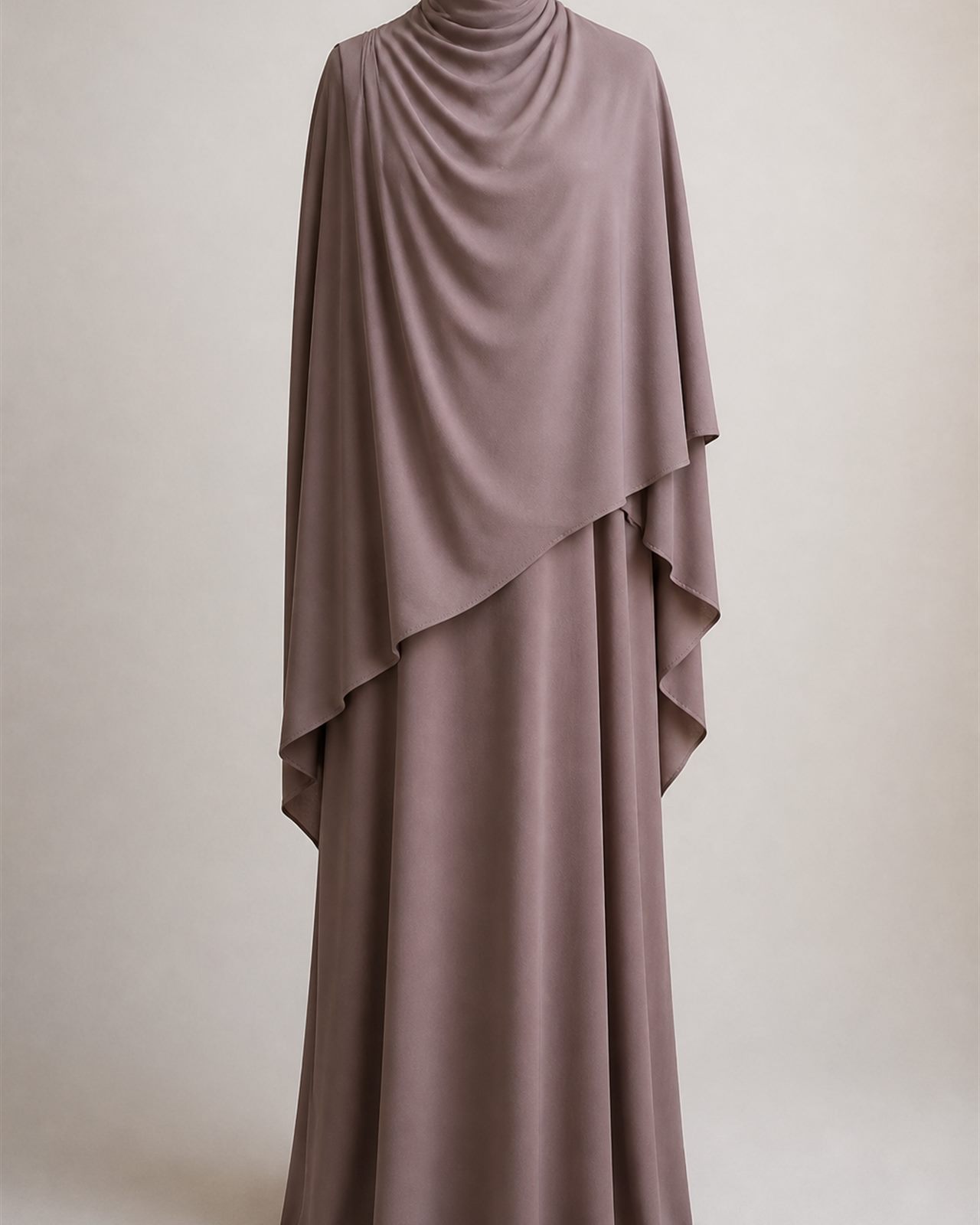
Fabric choice drives the repeat order
Customers reorder a hijab because of how it feels and how it stays in place. Fabric is therefore the single highest-value decision in a wholesale hijab order, and the one buyers most often delegate to guesswork.
Four fabrics cover most of what sells: modal for softness and grip, chiffon for drape and layering, jersey for everyday stretch and easy care, cotton voile for breathability and the traditional Southeast Asian trade. Each has its own page in the fabric library with buyer-focused notes.
| Fabric | What the customer gets | Sells into |
|---|---|---|
| Modal | Soft hand-feel, fluid drape, holds position without heavy pinning | Premium everyday ranges and online boutiques |
| Chiffon | Light, elegant drape and layered styling | Occasion, formal and layering-led ranges |
| Jersey | Stretch, comfort and minimal ironing | High-turnover everyday and active use |
| Cotton voile | Breathable in heat and humidity, traditional handle | Southeast Asia, school and event trade |
Colourway planning: the part that decides your margin
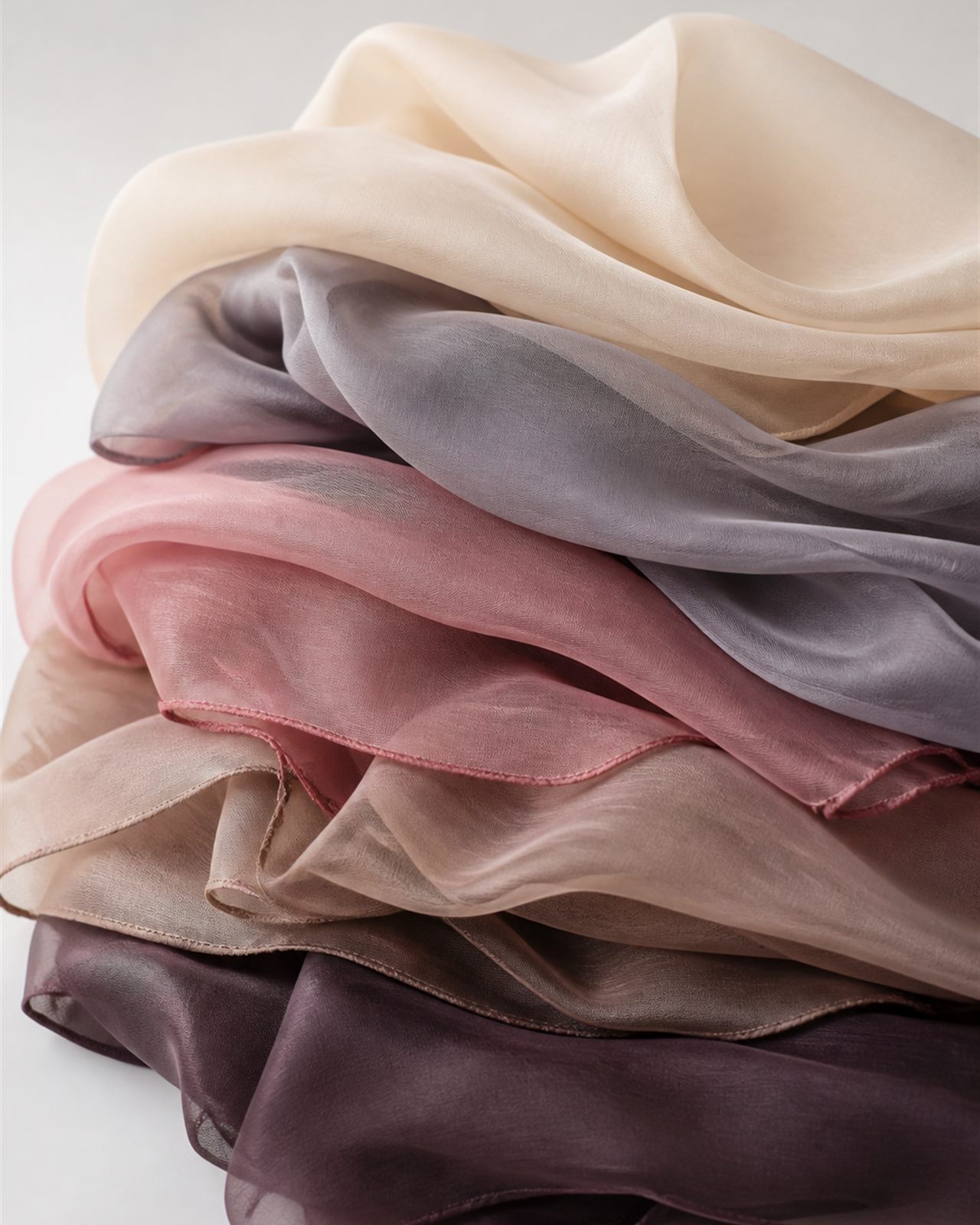
Hijab colour is closer to cosmetics than to clothing. Customers buy several at once, they buy a new one when a shade runs out, and they stop buying the moment the core neutrals disappear from the rack.
So build the colour range in two layers: a permanent core of neutrals that always carries, and a rotating layer of seasonal shades that changes. Neutrals are the reason customers return; seasonal shades are the reason they buy today.
- Core neutrals — the shades you keep in stock permanently
- Seasonal shades — a limited set that changes each collection
- Accent shades — one or two statement colours per drop
- Dye lot consistency — kept together across a single order
- Reorder matching — keep a sealed swatch so the next lot can be compared
Printed and patterned hijabs
Prints raise the perceived value of a hijab and give a boutique something a supermarket cannot copy. They also add work: artwork has to be prepared for repeat, print placement has to be agreed, and colour has to be controlled across the run.
Send artwork at a resolution suitable for printing and tell us whether the print is an all-over repeat, a border, or a placement motif. Print scale is where most buyer disappointment happens, so ask for a printed sample on the final fabric before bulk.
- All-over repeat — simplest to control, forgiving on cut lines
- Border or edge print — needs the cut to follow the design
- Placement print — where scale and positioning must be approved on a sample
- Tonal or self-colour print — texture without a loud pattern
Packing: how a hijab reaches the customer
Hijab packing is not a formality, because it is the presentation. The same garment folded flat in a plain bag and folded into a branded band with a hang tag sells at a different price point and photographs differently.
Decide whether you are buying a unit for a rail, a parcel for an online order, or a gift item. Tell us which, and the packing is built around it from the sample stage.
- Flat folded in a protective bag — the default for bulk and warehouse handling
- Folded with a branded band or sleeve — the retail presentation
- Single-piece retail packing — one bag, one tag, one unit
- Bundled sets — several colours packed together for a multi-buy offer
- Accessory pairing — hijab packed with inner cap or pins as one retail unit
What wholesale hijab pricing depends on
Send quantity per colour, destination and packing level, and the quote will reflect the order you are actually placing.
Wholesale prices are not published on this site, because the number that applies to your order depends on choices you have not made yet. For hijabs, the two variables buyers underestimate are finishing and packing.
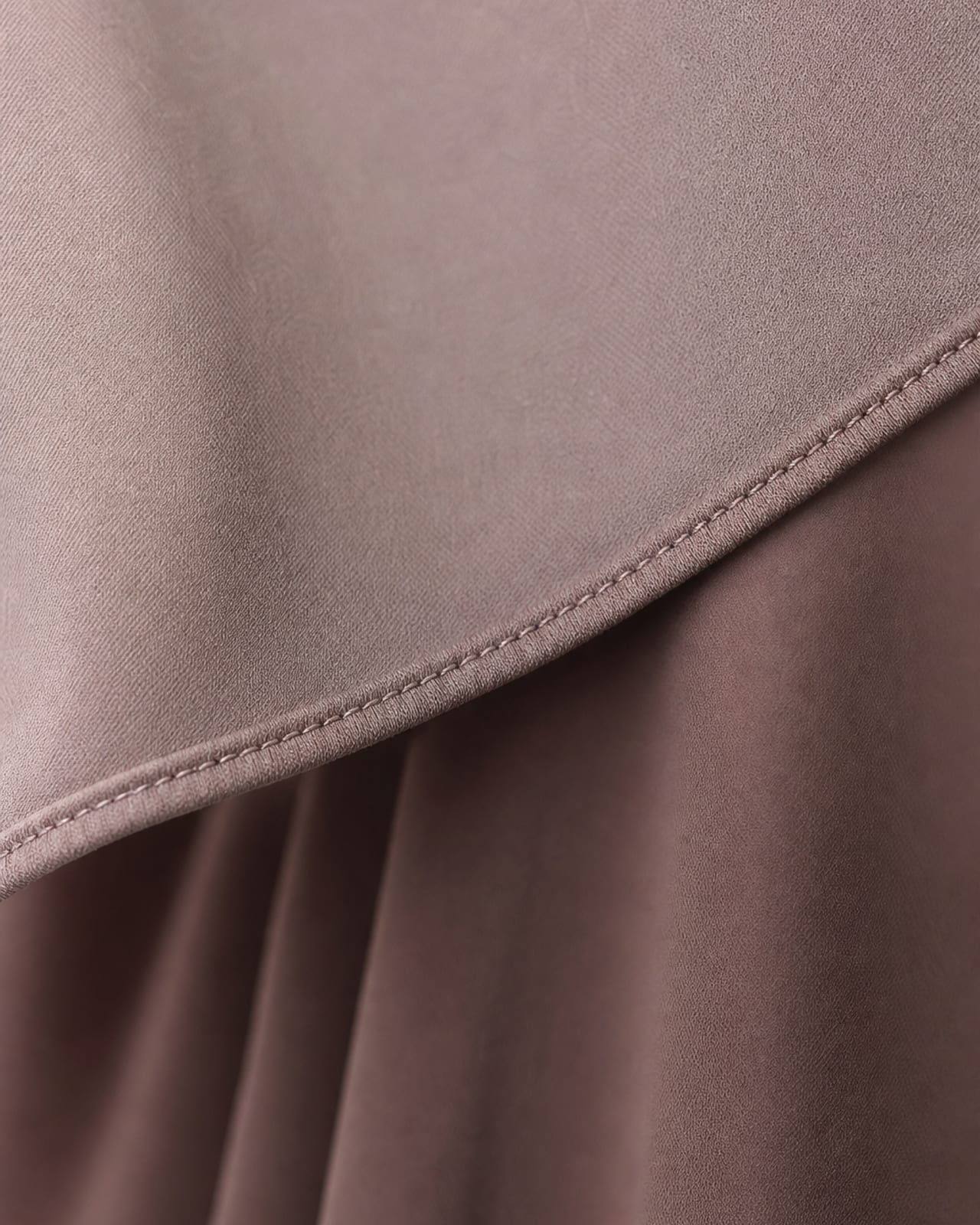
A rolled hem, a hand-finished edge, a printed surface and a branded band each add work. Quantity reduces the per-unit price, but it does so unevenly — heavy finishing resists volume discounts more than plain finishing does.
- Fabric and its availability at the time of order
- Edge and hem finishing, which is where the hand-feel shows
- Print or plain, and whether the print is an all-over or a placement
- Colour count and depth per colour
- Packing level, from bulk bag to branded retail unit
- Freight mode — hijabs are light, so packing volume often matters more than weight
Quality checks that matter on a hijab order
Hijab complaints are almost never about the fibres. They are about edges, colour and squareness — the three things a customer notices the moment she unfolds the piece.
- Hem and edge finish — no skipped stitches, no rolled edge that twists
- Shape and symmetry — squares that are actually square, rectangles that are actually rectangular
- Colour accuracy — checked against the sealed swatch, not against memory
- Print registration and repeat — checked on a cut piece, not on a fabric roll
- Fabric faults — pulled threads, marks and weaving defects found before cutting
- Packing consistency — the same fold, the same band, the same tag on every unit
Ordering hijabs together with abayas
Hijabs and abayas are bought together, displayed together and worn together. Ordering them on one purchase order means one packing list, one shipment and one quality standard — and it usually lowers the delivered cost per unit compared with two separate shipments.
If you are building a first collection, use wholesale abaya for the anchor styles, fill the size curve conservatively and let the hijab range carry your colour story. If you already have a brand identity, plan the labels and tags across both categories at once through private label hijab.
Frequently asked questions
Usually not in the way garments do. What varies is the cut dimensions of the square or rectangle and the length of the shawl. Set the dimensions you want on the sample and they are repeated in bulk, which is why hijab orders are far simpler to run than an abaya size curve.
Yes. Mixed orders are normal, and for a first collection they are advisable, because you learn which fabric your customers respond to. Send your quantity per fabric and per colour rather than an order total and the packing list will follow the same structure.
Contact us for current MOQ. It varies by fabric, by whether the style is ready stock or made to order, and by whether you want printing or branded packing applied. Printed styles carry setup work that plain styles do not.
Yes. A woven label, a printed care label, a branded band and a hang tag can all be produced to your artwork, and the packing can be built as a retail unit. Details are on the private label hijab page.
Ask for the same three things from everyone: a physical swatch of the exact fabric, a sample of the finished edge, and the garment dimensions in writing. Photographs hide edge quality, and edge quality is what the customer notices first.
No. Pricing depends on fabric, finishing, printing, colour count and packing, so it is quoted per order. Send your specification and destination and you will receive a price for that order rather than a generic list.
Planning your next modest fashion collection?
Tell us these seven things and we can come back with a workable sourcing plan instead of a price list.