Cotton Voile Hijab Wholesale: The Fabric Hot Markets Trust
In humid Southeast Asia, cotton voile is not a fabric option — it is the default. Here is how to specify it properly, and how it differs from the softer fashion fabrics.
Why cotton voile dominates in hot and humid markets
The customer in Kuala Lumpur, Jakarta or Singapore is not shopping for luxury. She is shopping for something she can wear through a hot, humid day and wash at night. Cotton voile answers that better than any fashion fabric on the shelf.
It breathes, it does not cling the way synthetic chiffon can in humidity, and it holds its shape on the head without constant adjustment. That is why the whole Southeast Asian hijab trade is built around it, and why a range that ignores it will be judged as imported rather than local.
- Airflow — comfortable through long days in heat and humidity
- Firm handle — stays in place with minimal pinning
- Durability — tolerates frequent washing
- Familiarity — the customer already knows how it behaves before she buys it
Body and finish: the specification buyers forget
Wash a sample before you approve it. Cotton voile changes handle after the first wash, and that is the version your customer lives with.
Cotton voile is often supplied with a light finish that gives the fabric body and makes it easy to shape on the head when new. Some markets expect that firmness; others want a softer handle straight out of the pack.
Either can be supplied, but the buyer has to say which. Tell us whether your customer expects the traditional firmer feel or a softer one, and remember that the finish changes the first impression, while the fibre determines how the piece behaves after a few washes.
- Traditional firm finish — holds its shape immediately, familiar to the market
- Softer finish — a gentler handle, often preferred by younger customers
- Care expectation — customers expect to press a cotton voile after washing
- Consistency — the whole lot should feel the same, not just match in colour
Print and pattern: where voile makes its money
Plain voile is a basic. Printed voile is where the margin sits, because it allows a range to be refreshed every season without changing the fabric or the format. Floral, botanical and batik-inspired motifs sell consistently across the region.
Print on voile has its own behaviour: the base is light, so print depth varies with the ground colour, and a border design has to be positioned against the finished dimensions rather than the fabric width.
- All-over florals and botanicals — the volume print category
- Border and edge designs — the layout needs to follow the finished dimensions
- Placement motifs — a corner or centre design agreed on a sample
- Tone-on-tone prints — texture and depth without a loud pattern
- Seasonal motifs — refreshed each collection for the same base fabric
Institutional and school demand
A significant part of the Southeast Asian voile trade is not retail at all. Schools, organisations and event committees buy in quantity, often at short notice, and they buy plain colours in the firm traditional finish.
These orders are straightforward to produce but unforgiving on timing and colour consistency: everyone in the group receives the same shade or the order looks wrong. If you supply institutional buyers, say so at enquiry stage, because it changes how the order should be packed and checked.
| Point | Retail / boutique | Institutional |
|---|---|---|
| Colour range | Wide, refreshed each season | Narrow, fixed and repeated |
| Central to the offer | Usually plain | |
| Packing | Retail-ready, banded or tagged | Bulk sorted by colour |
| Timing | Planned around collections | Often tied to a fixed date |
| Quality focus | Presentation and print | Shade consistency across the group |
| Price structure | Quoted per order | — |
Formats: square bawal, shawl and instant
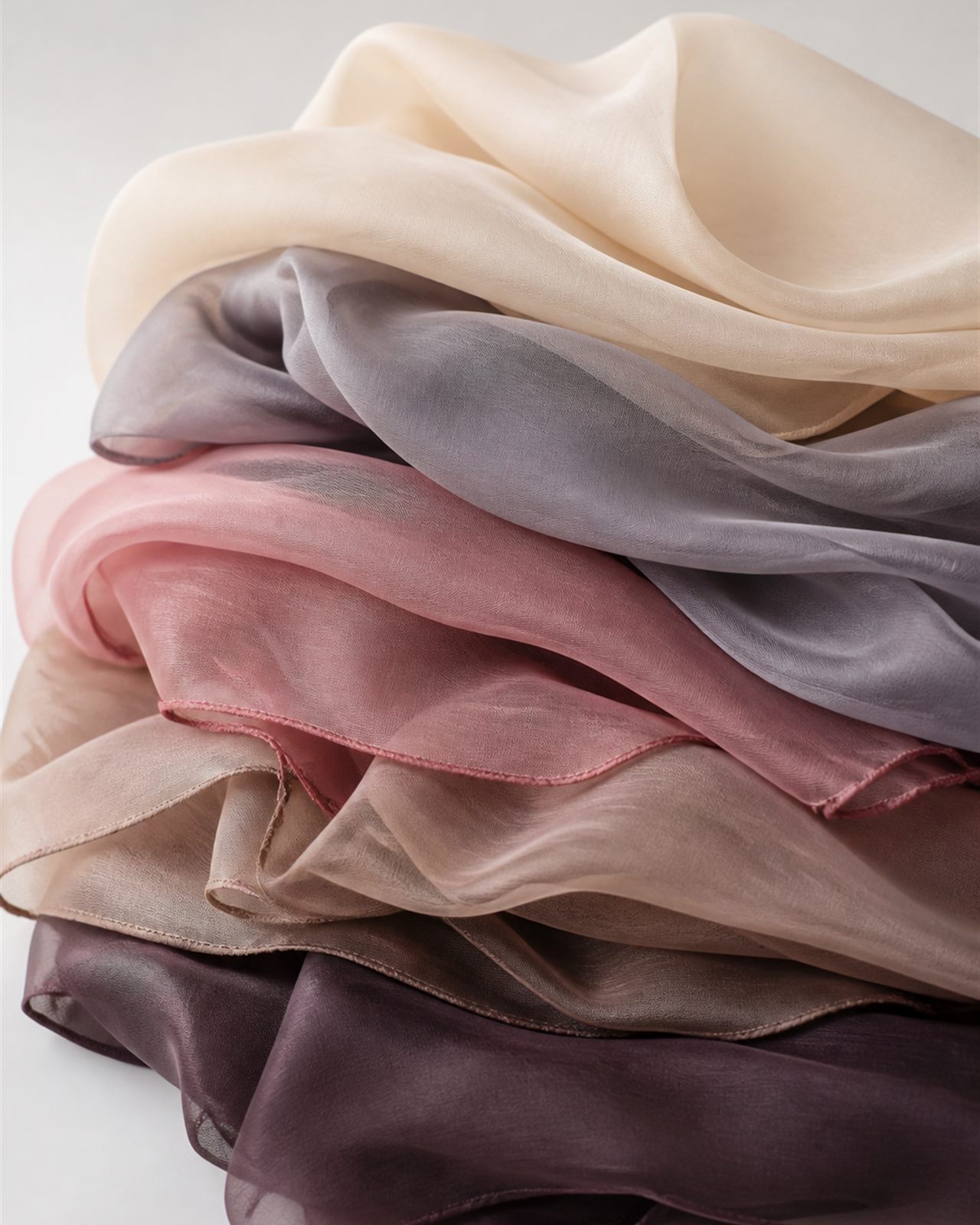
Voile is supplied in all three formats, and the market decides which one you should carry. The square is the traditional cut and dominates in Malaysia, Indonesia and Brunei; the shawl format is growing in urban retail; instant styles suit younger customers and gift retail.
If the square is your main format, read the dedicated tudung bawal wholesale page — the format has its own sizing, packing and quality logic that does not apply to a shawl.
- Square bawal — the traditional format, folds on the diagonal
- Shawl — longer format, growing in urban and online retail
- Instant — pre-shaped and easy, strong in gift and travel retail
- Inner cap — often sold alongside voile and expected by the customer
What to specify in a cotton voile enquiry
Voile quotes move on finish, print and format. Give us these points and the quote reflects the product your market actually buys.
- Finish — traditional firm or soft, stated in your own words
- Format and finished dimensions, including the corner treatment
- Plain or printed, with artwork if printed
- Colour range and the physical standard each shade is matched to
- Hem finish, which decides how the edge holds after washing
- Packing — per-piece band or wrap, or bulk sorted by colour
- Quantity per colour, and your target season
Quality checks that matter on voile
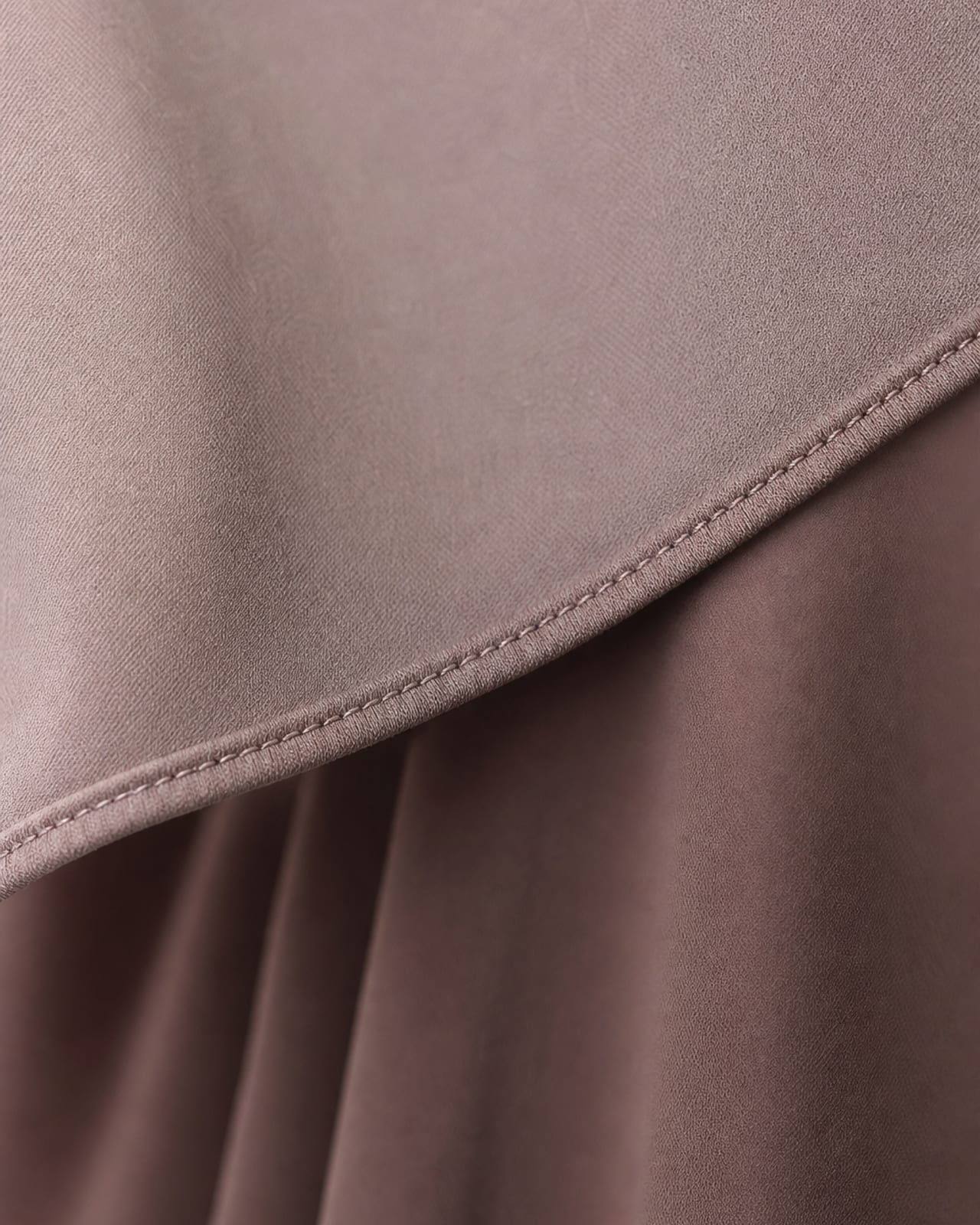
Voile defects are practical ones: an edge that frays, a square that is not square, a print that sits off centre on part of the lot. All three are visible before packing if anyone looks.
- Edge and hem — checked around the perimeter for fraying and skipped stitches
- Squareness — measured corner to corner, not eyeballed
- Print registration and centring — checked on finished pieces
- Shade consistency — compared piece by piece inside the lot
- Fabric faults — thin patches and weaving irregularities found before cutting
- Fold and packing — the same fold on every piece, especially for institutional orders
Voile in a wider hijab range
If you sell into Southeast Asia, voile is your baseline and everything else is an upgrade. Build the colour core in voile, add modal for customers who want a softer premium piece, and keep chiffon for occasion and gift retail.
Start the range planning at wholesale hijab, and read the cotton voile fabric page for the material properties behind the trade. If your customer base includes both Malaysia and Indonesia, treat them as separate ranges rather than one translated range.
Frequently asked questions
Voile is a cotton-based, breathable fabric with a firm handle that holds its position; chiffon is lighter, more fluid and more transparent, and it slips without pinning. In humid markets voile is the everyday choice and chiffon is the occasion choice.
It depends on your customer. Markets that grew up with traditional cotton voile expect the firmer hand-feel, while younger and online customers often prefer softer. Tell us which one you want, and check a washed sample, because the handle changes after the first wash.
Yes. Send artwork and tell us whether it is an all-over repeat, a border or a placement motif. Print colour and scale should be approved on a sample of the final base fabric, because light bases change how a printed colour reads.
We can produce plain voile in consistent shades for group and institutional orders. Tell us the colour, quantity, required format and any fixed date at enquiry stage, and we will confirm what is achievable before you commit.
Contact us for current MOQ. It depends on the format, whether the order is plain or printed, how many colours you need, and the packing and labelling level. Printed and banded orders carry setup work that plain bulk does not.
No. Pricing depends on the finish, format, print, colour count and packing, so it is quoted per order. Send the specification and your destination and you will receive a price that applies to your order.
Planning your next modest fashion collection?
Tell us these seven things and we can come back with a workable sourcing plan instead of a price list.