Kimono abaya — wholesale kimono-sleeve abayas
An open abaya cut with a wide kimono sleeve, worn over a dress or set. The sleeve shape carries the style, so it is agreed in measurements and sampled before bulk.
What defines a kimono abaya
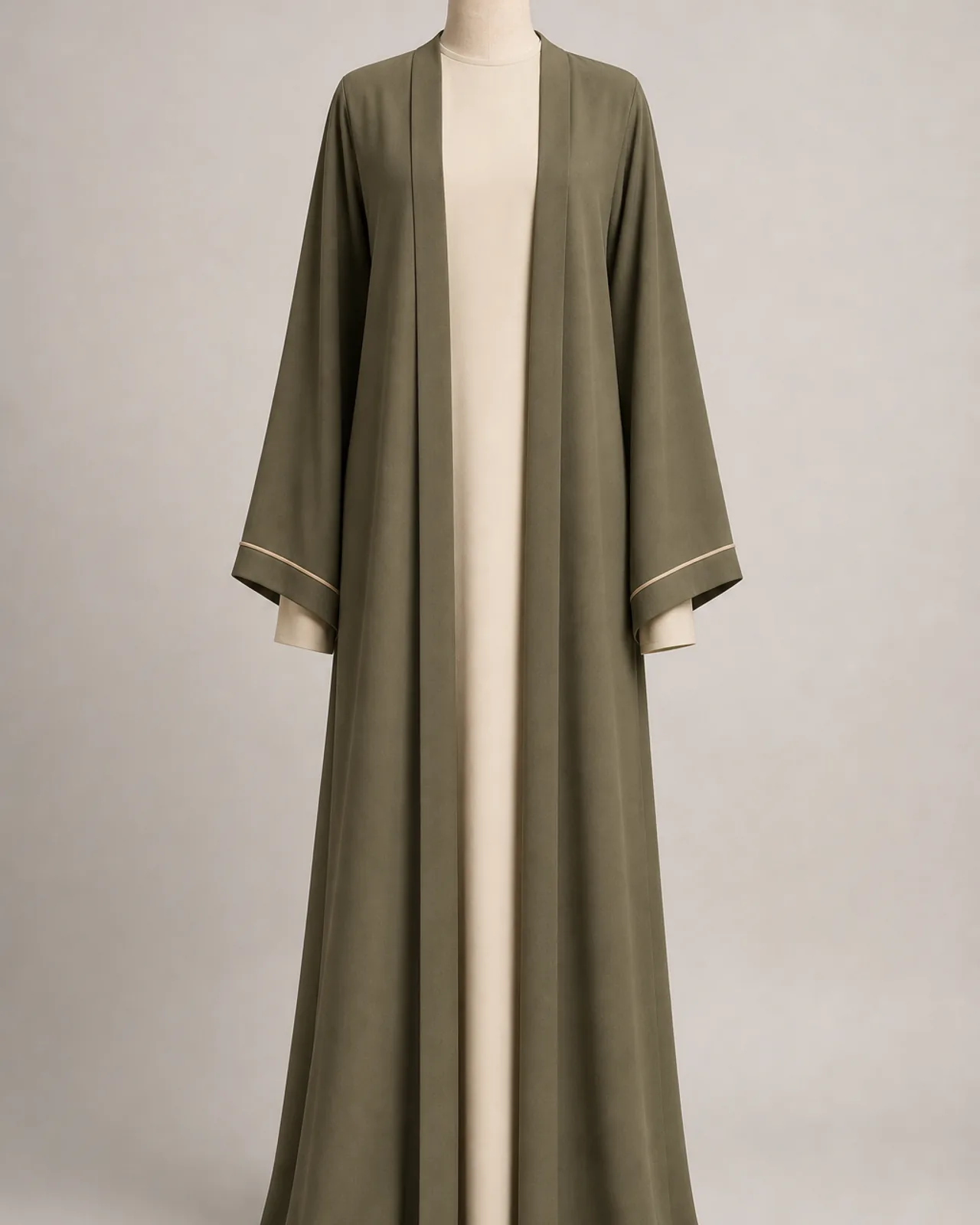
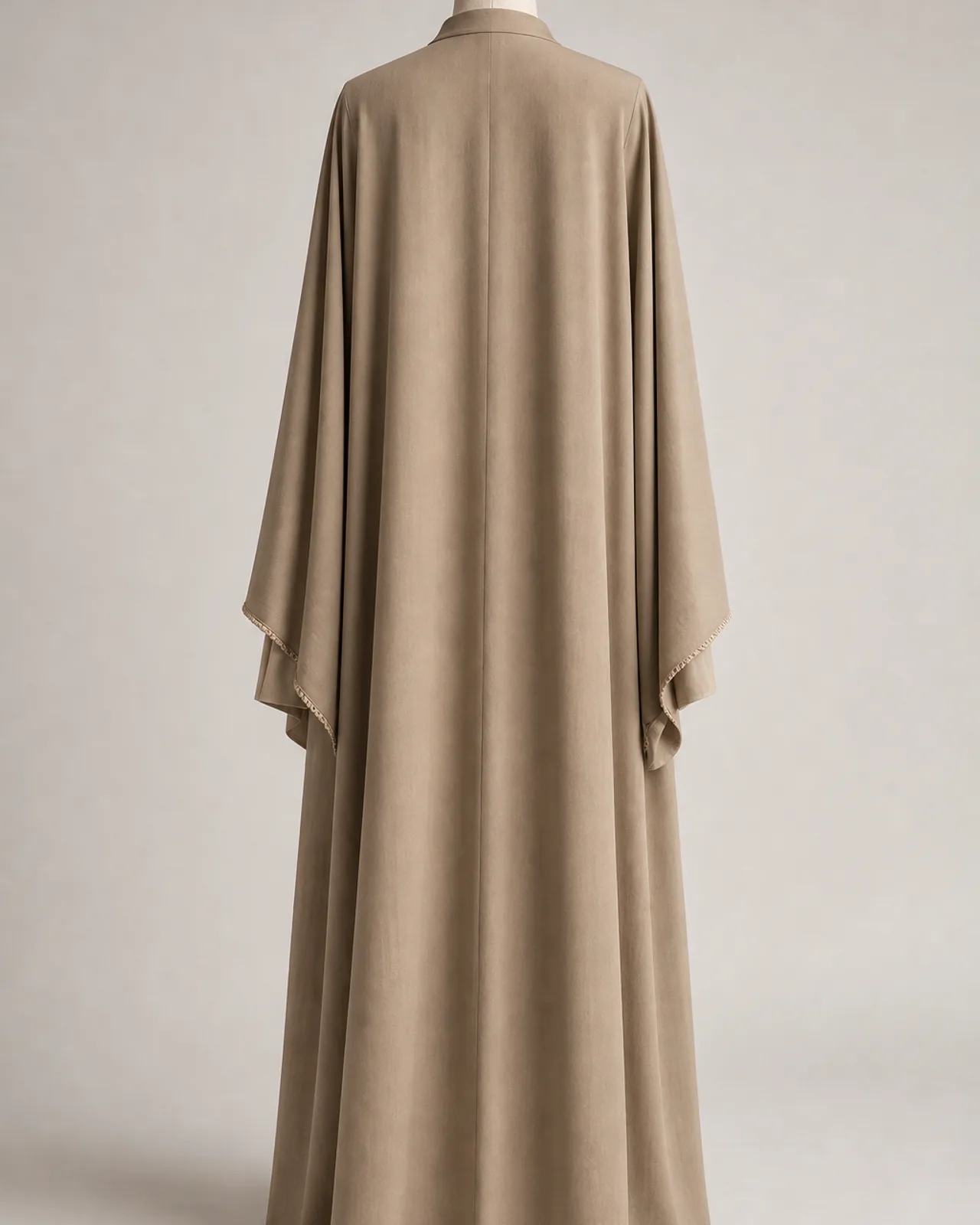
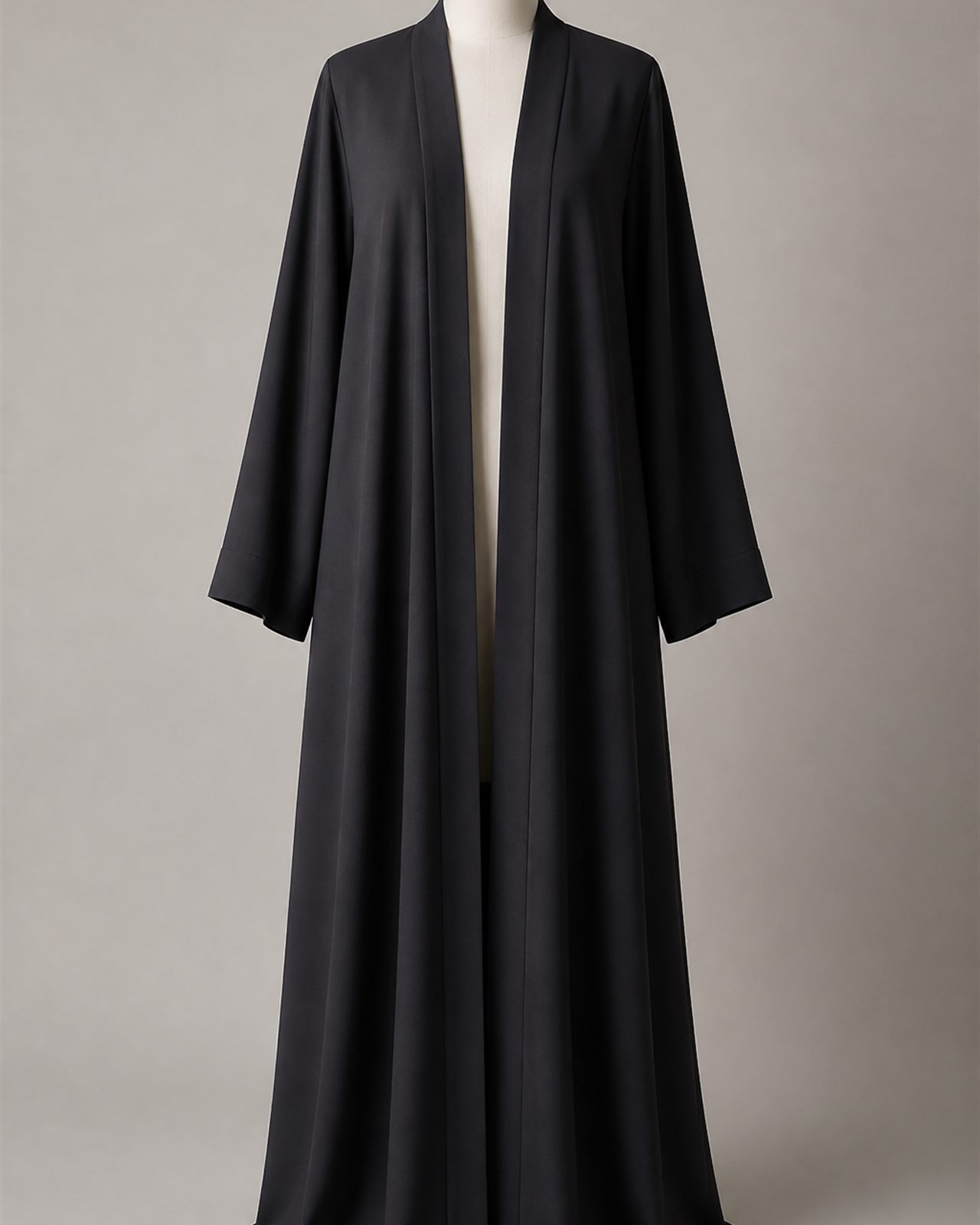
A kimono abaya takes the open, layered idea of an abaya and replaces the set-in sleeve with a wide drop sleeve. The result reads younger and more relaxed than a classic cut, which is why it appears so often in online catalogues and social media product photography.
- An open front that leaves the inner dress visible from the shoulder down
- A wide sleeve with a low underarm that changes how the garment sits on the shoulder
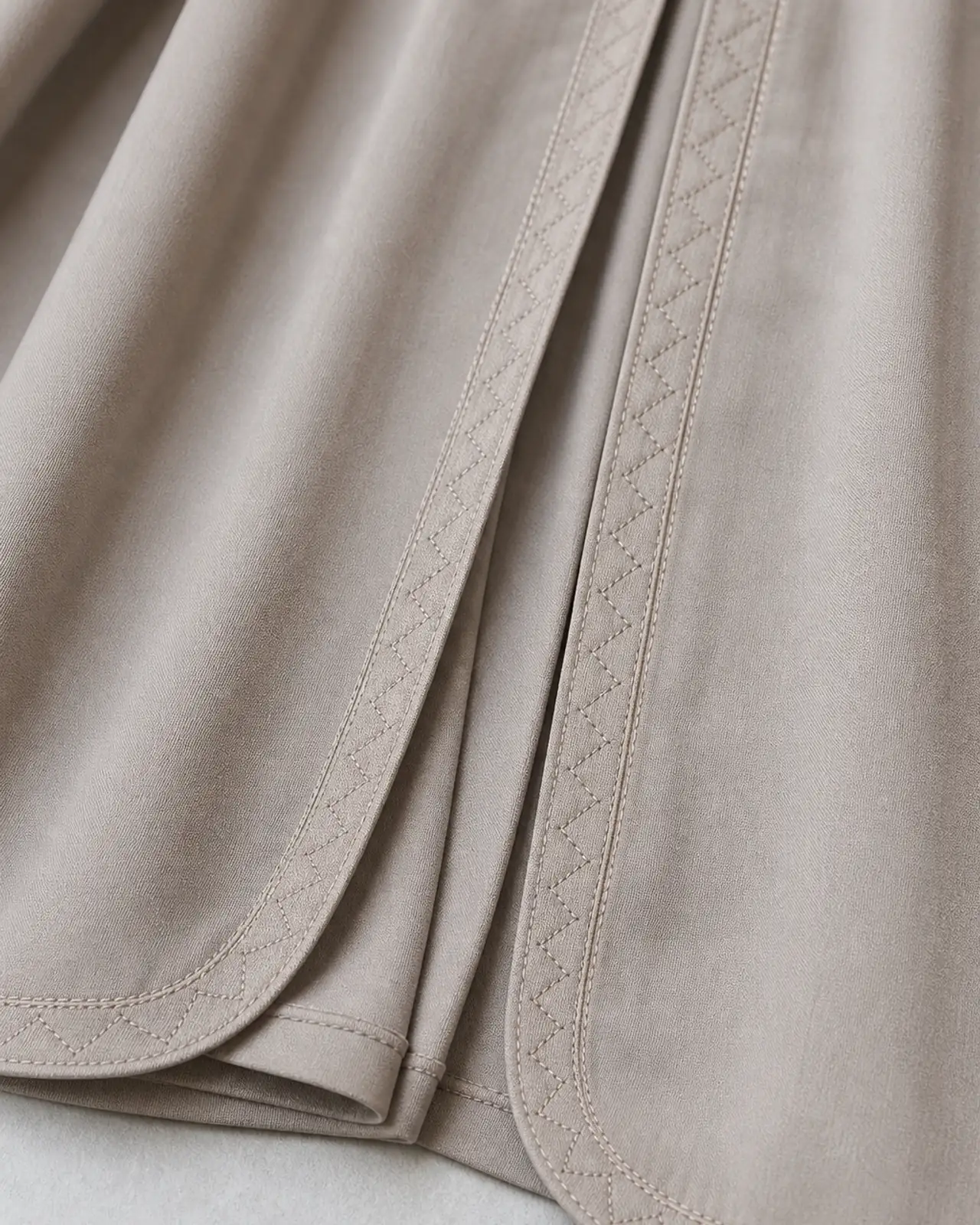
- A hem that can be left straight, split at the side, or shortened for a tunic length
- A style that works as a layer over a set as well as over a single dress
The wide sleeve: what it changes for the customer
The sleeve is the selling point and the risk. A wide opening looks generous in a photograph, but it also decides how the customer wears the piece: whether she can raise her arms, whether the sleeve catches on a handbag, and whether the garment still feels modest when she moves.
- Sleeve opening width agreed in measurements rather than described as wide or narrow
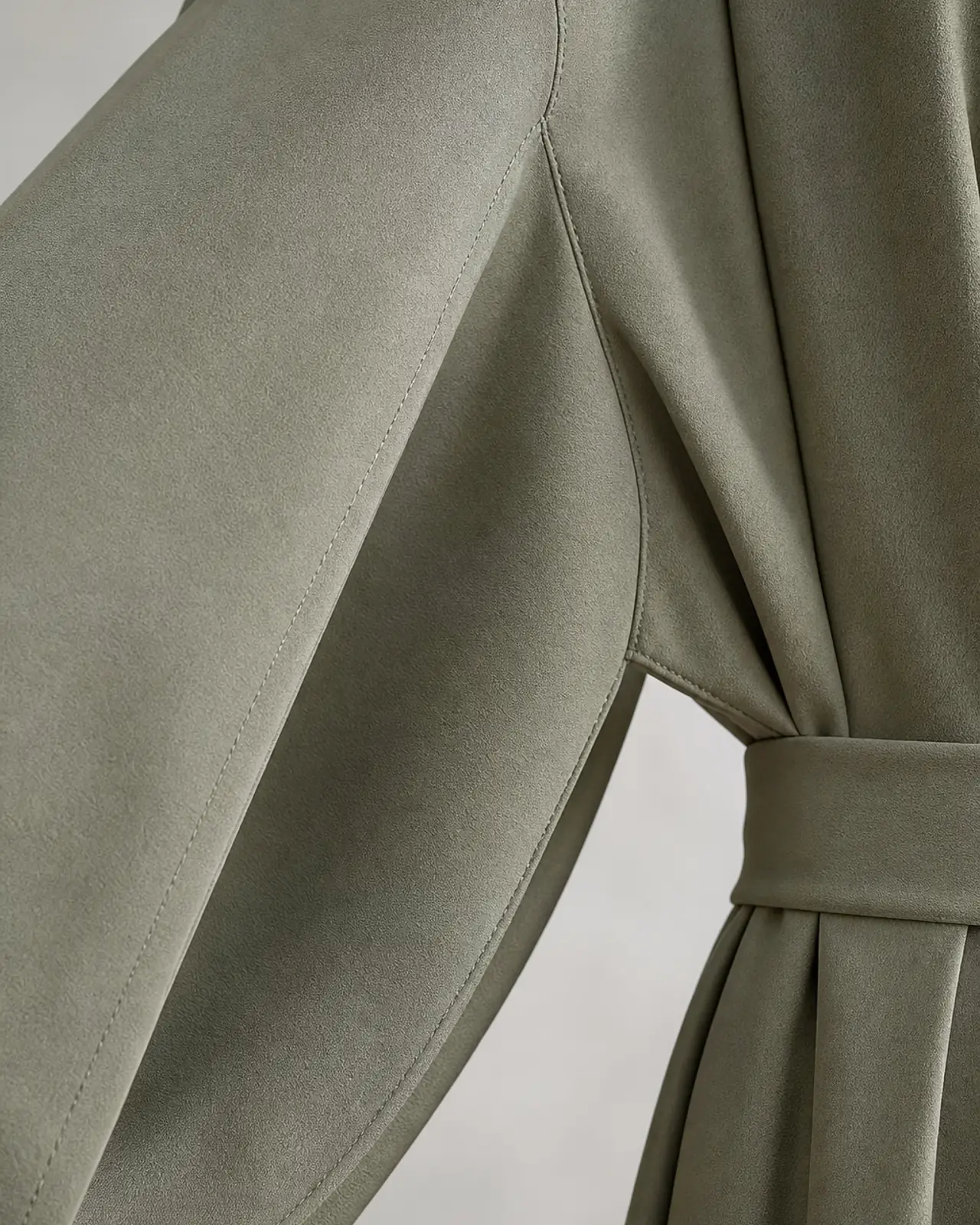
- Underarm drop set so the garment does not ride up when the arms lift
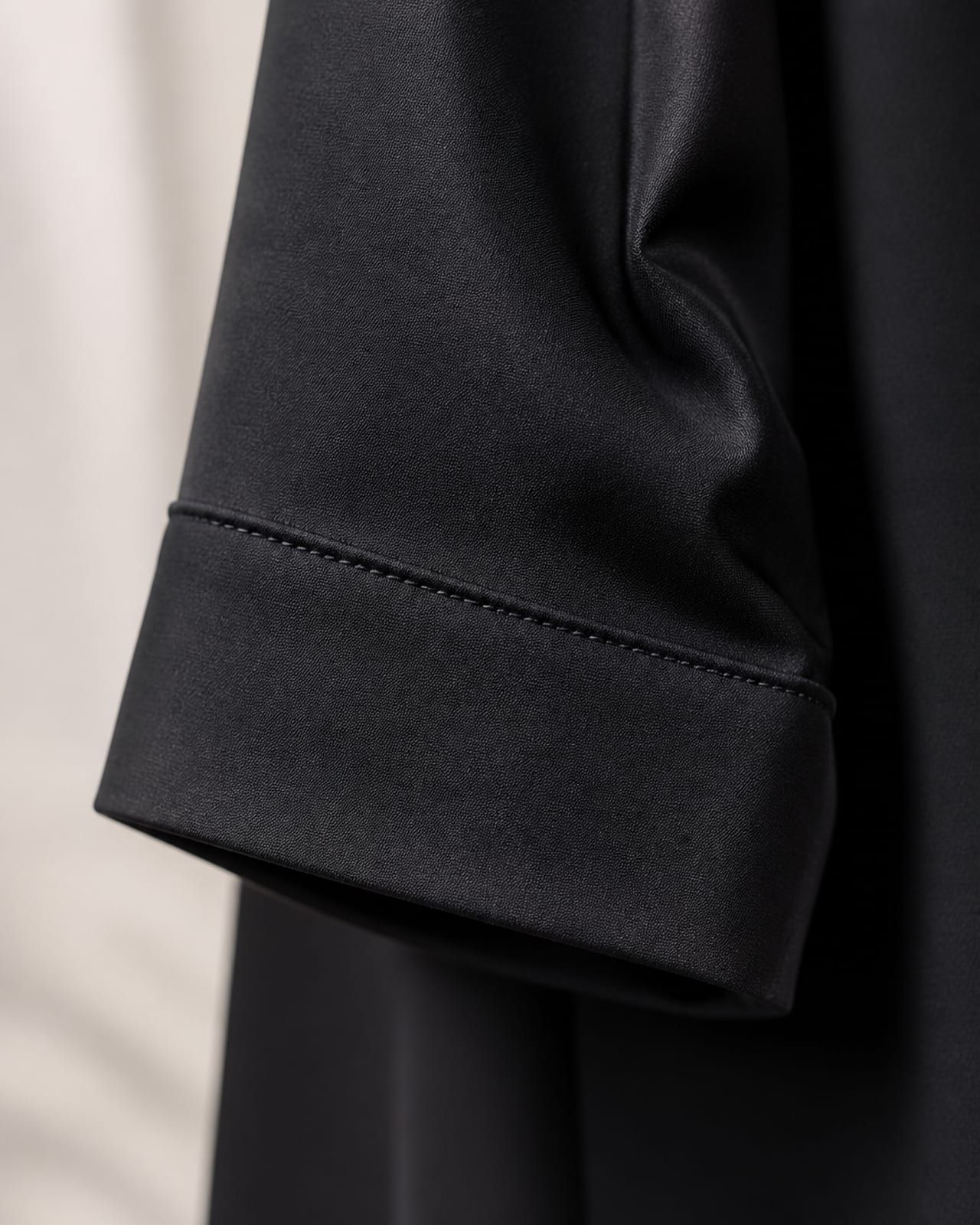
- Sleeve edge finished so it does not flare unevenly after washing
- For a heavier look, the sleeve can be cut narrower on the same block without changing the rest of the garment
Choosing the fabric for a kimono sleeve
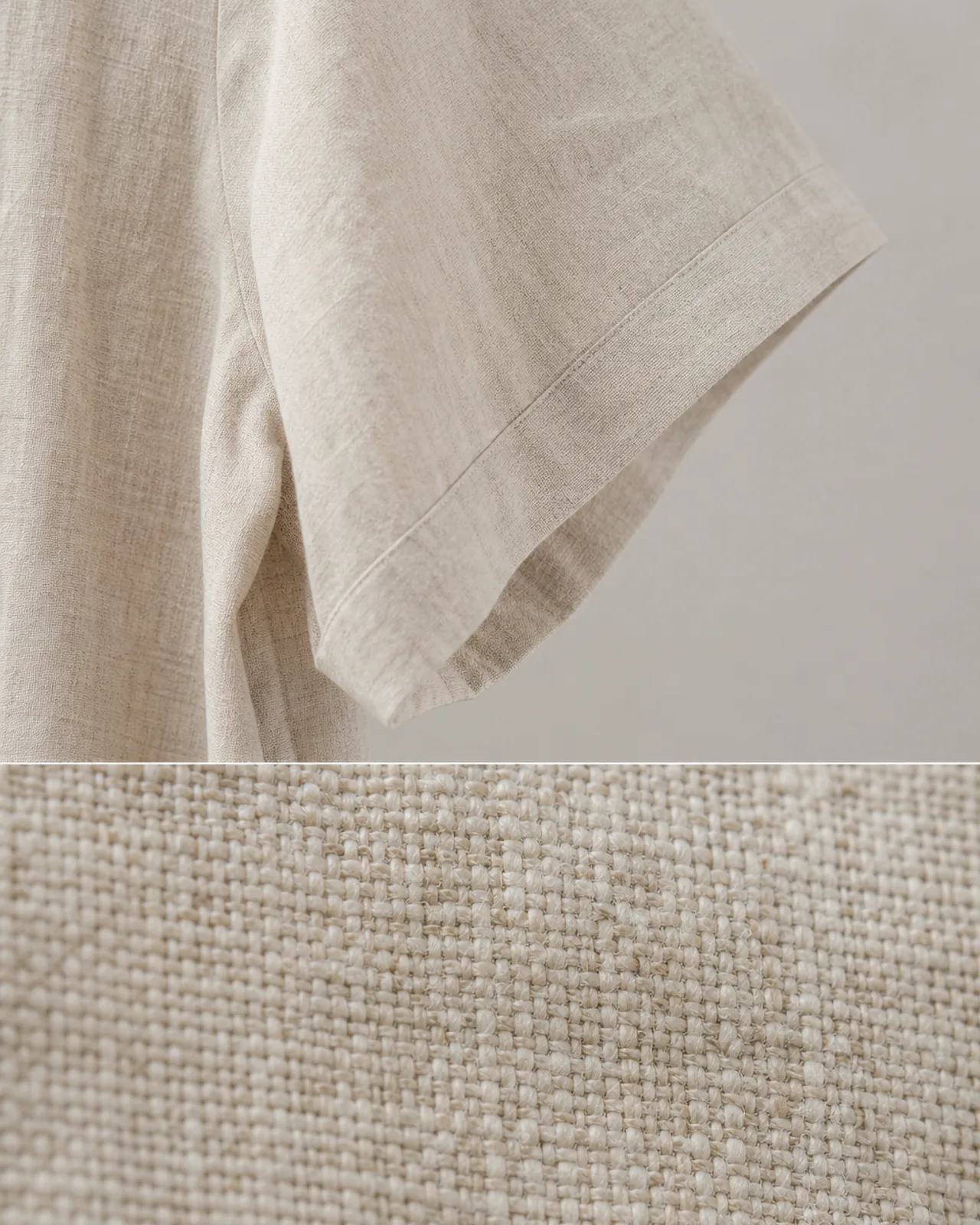
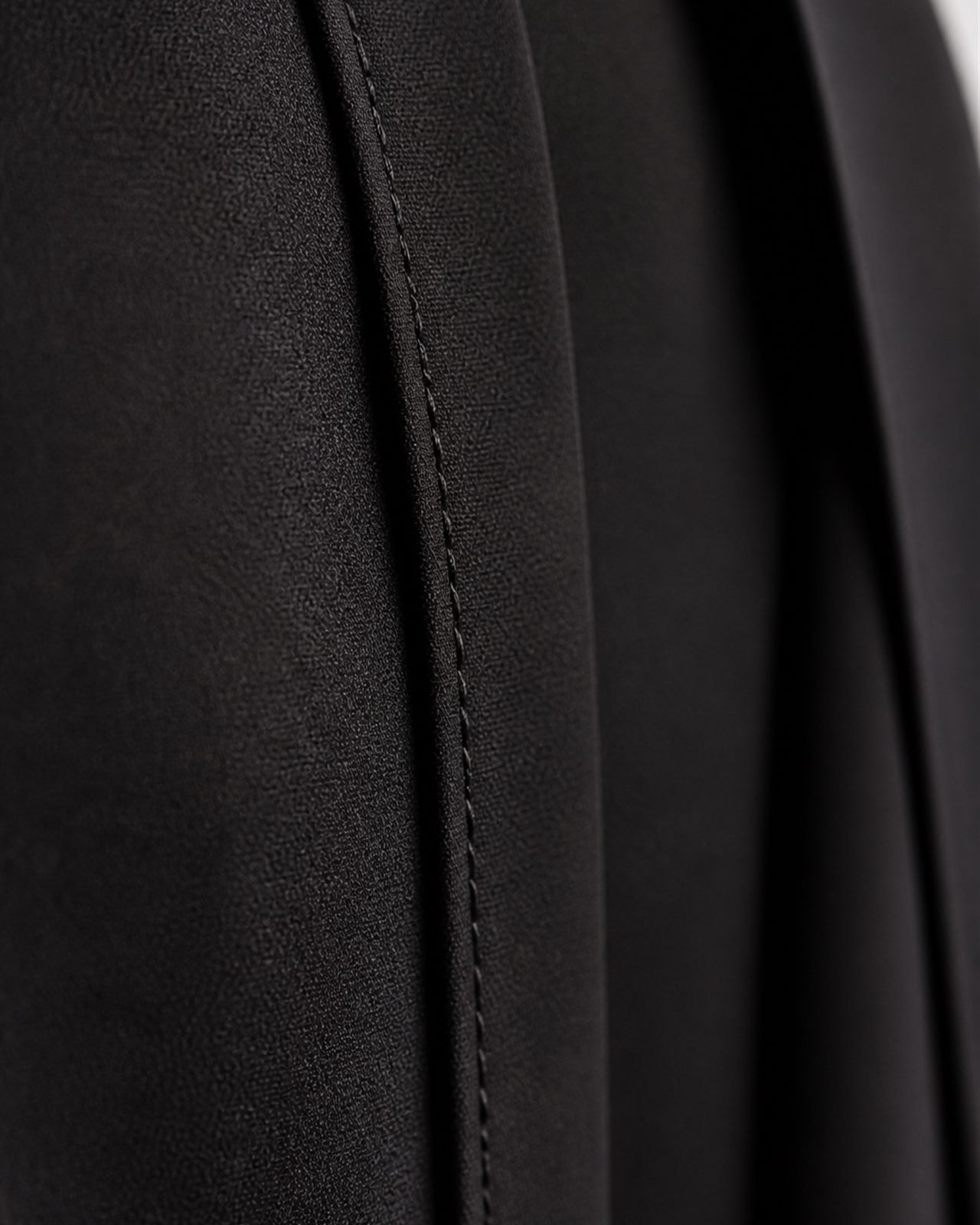
A wide sleeve hangs from the shoulder without a seam to support it, so the fabric decides whether the shape reads as elegant or shapeless. Light, fluid fabrics such as chiffon give movement and need layered styling; crepe holds a cleaner silhouette and nida falls straight and stays opaque.
- Chiffon or another light fabric for a soft, high-movement sleeve
- Crepe where the market wants a firmer, more tailored look
- Nida for an everyday version that holds its line and needs little care
- Confirm opacity over a dark inner layer before approval, especially on light shades
Sizing a kimono abaya
Because the sleeve is wide and the front stays open, a kimono abaya is forgiving across body shapes, and buyers sometimes assume that means sizing can be loose. It cannot: length and sleeve measurement still decide whether the garment sells. The size guide explains how those figures are taken.
Decide whether the piece is offered as a layer or as a standalone tunic
Fix garment length and sleeve opening width for each size in the run
Decide hem treatment: straight, split or shortened
Approve the sample worn over the inner layer your customer will use
Scale the approved block across the colour range
Who sells kimono abayas
This silhouette performs best where product images and short video drive the sale, because the movement of the wide sleeve is what makes the piece noticeable. It is also a convenient way for a seller to enter the abaya category without committing to a formal cut.
- Online sellers and social commerce accounts that market through photography and video
- Boutiques adding a relaxed layer alongside classic abayas
- Brands pairing the kimono abaya with a matching inner dress or hijab as a set
- New sellers testing a first collection with a small trial order
Inspection points on an open kimono silhouette
With no closure and a wide sleeve, everything on this style is on display, so the inspection concentrates on symmetry and on the two edges that are always visible.
- Left and right sleeve compared side by side for opening width and drop
- Front edges checked for straightness after pressing, since an uneven open edge is immediately obvious
- Hem checked level, including any split, so the two sides meet cleanly
- Measurement check against the approved chart, including sleeve opening
- Shade check between pieces and between the body and sleeve panels
Packing and presentation for wide-sleeve garments
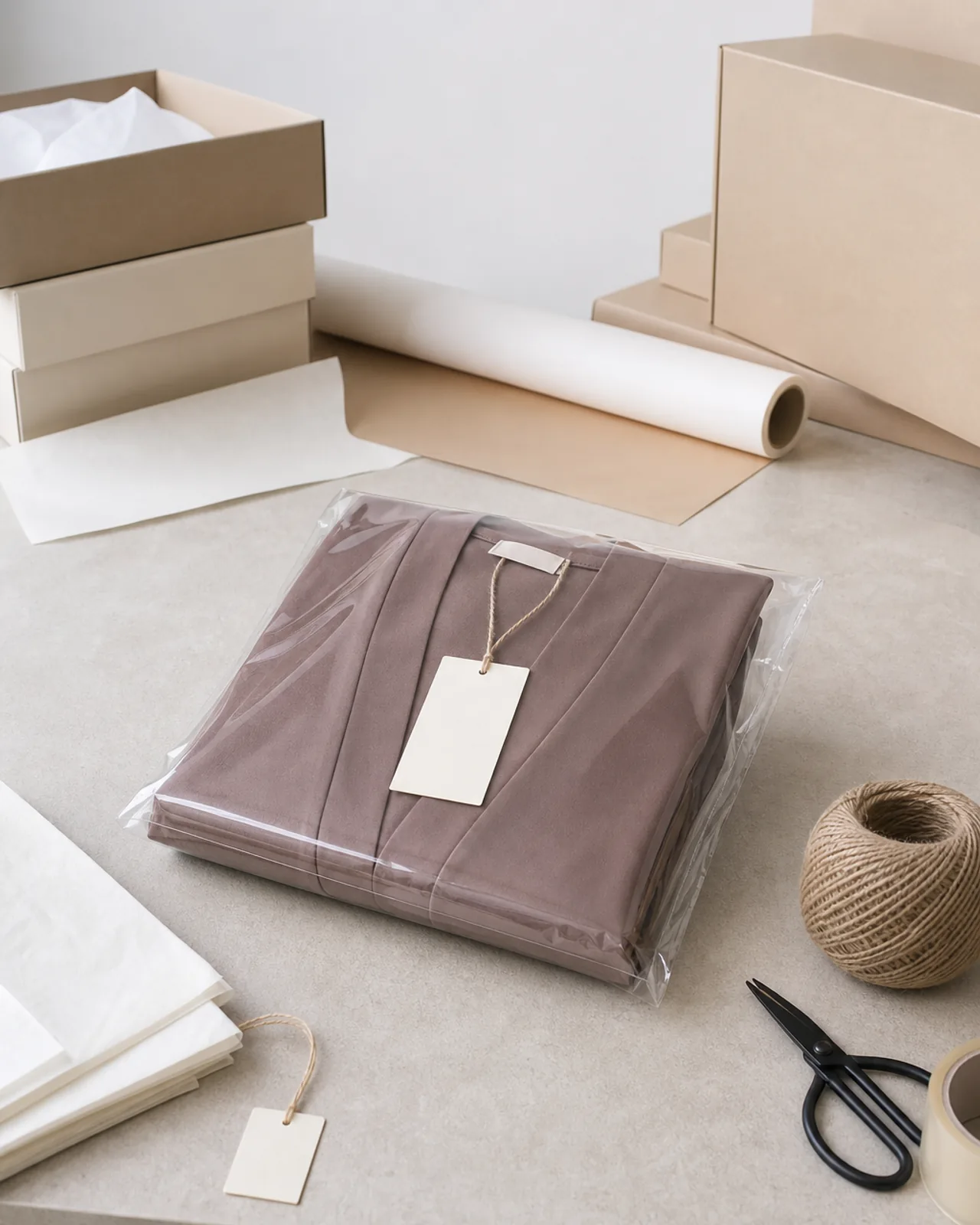
Wide sleeves crease where they are folded, so the pack is planned around the sleeve rather than around the carton. Folding is consistent across the run, which also makes a mixed wholesale shipment easier to check and to unpack.
- Sleeves folded flat along their own length rather than crushed against the body
- Poly bag as standard for bulk; printed or retail packing on request
- Hang tag and woven label applied during packing
- Packing list itemised by style, colour and size, with shipping documents prepared for your destination
Specifications
| Fabric | To be confirmed with your enquiry |
|---|---|
| Composition | To be confirmed with your enquiry |
| Weight | To be confirmed with your enquiry |
| Color | Matched to your reference, with swatch or lab dip approved before bulk |
| Size | Confirmed per order, including plus size and custom measurement runs |
| Length | Agreed in garment measurements; long or mid length to suit your market |
| Sleeve | Kimono sleeve; opening width and underarm drop agreed on the sample |
| Style | Open front kimono silhouette, worn layered over a dress or set |
| Decoration | None as standard; embroidery or beading on request |
| Closure | Open front; a belt or tie is optional and confirmed on the sample |
| Lining | Available where the fabric needs it for coverage; confirmed per order |
| Packaging | Poly bag as standard; printed poly bag, hang tag or retail packing on request |
Wholesale Information
| MOQ | Contact us for current MOQ |
|---|---|
| Sample | Lead time depends on design and order quantity |
| Price Tier | Quoted per order; fabric, sleeve construction and quantity move it |
| Customization | Fabric, colour, sleeve width, length, belt or tie, labels and packaging |
| Production | Lead time depends on design and order quantity |
| Packaging | Poly bag as standard; branded or retail packing to your instruction |
| Shipping | Consolidated shipment with packing list; terms and documents confirmed per destination |
OEM / ODM Options
- Custom Color
- Custom Size
- Custom Label
- Custom Hang Tag
- Custom Packaging
- Embroidery
- Beading
- Rhinestone
Quality Details
| Size tolerance | Garment measured flat at length, bust and sleeve opening, then checked against the approved size chart |
|---|---|
| Stitching | Sleeve edge and front edge checked for straightness and even finishing, since both are always visible on this silhouette |
| Fabric | Checked against the sealed reference for shade and drape before cutting, because a kimono sleeve exposes fabric quality quickly |
| Color inspection | Compared with the approved swatch under controlled lighting and checked for shade variation between cut pieces |
Frequently asked questions
Either way works, but the choice has to be made before sampling because a belt or tie changes the front edge and the way the panel pulls. If you want both looks, we sample the version you intend to sell.
Fluid fabrics show the sleeve shape best, while firmer fabrics keep a cleaner line and need less styling underneath. Both are produced on the same block, so the decision is about the look you want rather than about construction limits.
Yes. Sleeve opening width is a measurement, not a fixed feature. Many buyers order a narrower version for markets where a very wide sleeve is impractical for daily wear, while keeping the rest of the block identical.
It can be ordered as a set with a matching hijab, an inner dress, or both. Sets increase the average order value, and buyers who test the layer on its own often add the matching pieces on the reorder.
Yes. Fabric, colour, sleeve width, length and hem treatment can all be specified, and your labels, hang tags and packaging are applied during production and packing.
Planning your next modest fashion collection?
Tell us these seven things and we can come back with a workable sourcing plan instead of a price list.