Start a Boutique: How to Place a First Modest Fashion Order
Opening a boutique or launching an online store with modest fashion means buying before you know what sells. This page explains how to start smaller, what to test first, and how a first order is actually built.
Who this page is for
You are opening a boutique, launching an online store, or selling through social channels, and you need modest wear stock without committing to a warehouse full of styles you have not tested. The problem is not finding product — it is choosing how much to buy of what, in what sizes, and how not to lose money on the wrong guess.
This page answers the eight questions new buyers ask first: minimum quantity, mixing styles, testing in small quantities, ready stock, price, sizing, shipping cost and how quickly a style can be replenished.
What a first order usually looks like
A first order should be built to learn, not to fill a shop. That normally means several styles in shallower quantities rather than one style deep: you find out which cut, fabric and colour your customers actually buy, then go back for the winners.
It also means mixing categories. A single abaya order leaves your display empty; an order that combines abayas, hijabs, a modest set and accessories creates a complete look and a higher average sale. The wholesale page explains how mixed orders are consolidated.
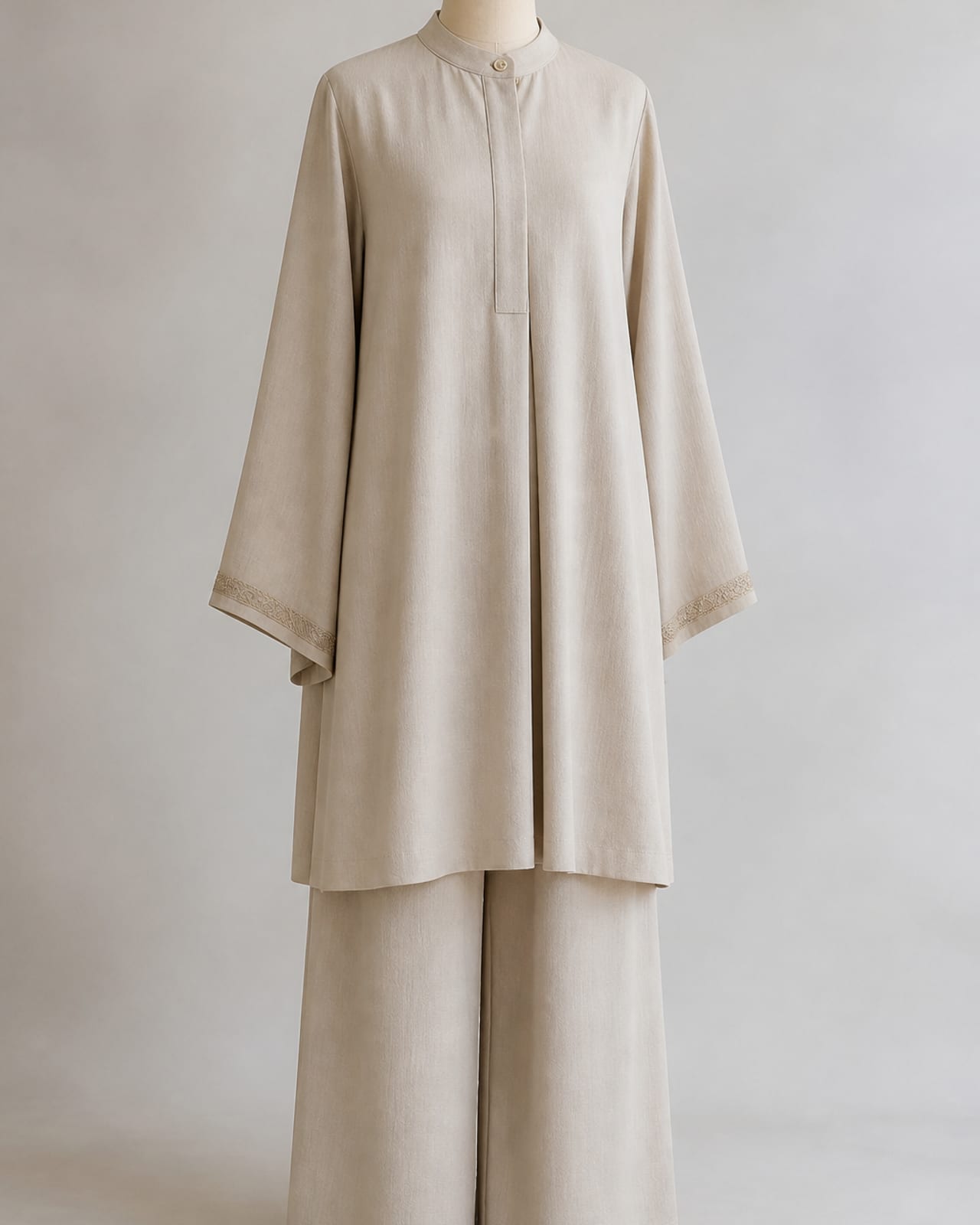
Can I mix styles and categories in one order?
Contact us for current MOQ. Mixing changes what the minimum applies to, so ask for the styles you are considering rather than a general figure.
Yes. Mixing is normal for boutique orders and it is usually the better commercial decision: one shipment, one packing list, one freight cost shared across everything you sell rather than several small shipments each carrying their own minimum charge and courier cost.
- Abaya, hijab, modest sets, prayer wear and accessories combined in one order
- Several styles within one category, in smaller quantities per style
- One colour story across categories, so pieces can be merchandised together
- One packing list and one arrival date, which simplifies receiving
- Quantity per style still drives the price, so mixing is a planning tool, not a discount
Testing a style before you commit
A test order is the most economical form of market research available to a buyer. You test the cut, the fabric, the length and the colour in your own market, at your own price point, before you place a production order in depth.
Test in the order that reduces risk fastest: first the silhouette, then the fabric, then the colour, then the size ratio. If you test everything at once with a small order, a slow seller tells you nothing about which element failed.
- Test a new silhouette before ordering it in depth
- Test the fabric decision on a style you already know sells
- Test colour in your own market, because palette preference varies by region
- Track which size sells first — it usually tells you whether your size run is right
- Keep the approved sample of anything you intend to reorder
Ready stock or made to order?
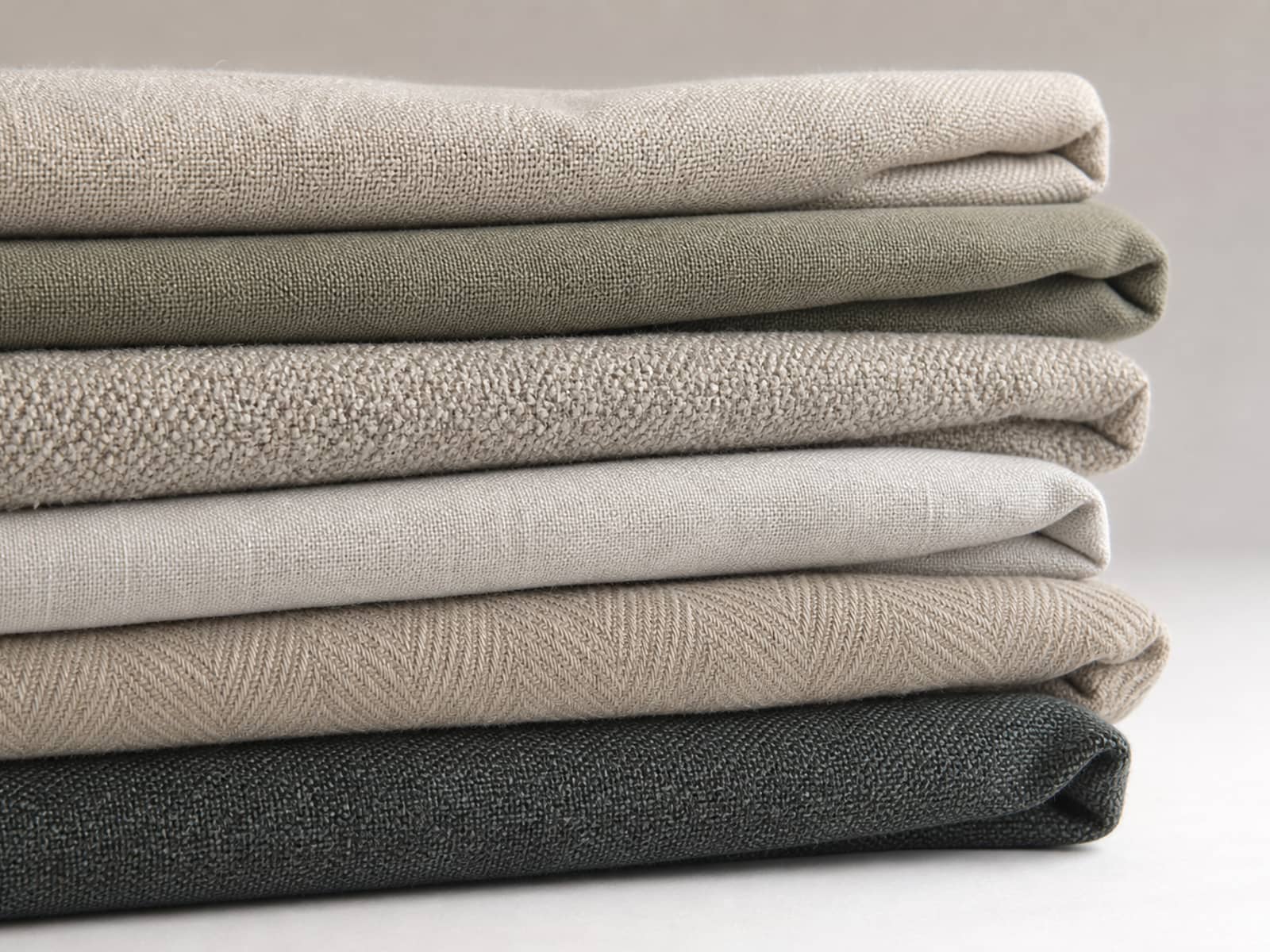
For a first order, ready stock is usually the sensible start: an existing specification, a shorter planning window, and no sampling cost before you know whether the style sells in your market.
Made to order makes sense once you know what works and want to control fabric, colour, sizing, labelling and packing. Most boutiques move to a mix: ready stock to fill the display now, made to order to build the collection that becomes their own.
- Ready stock: buy what exists, arrive sooner, less control over specification
- Made to order: your fabric, colour, measurements, labels and packing, longer planning window
- Mixed: everyday lines on ready stock, signature pieces developed to order
- Ask which styles are available as ready stock today rather than assuming every style is
Building a Boutique Starter Collection
A starter collection works when every piece has a role — anchor, statement, add-on or test. If a style has no role, it is stock, not a collection.
A starter collection is not a smaller version of a large catalogue. It is a set of pieces that can be merchandised together, priced across a range, and replenished. Think in roles rather than in styles.
- One anchor style: an everyday abaya in a fabric that suits your climate, in a colour that sells year round
- One statement piece: a decorated or occasion style that lifts the display and shows your price ceiling
- A hijab group that matches the abaya palette, in a fabric your market already buys
- One coordinated set, because sets sell as a complete look and carry a higher value per sale
- Small accessories that attach to the same purchase, so the average order rises without more stock risk
- A prayer wear option if your market buys it seasonally — see prayer dress wholesale
- One test style: something you are not sure about, ordered shallow and judged honestly
Sizing: the part first orders most often get wrong
Boutiques lose money on sizing more often than on any other decision, usually because the size run was copied from somewhere else. S, M, L and XL do not mean the same thing in different markets, and abaya length is usually chosen by height rather than by body size.
Work from garment measurements rather than letters, decide which sizes your market actually asks for, and set the ratio deliberately. The size and fit guidance explains the measurement points; plus size abaya wholesale covers extended runs.
- Choose a size run based on what your market buys, not on what a chart assumes
- Confirm garment measurements in writing before the order is placed
- Decide length options for abaya styles, since length drives satisfaction
- Plan the ratio so the middle sizes are not sold out first and the extremes are not left behind
- Ask about custom measurement if you sell to a specific customer profile
How price works on a boutique order
There is no published price list, because price depends on fabric, quantity per style and colour, decoration, sizing and packing. Two orders that look similar can sit at different prices, and a list price would be wrong for both.
What you can control is the specification. Choosing a stock fabric, concentrating quantity in fewer styles and colours, and keeping decoration to defined pieces will move the price more than negotiating will. The wholesale page explains the same mechanics for larger orders.
- Quantity per style and per colour is the biggest price variable
- Fabric choice sets the material floor of the price
- Decoration, labelling and printed packaging each add a step
- Ask for the same style quoted in two fabrics — that comparison is more useful than a single figure
- Payment terms are confirmed with the order, not published as a general rule
Shipping cost: think per garment, not per shipment
A cheap shipment that arrives in three parts is expensive. What matters is landed cost per garment: freight plus any duty and handling, divided by the pieces you can actually sell. Consolidating everything into one order is the simplest way to keep that number down.
- Consolidate categories into one shipment instead of several small ones
- Packing method changes volume, and volume changes freight cost
- Destination, weight and delivery terms drive the shipping quote
- Ask for the shipping options with the quotation, so landed cost can be compared properly
- Shipping and customs requirements differ by country — confirm what your destination needs
Replenishment: how quickly can a style come back?
Replenishment speed depends on whether the style is ready stock or made to order, and on whether the specification was recorded the first time. A reorder from a kept sample and a written specification moves far faster than a reorder that has to be reconstructed.
- Keep the approved sample and the specification of every style you intend to reorder
- Ready stock can be replaced faster than a made-to-order style
- Flag your core styles before the season, so they can be planned rather than rushed
- Lead time depends on design and order quantity — confirm it when you place the first order, not when you run out
- Reorder before stock runs out, using your own sell-through rather than a fixed schedule
Decisions to make before you order
Each decision below has a commercial consequence. Making them in this order keeps a first order coherent instead of a collection of unrelated purchases.
| Decision | Why it matters | What to send us |
|---|---|---|
| Market and customer | Determines sizing, length, colour and price position | Country, channel and price level you sell at |
| Category mix | Decides what can be merchandised together and what shares freight | Categories and the roles they play in your display |
| Quantity per style | The main price variable and the main stock risk | Your estimate, or the styles you want to test first |
| Fabric | Sets drape, opacity, season and cost | A direction such as Nida, crepe, modal or cotton voile |
| Size run | The most common source of lost margin | Your chart, or the sizes your customers ask for |
| Ready stock or made to order | Sets planning time, sampling work and control over specification | Which styles are urgent and which can be developed |
| Branding | Turns an import into your own product | Whether you need labels, tags and packaging — see [private label](/private-label/) |
| Destination and timing | Drives shipping cost and whether the goods arrive in time to sell | Destination, deadline and any delivery preference |
Your first order checklist
Run through this before you send the inquiry. It takes minutes and prevents most of the problems that make a first order expensive.
Decide your market, price position and the categories you will actually show.
Choose a size run from garment measurements, not from letters.
Choose fabric per style and accept that fabric decides drape and cost together.
Decide whether the order is ready stock, made to order, or a mix.
Decide whether you need labels, tags and packaging, and gather any artwork you have.
Ask for the current MOQ on those exact styles, and for shipping options to your destination.
Request the quotation against a written specification, and compare options rather than totals.
Request a sample or a reference sample where the style is new to you.
Confirm packing method, carton plan and packing list before production starts.
Keep the approved sample and specification so your first reorder is fast.
How to start
One message with product, quantity, market, fabric, size, customization and target date is enough to start. Read the FAQ if a question is still open.
Send your market, the categories you are considering and your rough quantity. If you are not sure which styles suit your market, say so — describing your customer and price position is enough for a recommendation on category, fabric, sizing and quantity.
Frequently asked questions
It depends on whether the styles are ready stock or made to order, and on fabric, decoration and packing. Contact us for current MOQ on the styles you want to test, and the order can be built around those.
Yes, and it is usually the better first order. Mixing gives you a complete look on display, shares one freight cost across everything you sell, and arrives with a single packing list.
Yes. A sample, or a reference sample of an existing style, lets you judge fabric, length, finish and sizing before you buy in any depth. Sample cost and timing are confirmed for the style you are considering.
Shipping method depends on order size, weight and destination, and the options are quoted with your order. Send your destination and the quantity you have in mind and we will confirm what is available for that order.
Start from your market's customers rather than a generic chart, order by garment measurement, and treat the size ratio as a decision rather than a default. The [size and fit guidance](/sizes/) explains the measurement points and how to build a run.
Yes. Reorders are the point of recording the specification: fabric, colour, measurements and packing are kept, so the next order starts from the same baseline instead of a new development. Lead time depends on design and order quantity, so plan the reorder before you run out.
A catalogue of styles is available on request, and pricing is quoted per order because it depends on fabric, quantity, decoration and packing. Send your requirement and you will receive a specification and a price rather than a list that may not apply.
Planning your next modest fashion collection?
Tell us these seven things and we can come back with a workable sourcing plan instead of a price list.