Modest Clothing Wholesale: Building a Range, Not a Single Order
Buyers who split every category across a different supplier end up with four quality standards, four shipments and four sets of problems. This page is about consolidating that.
The case for one supplier across categories
Sourcing each modest category from a different supplier looks efficient on a spreadsheet and turns into work everywhere else. You maintain several relationships, you reconcile several packing lists, you accept several quality standards, and you pay for several shipments.
Consolidating does not mean buying everything from one place forever. It means treating the first collection as one project: one specification, one order, one shipment, one standard you can audit and repeat.
- One purchase order instead of several, with one set of terms
- One packing list you can check line by line against what you ordered
- One quality standard applied to every category in the shipment
- One consolidation point, so freight is calculated on the whole order
- One colour conversation, so shades across categories can be aligned
Which categories combine well, and which do not
Not every combination is sensible. Categories that share a fabric and a colour direction combine naturally and often improve each other. Categories that pull the order in different directions — a heavily decorated occasion line next to a plain everyday basic — slow production down and complicate packing.
The practical rule: combine categories that a customer would buy in the same visit, and separate production windows where the finish levels are far apart.
| Combination | Why it works or does not | Order together |
|---|---|---|
| Abaya + hijab | Same customer, same occasion, frequently bought as a pair | Yes |
| Dress + hijab | Colour matching across fabrics is the main value | Yes, with matching agreed at sample |
| Prayer dress + hijab + inner cap | Natural bundle, and often bought as a gift | Yes |
| Everyday basics + occasion decoration | Different production routes and pacing | Preferably separate windows |
| Jilbab and khimar + everyday range | Different markets and different customers in many cases | Only if your market buys both |
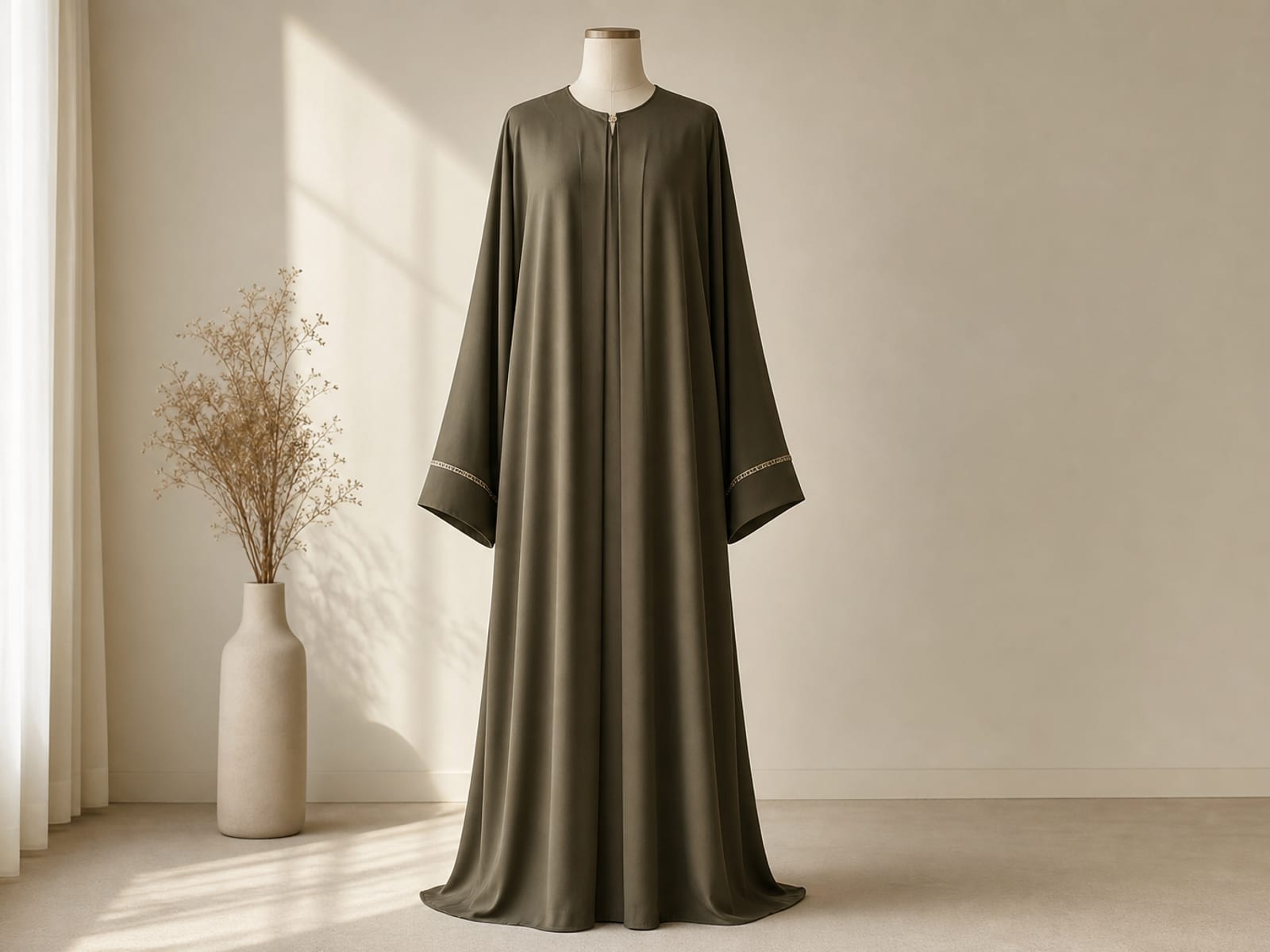
Width or depth: the first collection question
A new range can be wide — many styles, little of each — or deep — fewer styles, more of each. Width looks impressive and stalls the reorder, because nothing sells out and nothing proves itself. Depth is less exciting and produces clear information.
For a first modest clothing order, a narrow core of styles at workable depth, plus a small number of test styles, gives you both sell-through data and something to reorder.
- Anchor styles — the categories and styles you expect to repeat
- Test styles — one or two pieces that answer a question about your market
- Filler styles — items that complete the story but are not the reason for the order
- Reorder candidates — identified in advance so the second order is fast
The colour thread that ties a mixed range together
The reason a mixed range looks like a collection rather than a shipment is usually colour. Choose a small set of shared shades and let them run across categories — an abaya, a hijab and a set in the same neutral read as one range even when the cuts differ.
This is also the hardest thing to retrofit. Asking for matching shades after the separate orders are placed means comparing dye batches, which is exactly the problem you avoid by ordering together.
- A core neutral palette that runs through every category
- One or two seasonal shades used across categories
- Physical colour standards, agreed before production, not after
- Shade approval on each fabric independently, since the same standard looks different on each
- A sealed swatch of every shade kept as the reorder reference
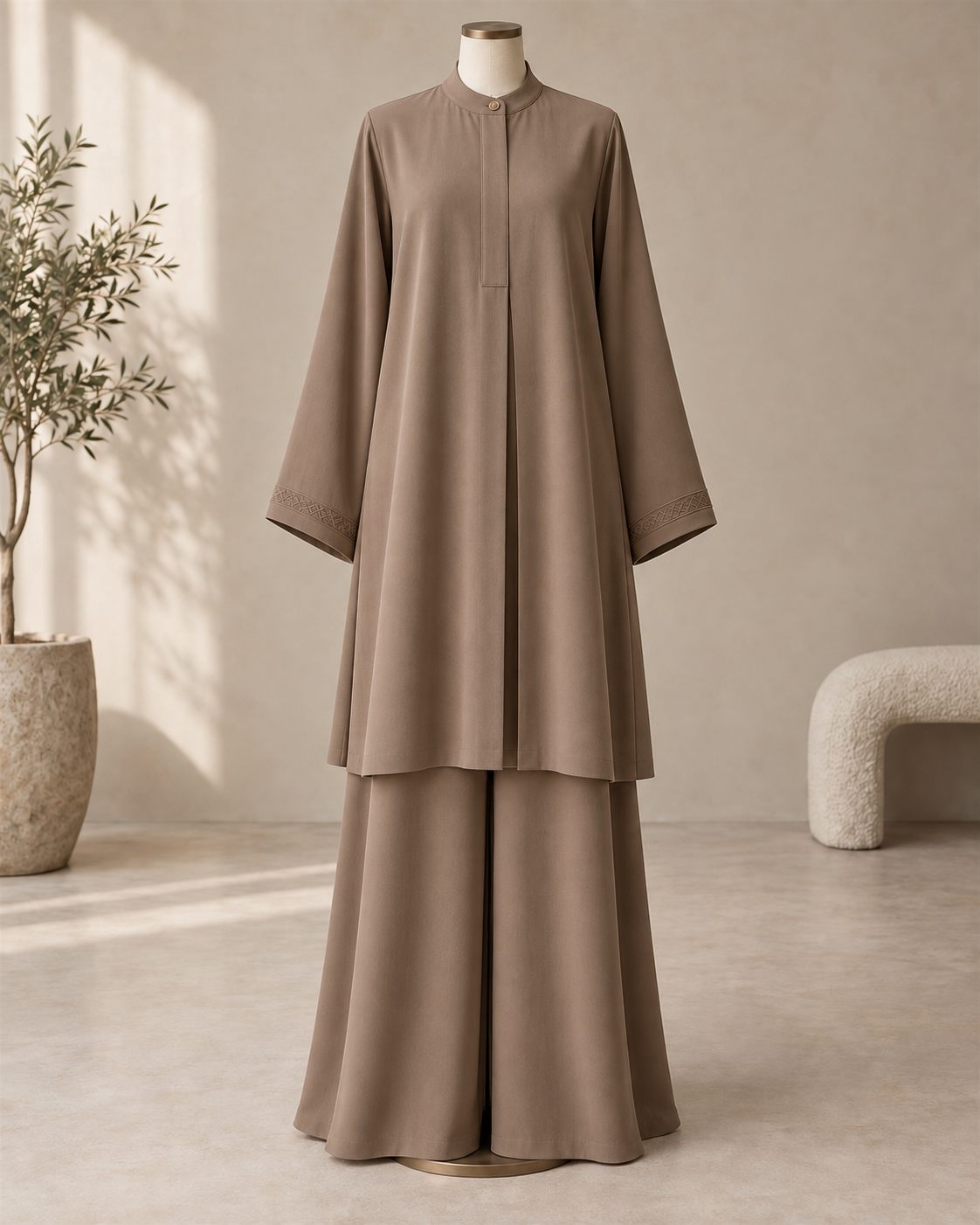
One quality standard across every category
Quality is the strongest argument for consolidation. When one supplier produces the whole order, one inspection standard applies to everything, and a buyer can compare categories against each other rather than arguing about which supplier is worse.
It also means the same language is used for the same problem. Measurement tolerance, colour checking and finishing standards are stated once and applied to the whole shipment.
- One stated measurement tolerance, applied category by category
- One colour approval process against physical standards
- One finishing standard for hems, seams and closures
- One inspection sequence from fabric to packed carton
- One documented outcome per order that you can compare with the next
Packing and shipping a multi-category order
Consolidation saves money in shipping, but only if the cartons are organised. A mixed container that arrives sorted by category takes hours to process; one that arrives sorted by shop, by collection or by type takes minutes.
Tell us how you will process the shipment when it lands, and we pack to that. It costs nothing to specify and it is the difference between a container that saves money and one that costs your team a week.
- Sort order agreed before packing: category, colour, size or destination
- Carton content list inside each carton, not only on the master packing list
- Uniform packing level, or deliberately different levels per category if that is what you need
- Accessories packed with the garments they belong to, where they are sold together
- Freight mode chosen against total volume, not against the heaviest category
- Shipping documentation prepared for your destination and available upon request
Applying your brand across a mixed range
A brand applied inconsistently across categories looks like a reseller, not a label. If an abaya carries a woven label, a hijab carries a printed band and a set arrives in a plain bag, the customer notices even if she cannot say why.
Decide the label architecture once and apply it everywhere: which label, in which position, on which category, with which care wording and which packing level. The full framework is on private label modest clothing.
- Label type and placement defined per category in advance
- Care wording that matches each fabric, not one generic label
- Consistent hang tag and packing across everything in the range
- Accessory branding that ties smaller items into the same identity
Planning a mixed order against the calendar
Categories peak at different times. Prayer wear and abayas spike around Ramadan, occasion pieces around Eid, dresses across the summer, and gifts at the year end. Ordering all of them at the same moment guarantees that some arrive early and some arrive late.
Work backwards from each category's selling window and let the order follow that sequence, rather than forcing one production date on a range built for three different seasons.
- Peak categories — ordered earliest, since they carry the highest consequence of delay
- Core categories — ordered to keep the basics in stock year round
- Test categories — ordered in the quiet window so the sample work has time
- Reorder windows — agreed in advance for the styles that prove themselves
How to brief a one-stop order
The brief that works is short and complete: what you sell, where, at what level, and what you need in this order. Everything after that is a specification conversation rather than a guessing game.
Send it once, with the categories listed separately and the priority order stated. If a style needs developing, say so — custom work belongs at the front of the schedule, not the back.
Tell us your market, your channel and the price level you sell at.
List the categories you want in this order, with quantity per category.
State which styles are ready stock and which need development.
Confirm fabric and colour direction across the range.
Confirm size ranges and measurement specifications category by category.
Confirm branding and packing level for the whole order.
Approve samples before any category goes into bulk.
Confirm the packing structure and the shipping plan as one shipment or several.
Frequently asked questions
Yes, and consolidation is usually the point of ordering this way: one packing list, one shipment and one quality standard. Keep the order to categories your customers buy together, and separate heavily decorated lines from plain basics where the production pacing differs.
It lowers the delivered cost per unit, mainly through consolidation of freight and handling. Whether the unit price itself falls depends on the fabrics, finishes and quantities in each category, so the quote is built line by line and priced per order.
Start narrow and deep. A small number of styles at workable depth tells you what sells and gives you something to reorder, while a wide shallow range usually leaves you holding stock that proves nothing.
Approve each shade on each fabric separately, using physical swatches, because the same colour reference looks different on a woven abaya fabric and on a knit hijab. Keep a sealed swatch of each combination as the reference for reorders.
Contact us for current MOQ. With mixed orders the practical constraint is quantity per style, fabric and colour rather than the order total, since each combination still has to be cut, produced and packed.
Yes. Labels, tags and packing can be produced to one design across abayas, hijabs, sets and prayer wear. Plan the label architecture before the first order so care wording and placement match each fabric rather than being retrofitted later.
Planning your next modest fashion collection?
Tell us these seven things and we can come back with a workable sourcing plan instead of a price list.