Jilbab Wholesale: A Covering Garment, Specified Properly
A jilbab is judged on coverage before anything else. This page covers the constructions, the fabrics that work, and the sizing logic for a garment that leaves little room for error.
What makes a jilbab different from an abaya
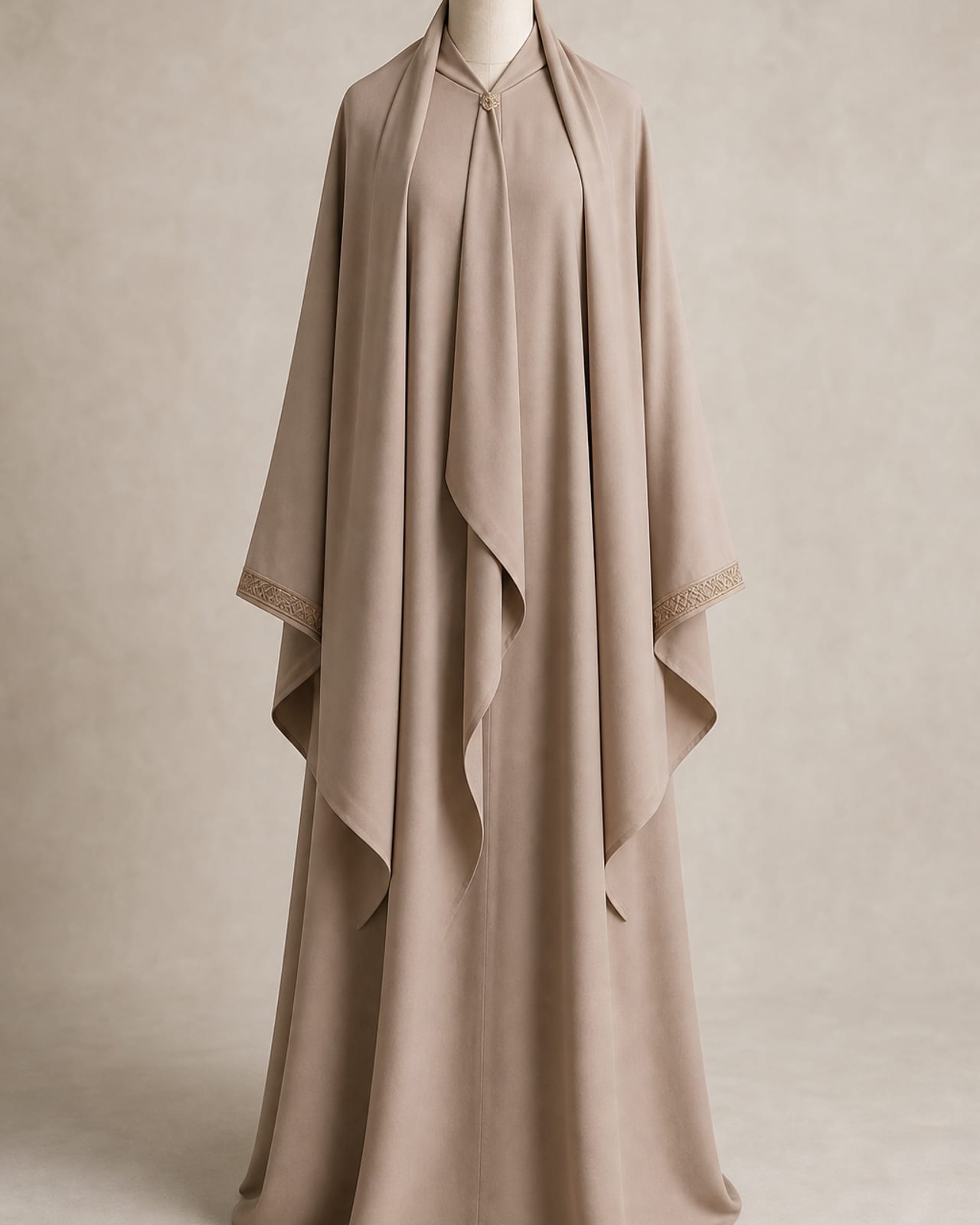
An abaya is an over-garment worn over clothing and usually with a separate head covering. A jilbab is a complete covering: the head cover is part of the garment, and the cut is designed to cover the body in one piece.
That construction difference drives everything else. Because the head cover is attached or coordinated, the garment cannot be adjusted with a pin at the last moment, and coverage failures cannot be hidden with a layer underneath.
- Integrated or coordinated head covering
- Longer, wider cut that covers without layering
- Sold as a complete garment rather than as an outer layer
- Less forgiving on sleeve openings and front closures
The constructions buyers choose between
Jilbab styles vary by how the garment is assembled rather than by fashion detail, and each construction has a different fit behaviour. The buyer's job is to pick the one that suits the market's habit and the size range they can carry.
| Construction | What it is | Advantage | Consideration |
|---|---|---|---|
| One-piece | Head cover and body garment made as one | Clean line, no exposed edges when worn | Sizing has to be right, since there is no adjustment |
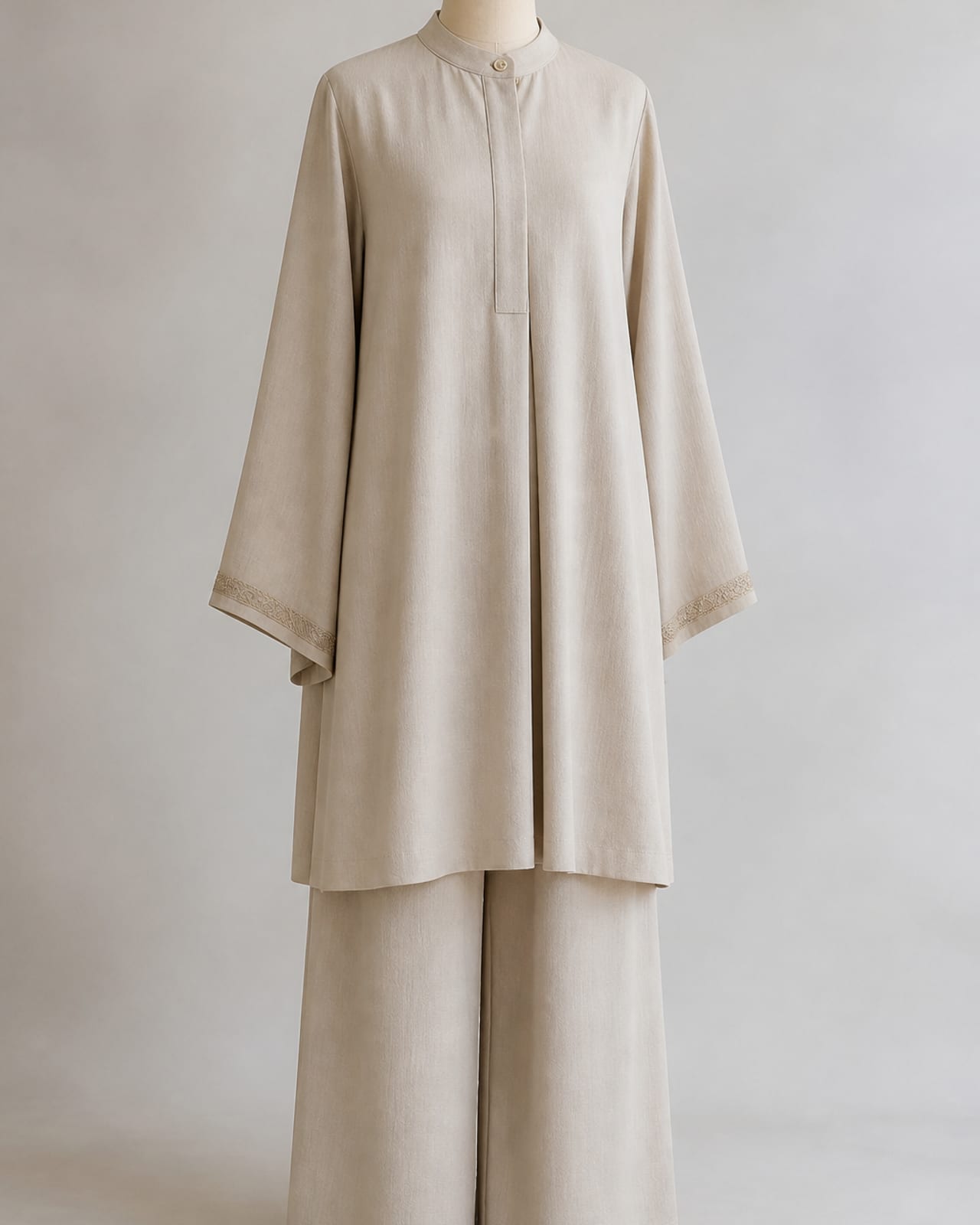
| Two-piece | Coordinated head cover and body garment | More forgiving to fit and easier to pack | Both pieces must match in shade and finish |
| Jilbab with skirt | Upper section with a separate skirt | Flexible length and easier grading | Two garments to produce, check and pack as one unit |
| Half jilbab | Shorter over-garment with head covering | Suitable for daily wear and warmer markets | Coverage expectations vary by market |
Coverage: the specification that decides everything
Never approve a jilbab for coverage from a swatch. Approve it by wearing the finished sample.
In other categories, opacity is a preference. In a jilbab it is the reason the garment exists. If the fabric reads sheer in daylight, the garment has failed regardless of how well it is made.
Two things control coverage: the fabric itself, and whether the garment is lined or layered. A moderately light fabric with a lining or a second layer often covers better than a much heavier single-layer fabric, and it usually drapes better too.
- Fabric density — the primary control, checked in daylight
- Lining or layering — the structural way to guarantee coverage
- Colour effect — light shades read sheer sooner than dark ones
- Construction effect — fabric spreads over the shoulders and bust
- Test method — on a person, in daylight, in the finished garment
Fabric choice for jilbab
The fabric has to do two jobs: cover, and fall well. Nida-style wovens do both, which is why they are the default for the category. Crepe gives more structure. Lighter wovens need lining. Knits are comfortable but need to be dense enough to cover under stretch.
Read the fabric library for how each material behaves, and start with nida if you are specifying the category for the first time.
- Nida — matte, opaque and fluid, the standard for the category
- Crepe — structure and a crisp line, good for formal styles
- Lighter wovens — used with lining or layering where coverage demands it
- Knit fabrics — comfortable, but density has to be checked under stretch
- Satin and premium wovens — for the upper tier of the range
Sizing a garment that covers the head
Jilbab sizing combines garment sizing and headwear sizing, and the second one is where buyers get caught. The head opening or the attached head section has to sit correctly on the customer, and it cannot be adjusted after production.
Set the measurements that matter and confirm them on a sample worn by someone: head opening width, body length from shoulder, width through the garment, sleeve opening and hem circumference.
- Head opening or head section — measured and confirmed on a person
- Body length — the dimension customers notice first
- Width through the garment — governs comfort when walking and sitting
- Sleeve opening — wide enough for comfort, narrow enough to cover
- Hem circumference — affects drape and how the garment moves
- Size range — often generous single sizes rather than a fine grade
Addressing the markets that buy jilbab
Demand sits in several distinct places: markets where jilbab is everyday dress, communities in Europe and North America where it is worn for daily and occasional use, and institutional buyers such as schools that require a standardised garment.
Each one asks for a different specification. Everyday markets want durability and easy care; Western markets often want cleaner finishing and a more considered retail presentation; institutional buyers want a fixed specification repeated exactly.
- Everyday markets — durable fabrics, generous cuts, easy care
- Occasion and occasional wear — finer finishing, premium fabrics
- Western retail — smaller size runs, higher presentation standard
- Institutional supply — one specification repeated precisely, packed for distribution
What to specify when enquiring
Jilbab quotes move on construction, fabric and lining. Give us these points and the quote reflects the garment your market will actually wear.
- Construction — one-piece, two-piece, with skirt, or half jilbab
- Fabric and whether lining or layering is required for coverage
- Measurements, including the head opening
- Colour range and the physical standard for each shade
- Finish level — plain, trimmed or decorated
- Packing and labelling level
- Quantity per colour and per size
Quality checks specific to jilbab
The defects that matter here are the ones that turn a covering garment into a returned one: a fabric that reads sheer, a head section that fits badly, a length that varies across the lot.
- Coverage — checked in daylight on the finished garment
- Head section or opening — measured and tried, not only measured
- Length consistency — the same across the whole lot
- Seam and hem finishing — inspected inside, since the garment is often unlined
- Sleeve and hem openings — symmetrical on both sides
- Shade consistency across pieces, particularly on two-piece styles
Where jilbab fits in a modest range
Jilbab is a specialist category rather than a volume one in most markets, so it is usually stocked in a narrow range of colours and a limited size spread. That makes it a low-risk addition to an established abaya range and an awkward starting point for a new shop.
If you already sell abayas, adding jilbab is a natural extension. Related formats are covered on the khimar and prayer dress pages, and consolidation into one order is explained on modest clothing wholesale.
Frequently asked questions
A jilbab is a complete covering that includes the head covering as part of the garment, worn instead of clothing rather than over it. An abaya is an outer garment worn over other clothes, usually with a separate headscarf. The construction and the sizing logic are different.
Specify coverage rather than a fabric name, and approve it by wearing the finished sample in daylight. Where the fabric is borderline, lining or layering solves it structurally, which is usually better than moving to a heavier fabric that drapes badly.
One-piece gives a cleaner line but leaves no room for sizing adjustment, so it suits a market where you know the fit. Two-piece is easier to size, packs better and usually suits institutional orders. The shade match between the two pieces becomes a critical check on two-piece styles.
Most ranges work with a small number of generous sizes rather than a fine grade, because the garment is cut wide by design. What has to be exact is the head section and the body length, and both should be confirmed on a worn sample before bulk.
Contact us for current MOQ. It depends on the construction, the fabric, whether lining is required, the number of colours and the size spread. A two-piece style has more variants to produce and pack than a one-piece garment.
No. Pricing depends on construction, fabric, lining, size range and packing, so it is quoted per order. Send your specification and destination and you will receive a price for the order you are placing.
Planning your next modest fashion collection?
Tell us these seven things and we can come back with a workable sourcing plan instead of a price list.