Prayer Dress Wholesale: Sourcing Telekung, Mukena and Prayer Sets
Prayer wear is bought differently from fashion — by institutions as well as retailers, and often as gifts. That changes what you should specify, pack and check.
Prayer wear is not one product
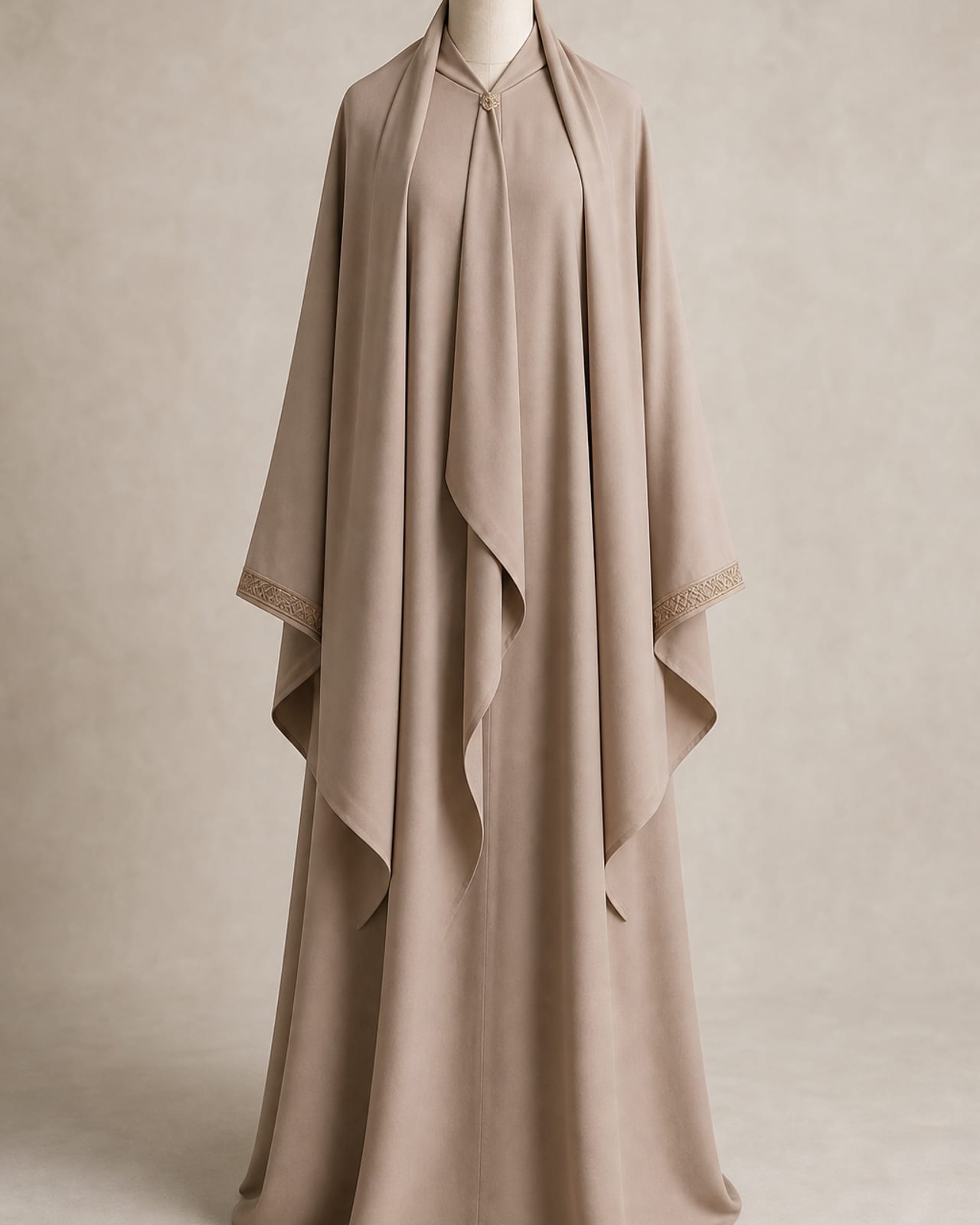
The same garment category goes by different names and takes different forms depending on the market: the telekung and mukena of Southeast Asia, the prayer dress of the Gulf and Europe, the two-piece prayer set used in travel and gifting. Before quoting, a buyer has to say which one they mean.
The differences are practical rather than decorative. A one-piece garment is worn as a single unit; a two-piece separates the head covering from the body garment; a prayer set adds a mat bag or a pouch. Each changes the pattern, the packing and the price.
- One-piece prayer dress — the head covering and the body garment made as one unit
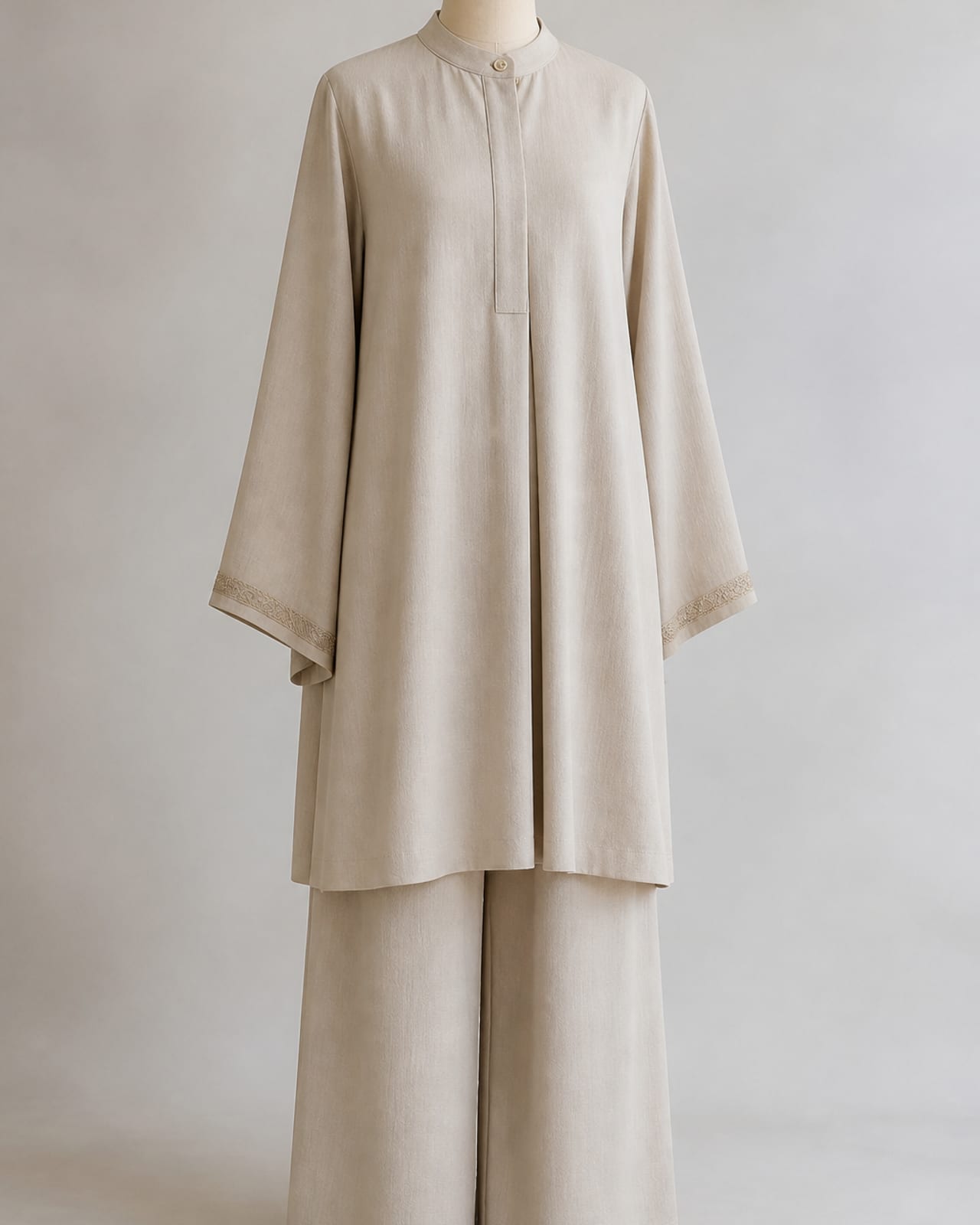
- Two-piece prayer set — a separate head covering and body garment, easier to size and to pack
- Loose-body prayer dress — worn over clothing rather than instead of it
- Travel prayer set — compact, folded small, often presented with a pouch
One-piece or two-piece: the decision that shapes the order
One-piece construction looks cleaner when worn and is the traditional form in much of Southeast Asia. It is also harder to size, because the head opening and the body length are locked together — a customer between sizes has no adjustment.
Two-piece construction is more forgiving, packs more flexibly and suits gifting, but it asks the buyer to specify two sets of measurements. Retailers selling to a local, known customer base usually go one-piece; retailers and institutions selling across body shapes usually go two-piece.
| Point | One-piece | Two-piece |
|---|---|---|
| Fit tolerance | Lower — the head opening is fixed to the body length | Higher — pieces drape independently |
| Packing | Folds as one piece, usually bulkier | Folds compactly, suits pouches |
| Sizing approach | Usually offered in a size range or as a generous single size | Often a single generous size, or a graded range |
| Gift suitability | Strong where the traditional form is expected | Strong where presentation matters |
| Institutional suitability | Best where the group is consistent in size | Best where sizes vary across the group |
Fabric for prayer wear
Coverage in a prayer garment is checked on the body in daylight. Sheer fabric that looks acceptable flat will not be acceptable in use.
Prayer wear is worn for long periods, often on the floor, and it is washed frequently. Those two facts narrow the fabric choice more than fashion does: it has to be opaque, comfortable against the skin, and durable enough to survive constant washing.
Cotton voile is the traditional answer and remains the volume seller, particularly in Southeast Asia. Jersey is the practical alternative: it does not need ironing, it does not crease when folded for travel, and it tolerates frequent washing well.
- Cotton voile — breathable, traditional, expected in the Southeast Asian trade
- Jersey and knit fabrics — minimal ironing, comfortable, strong for travel sets
- Lightweight wovens — lighter to carry, generally need lining for full coverage
- Opacity — a functional requirement here, not an aesthetic preference
- Care behaviour — the fabric has to survive frequent washing without losing shape
Sizing prayer wear without a fitting
Most prayer wear is sold without a fitting room, so the practical approach is to specify lengths generously and offer limited sizes rather than a fine grade. The critical dimensions are the body length from shoulder, the width through the garment, the sleeve length and, on a one-piece, the head opening.
Institutions complicate this further, because a group may include a wide range of heights. If you supply organisations, a two-piece format with a generous cut usually reduces exchanges.
- Body length — measured on the garment, and generous enough to cover in use
- Overall width — enough room for comfort while kneeling and standing
- Head opening — critical on one-piece styles, and impossible to adjust later
- Sleeve length and opening width
- Ground clearance — the hem should not drag, and should not ride up in use
Storage, pouches and travel format
Prayer wear is expected to be stored somewhere — a drawer, a bag, a car, a suitcase. Supplying it with a pouch is not a decoration; it is the feature that makes the product usable, and it often decides which item a customer buys.
Pouches come in several forms, from a simple drawstring bag to a zipped or printed case. Tell us which level you want and whether the pouch should carry your branding, because it is one of the cheapest places to make a product look considered.
- Drawstring pouch — simplest and the most common
- Zipped or press-stud case — better protection and a stronger gift impression
- Printed pouch — carries your brand at the moment of opening
- Compact fold — folded to a defined shape for travel and gifting
- Mat or accessory pairing — only where you genuinely supply the item
Selling to institutions rather than consumers
Mosques, schools, community organisations, hotels and pilgrimage operators buy prayer wear in quantity, and they buy it for a purpose rather than for taste. They care about consistent shade, generous sizing, durability and delivery against a fixed date.
That makes institutional orders easier to specify and less forgiving to deliver. If you supply them, tell us at enquiry stage: it changes the colour direction, the size decision and the packing structure.
- Uniform shade — one colour across the whole order, checked piece by piece
- Durability — fabric and finishing that survive institutional washing
- Generous sizing — because the group will include a range of heights
- Packing for distribution — sorted by size or by location, not by retail unit
- Fixed delivery dates, discussed at enquiry stage rather than assumed
Prayer wear as a gift product
A large share of prayer wear is bought as a gift, and the season for it is the same one that drives the rest of the modest market. That makes presentation a commercial decision rather than a finishing touch.
Gift packing, coordinated colour sets and a pouch all raise the perceived value of a low-cost garment. Decide whether you are selling a functional item or a gift item, because the two are packed differently from the sample stage.
- Coordinated colour sets across prayer wear and accessories
- Gift packing with branded band, sleeve or box
- Matching pouch included as part of the retail unit
- Seasonal timing, planned backwards from the festive period
Quality checks for prayer wear
Prayer wear is a functional garment, so its defects are functional: it does not cover, it does not fit the head opening, it does not survive the wash. Those are the checks that decide whether the order is successful.
- Coverage — checked in daylight and on the body, not on a table
- Head opening size — measured on one-piece styles, since it cannot be adjusted
- Length and width across the size range
- Seam strength where the garment is pulled when put on
- Shade consistency — critical on institutional and set orders
- Pouch or bag quality, if supplied as part of the retail unit
Where prayer wear fits in your range
Prayer wear sells to the same customer as your abayas, and often on the same visit. It is a low-risk category to add: no fashion cycle, no sizing anxiety in most formats, and a natural pairing with hijabs and inner caps.
If you are building a full modest range, add prayer wear inside the modest clothing wholesale order so it shares the shipment. For the wider prayer category, related formats are covered on the jilbab and khimar pages.
Frequently asked questions
They are regional names for closely related garments: a covering worn for prayer, usually including a head cover and a long body garment. The practical differences are in construction — one-piece versus two-piece — and in how generously the garment is cut. Tell us which form your market expects and we will match it.
One-piece suits a market where the traditional form is expected and the customer base is fairly consistent in size. Two-piece is more forgiving where sizes vary, packs better for gifting and travel, and is usually the safer choice for institutional orders.
Yes. Pouches can be plain, printed with your branding, or made as a zipped case, depending on the price level. Since storage is part of how the garment is used, the pouch is often the detail customers notice most.
Contact us for current MOQ. It depends on the format, the fabric, whether the style is packed with a pouch, and whether you need a graded size range or a single generous size.
Yes, and for institutional orders the priorities are consistent shade across the whole batch, durable finishing and a size decision that suits a varied group. Tell us the quantity, colour and any required date at enquiry stage so we can confirm what is achievable.
No. Pricing depends on the format, fabric, size range, pouch and packing, so it is quoted per order. Send the specification and destination and you will receive a price for your order rather than a general list.
Planning your next modest fashion collection?
Tell us these seven things and we can come back with a workable sourcing plan instead of a price list.