Tudung Bawal Wholesale: Ordering for the Southeast Asian Market
Bawal is a format with its own rules — how it is sized, printed, banded and bought. If you sell into Malaysia, Indonesia, Brunei or Singapore, this is the page to plan from.
What buyers actually mean by bawal
Bawal is the square, hemmed headscarf worn folded on the diagonal, and it is the format the Southeast Asian market grew up with. It is a shape and a wearing habit, not a single fabric — the same square can be made in cotton voile, in a poly chiffon, or in a firmer blend.
That distinction matters commercially. Two sellers can offer a bawal at very different prices because they are selling different fabrics in the same format, and customers who shop by feel will notice immediately.
- Square format, worn folded diagonally, usually with an inner cap
- A finished hem on all four sides — the edge is part of the product
- Supplied as a plain or printed square, rarely as a shawl
- Sold in stacks and bundles as much as single units
Sizing a square: the measurement conversation
Agree the square dimension in writing and check it on the bulk lot. A small variation that nobody notices in the sample becomes a visible difference in a stack.
Buyers specify bawal by the size of the square, and traditions differ between markets and between generations. Some customers want a smaller square for a neater, tighter fold; others want a larger one for fuller coverage and more styling room.
We agree the finished square dimension on the sample and repeat it in bulk, because a difference between the sample and the production run is the fastest way to lose a wholesale customer in this trade. Give us the dimension you want measured on the finished piece, and confirm whether the hem is included in that measurement.
- Finished square dimension, agreed on the sample
- Whether the measurement includes the hem allowance
- Consistency across the lot — every piece the same size, not an average
- Corner behaviour — how the folded corners sit and whether they are reinforced
Choosing the fabric for a bawal
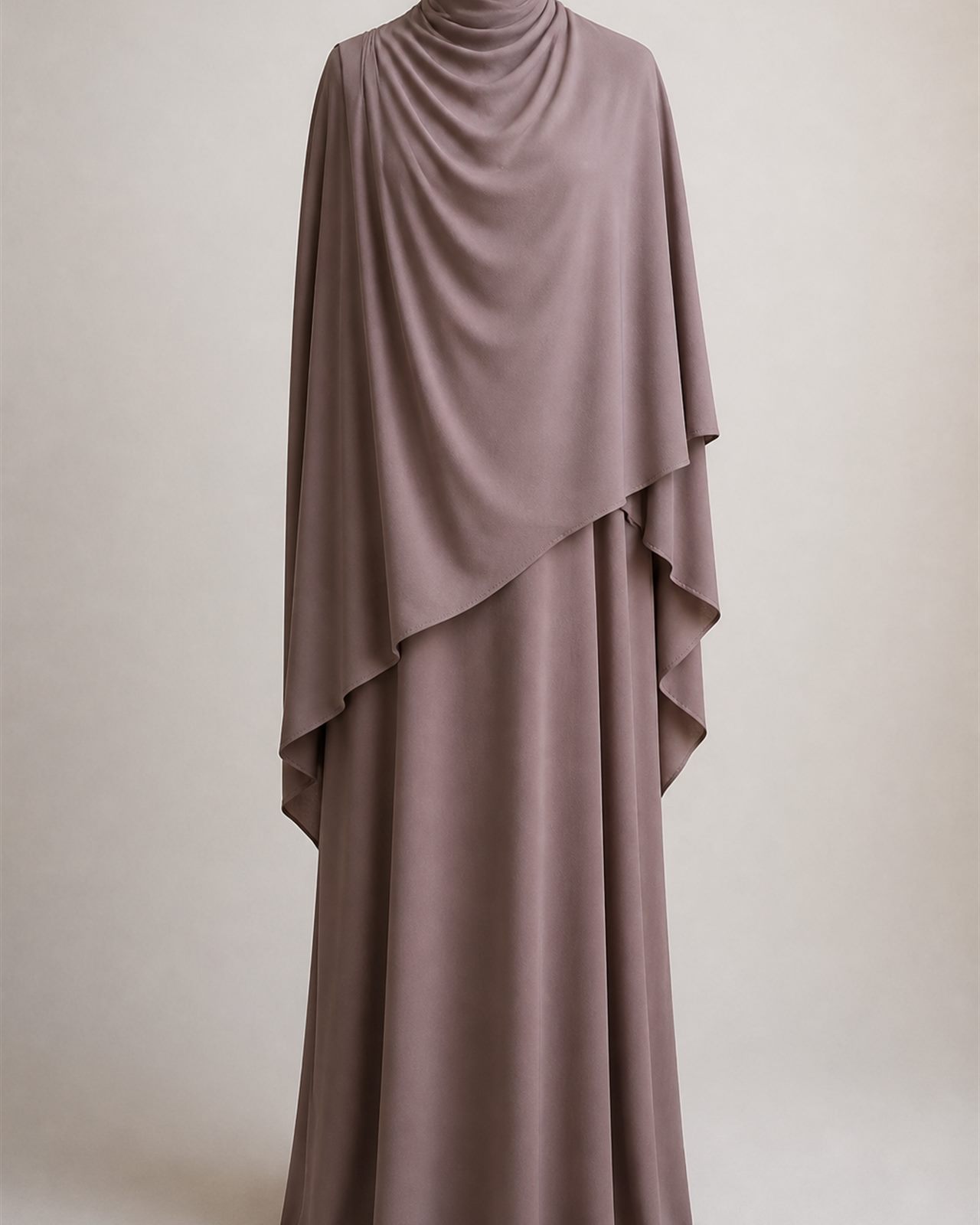
Cotton voile is the traditional choice and still the volume seller: breathable, firm on the head, and familiar. Poly chiffon is the lighter alternative, cheaper to produce, smoother to the touch, and popular in printed ranges where the customer prioritises pattern over feel.
If your market is traditional and institutional, lead with voile. If your market is younger and pattern-led, a printed poly chiffon at a lower price point may sell faster. Carrying both, at two price tiers, is the usual resolution.
| Fabric | Handle | Prints well | Typical buyer |
|---|---|---|---|
| Cotton voile | Firm, breathable, traditional | Yes — florals and botanicals | Traditional retail, schools, organisations |
| Poly chiffon | Smooth, light, slightly slick | Yes — sharp print detail | Fashion-led and price-sensitive retail |
| Cotton blend | Mid-way, softer than pure voile | Yes | Buyers balancing feel against cost |
| Other specification | Agreed on a swatch | Available upon request | Buyers with a fixed in-house standard |
The borong model: how bawal is actually bought
In this trade the buying unit is often the bundle rather than the single piece. Retailers and small distributors buy in stacks by colour or by design, split them across outlets, and come back for the same motifs when they sell through.
That changes what you should ask for. Per-piece pricing still applies, but the number that matters is the quantity per design and per colour, because it decides whether the print setup is viable and how the pieces can be bundled and labelled.
- Quantity per design, not just total quantity
- Quantity per colour within each design
- Bundling — how many pieces per pack and how they are held together
- Repeat availability — whether the same design can be produced again later
- Mixed bundling — several designs packed as one retail pack
Prints and motifs the market expects
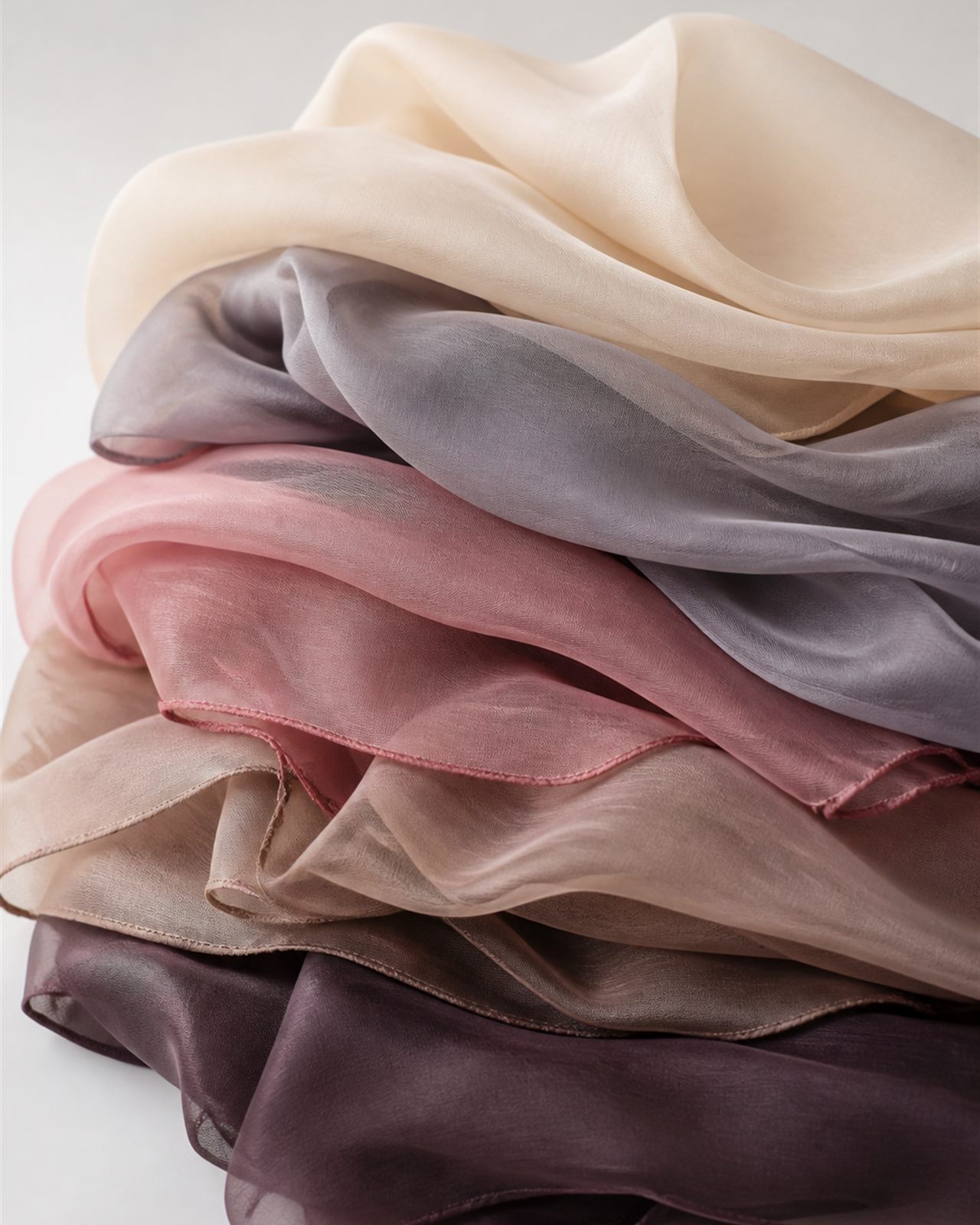
Printed bawal is the mainstream product, not the premium one. Customers expect floral, botanical and traditional motif designs across a range of ground colours, and they expect the design to be refreshed regularly.
Print design also has a structural role in a square: a border print has to align with the finished square dimension, and a centre motif has to sit centred after hemming. Approve both on a finished sample, not on a flat fabric print.
- All-over florals — the volume design category
- Border designs — layout must match the finished square dimensions
- Centre placement motifs — must stay centred after hemming
- Small-scale repeats — forgiving on cut positions and popular for daily wear
- Seasonal designs — refreshed for each festive period
Per-piece packing: the detail that sells the stack
A bawal is usually folded and held with a band or wrapped individually before it goes into a stack or a display box. That per-piece presentation is what the customer sees first, and it is also what keeps the stack orderly in your warehouse.
Decide the presentation before bulk. A plain elastic band, a printed band, a printed label card, or an individual poly wrap each produce a different retail impression, and the choice affects the packing line rather than the fabric.
- Elastic band or paper band around the folded square
- Printed band carrying your brand or the design name
- Individual poly wrap for hygiene and handling
- Display box or stack pack for counter retail
- Bulk packing sorted by design and colour for redistribution
Seasonal peaks in the bawal calendar
Demand in this market is not flat. Festive periods produce a sharp peak, school intakes produce a second one, and both reward buyers who sampled early rather than buyers who ordered late and shipped fast.
Sampling is the step that cannot be compressed. Print development, colour approval and the finished square dimension all have to be settled before the production window opens, which is why seasonal planning starts months before the season.
- Festive season — the largest peak, driven by new outfits and gifting
- School intake — plain colours in firm traditional finish, ordered in quantity
- Wedding and event season — decorative designs and coordinated sets
- Quiet periods — the right time to develop new prints for the next peak
Quality checks specific to a square format
A square has a quality problem that a shawl does not: if it is not actually square, the customer feels it every time she folds it. Add print alignment to that and you have the two defects that decide whether the stack sells.
- Squareness — measured across both diagonals on finished pieces
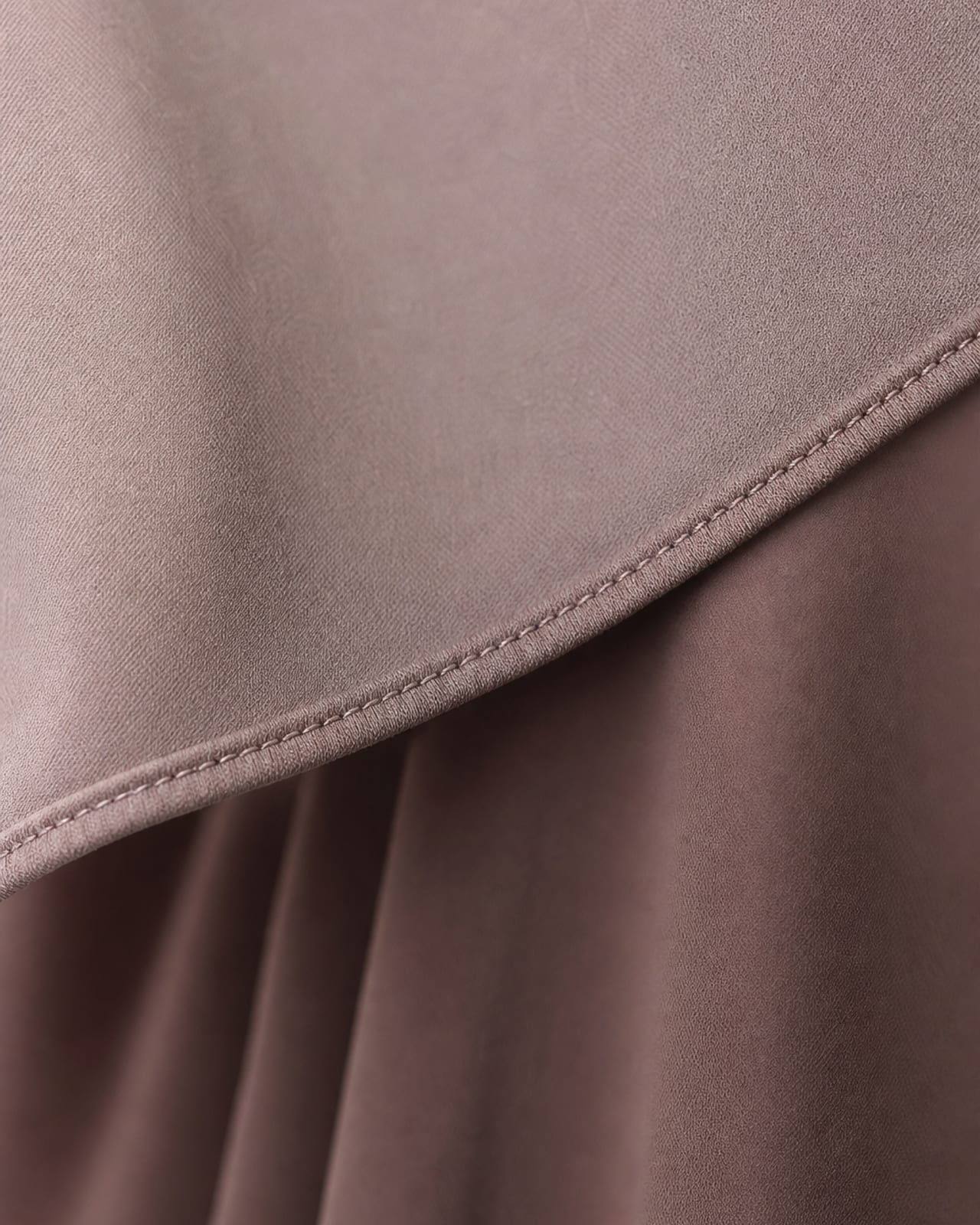
- Hem width and evenness — consistent on all four sides
- Hem strength — the fold hold after washing, not only on arrival
- Print centring — the motif placed correctly relative to the finished square
- Shade consistency — checked piece by piece inside a stack
- Fold and band consistency — the presentation repeated on every unit
Malaysia and Indonesia are not the same market
They share a format, not a range. Preferences in print style, preferred square size, colour direction and packing presentation differ between the two, and treating one as a translation of the other produces a range that sells in neither.
Tell us which market each part of the order is for, and we will discuss the specifications separately. For material background, read the cotton voile fabric page, and for the wider category range see cotton voile hijab wholesale and wholesale hijab.
- Agree square dimensions per market rather than one size for both
- Separate print directions, since motif preferences differ
- Separate colour stories for the same festive season
- Separate packing presentations if the retail environments differ
Frequently asked questions
It depends on the market and the customer's preferred fold rather than on a single standard. Tell us the finished square dimension you want, and whether that measurement includes the hem, and we will confirm it on a sample before bulk.
Voile is the traditional choice: breathable, firm on the head and trusted by older and institutional customers. Poly chiffon is lighter and smoother, prints sharply and suits fashion-led, price-sensitive ranges. Many buyers carry both at two price points.
Contact us for current MOQ. Printed squares carry print setup work, so the quantity per design matters as much as the order total. Orders are usually planned around several designs at workable depth rather than one design at the full quantity.
Typically folded to a consistent shape and held with a band or wrapped individually, then stacked or packed into a display format. Tell us the presentation you want — plain band, branded band, wrap or box — and it is built from the sample stage.
Earlier than most buyers plan for, because print development and colour approval come before production and cannot be compressed. Start the design conversation well before the season and confirm the specification before the production window opens.
No. Price depends on the fabric, the square dimension, the print, the number of designs, the packing and the quantity per design, so it is quoted per order. Send the specification and destination and the quote will match your order.
Planning your next modest fashion collection?
Tell us these seven things and we can come back with a workable sourcing plan instead of a price list.