Abaya size guide: length, measurement and size runs
This guide is written for the boutique owner, the brand owner and the wholesaler building a size run — not for a shopper looking for one dress. It explains what the length numbers mean, how each measurement is taken, and how to order so the shipment fits your market.
The problem this guide solves
The working rule for every market: do not treat S, M, L and XL as equivalent between suppliers. Order by garment measurements, and use the letter code only as an internal label for your own range.
S, M, L and XL do not mean the same thing in different markets, in different factories, or even between two styles from the same factory. A buyer who orders by letter code is guessing, and the cost of guessing wrong is a shipment that fits nobody in a market where returns are expensive.
The alternative is to order by garment measurement: a length, a bust, a sleeve, a shoulder. Those numbers mean the same thing everywhere, they can be checked with a tape measure on arrival, and they remove the argument about what the letter was supposed to represent.
What an abaya length number actually means
An abaya length is a garment measurement, not a body height. It describes how far the fabric runs on the finished garment, and it is normally taken straight down from a defined point at the top of the garment to the hem. It tells you where the hem will sit on a wearer of a given height; it tells you nothing about whether the abaya will close comfortably across the shoulders or the bust.
The trap is that different suppliers start the tape in different places — the highest point of the shoulder, the centre back neck, or the base of the collar. The same garment can be described with two different length numbers without anyone being dishonest. Always ask where the tape starts, and state your own convention on the measurement sheet so bulk can be checked against the sample.
- Length = how far the fabric runs on the garment, measured from a stated start point
- Length decides where the hem falls; it does not decide fit across the body
- Two suppliers can quote different lengths for the same finished garment
- Record the start point on the measurement sheet, not only the number
- If your customers buy by height, publish the height band each length suits — as guidance, not as a body measurement
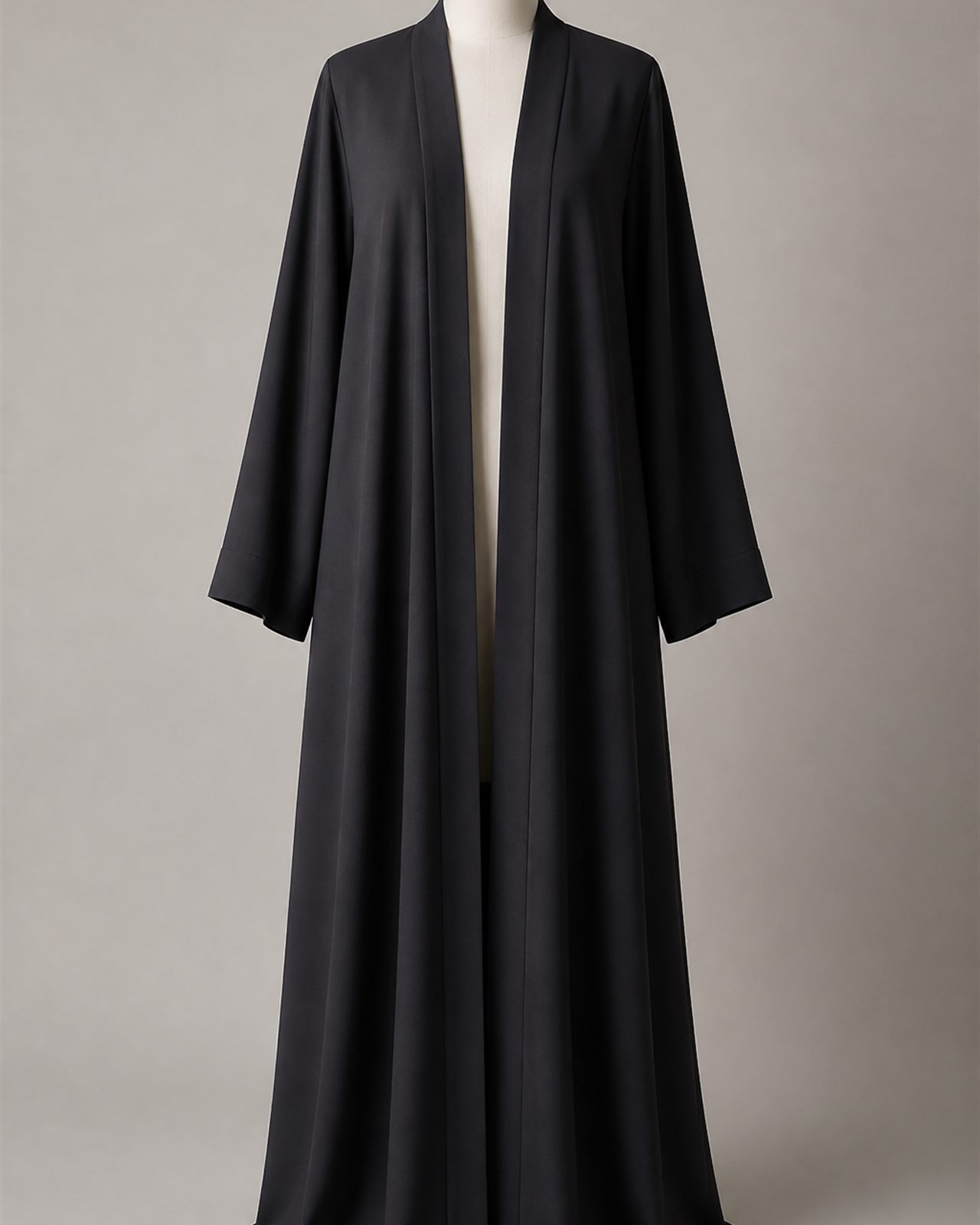
How to measure: the seven points that matter
Measure the garment, not the customer. Lay it flat, closed, with the tape following the cloth rather than pulling it, and record everything before the piece is packed. These are the points buyers and factories argue about when they are not written down.
| Measurement point | How to measure it |
|---|---|
| Bust | Lay the garment flat and closed, measure straight across the fullest part of the chest from side seam to side seam, then double it. Do not stretch; the number is a flat measurement doubled, and the sheet should say so. |
| Waist | Measure across the narrowest part of the body of the garment in the same way. On a loose abaya this is a specification of the cut, not a fitted body measurement, so the number is usually larger than the wearer's waist. |
| Hip | Measure across the garment at the widest point below the waist, normally at a stated distance down from the waist seam or from the shoulder. State which reference point you used. |
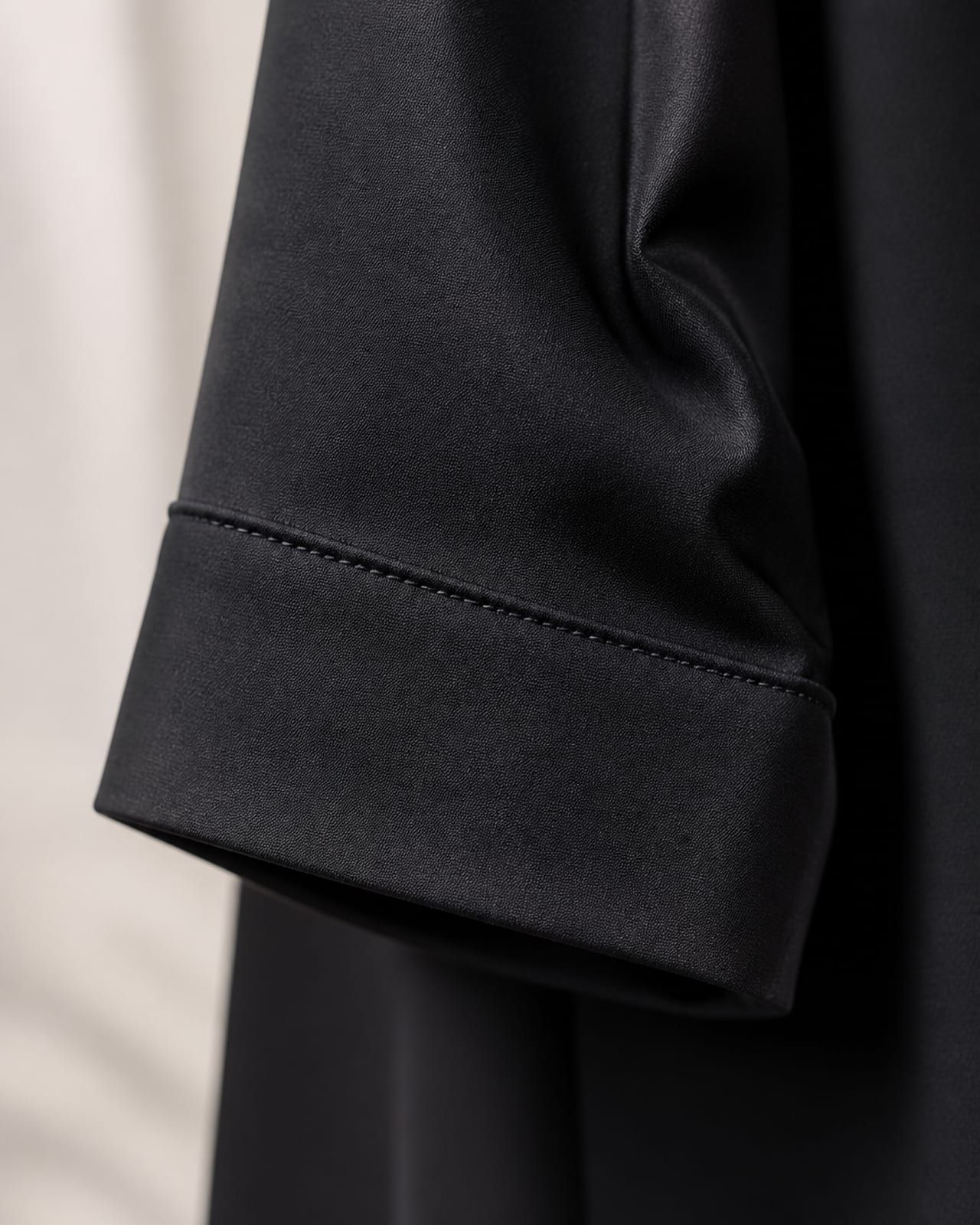
| Sleeve | Measure from the shoulder seam or from the sleeve head, following the outside of the sleeve to the cuff. Note which start point and whether the sleeve was measured straight or along the curve. |
| Shoulder | Measure across the back from one shoulder seam to the other, flat. On a dropped-shoulder or kimono cut there may be no shoulder seam; in that case measure to the stated armhole reference instead. |
| Garment length | Measure from the stated top reference point straight down to the hem, without following the curve of the body. State the start point — high shoulder point or centre back neck. |
| Abaya length | The headline length of the garment, set by you for the market, measured front and back if the hem is not level. It is the number customers usually ask about, so it belongs on the product page as well as the internal sheet. |
Chart values are confirmed per style, not published here
Send the style and the market, and the measurement sheet for that style is confirmed per order — with the start points, the flat-or-relaxed method and the agreed tolerance written on it.
We do not print a universal measurement table on this page, because there is no universal abaya. A length that suits one market is short in another, and a bust range that suits an open abaya does not carry across to a fitted one. A chart that is not tied to your style would be worse than no chart at all.
What we do provide is a garment measurement sheet for the specific style you order, with the measurement convention stated on it so you can verify bulk with a tape measure.
| Measurement point | Value |
|---|---|
| Bust | — |
| Waist | — |
| Hip | — |
| Sleeve | — |
| Shoulder | — |
| Garment length | — |
| Abaya length | — |
Should the buyer order by height or by body size?
By body size for fit, and by length for the hem. Height tells you where the hem will fall and how much of the ankle will show; it does not tell you whether the abaya will close across the chest or sit on the shoulders. Ordering only by height is how buyers end up with garments that are the right length and the wrong fit.
The practical approach for a wholesale order is two decisions made separately: choose the body size range that covers your market, then choose the length options your market wants. A boutique serving taller customers may need two or three lengths within one body size, and that is a normal order, not a special one.
- Body size decides bust, shoulder and sleeve
- Length decides where the hem falls
- One body size can carry more than one length
- Sleeve length is the second complaint after hem length — specify it explicitly
- Give the customer a height band as guidance only, never as the sizing rule
Why S, M, L and XL cannot be compared between markets
Letter codes are labelling conventions, not measurements. A size M from one supplier can measure like a size L from another, and the same label can mean a different thing in a different country because the retail sizing in that market is built on a different body standard.
That is why buyers who switch suppliers and order the same letters receive a shipment that does not fit their existing customers — and why ordering by garment measurement removes the entire problem. Letters stay useful inside your own range, as a label for the customer; they are not a specification.
How to build a size run
A size run is a commercial decision before it is a sizing decision. The question is not which sizes exist but which sizes your market actually buys, and in what proportion.
Start from your market, not from a standard run: which sizes do your customers ask for most?
Cover the middle of your market properly before you cover the edges thinly.
Decide the length options your market wants, and how many lengths per body size.
Set a ratio per size for the first order rather than ordering equal quantities of everything.
Test with a small batch, then extend the run once you have sell-through data.
Re-check sizing against the measurement sheet each time you reorder, not against the letter code.
How a boutique should choose sizes
A boutique has the opposite problem to a wholesaler: it cannot hold every size, and it cannot afford to be out of the size that most of its customers wear. The answer is to size for the middle of the range rather than the whole spread.
- Identify the two or three sizes that cover most of your customers and stock them properly
- Hold one length option for each body size at first, and add lengths once you see demand
- Keep a small number of plus size and tall pieces as an order-on-request service
- Order one sample in an unusual size before committing to a run in it
- Record what actually sells by measurement, not by letter, so the next order is better informed
- Use custom sizing where a customer cannot be served from the standard run; see custom abaya sizing
How to adapt sizing for different markets
Markets differ in average stature, in how much coverage the customer expects, and in how they read a size label. Adjusting for a market is a matter of holding the garment measurement as the fixed specification and letting the label and the length range change around it.
- Start from the body size range the market actually buys, not from a home-market chart
- Set the length range from local preference: a market that wears longer hems needs more length options
- Check sleeve length against local expectations — it is the most common after-sales complaint
- Keep the letter labels your market recognises, but define them by measurement inside your own range
- Verify against a fit sample in the destination market before the first bulk order
- Keep the measurement sheet identical across markets so one order can serve several
What we need from you to quote a size run
MOQ: contact us for current MOQ. Lead time depends on design and order quantity. Size measurements and tolerances are confirmed per style and per order.
The style or the design you are ordering.
The destination market and the customer you are selling to.
The body size range you need, in garment measurements where you have them.
The length options and how many of each.
The quantities per size, and whether the order is ready stock or made to order.
Whether you want your own size labels and measurement sheet for private label.
Frequently asked questions
An abaya length is a garment measurement: how far the fabric runs on the finished piece from a stated start point down to the hem. It tells you where the hem will sit on a wearer of a given height, not whether the abaya fits across the body. Ask where the tape starts before comparing two suppliers, because the same garment can be described with two different numbers.
By body size for fit and by length for the hem — two separate decisions. Height only tells you where the hem falls; it says nothing about bust, shoulder or sleeve. A single body size can be offered in more than one length, which is how you serve a market with mixed customer heights.
Because S, M, L and XL are not equivalent between markets, factories or even styles. They are labels, not measurements. Order by garment measurements instead, and use the letters only as a label inside your own range so returning customers recognise the size they bought before.
A garment measurement sheet is provided per style, with the measurement convention written on it — start points, flat or relaxed, and the agreed tolerance. We do not publish one universal chart, because a chart that is not tied to your style would be misleading.
Enough to cover the middle of your market properly rather than the whole range thinly. A workable start is the two or three body sizes that cover most of your customers, in one length each, plus an order-on-request option for plus size, tall and custom pieces. Extend the run once you have sell-through data.
Yes, and many buyers do. Because length is a separate specification from body size, a size run can combine different body sizes with different length options. Send the combination with quantities and the market, and the run is quoted against that rather than against a standard set.
A tolerance is agreed as part of your order and written on the measurement sheet, then used for the measurement check before packing. There is no single figure that applies to every fabric and style — a knit behaves differently from a woven, and decoration changes the picture again.
Planning your next modest fashion collection?
Tell us these seven things and we can come back with a workable sourcing plan instead of a price list.