Custom abaya sizing: buyer-supplied measurements
Custom sizing is the route a buyer takes when a standard run will not cover the customer, or when a private label needs its own size chart. This page explains what to send, how it is checked, and how the measurements are confirmed before bulk production.
When custom sizing is the right answer
Custom sizing is not only for unusual customers. It is the normal solution in three situations: a boutique whose customers fall outside the standard run, a brand that wants its own size chart and its own labels, and a wholesaler serving a market whose body standard does not match the supplier's default.
It is also the honest answer when a letter code cannot describe what you need. Since S, M, L and XL are not equivalent between markets or suppliers, a custom measurement set is often the shortest route to a garment that fits — not a premium extra.
- Customers who fall between or outside your standard run
- Private label brands building their own size chart and labels
- Markets whose sizing does not match the supplier's default
- Styles where one point, such as sleeve or length, needs to differ from the standard
Two ways buyers send measurements
There are two routes and they are not equally safe. Body measurements describe a person; garment measurements describe a piece of clothing. For bulk production, garment measurements are the more reliable route, because a garment can be measured with a tape, re-measured by anyone, and compared against the delivered bulk without anyone having to interpret how tightly the tape was held.
If a customer is being measured, do it over light clothing and write down who measured and how. If a garment that already fits is available, use it: that is the reference most likely to produce a repeatable result.
| Route | What you send | Strength and risk |
|---|---|---|
| Body measurements | Bust, waist, hip, shoulder and length taken on the customer | Necessary where no fitting garment exists. Riskier, because ease and how the tape is held change the result. |
| Garment measurements | The measurements of a garment that already fits, taken flat from stated start points | Repeatable and checkable. This is the preferred route for bulk, and it is the one to use for a private label size chart. |
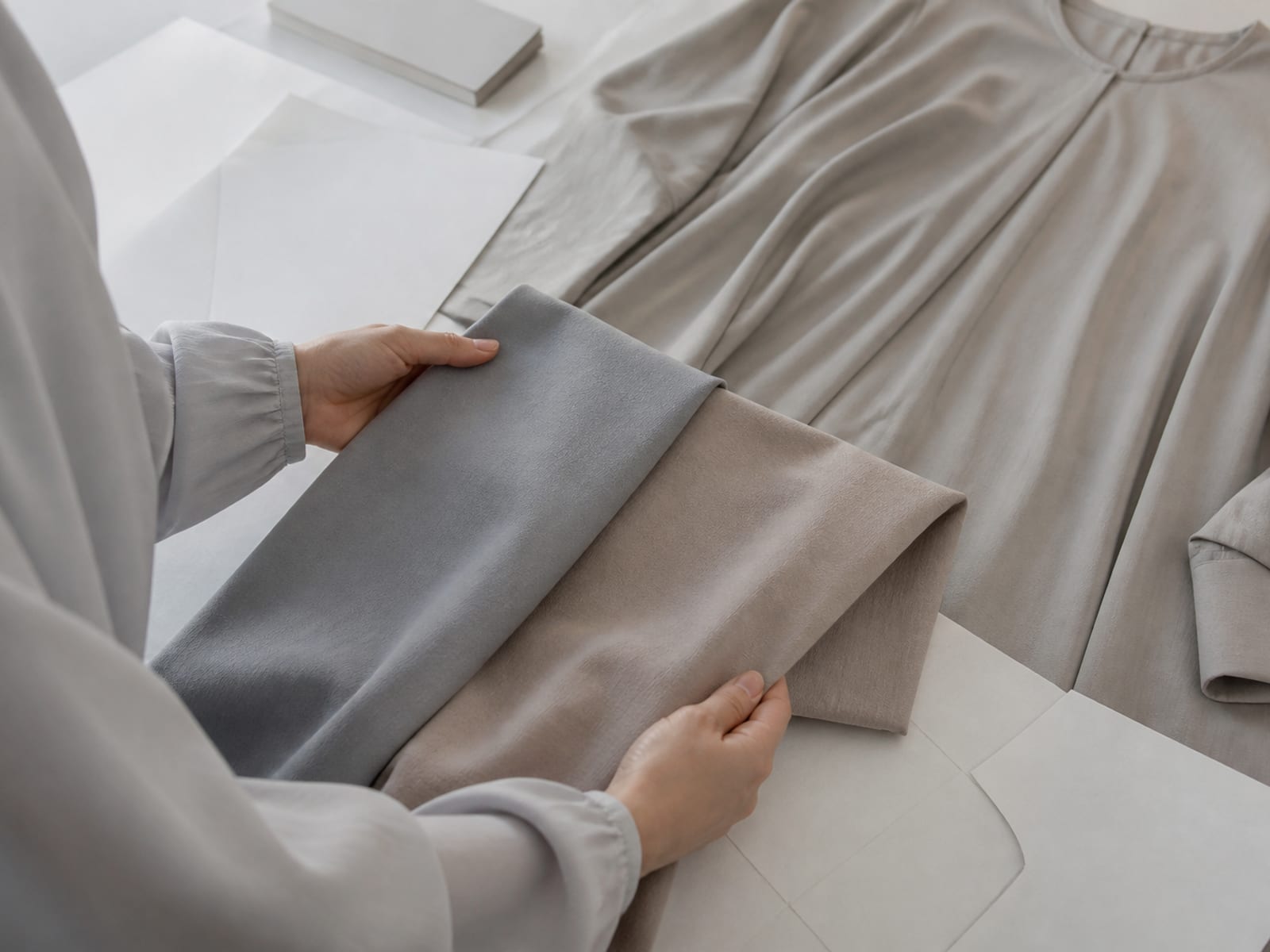
How to measure a reference garment
Values are confirmed per style and per order. The measurement sheet states the start points, whether the garment is measured flat or relaxed, the unit, and the agreed tolerance — so bulk can be checked against the sample with the same method.
Use a garment that fits the customer well, lay it flat and closed, and measure without stretching the cloth. Write down the start point for every point that has one, because length and sleeve are meaningless without it.
| Measurement point | How to measure it | Value |
|---|---|---|
| Bust | Flat and closed, seam to seam at the fullest point, then doubled. State that the figure is doubled. | — |
| Waist | Across the narrowest part of the garment, flat. On a loose abaya this describes the cut, not the wearer. | — |
| Hip | Across the widest point below the waist, with the reference point stated. | — |
| Shoulder | Across the back, seam to seam, flat. On a dropped shoulder, state the armhole reference instead. | — |
| Sleeve | From the stated start point along the outside of the sleeve to the cuff, plus the cuff opening measured separately. | — |
| Garment length | From the stated top reference straight down to the hem; front and back if the hem is not level. | — |
| Abaya length | The headline length for the style, measured the same way on every size and every colour. | — |
What the measurement sheet must state
Most measurement disputes are not about numbers, they are about method. Two people measuring the same garment can arrive at different figures if one starts at the high shoulder point and the other at the centre back neck, or if one measures flat and the other measures the garment hanging. The sheet exists to remove that ambiguity.
- The start point for every point that has one
- Whether the garment is measured flat, closed and relaxed, or hanging
- Whether a flat figure is doubled, and whether the cuff opening is included in sleeve length
- The unit being used throughout the sheet
- The agreed tolerance, and which points it applies to
- The garment measured — style, fabric, colour and size — so there is no confusion later
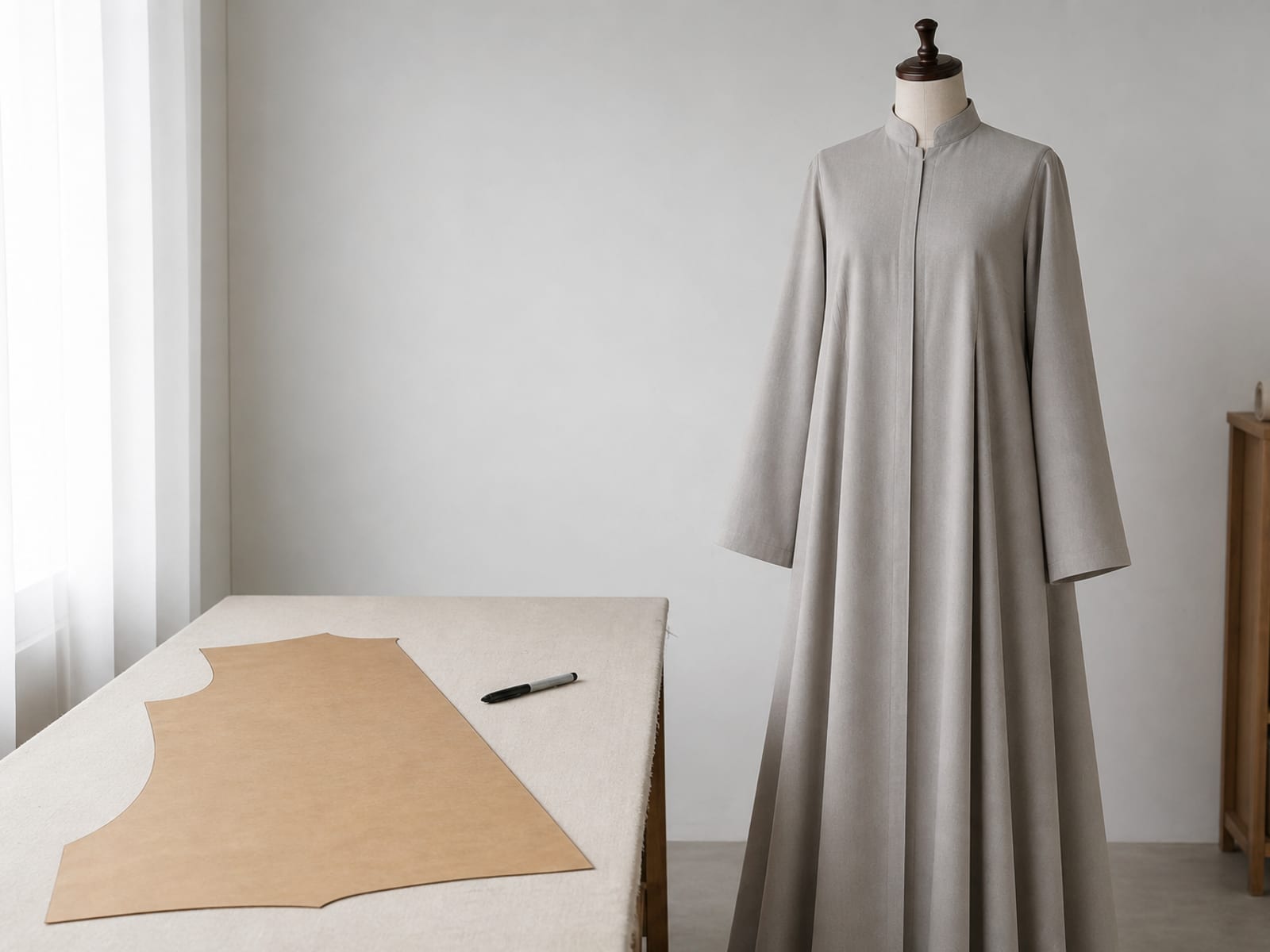
Units, tolerance and how differences are judged
Agree the unit and the tolerance before the order is placed, and write both on the sheet. Measuring in one unit and producing in another is a common and entirely avoidable source of error. Tolerance is the same idea: a knit and a woven do not behave alike, and a decorated panel does not measure like a plain one.
There is no single tolerance figure that applies to every fabric and style. It is set per order, recorded on the sheet, and used at the measurement check before packing — so the conversation at delivery is about whether the agreed tolerance was met, not about whose tape was right.
Sample approval before bulk
Custom sizing only removes risk if the sample is approved against the measurement sheet. Approving by eye is what produces a bulk order that matches the sample visually and differs from it by two centimetres at the cuff.
Send the measurements, the reference garment or the size chart, and the style.
Confirm the sheet: start points, method, unit and tolerance.
Sample development against the agreed measurements.
Measure the sample with a tape and compare it with the sheet point by point.
Record any change on the sheet rather than in a message, and re-approve if a point changes.
Bulk production, measurement check and packing to the approved sheet.
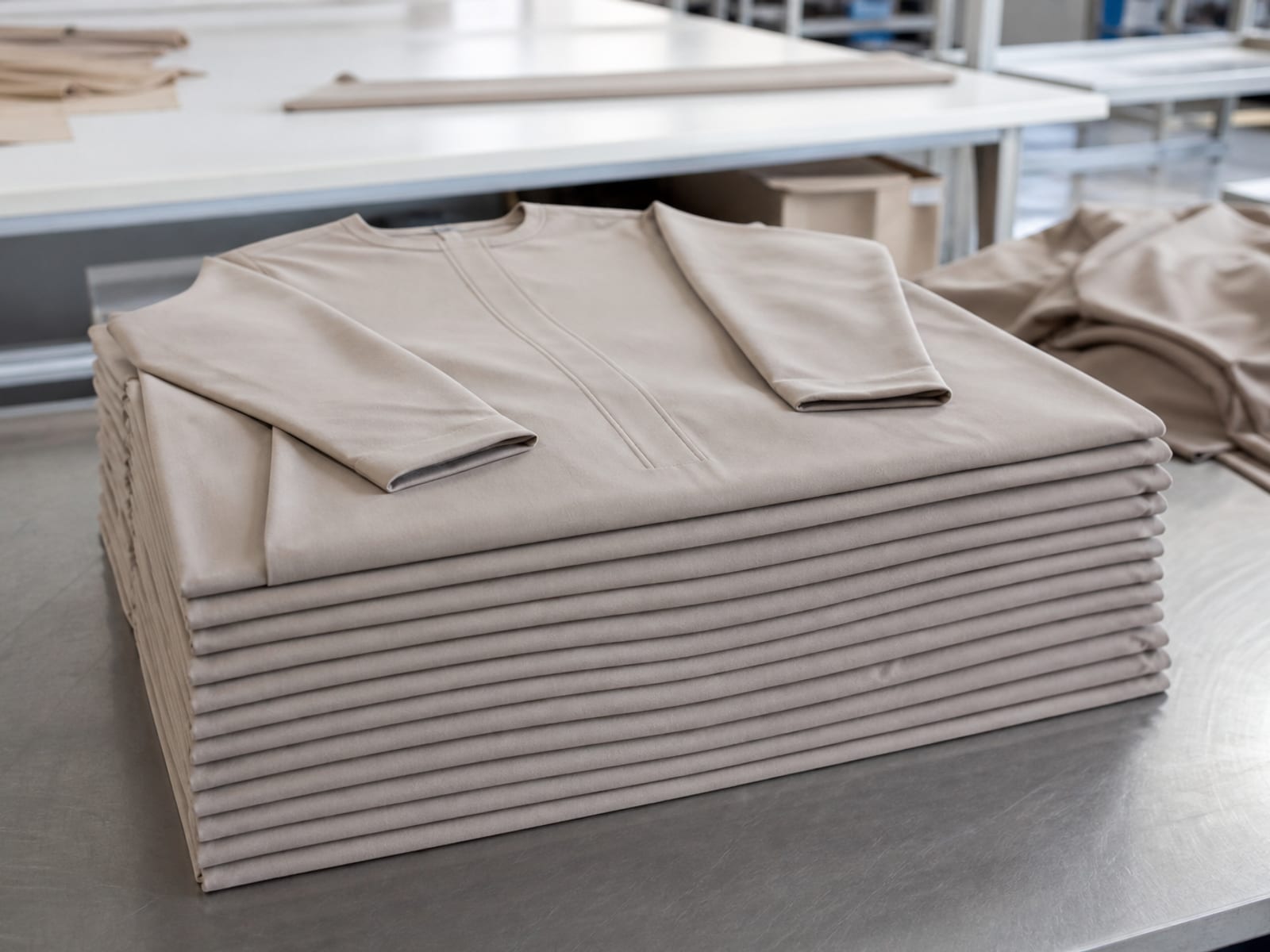
Custom sizing and size letters
A custom run does not need letter codes at all. Where a letter is useful it is as a label for the customer, defined by your own measurement set rather than borrowed from another supplier's idea of what an M is. This is the same rule that applies across every size page here: order by garment measurements, and treat S, M, L and XL as labels rather than specifications.
If you are building a private label range, that distinction becomes part of your product: your own chart, your own labels, your own published measurements, so a returning customer receives the same fit next season.
Custom sizing for private label ranges
Private label buyers usually want three things from custom sizing: a chart they can publish, labels that match it, and a fit that repeats. All three are delivered through the measurement sheet rather than through a conversation.
- Your own size chart, built in garment measurements
- Your own size labels, printed against that chart
- A fit sample approved before bulk, in the sizes you will actually sell
- Product copy that gives the customer measurement values rather than only a letter
- The sheet retained for the next reorder so the fit repeats
What we need from you
MOQ: contact us for current MOQ. Lead time depends on design and order quantity. Custom measurement values and tolerances are confirmed per order, before sampling starts.
The style or design, and the fabric you want it in.
The destination market and the customer you are selling to.
The measurement sheet or reference garment measurements, with start points stated.
The unit and the tolerance you want to work to.
Quantities per size, and whether this is a trial order or a bulk run.
Whether you need your own size labels and published chart.
Frequently asked questions
Yes. Send the chart or the reference garment measurements and the style, and the run is developed against that sheet. The chart is confirmed in writing, the sample is measured point by point against it, and the same sheet is retained for your next reorder so the fit repeats.
Garment measurements wherever possible, taken flat from stated start points on a garment that already fits. They are repeatable and can be checked on the delivered bulk with a tape measure. Body measurements are used when no fitting garment exists, and they carry more risk because ease and tape tension change the result.
Custom measurement is part of the development work, and how it affects the price depends on the style, the number of sizes and the quantity. Send the detail and it is set out in the quotation rather than described with a general figure that may not apply to your order.
There is no universal figure: a knit behaves differently from a woven and decoration changes the picture. The tolerance is agreed per order, written on the measurement sheet, and applied at the measurement check before packing so the delivered pieces are judged against a rule you approved.
Yes, and it is the recommended way to start. The sample is developed against the agreed sheet, measured point by point, and adjusted once if a point needs to change. Bulk is produced only after the sheet is approved, which is what keeps the trial and the bulk run consistent.
Yes, and the two belong together. Private label buyers normally work to their own chart, print their own size labels against it, and publish the measurement values on their product pages. That combination is what makes a fit feel consistent to a returning customer.
Contact us for current MOQ. It depends on the style, the number of sizes, whether the item is ready stock or made to order, and how the order is combined across categories. Lead time depends on design and order quantity.
Planning your next modest fashion collection?
Tell us these seven things and we can come back with a workable sourcing plan instead of a price list.