Plus size abaya sizing for wholesale and private label buyers
A plus size abaya is not a larger version of a standard one. This page is for the boutique owner, brand owner and wholesaler who needs a plus size run that fits, and it explains what changes when a pattern is graded properly.
What plus size means in a wholesale order
In retail, plus size is a label. In production it is a pattern: a set of garment measurements that has to be developed for the shape it is meant to fit. The two get confused constantly, which is why so many plus size ranges arrive looking correct on the hanger and wrong on the customer.
For a buyer, the practical definition is simpler: plus size is the part of your size run above the middle of your market, and it has to be specified in measurements like any other size. The label on the tag is your decision; the measurements are the specification.
- Plus size is a pattern and a measurement set, not just a bigger label
- It is defined by your market, not by a universal standard
- It should be measured on the garment like every other size
- It sells as a normal part of a range when it fits, and as a returns problem when it does not
Why grading matters more than scaling up
Scaling takes a base pattern and enlarges every dimension by the same proportion. It is fast and it is wrong: a body does not grow evenly, so an enlarged size M produces an armhole that is too low, a shoulder that is too wide and a sleeve that hangs oddly, even though the bust measurement is right.
Grading adjusts each point by its own increment. Bust increases by one amount, shoulder by a smaller one, armhole depth, sleeve width and body length by amounts of their own. That is why a properly graded plus size abaya looks like a well-cut garment rather than a widened one.
| Point | Scaled up | Graded properly |
|---|---|---|
| Shoulder | Widens in proportion with the bust | Widens by its own, smaller increment so the garment still sits on the shoulder |
| Armhole and sleeve head | Deepens and drops with the body | Adjusted so the sleeve hangs from the shoulder rather than from the mid-arm |
| Bust and waist | Increase evenly | Increase by separate amounts so the front does not gape or pull |
| Body and sleeve length | Stretch with the width | Set against the length your market actually wants |
| Drape and flare | Adds volume in the wrong place | Placed where the garment needs to fall clear of the body |
The three points buyers complain about most
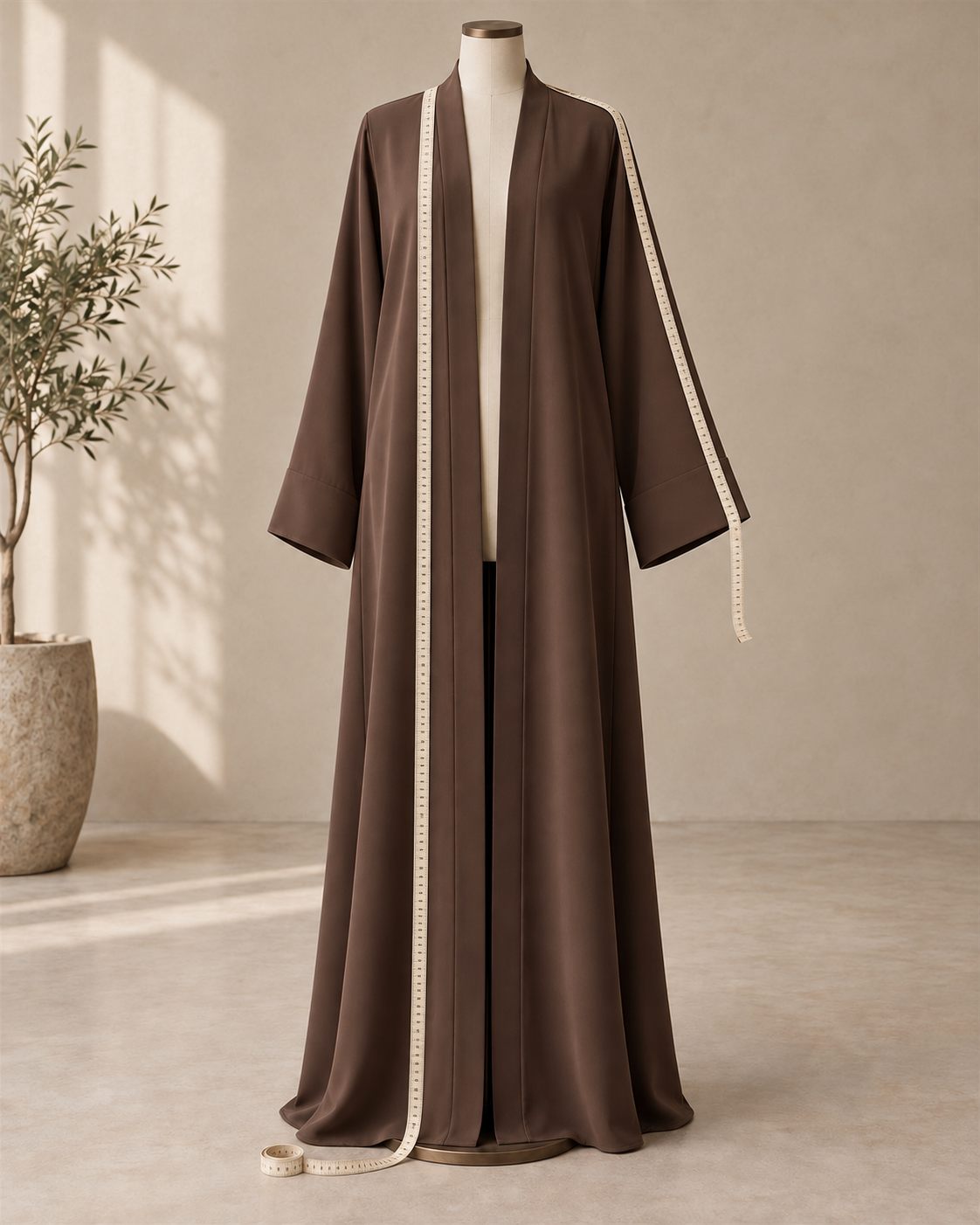
The same three problems come back from every market. They are all pattern issues, they are all visible on a sample, and they are all cheaper to fix before bulk than after.
- Sleeve length: the cuff ends above the wrist because the sleeve was scaled with the body
- Shoulder: the seam sits outside the shoulder line, so the garment looks and feels oversized at the top
- Front coverage: the abaya pulls across the chest or the front panels do not overlap enough when closed
- Second-order effects: the lining is tight in the same places, and any decoration sits off-centre
How to measure a plus size abaya
Values are confirmed per style and per order. We do not print a universal plus size chart, because plus size is defined by your market and your fit sample, not by a standard table.
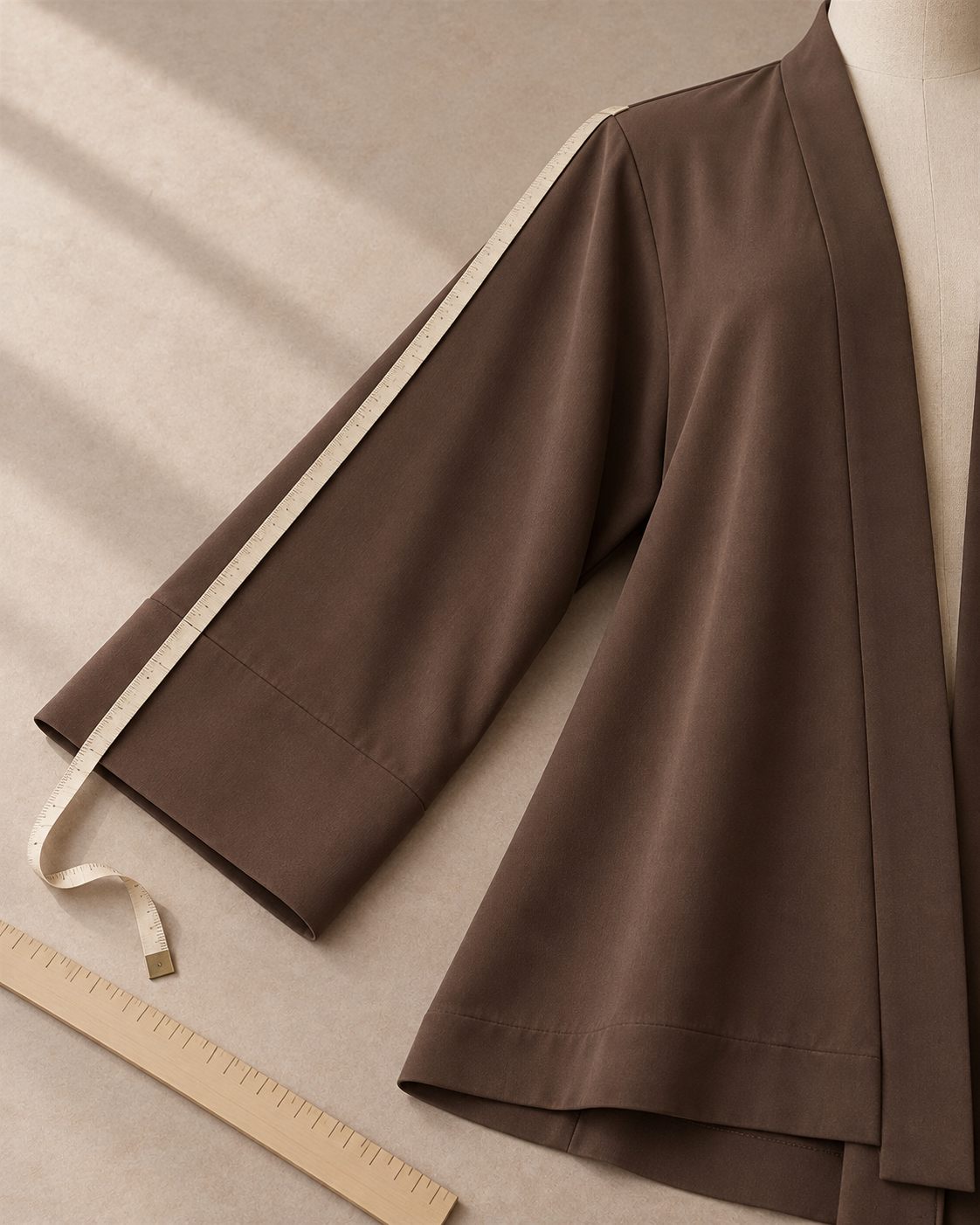
Measurement method does not change with size — but the points that matter do. On a plus size garment, sleeve, shoulder, armhole depth and front overlap deserve as much attention as the bust number.
| Measurement point | How to measure it | Value |
|---|---|---|
| Bust | Flat, closed, seam to seam at the fullest point, then doubled. Record that it is a doubled flat measurement. | — |
| Waist | Across the narrowest part of the garment body, flat. On a loose abaya this describes the cut, not the wearer. | — |
| Hip | Across the widest point below the waist, with the reference point stated. | — |
| Shoulder | Across the back, shoulder seam to shoulder seam, flat. State the reference on a dropped-shoulder cut. | — |
| Armhole depth | From the shoulder seam or stated top reference down to the underarm seam, measured flat. | — |
| Sleeve | From the stated start point along the outside of the sleeve to the cuff, and state the cuff opening separately. | — |
| Garment length | From the stated top reference straight down to the hem, front and back if the hem is not level. | — |
| Abaya length | The headline length for the style, measured the same way on every size in the run. | — |
Order by garment measurement, not by letters
The single most useful decision a plus size buyer can make is to specify the run in garment measurements and treat the letter code as a label for the customer. S, M, L and XL cannot be treated as equivalent between markets, and plus size lettering is even less consistent: a size one market calls large, another market calls extra large, and neither label describes a measurement. Order the run by garment measurement and use the letter only as a label for your own customer.
Order by measurement and the problem disappears. Extend the run by adding a measurement set, not by adding a letter; keep the letters as the customer-facing label and define them inside your own range.
How to build a plus size run
MOQ: contact us for current MOQ. Lead time depends on design and order quantity. Measurement values and grading increments are confirmed per style and per order.
Establish the base pattern and the fit sample before you consider the rest of the run.
Decide where plus size starts in your market — it is a commercial decision, not a standard.
Grade from the base pattern with increments agreed for each point.
Set the length options for the run; plus size customers often need two.
Order a small trial batch across the new sizes before the first full run.
Check the delivered pieces against the measurement sheet, size by size, before they go on sale.
How to adapt plus size for different markets
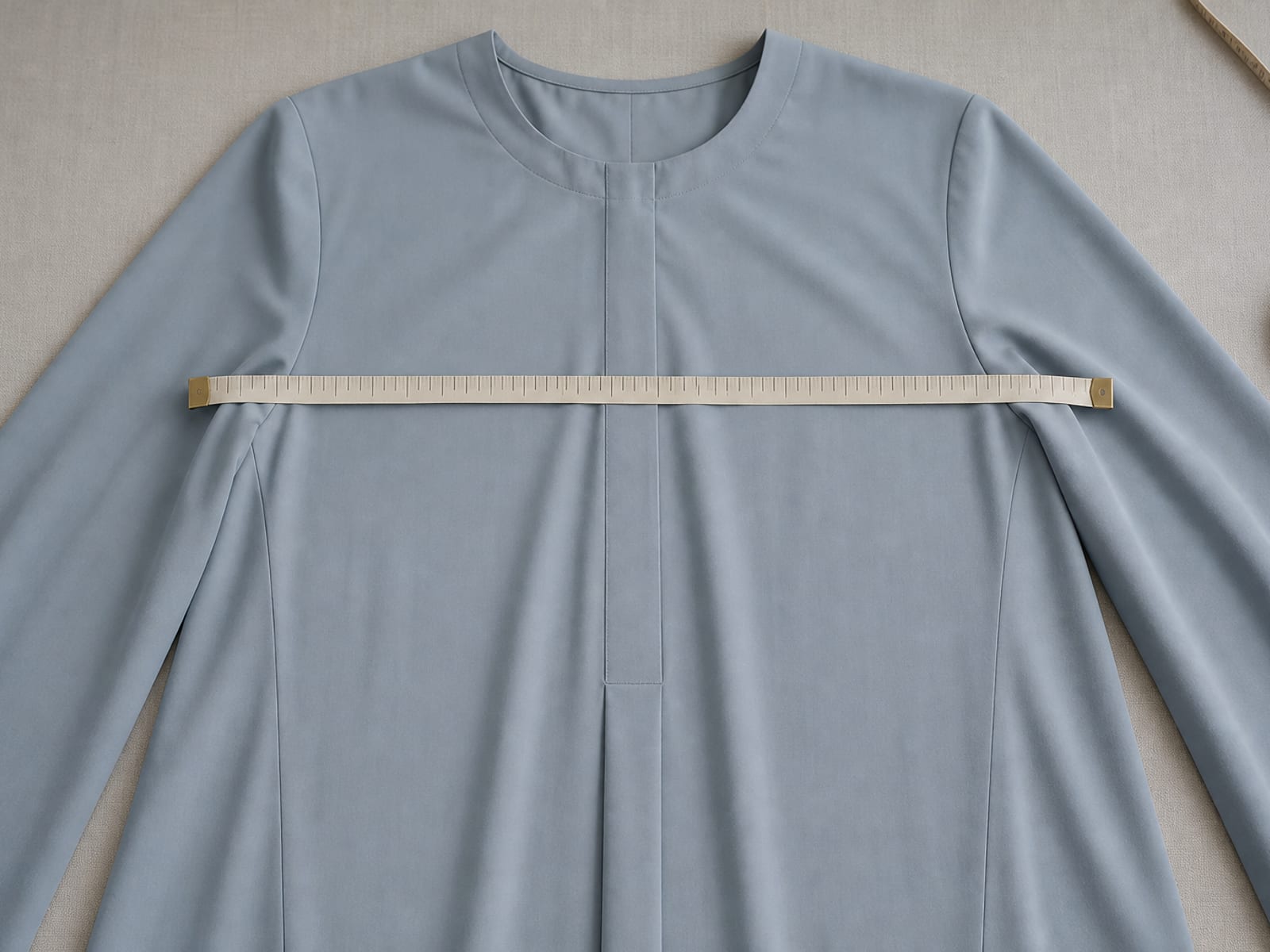
Plus size demand and expectations differ by market more than standard sizing does: the size where the range begins, the length customers want, and how much the customer expects the garment to skim the body rather than follow it. Treat the destination market as a specification, not a detail.
- Ask where plus size starts in your market and set the run from that point
- Set length options from local preference; do not inherit them from another market
- Decide the sleeve expectation: full coverage is not the same requirement everywhere
- Confirm the fit sample against a real customer shape in the destination market
- Keep one measurement sheet across markets so a single order can serve several
Private label and plus size
Plus size is often the range a private label buyer is judged on, because it is where customers notice fit first. If you are building your own brand, the elements that matter here are your own size labels on your own measurement set, a fit sample that has been approved in the destination market, and product copy that gives the customer a garment measurement rather than only a letter.
- Your own size labels, printed against your own measurement set
- A measurement sheet you can publish on your product pages
- A fit sample approved before bulk, in the sizes you will actually sell
- Product copy that gives bust and length as garment measurements
What we need from you to quote a plus size run
The style or design, and the base size you want it developed from.
The destination market and the customer you are selling to.
Where plus size starts for you, and which sizes the run should cover.
The length options and any sleeve requirement.
Quantities per size and whether the order is ready stock or made to order.
Frequently asked questions
No. Enlarging a base pattern evenly changes the shoulder, armhole and sleeve in the wrong proportions, so the garment looks oversized at the top even when the bust measurement is right. A plus size range is graded point by point, and the fit sample is approved before bulk.
By garment measurement for both the body and the length, rather than by letter or by height. Height only tells you where the hem falls. On plus size styles the points that drive complaints are sleeve length, shoulder position and front coverage, and all three have to be specified in measurements.
Grading is the approach: each point is adjusted by its own increment rather than the whole pattern being enlarged. Whether that suits your market is confirmed on the fit sample, so you see the garment on a real shape before bulk production begins.
Yes. Private label buyers usually replace the size labels with their own and work to their own measurement set. Send your size labels, your measurement sheet and the market the goods are going to, and the run is developed against that.
That is a commercial decision tied to your market and your customers, not a standard. Look at what your customers ask for and where the standard run stops covering them, set the starting size from that evidence, and confirm the measurement set for each size on the sheet.
Contact us for current MOQ. It depends on the style, whether the item is ready stock or made to order, and how sizes are combined across the run. Lead time depends on design and order quantity.
Planning your next modest fashion collection?
Tell us these seven things and we can come back with a workable sourcing plan instead of a price list.